Work-Identity Addiction: When Productivity Becomes Your Personality

In short: Workaholism & the Illusion of Success In many modern settings, overworking doesn’t look like a problem. It looks like commitment. It gets rewarded, promoted, and praised. But for some people, work stops being a place you go and becomes the place your nervous system goes to feel steady.
In many modern settings, overworking doesn’t look like a problem. It looks like commitment. It gets rewarded, promoted, and praised. But for some people, work stops being a place you go and becomes the place your nervous system goes to feel steady.
What if “being productive” isn’t your personality—but your system’s most reliable way to feel safe?
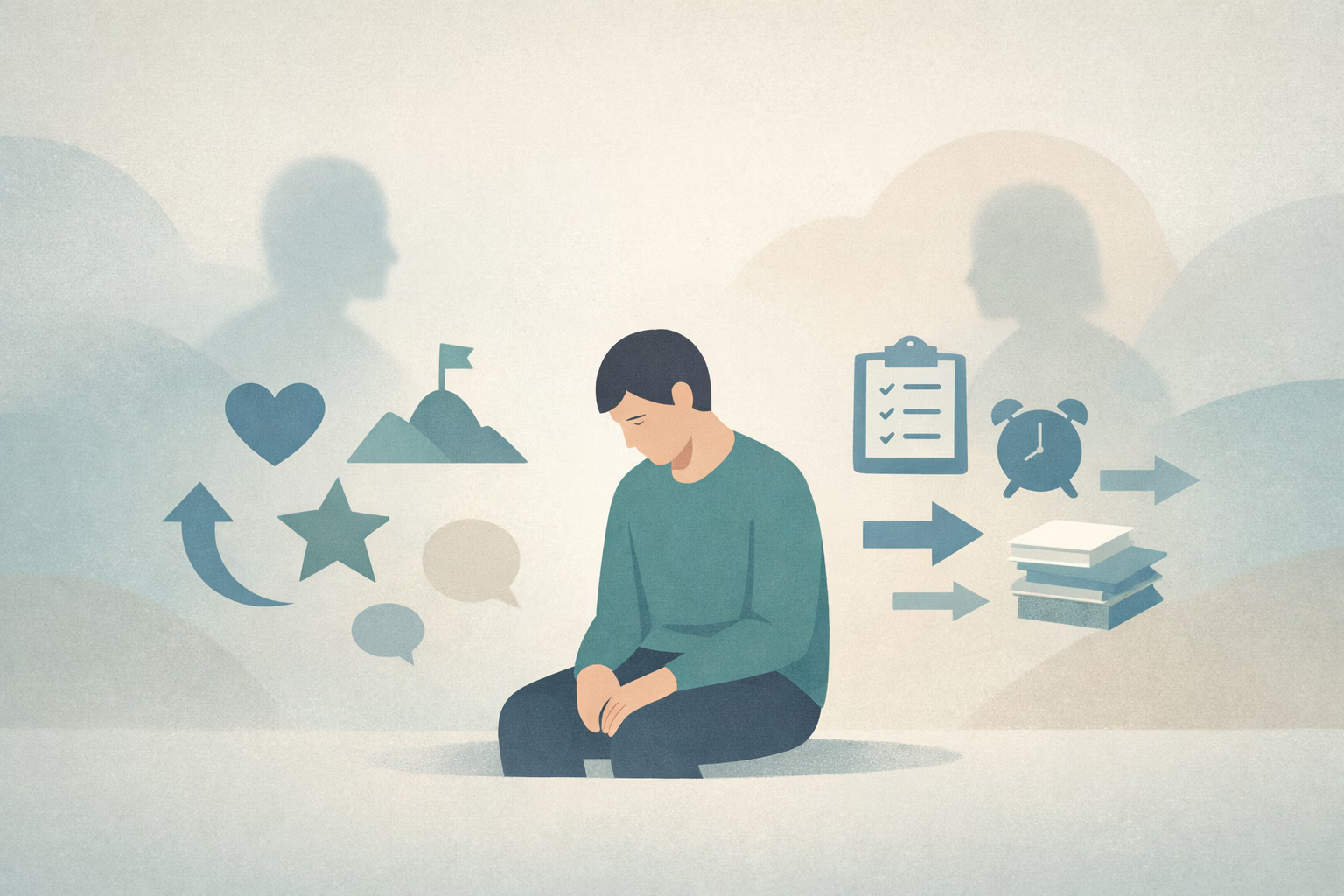
Workaholism can be understood as the compulsive use of work to regulate worth, identity, and connection—often while appearing “successful.” The outer story is achievement. The inner story is stabilization: a way to quiet restlessness, reduce uncertainty, and stay ahead of the moment when everything feels too open-ended.
One of the clearest signals of workaholism isn’t how much you do—it’s what happens when you don’t. A quiet evening, an unstructured weekend, even a short pause between tasks can feel oddly agitating, like something important is being missed.
This isn’t simply “liking work.” It’s the body responding as if stopping reduces safety. Work provides predictable cues: deadlines, roles, metrics, and next steps. Rest can remove those cues, leaving the system without a clear map for what to do with itself. Over time, the absence of structure can register as threat, and returning to work becomes the fastest way back to steadiness. [Ref-1]
When work is the place your system feels organized, rest can feel like losing your footing.
Work offers immediate structure and fast feedback. When you answer a message, finish a task, or solve a problem, your system receives a clean signal: “Something is handled.” That signal can temporarily reduce internal noise—especially when other parts of life feel ambiguous or unfinished.
In this way, busyness can function like a protective layer. It narrows attention, reduces vulnerability to uncertainty, and makes experience more manageable by turning it into output. The relief is real, but it’s state-based: a short-term quieting that can fade as soon as the next open loop appears. [Ref-2]
Importantly, this isn’t about “avoiding feelings” as a personality flaw. It’s a structural trade: work supplies instant closure cues, while other domains (relationships, identity questions, long-term fears) rarely offer clean completion.
Humans are wired for belonging. In many families, schools, and workplaces, belonging is subtly paired with contribution: you are welcomed when you are helpful, impressive, responsible, or needed.
Over time, the nervous system can learn a specific equation: usefulness equals connection. Work then becomes more than employment—it becomes a reliable attachment channel. Not necessarily because someone is consciously chasing approval, but because being indispensable produces social safety cues: inclusion, respect, and reduced risk of being dismissed. [Ref-3]
When you’re not producing, do you still feel “counted”?
Workaholism often runs on a powerful sequence: pressure rises, work intensifies, competence is proven, and relief arrives. The relief might feel like worth, clarity, or control—an inner “I’m okay” that lands briefly after something is completed.
This is why overworking can be so compelling even when it costs sleep, health, or relationships. It delivers immediate stabilizers: measurable progress, praise, certainty, and a sense of being on track. The system learns that output reduces inner chaos—so it asks for more output the next time uncertainty appears. [Ref-4]
From the outside, it can look like ambition. From the inside, it can feel like the only available way to settle.
Modern culture frequently equates constant productivity with success, responsibility, and even morality. In that climate, overwork can masquerade as a smart strategy: “If I keep going, I’ll be secure.”
But the promise has a quiet downside. When work is used as the main stabilizer, other needs are repeatedly postponed—sleep, friendship, play, unstructured thought, physical recovery. The cost isn’t immediate failure; it’s gradual erosion of wellbeing and connection, often while the outside world continues to applaud. [Ref-5]
What makes it an illusion is not that success is meaningless, but that nonstop output rarely produces the deeper “done” signal the body is looking for. It produces temporary relief—and then the demand returns.
Workaholism can be understood as a Power Loop: a self-reinforcing cycle where control and external validation become the main regulators of inner state. Work provides both. You can influence outcomes, monitor performance, and receive visible feedback from others.
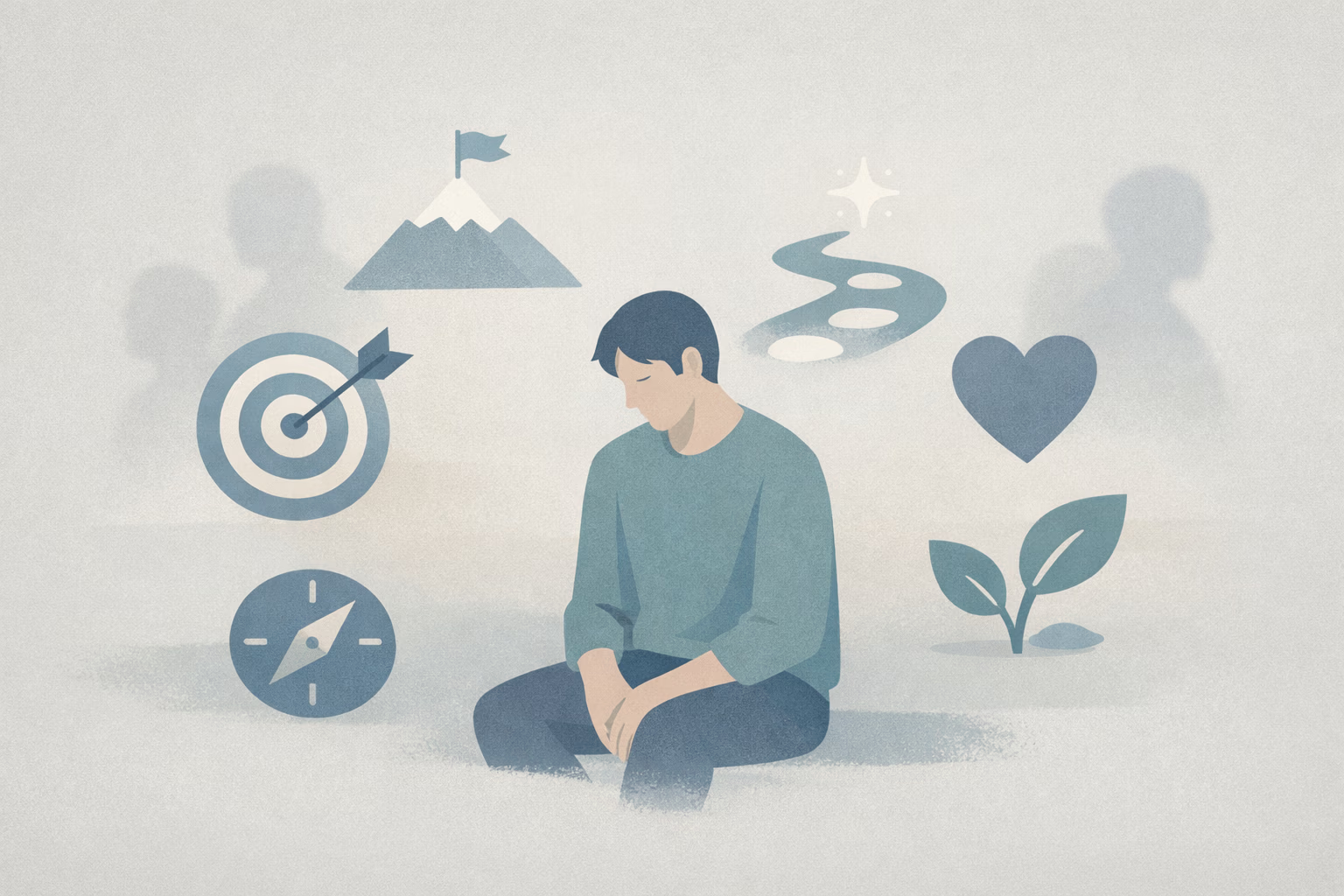
Each time the loop runs, it strengthens a particular kind of stability: stability dependent on proving. The system becomes less practiced at settling without metrics and more practiced at mobilizing under pressure. Over time, identity can drift from “I am a person with values” toward “I am what I deliver.” [Ref-6]
Because workaholism is socially rewarded, its patterns can be easy to miss—especially in high-performing environments. Many people don’t notice the compulsive quality until the body or relationships start pushing back.
Some common patterns include: [Ref-7]
These are not character defects. They are signs that regulation and closure have been outsourced to a single domain.
Sustained overwork can eventually create a strange split: your calendar is full, but your life can feel thin. When the system is repeatedly mobilized, it has less capacity for digestion—less room to integrate experiences into a stable sense of self.
The longer the loop runs, the more likely it is to show up as depletion: burnout, irritability, sleep disturbance, physical strain, emotional flattening, and relationship wear. Not because someone “can’t handle life,” but because the body cannot remain in high output mode indefinitely without cost. [Ref-8]
When there’s never a real finish line, your system can’t stand down long enough to remember why you started.
One of the most disorienting parts of workaholism is that the environment often collaborates with it. Promotions, compliments, and admiration can function like proof that the pattern is healthy—even when the inner experience is strained.
Research suggests workaholism is often linked to extrinsic motivation and self-esteem regulation, including guilt when not working. [Ref-9] In practice, that can mean the nervous system learns a tight link: working equals worth, and stopping equals risk.
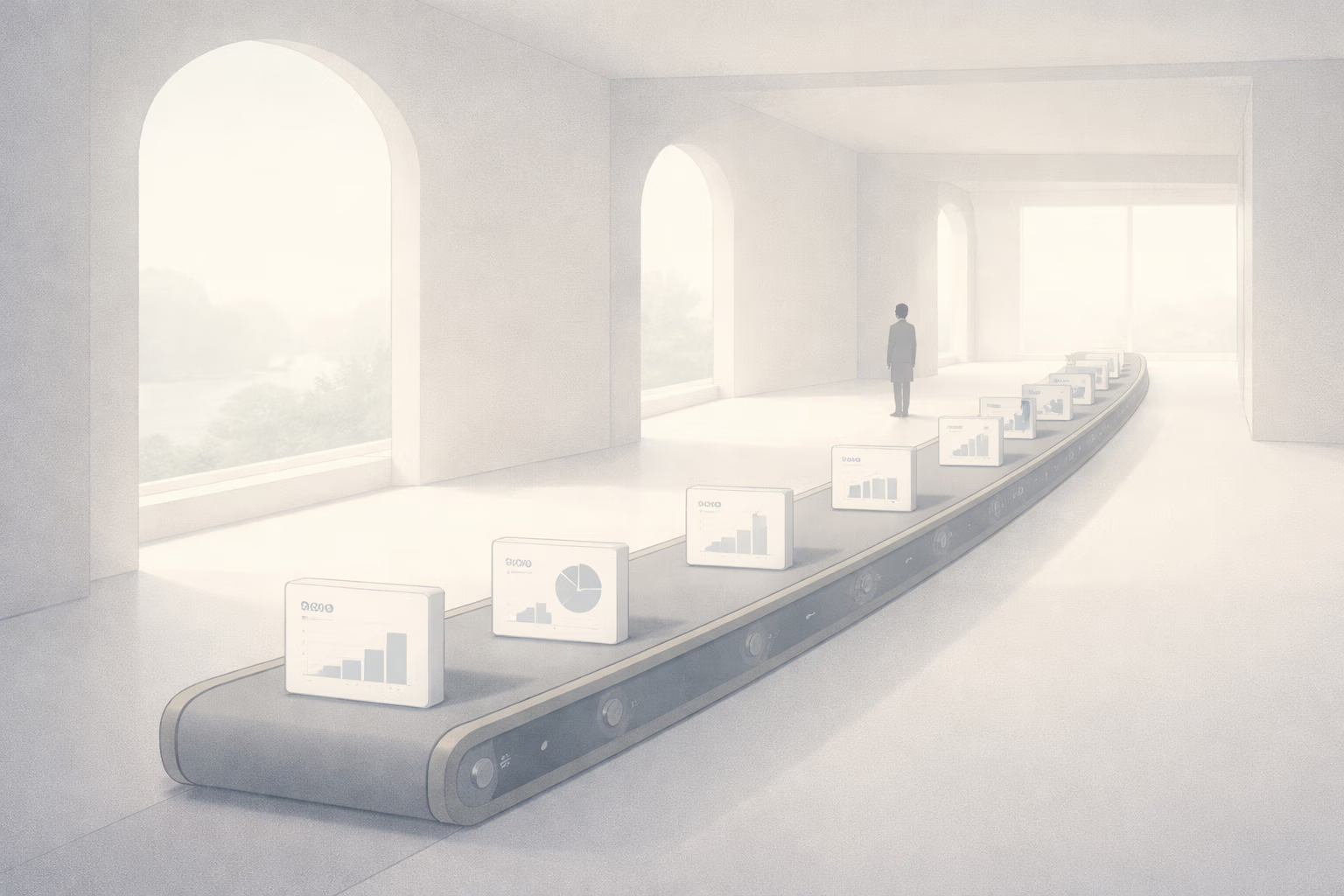
When an entire workplace runs on visible sacrifice, it becomes harder to notice that the “success” being rewarded is sometimes a nervous system staying activated—not a person thriving.
There is a form of internal safety that doesn’t require constant demonstration. It’s quieter and less dramatic than the competence surge, but it’s more stable: a sense that your place in your own life is not contingent on today’s performance.
This is not a mindset trick or a reframe. It’s a deeper settling that tends to arrive when enough loops are completed—when life contains real endings, protected recovery, and relationships where presence counts as participation. When worth is not being constantly renegotiated, the system doesn’t need to keep proving to remain oriented. [Ref-10]
What changes when “enough” is an inner signal, not a moving target?
Because workaholism often functions as a belonging strategy, restoration isn’t only about reducing hours. It’s about what else supplies safety cues. When connection is tied to performance, boundaries can feel socially risky. When connection is tied to personhood, boundaries become less threatening.
This kind of belonging is not created by insight alone. It’s built through repeated experiences where being human is not penalized—where limits are met with respect, and where closeness doesn’t require constant usefulness. Those experiences gradually reduce nervous-system load and widen the range of what feels safe. [Ref-11]
Some people don’t need more motivation. They need more evidence that they still belong when they’re not impressive.
When the system is no longer using work as its primary regulator, rest starts to change. It stops being an empty gap that must be filled and becomes a legitimate state with its own “completion” signals—breath returning, attention widening, time feeling less urgent.
Presence often increases not through trying harder to be mindful, but because load decreases and closure improves. Work begins to feel more chosen than compulsory—less like a leash and more like a tool. And the body becomes better able to transition between states without needing constant stimulation or control. [Ref-12]
In this shift, success doesn’t vanish. It becomes less costly.
Work can be meaningful. It can be service, craft, problem-solving, leadership, creation. The issue isn’t caring—it’s when caring becomes fused with survival, when output becomes the only reliable bridge to identity and belonging.
As coherence returns, work can move from being a proof-of-worth system to being a contribution system. You still build, achieve, and grow—but the engine changes. The stabilizer becomes alignment with values and a life that contains real completion, not endless escalation. [Ref-13]
In this orientation, effort has a context. It belongs to a person, not a compulsion.
Workaholism is often a search for safety wearing the costume of success. It’s what can happen when the nervous system finds one domain that reliably provides structure, validation, and short-term relief—and then is asked to live there.
When overwork is understood as a regulatory loop, shame becomes less relevant. The question shifts from “What’s wrong with me?” to “What has my system been trying to solve, and what kinds of closure has my life been missing?” Rumination and constant mental replay can also intensify the load, keeping the loop active even off the clock. [Ref-14]
Agency tends to return as meaning becomes more coherent: when worth is not constantly up for debate, and when life contains spaces where nothing needs to be proved for you to be real.
Many cultures reward overwork so consistently that it can feel like the only respectable way to live. Praise and rewards can normalize the pattern, even when it quietly empties the person inside it. [Ref-15]
But success isn’t only what you produce. It’s how aligned your life feels when you close the laptop—how much of you is still there, how much connection remains reachable, and how easily your system can return to itself.
From theory to practice — meaning forms when insight meets action.
Because work has been functioning as your nervous system's primary stabilizer. A quiet evening or unstructured weekend can feel agitating not because you 'love work,' but because the body responds as if stopping reduces safety. Work provides predictable cues — deadlines, roles, metrics, next steps. Rest removes those cues, leaving the system without a clear map for what to do with itself. Over time, the absence of structure registers as threat, and returning to work becomes the fastest way back to steadiness. When work is the place your system feels organized, rest can feel like losing your footing. That's not laziness or restlessness. It's regulation outsourced to a single domain.
Often it's reinforcing the loop. One disorienting feature of workaholism is that the environment collaborates with it. Promotions, compliments, and admiration function like proof that the pattern is healthy, even when the inner experience is strained. Workaholism is often linked to extrinsic motivation and self-esteem regulation, including guilt when not working. The nervous system learns a tight equation: working equals worth, stopping equals risk. When a workplace runs on visible sacrifice, it's harder to notice that the 'success' being rewarded is sometimes a nervous system staying activated, not a person thriving. The praise is real. So is the cost it's hiding.
Through self-reinforcement: control and external validation become the main regulators of inner state, and work provides both. You can influence outcomes, monitor performance, receive visible feedback. Each time the loop runs — uncertainty triggers urgency, urgency triggers work, work triggers relief and praise, relief teaches the system to repeat — it strengthens stability dependent on proving. The system becomes less practiced at settling without metrics and more practiced at mobilizing under pressure. Identity drifts from 'I am a person with values' toward 'I am what I deliver.' Belonging gets paired with usefulness, so the equation becomes: contribution equals connection. Stopping then feels like risking the bond, not just the income.
Coherence rather than constant activation. When the system isn't using work as its primary regulator, rest changes — it stops being an empty gap that must be filled and becomes a legitimate state with its own completion signals: breath returning, attention widening, time feeling less urgent. Work begins to feel more chosen than compulsory, less like a leash and more like a tool. The engine shifts: instead of work as proof-of-worth, it becomes contribution. Effort has a context — it belongs to a person, not a compulsion. Real success isn't only what you produce. It's how aligned your life feels when you close the laptop, and how easily your system can return to itself.
From Science to Art.
Understanding explains what is happening. Art allows you to feel it—without fixing, judging, or naming. Pause here. Let the images work quietly. Sometimes meaning settles before words do.
One Quiet Window, one insight, one reflection — every Sunday