Self-Improvement Overload
Learn why over-improving leads to burnout and how it’s tied to survival-based pressure.
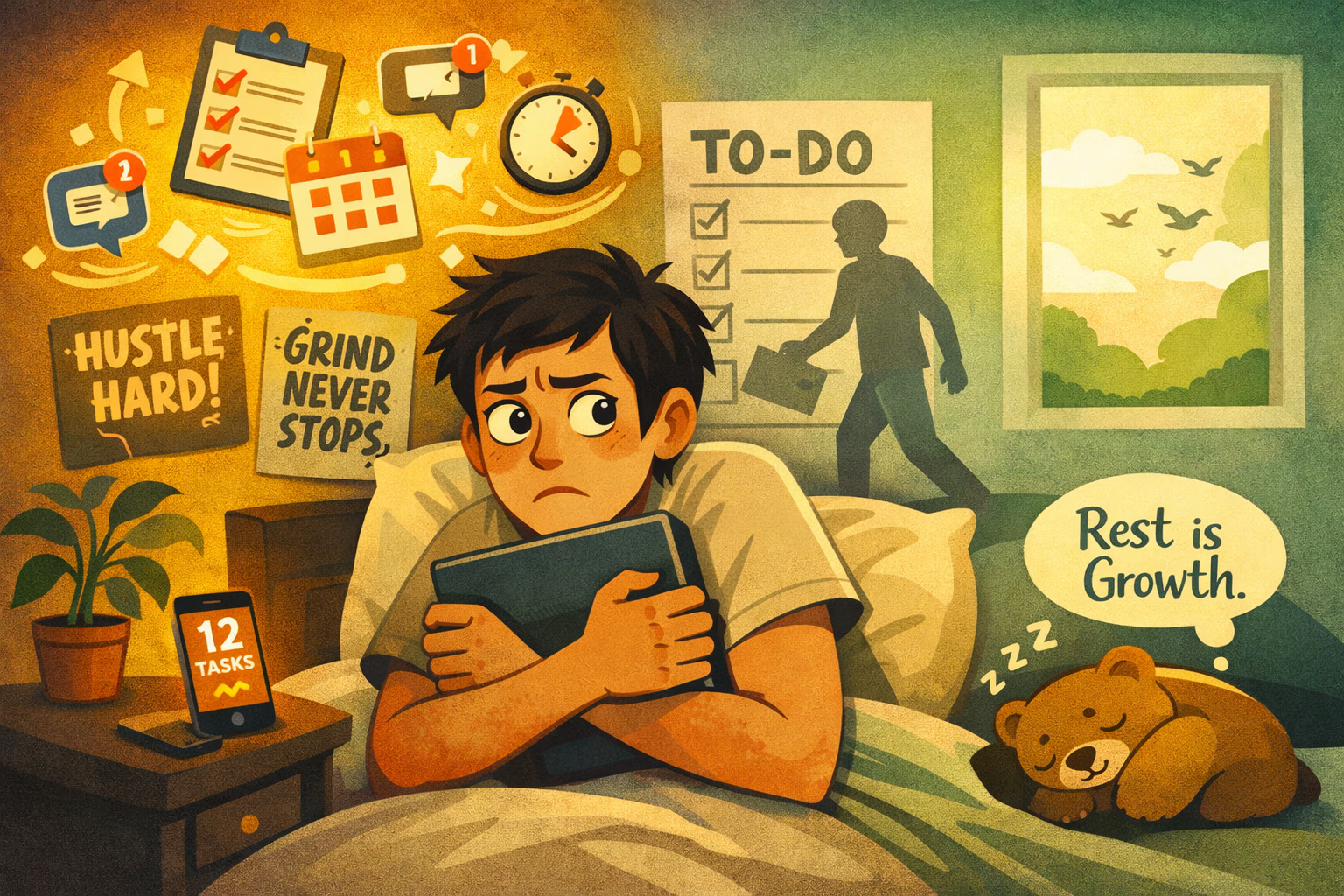
In context: Optimization has become a habituated loop—a “high-velocity“ drive of the Reward & Pursuit system. You are chasing the “perfectly efficient“ day to satisfy a Status demand. In this model, constant optimization is a “leak“ of integration capacity. Identifying it as a loop helps you realize that “better“ is the enemy of “done.
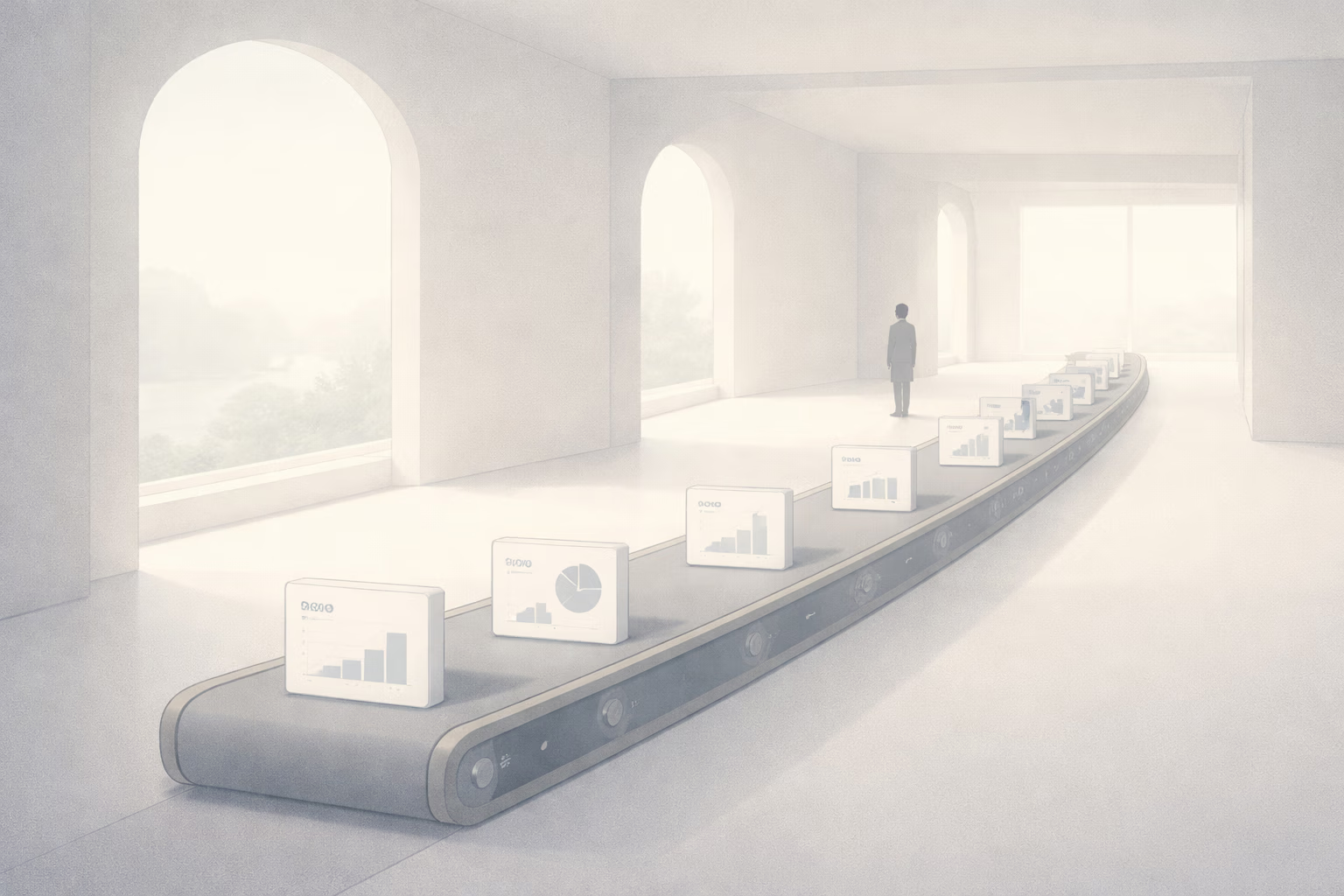
Improvement never finishes.
Metrics roll forward, targets shift, refinement repeats.
You notice how optimization became automatic, no longer tied to purpose.
The loop sustains itself.
This moment simply names that pattern as it is.
Recognize optimization loops with DojoWell.
Explore DojowellArticles exploring the psychology behind these patterns.
Optimization has become a habituated loop—a "high-velocity" drive of the Reward & Pursuit system. You are chasing the "perfectly efficient" day to satisfy a Status demand. In this model, constant optimization is a "leak" of integration capacity. Identifying it as a loop helps you realize that "better" is the enemy of "done." By intentionally choosing "non-optimization," you allow your energy to accumulate, leading to a much more "dense" and meaningful experience of time.
The cost is the loss of "presence." If you are always optimizing the next moment, you are never inhabiting the current one. This leaves your Narrative & Identity system "starved" of lived experience. By closing the optimization loop at "sufficient," you allow the current moment to "land." This settlement is what actually creates the feeling of a "good day," far more effectively than any productivity hack or perfect schedule ever could.
One Quiet Window, one insight, one reflection — every Sunday