The Compulsion to Be Busy: Is Busyness a Coping Mechanism?
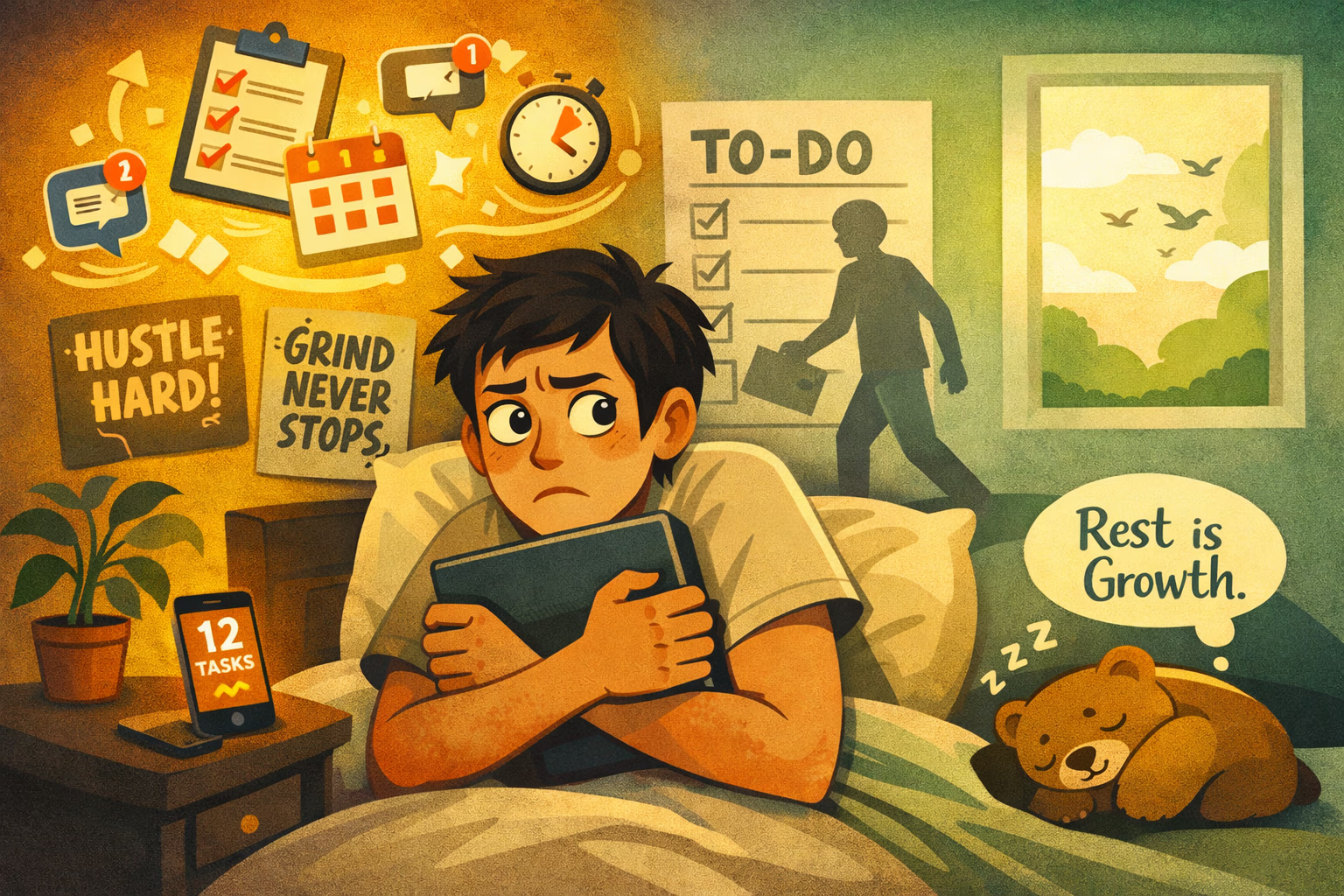
In short: Toxic productivity isn’t simply “working a lot.” It’s the quieter belief that your safety, worth, or future depends on constant output—so rest doesn’t register as recovery. It registers as risk.
Toxic productivity isn’t simply “working a lot.” It’s the quieter belief that your safety, worth, or future depends on constant output—so rest doesn’t register as recovery. It registers as risk.
In that state, the body doesn’t interpret a break as a neutral pause. It interprets it as a loss of control, a gap in proof, or a window where consequences could catch up. The result is a very specific kind of distress: you can be exhausted and still unable to stand down.
Why does doing nothing feel like doing something wrong?
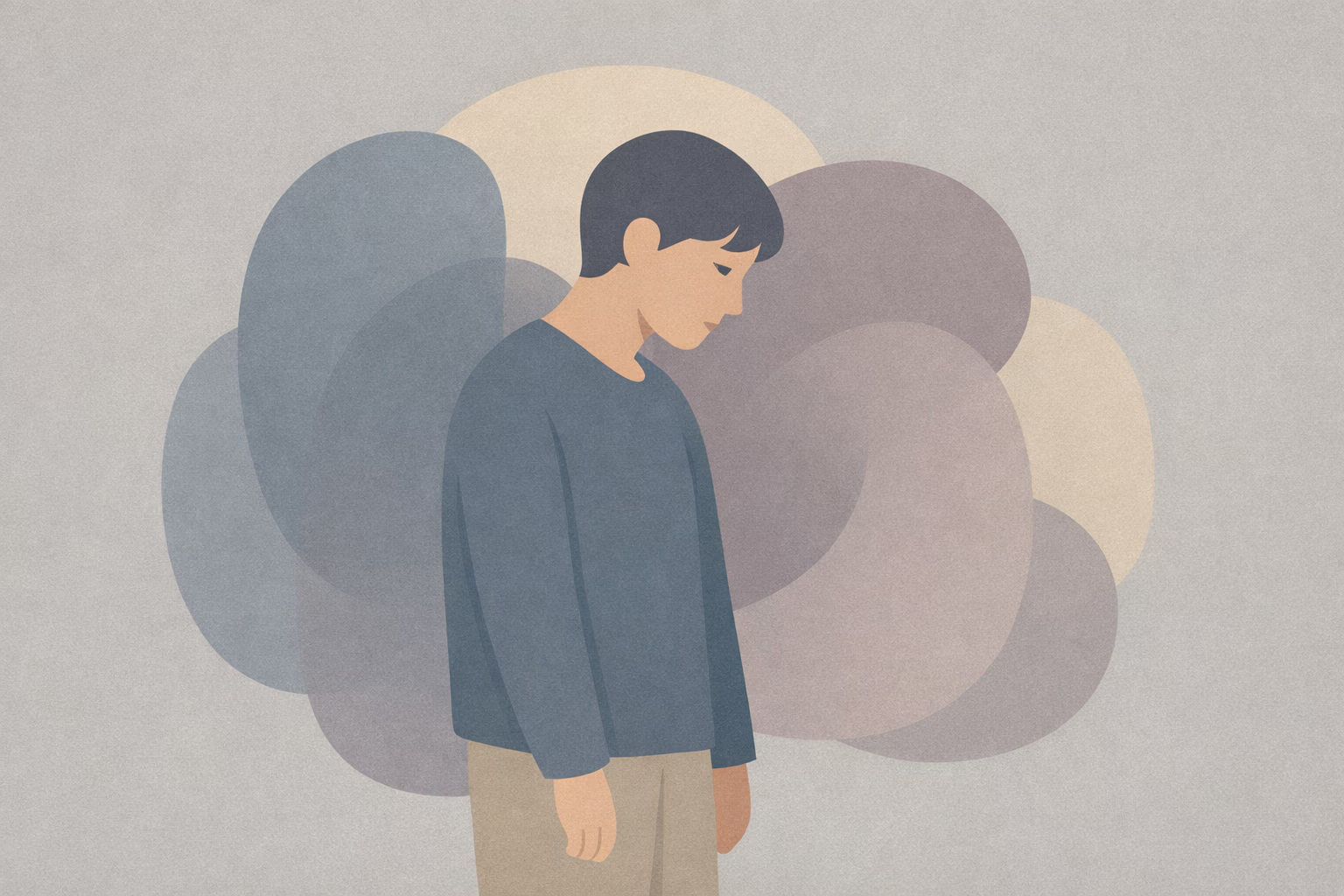
Many people describe the same moment: the calendar finally opens, the laptop closes, the body lands on the couch—and instead of relief, there’s agitation. Thoughts speed up. The chest tightens. A sense of “I should be doing something” arrives as if it’s an emergency.
This isn’t proof that you don’t know how to relax. It’s a sign that your system has learned to associate rest with vulnerability. When the usual stream of effort stops, the mind doesn’t automatically drop into peace; it scans for what might go wrong next, or what you might be judged for not doing. That scanning can feel like guilt, self-criticism, or a restless itch to “make the break productive.” [Ref-1]
In a high-pressure environment, constant doing can function like a stabilizer. It creates structure, metrics, and visible progress—signals that reduce uncertainty. The problem is that this stabilizer often requires ongoing activation: keep moving, keep checking, keep proving.
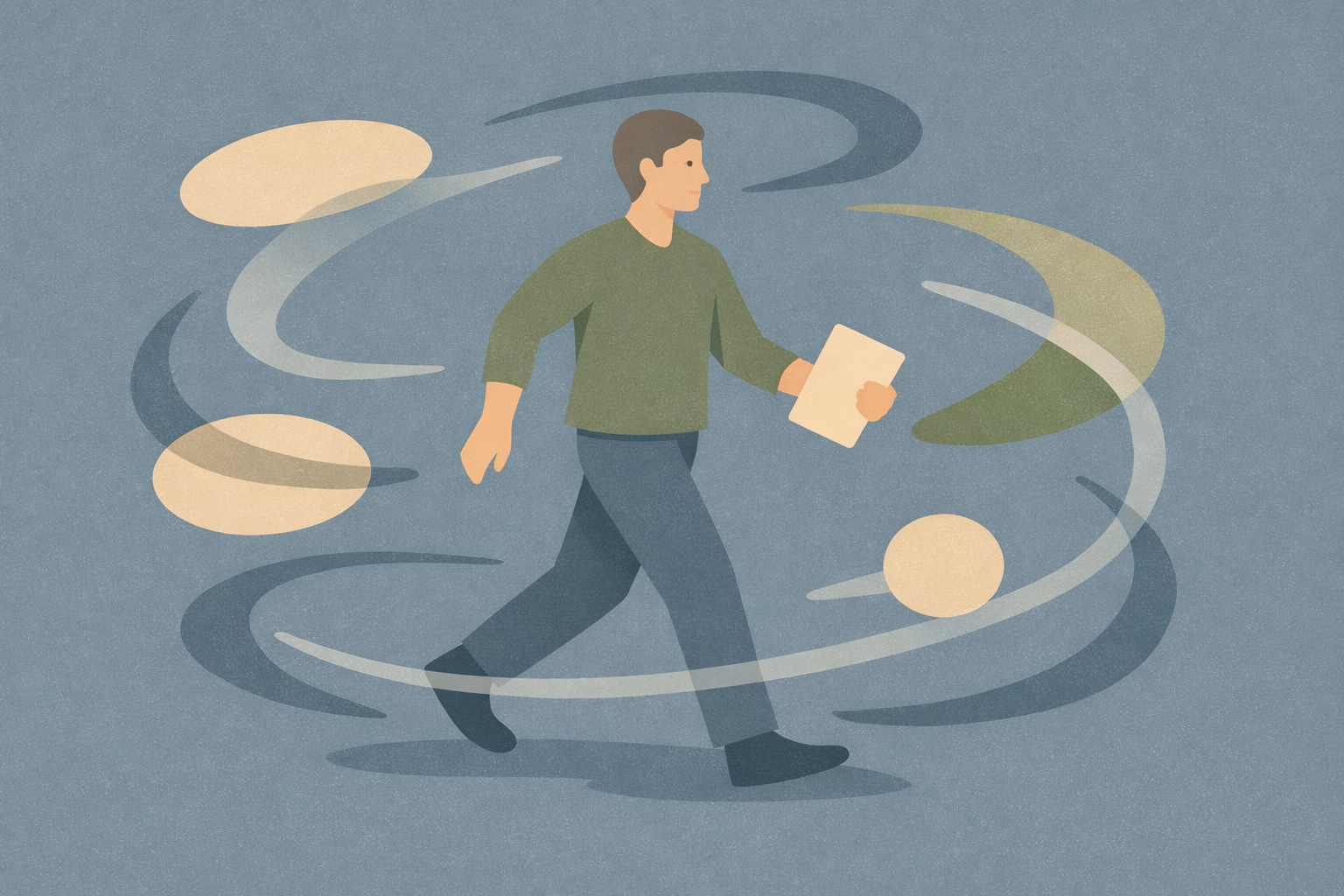
Over time, productivity stops being about completing what matters and starts acting like a regulatory loop: effort reduces discomfort for a moment, so the body learns “effort = safety.” When you try to rest, the system doesn’t just lose activity; it loses the mechanism that was holding threat at bay. That can make downtime feel internally noisy and strangely unsafe. [Ref-2]
Sometimes “being busy” isn’t about ambition. It’s the nervous system keeping the lights on.
Humans are shaped by conditions where contribution mattered. In earlier social worlds, being useful increased your chances of support, shelter, and inclusion. Value wasn’t an abstract concept; it was often visible in what you could provide to the group.
That history doesn’t mean modern work is the same as survival. But it helps explain why the body can treat usefulness like a deep cue. When usefulness is questioned—by layoffs, metrics, comparison, or internal pressure—alarm can rise quickly. In that context, productivity doesn’t just “help you get things done.” It can feel like a way to stay connected, relevant, and protected. [Ref-3]
Toxic productivity often works because it gives immediate evidence: tasks completed, inbox cleared, hours logged, goals hit. That evidence can mute uncertainty, even if only briefly. The system gets a momentary “I’m okay” signal.
But proof expires. The next morning brings a new list, a new standard, a new comparison. So the loop restarts: more output to restore the feeling of control. What looks like high functioning from the outside can be, internally, a cycle of temporary silence followed by renewed activation. [Ref-4]
What if the drive isn’t “too much ambition,” but a short-lived relief that keeps wearing off?
The promise of toxic productivity is simple: if you produce enough, you’ll finally feel secure. But the nervous system doesn’t settle from accumulating more evidence; it settles when loops complete and the body receives a genuine “done” signal.
When work becomes endless, that “done” signal rarely arrives. Even wins can feel incomplete, because they don’t integrate into stable identity—only into the next demand. Over time, the costs show up not as a dramatic collapse, but as a slow thinning: less creativity, less spaciousness, less contact with what you care about beyond performance. [Ref-5]
This is a particular pattern: the system treats output as a shield. If you keep producing, you reduce the chance of criticism, scarcity, rejection, or regret—at least in the short term. That makes productivity feel protective, not just productive.
In this “Power Loop,” rest is not interpreted as a neutral biological need. It is interpreted as a loss of control. Even positive rest (vacation, quiet weekends) can carry an edge of threat because it removes the very behavior that has been functioning as your stabilizer. Anxiety during downtime and guilt when you pause are common in this loop, not because you’re broken, but because your regulation strategy depends on motion. [Ref-6]
Toxic productivity tends to look the same across different lives, because it’s less about unique psychology and more about a body adapting to sustained pressure and evaluation. The patterns are regulatory responses: they keep you moving so you don’t have to feel the internal “drop” that comes with stopping.
None of these are proof of laziness, weakness, or obsession. They are proof that your system is trying to maintain coherence and safety using the tools it has available.
There’s a point where the body can’t sustain constant activation. People often describe this as “burnout,” but the lived experience is more specific: concentration gets brittle, motivation gets mechanical, and even enjoyable work feels flat.
This isn’t a failure of character. It’s the predictable result of reduced recovery. When your system can’t fully stand down, it doesn’t fully rebuild capacity. Over time, exhaustion may be paired with emotional detachment or a muted sense of reward—less because something is “wrong with you,” and more because the nervous system is protecting itself by lowering output and dampening signals. [Ref-8]
When everything is urgent, the body eventually stops believing anything is nourishing.
Modern work often provides tight feedback loops: notifications, rankings, targets, performance reviews, social praise. These aren’t inherently harmful—but under strain, they can become the primary way the system knows it’s “okay.”
When approval consistently follows overextension, the association strengthens: more work equals more safety. And when rest is met with subtle penalties—missed opportunities, slower responses, a sense of being replaceable—the body learns the opposite association: rest equals risk. In that conditioning, self-worth can feel inseparable from productivity, even when you consciously disagree with that idea. [Ref-9]
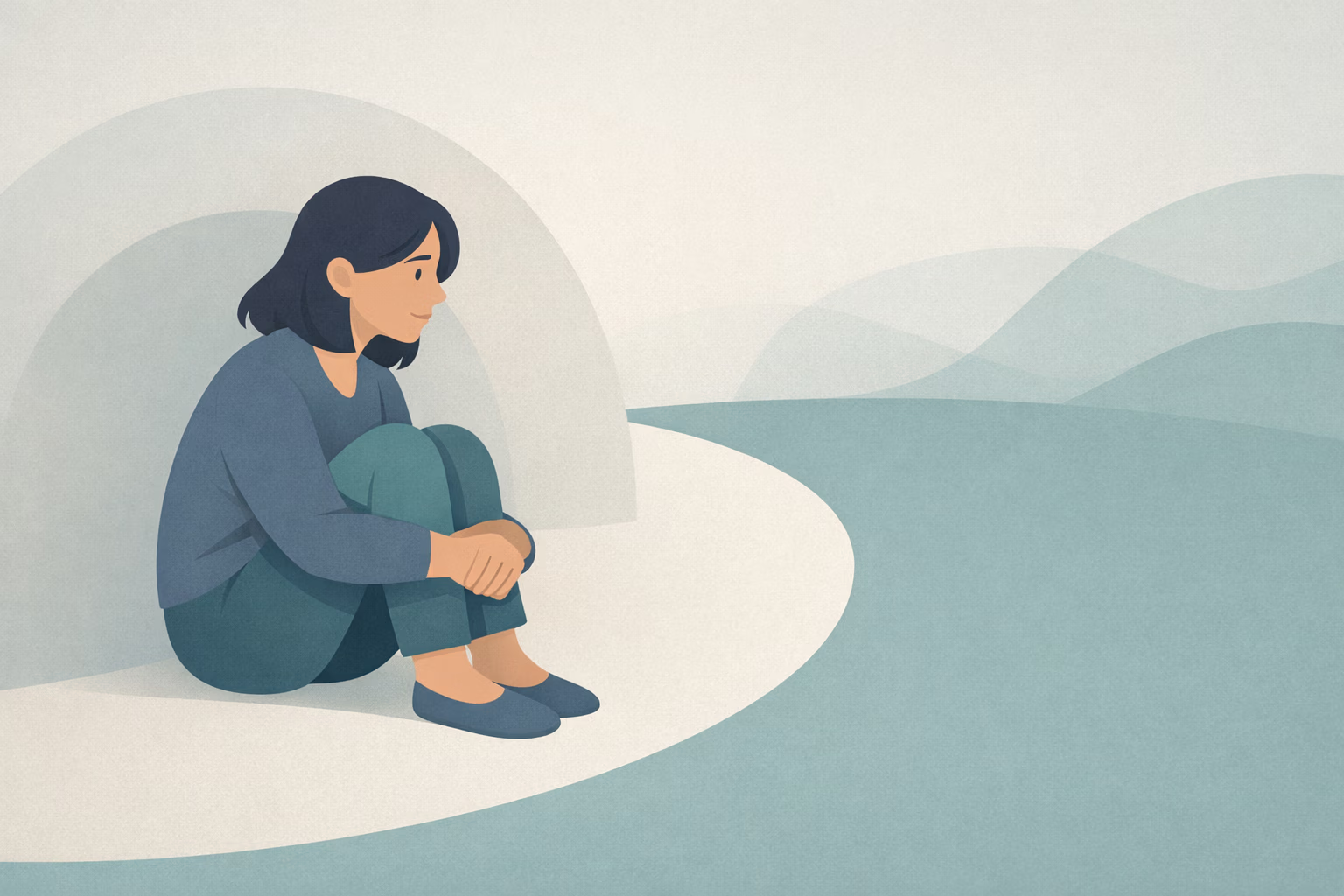
There is a different way rest can be understood—not as a reward, and not as a break from seriousness, but as a regulatory state where the system completes what effort started. In that frame, rest isn’t “not working.” It’s the phase where the body processes demand, repairs load, and returns signals back to baseline.
Importantly, this isn’t just an insight you tell yourself. The shift is felt when the body can accept a pause without escalating. When rest becomes safe enough to land, the need to constantly justify your existence with output loosens. Guilt may still appear, but it no longer automatically runs the whole system. That softening is often described by people as relief and “permission,” but what’s happening underneath is a more stable completion signal—an internal sense that you’re allowed to be unfinished without being in danger. [Ref-10]
What changes when a pause stops being interpreted as a performance problem?
No nervous system regulates in isolation. When a workplace or family system normalizes constant availability, rest becomes socially unsafe. When a culture punishes slowness, the body learns speed as protection.
Supportive environments do something quiet but powerful: they offer steadier cues that you remain valued even when you are not producing in the moment. Over time, this reduces the need for frantic proof. In relationships where presence matters as much as output, the self doesn’t have to be continuously “earned.” That social steadiness can be one of the strongest conditions for recovery from overwork patterns. [Ref-11]
When chronic activation eases, people often notice changes that aren’t dramatic but are unmistakable: attention holds more easily, decision-making feels less panicked, and the world becomes less binary (win/lose, ahead/behind). These are signs of returning capacity—your system regaining room to respond rather than react.
Physiologically, prolonged stress and insufficient recovery are associated with weariness, cognitive strain, and altered stress-hormone patterns. When recovery becomes more available, the body can re-approach equilibrium, and mental work becomes less costly. [Ref-12]
In that steadier state, intrinsic motivation can reappear—not as a forced mindset, but as a natural pull toward what feels meaningful when threat is not running the show.
Productivity itself isn’t the enemy. Effort can be deeply human: building, contributing, learning, creating. The difference is what productivity is asked to carry. When it carries your identity and safety, it becomes brittle and compulsive. When it serves your values and relationships, it becomes more coherent.
In a purpose-guided mode, “enough” is more likely to register because completion is not purely metric-based. There is a sense of closing loops: finishing, resting, returning. That rhythm supports recovery, and recovery protects against the health consequences linked to chronic work stress and insufficient restoration. [Ref-13]
Work can be a channel for meaning—without being the container for your worth.
If rest has been feeling like failure, it may be because your system has been living under perfectionistic standards and constant evaluation, where “doing” is treated as the only reliable form of safety. In those conditions, it makes sense that stopping would spike alarm. [Ref-14]
But identity is larger than output. When worth is allowed to sit in something steadier—values, connection, contribution over time—rest becomes easier to recognize as part of a coherent life, not a deviation from it. That recognition isn’t a slogan. It’s the gradual return of an internal “stand down” signal: a body that can pause without bracing for impact.
In hustle culture, rest is often treated like a luxury item—something granted after you’ve proven yourself. But nervous systems don’t operate on moral deserts; they operate on load, safety cues, and completion.
You are not a machine that must justify its downtime. When effort becomes humane, meaning has space to form. And when meaning has space to form, work can return to its rightful place: something you do, not something you have to become. [Ref-15]
From theory to practice — meaning forms when insight meets action.
Because your system has learned to associate rest with vulnerability. When the usual stream of effort stops, the mind doesn't automatically drop into peace; it scans for what might go wrong, or what you might be judged for not doing. That scanning lands as guilt or a restless itch to 'make the break productive.' This isn't proof you don't know how to relax. Toxic productivity isn't simply 'working a lot' — it's the quieter belief that your safety, worth, or future depends on constant output. So rest doesn't register as recovery. It registers as risk. Stillness doesn't cause distress; it removes the buffer that was holding distress at bay.
Because productivity has become a regulation strategy, not just a behavior. In high-pressure environments, constant doing creates structure, metrics, and visible progress — signals that reduce uncertainty. Effort reduces discomfort for a moment, so the body learns 'effort equals safety.' When you try to rest, the system doesn't just lose activity; it loses the mechanism holding threat at bay. Productivity also produces immediate evidence — tasks completed, inbox cleared, hours logged — that mutes uncertainty briefly. But proof expires. The next morning brings a new list, a new standard. So the loop restarts: more output to restore the feeling of control. Sometimes 'being busy' isn't ambition. It's the nervous system keeping the lights on.
When output becomes a shield instead of a contribution. In the Power Loop, the system treats production as protection — keep producing and you reduce the chance of criticism, scarcity, rejection, or regret. Productivity feels protective, not just productive. Rest stops being read as a neutral biological need and starts being read as loss of control. Even positive rest carries an edge of threat because it removes the very behavior functioning as your stabilizer. The patterns are predictable: inability to rest without checking messages, guilt during breaks, overworking beyond what's required because 'enough' doesn't register, identity fused with performance, boom-and-bust cycles. These aren't proof of obsession. They're a body trying to maintain coherence using available tools.
It means the body is registering a Done Signal it had been blocked from receiving. Rest isn't 'not working.' It's the regulatory state where the system completes what effort started, processes demand, repairs load, and returns signals to baseline. The shift isn't an insight you tell yourself — it's felt. The body accepts a pause without escalating. Guilt may still appear, but it no longer runs the whole system. Capacity returns: clearer thinking, less panicked decisions, the world becomes less binary. Effort can feel less like self-coercion and more like directed energy. You don't need to earn rest to be legitimate. Nervous systems don't operate on moral deserts. They operate on load, safety cues, and completion.
From Science to Art.
Understanding explains what is happening. Art allows you to feel it—without fixing, judging, or naming. Pause here. Let the images work quietly. Sometimes meaning settles before words do.
One Quiet Window, one insight, one reflection — every Sunday