Emotional Tolerance: Building the Capacity to Handle More Life
In short: Emotional capacity is often described as “how much you can feel.” But in real life, it’s closer to: how much intensity, uncertainty, and complexity your system can carry without tipping into overwhelm or shutting everything down. This isn’t about being fragile or strong.
Emotional capacity is often described as “how much you can feel.” But in real life, it’s closer to: how much intensity, uncertainty, and complexity your system can carry without tipping into overwhelm or shutting everything down.
This isn’t about being fragile or strong. It’s about load, recovery, and whether your day-to-day experiences are reaching enough completion that your nervous system can stand down between waves.
What if “I can’t handle this” is less a verdict on you, and more a signal about capacity and closure?
There’s a particular kind of strain that doesn’t feel like sadness or worry alone. It feels like life itself is too loud: one more message, one more decision, one more conversation, and something inside you spikes or goes blank.
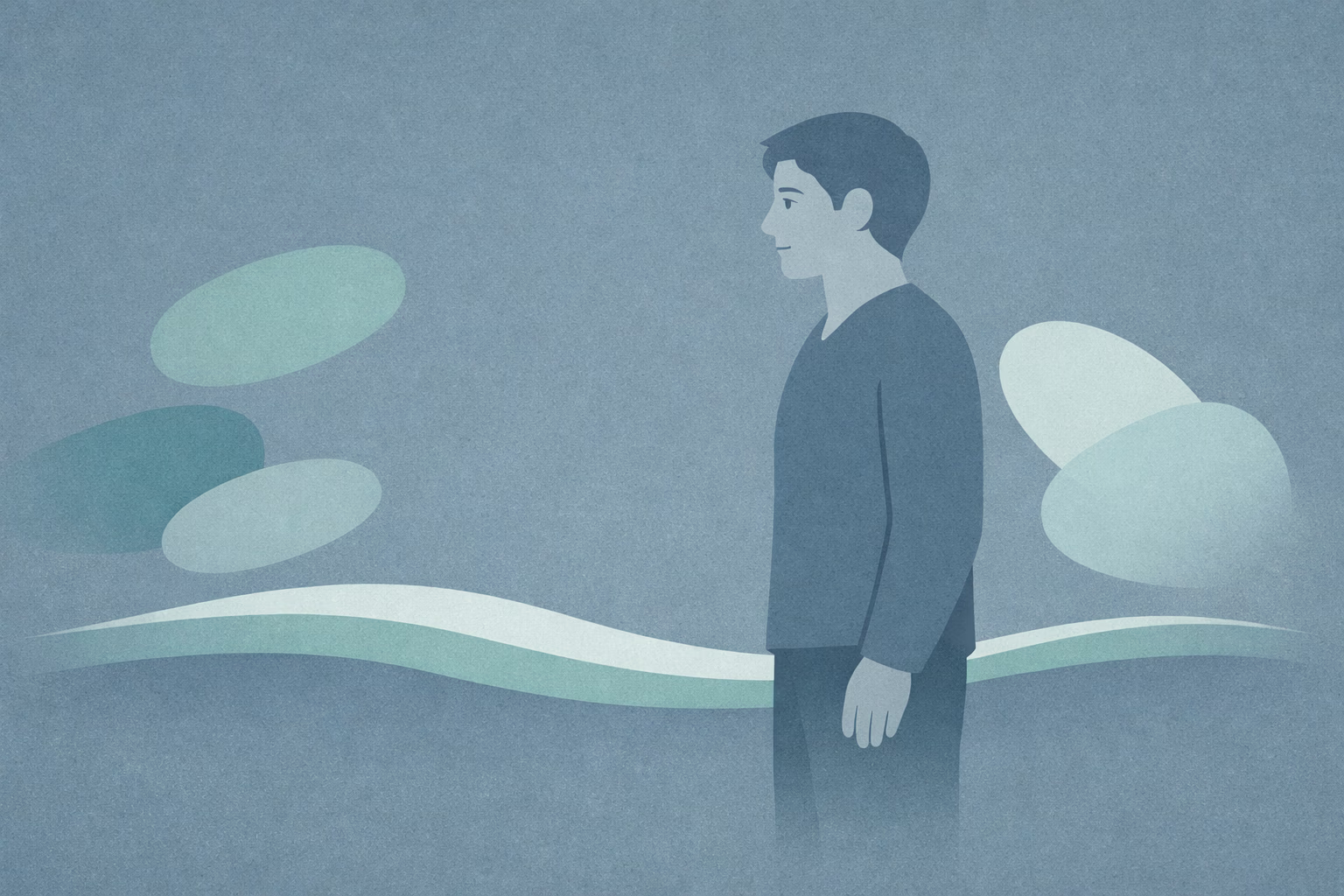
In nervous-system terms, this is what happens when emotional load rises faster than your system can process it. The “window” where you can stay present and flexible narrows, and you get pulled toward high activation (urgency, reactivity) or low activation (numbing, disconnection). [Ref-1]
Many people interpret this as personal failure. But the more accurate read is often structural: too much intensity without enough recovery and completion.
Emotional capacity is not a moral achievement. It’s a physiological tolerance that changes over time as your system learns, again and again, that intensity can rise and then resolve.
What expands tolerance isn’t simply “understanding your feelings.” It’s repeated experiences where activation increases, stays within workable bounds, and then returns toward baseline—so the body learns the arc has an ending. This is one reason clinicians talk about staying within a “window of tolerance,” where experience is strong enough to register but not so strong it overwhelms processing. [Ref-2]
When those arcs complete, the system gets a “done” signal. Over time, that completion is what makes future intensity less destabilizing.
Capacity is not infinite because biology is not infinite. Sleep, nutrition, illness, chronic stress, and ongoing demands all affect how much bandwidth your nervous system has available on any given day.
When resources are low, the same conversation that felt manageable last month can feel unbearable now—not because you regressed, but because your system is operating with fewer reserves. The “window” shifts with context: workload, conflict exposure, sensory overload, and how much time your body has had to settle. [Ref-3]
This view replaces self-blame with orientation. It becomes possible to say: “Something is loading me past capacity,” rather than “Something is wrong with me.”
Expanding emotional capacity doesn’t mean you stop having strong reactions. It means strong reactions have somewhere to go. You can track what’s happening without losing the ability to think, relate, or choose your next move.
In practical terms, increased capacity looks like a wider zone where you can stay connected to yourself and the moment—without flipping into panic-speed or shutdown-silence. Many descriptions of the window of tolerance emphasize this middle band of workable activation, where you can stay engaged with reality. [Ref-4]
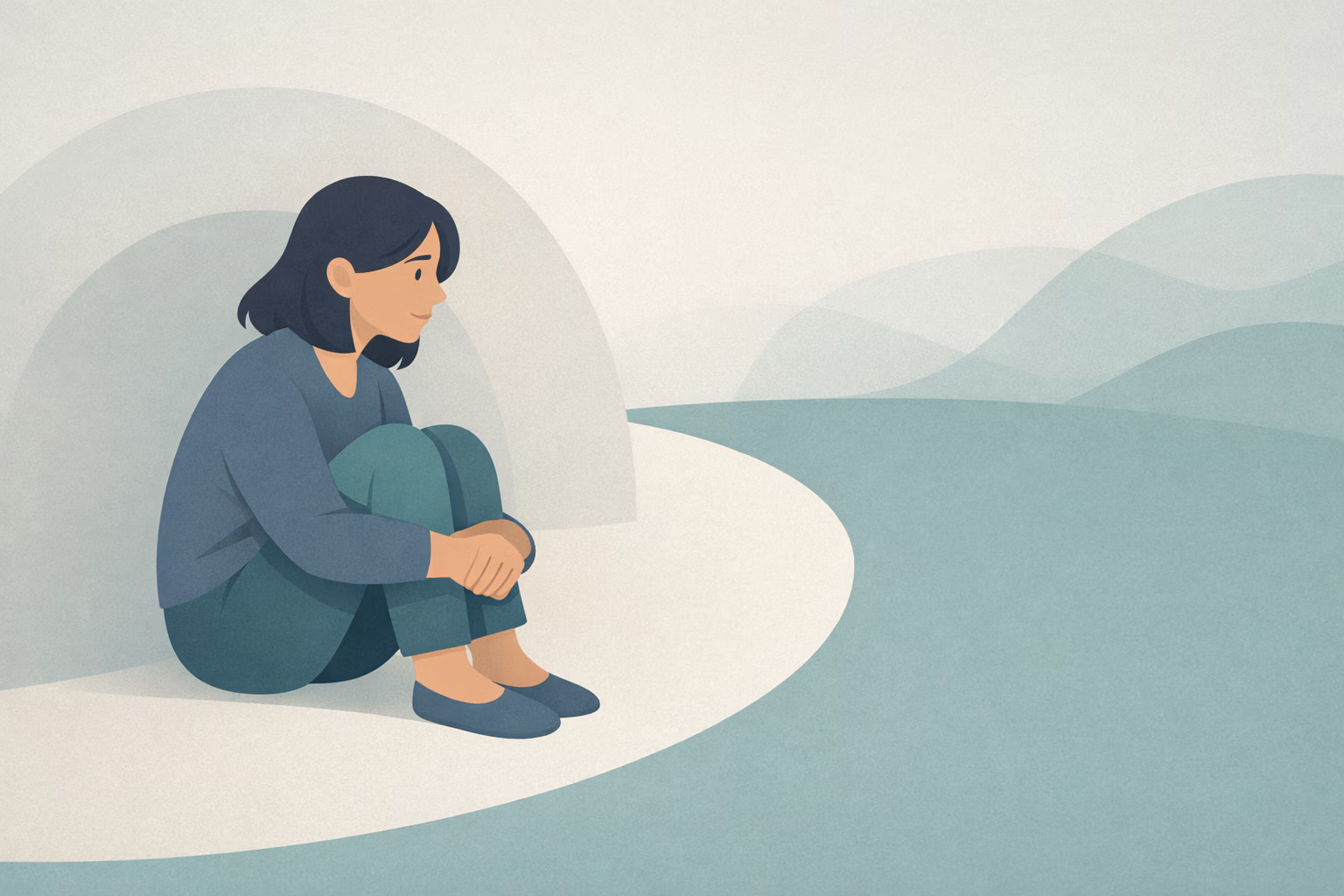
Steadiness isn’t the absence of waves. It’s the ability to return to shore.
A common cultural story says: “Either you can handle it or you can’t.” Another says: “Just push through and you’ll grow.” Both miss something important.
Capacity is adaptable, but adaptation follows safety and pacing, not pressure. When the nervous system is repeatedly pushed past its limit, it doesn’t “toughen up” in a clean way; it often becomes more reactive, more guarded, or more prone to shutting down.
Many clinicians frame this as a widenable window rather than a permanent trait—something that can increase as the body learns stability under manageable intensity. [Ref-5]
When capacity is narrow, life naturally gets smaller. Not as a preference, but as a regulatory response: the system reduces exposure to intensity because intensity has stopped resolving.
This is where meaning can start to thin. Fewer conversations feel possible. Fewer risks feel survivable. Fewer parts of you feel “welcome” in the room. Avoidance here isn’t best explained as fear or suppression—it’s a structural narrowing meant to prevent overload.
The “window of tolerance” model is often used to describe how high stress can shrink the range of experience we can handle, and how this narrowing can shape daily choices. [Ref-6]
Narrow capacity doesn’t always announce itself as obvious distress. Sometimes it looks like simplification: fewer options, fewer feelings, fewer conversations, fewer needs.
Common patterns include:
These are not identities. They’re short-term stabilizers when the system can’t complete what it’s carrying. [Ref-7]
Many meaningful parts of adulthood require sustained contact with complexity: commitment, repair, grief, creativity, parenting, leadership, community. These aren’t just “tasks”—they’re ongoing emotional loads.
When capacity is restricted, even good things can feel threatening because they come with intensity: responsibility, visibility, dependence, hope. People may withdraw not because they don’t care, but because their system can’t metabolize the added activation.
Window-of-tolerance framing is often used to explain why, under high stress, engagement can become harder and reactions can become more extreme—because the nervous system has less room to process experience in real time. [Ref-8]
Capacity expands when the nervous system learns: “This rises, and then it resolves.” But if intensity is repeatedly cut off—by distraction, numbing, rushing, or collapsing the situation—the body doesn’t get the completion signal it needs.
So the system stays sensitized. It’s not that avoidance is “wrong.” It’s that avoidance often prevents the very adaptation that would make future moments less costly. Over time, the threshold for overwhelm can get lower because the brain and body are shaped by repeated patterns of activation without resolution. [Ref-9]
Not processing isn’t a moral failure. It’s unfinished physiology.
There’s a difference between being stimulated and being restored. Stimulation changes state quickly; restoration reduces load enough for the system to complete cycles and return toward baseline.
When people talk about somatic awareness, pacing, and recovery, the deeper point is often this: the body needs manageable arcs of activation paired with genuine downshifts. That’s how allostatic load—the cumulative cost of chronic demand—stops stacking and starts unwinding. [Ref-10]
In a meaning sense, this is also where life begins to feel “liveable” again. Not because everything is understood, but because experiences start to land, settle, and become part of a coherent story rather than an ever-growing pile of unfinished intensity.
Humans are built to regulate in connection. Another steady nervous system nearby—through tone, pacing, attention, and non-escalation—can act as an external stability cue that your body can borrow.
This is not about being rescued. It’s about shared processing: intensity can be held without escalating when it’s met with containment and time. Over repeated experiences, the nervous system updates what “safe enough” feels like in relational space.
Research on emotion regulation and brain networks often points to the distributed nature of regulation—how internal control, attention, and social context interact rather than functioning as a single willpower module. [Ref-11]
As capacity grows, people often notice less dramatic swings after stress. Not because stress disappears, but because the rebound becomes more reliable. There’s more “return” after difficult meetings, hard news, conflict, or fatigue.
Resilience here is not a personality trait; it’s the system’s ability to absorb impact without staying stuck in high-cost states. When recovery improves, the cumulative burden of stress can lessen, and the body carries fewer lingering “unpaid bills” of activation. [Ref-12]
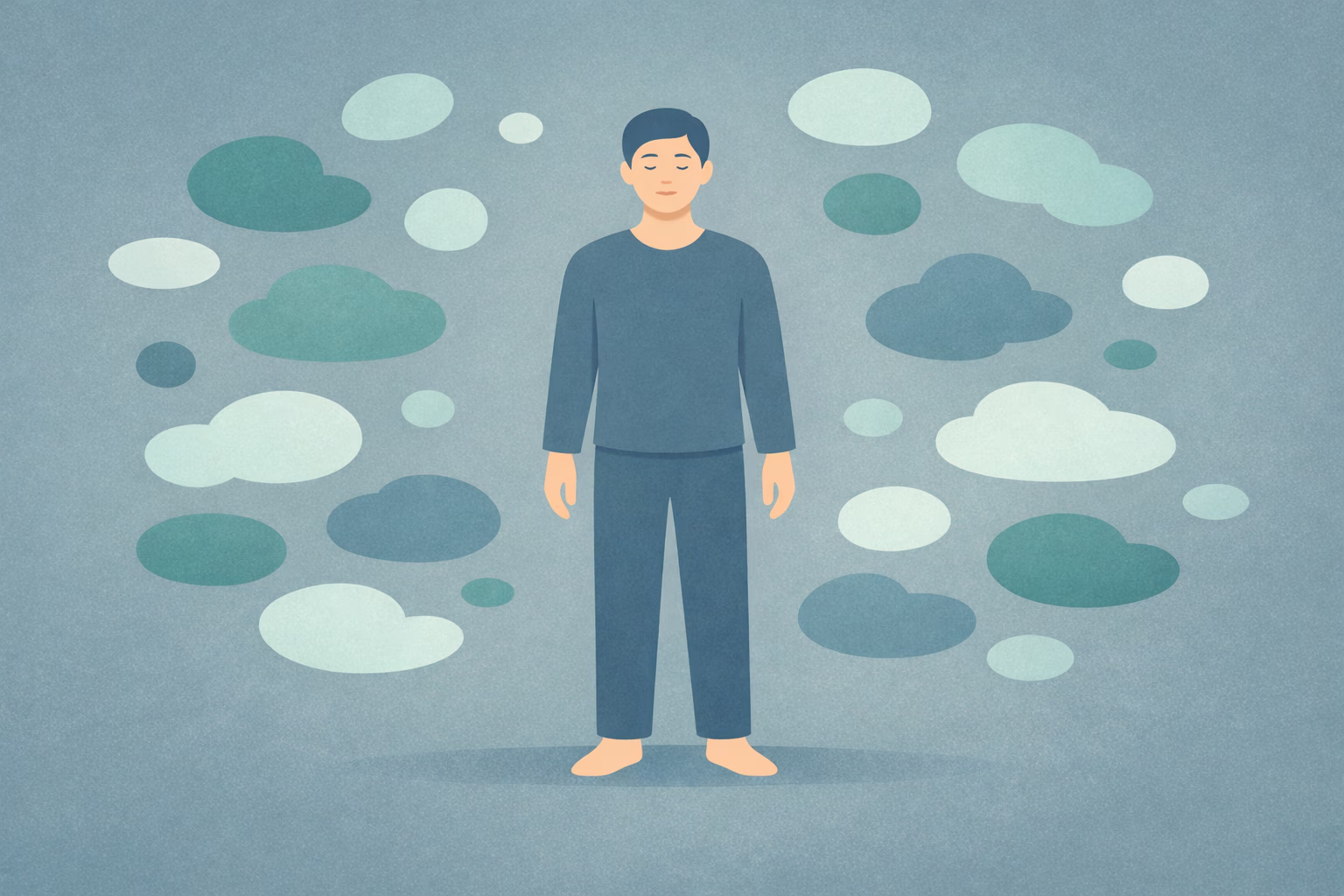
Many describe this as emotional spaciousness: the ability to hold mixed truths at once—care and limits, grief and gratitude, uncertainty and direction—without needing to collapse the complexity into something smaller.
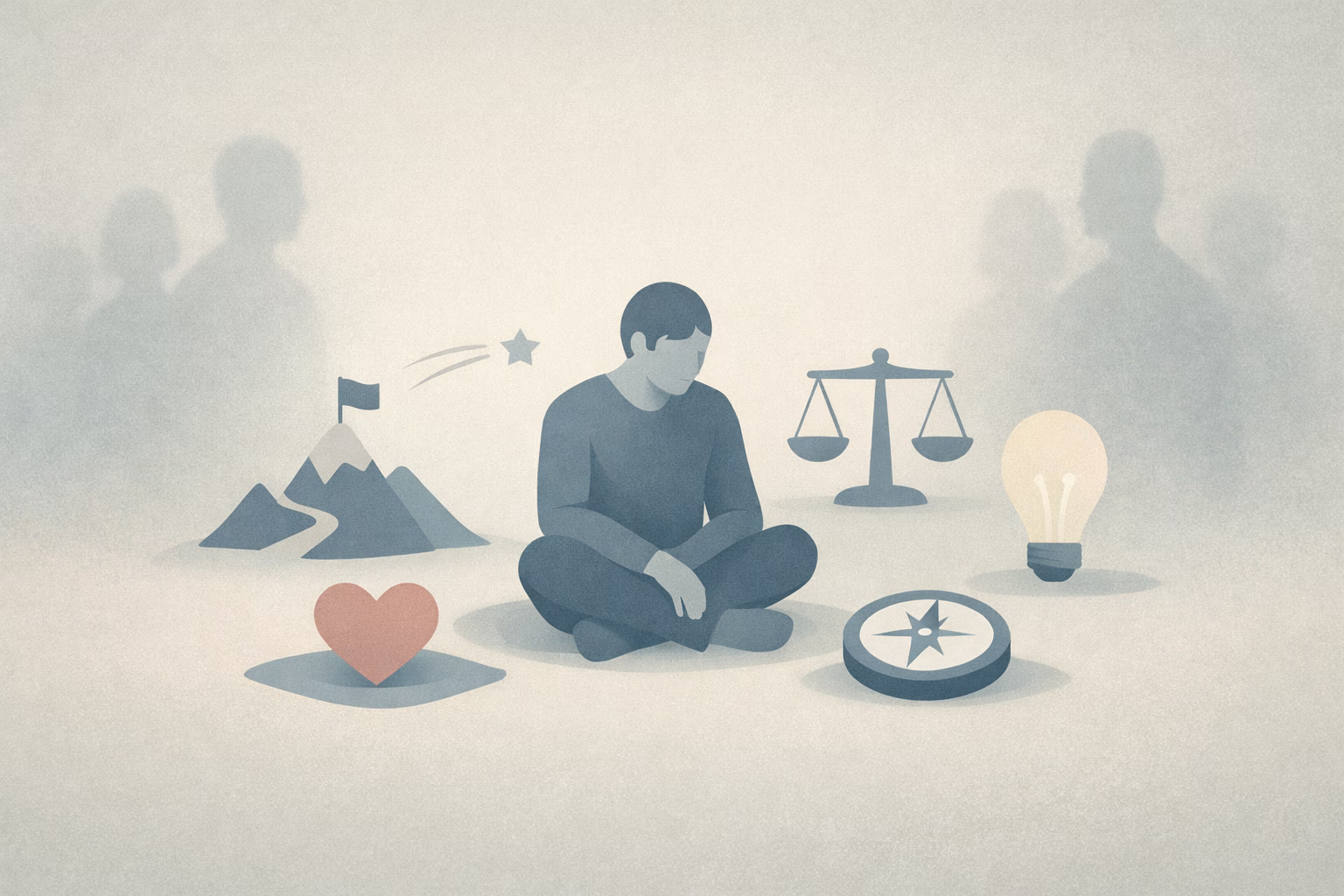
Meaning rarely arrives as a perfect insight. It arrives when your life can hold the weight of what matters: the courage of choosing, the vulnerability of closeness, the discomfort of growth, the grief of change.
With wider capacity, you can stay in contact with emotionally loaded experiences long enough for them to complete their arc—so they integrate into identity rather than remaining an open loop. This is part of why exposure-based models emphasize not just contact with intensity, but the kind of processing that predicts real change over time. [Ref-13]
When capacity is present, complex directions—purpose, repair, commitment, creativity—stop feeling like threats and start feeling like routes your system can actually travel.
When emotional capacity is low, “avoidance” can look like preference. But often it’s simply the nervous system keeping you within survivable bounds. As capacity expands, life doesn’t become permanently easy—it becomes more negotiable.
In that way, capacity is the ground beneath meaning. It’s what allows you to remain present long enough for experiences to reach closure, for values to translate into lived choices, and for identity to feel coherent instead of scattered.
Many frameworks describing exposure and emotional processing point to this same arc: tolerance increases when contact is paced and experiences are allowed to complete rather than being continually interrupted. [Ref-14]
If you’ve been telling yourself that you “should be able to handle more,” it may help to replace that pressure with a different question: what has your system been carrying without enough completion?
Emotional capacity expands when load is met with conditions that allow settling—when difficult states can move through to resolution, and the body learns that intensity is survivable and finite. Over time, this supports the kind of integration that makes stability feel real, not performed.
And from there, a fuller life becomes possible—not because you force yourself into it, but because you can finally hold it. [Ref-15]
From theory to practice — meaning forms when insight meets action.
It's how much intensity, uncertainty, and complexity your system can carry without tipping into overwhelm or shutting down. Not fragility versus strength — load and recovery. When emotional load rises faster than your system can process it, your window of tolerance narrows, and you get pulled toward high activation (urgency, reactivity) or low activation (numbing, disconnection). 'I can't handle this' usually isn't a verdict on you; it's a structural signal that something is loading you past available bandwidth. The accurate read is rarely personal failure — it's too much intensity without enough recovery and completion.
Because adaptation follows safety and pacing, not pressure. When the nervous system is repeatedly pushed past its limit, it doesn't toughen up cleanly — it becomes more reactive, more guarded, or more prone to shutting down. Capacity expands when activation rises, stays within workable bounds, and then resolves, so the body learns the arc has an ending. That's the Done Signal it needs. If intensity is repeatedly cut off by distraction, numbing, rushing, or collapsing, the system stays sensitized and the threshold for overwhelm drops. Not processing isn't a moral failure — it's unfinished physiology.
It often looks like simplification rather than obvious distress. Quick escalation, urgency, irritability, or 'everything is too much' states. Going blank, feeling unreal, suddenly needing to sleep or scroll. Difficulty holding mixed feelings or nuance. Reliance on rigid rules and black-and-white decisions. Withdrawing from meaningful challenges — commitment, repair, grief, creativity — because they come with intensity the system can't metabolize. These aren't identities; they're short-term stabilizers when the system can't complete what it's carrying. Even good things start feeling threatening because they bring activation the window of tolerance can't accommodate.
Through manageable arcs of activation paired with genuine downshifts. The body needs to learn 'this rises, and then it resolves' over and over until the lesson sticks. Co-regulation accelerates the work — another steady nervous system nearby, through tone, pacing, and non-escalation, becomes an external stability cue your body can borrow. As capacity grows, you don't stop having strong reactions; the rebound becomes more reliable. Emotional spaciousness returns: care and limits, grief and gratitude, uncertainty and direction can coexist without needing to collapse the complexity. A fuller life becomes possible — not because you force it, but because you can finally hold it.
From Science to Art.
Understanding explains what is happening. Art allows you to feel it—without fixing, judging, or naming. Pause here. Let the images work quietly. Sometimes meaning settles before words do.
One Quiet Window, one insight, one reflection — every Sunday