Instant Gratification and Reward Traps
Learn why instant gratification feels good but sabotages long-term growth.
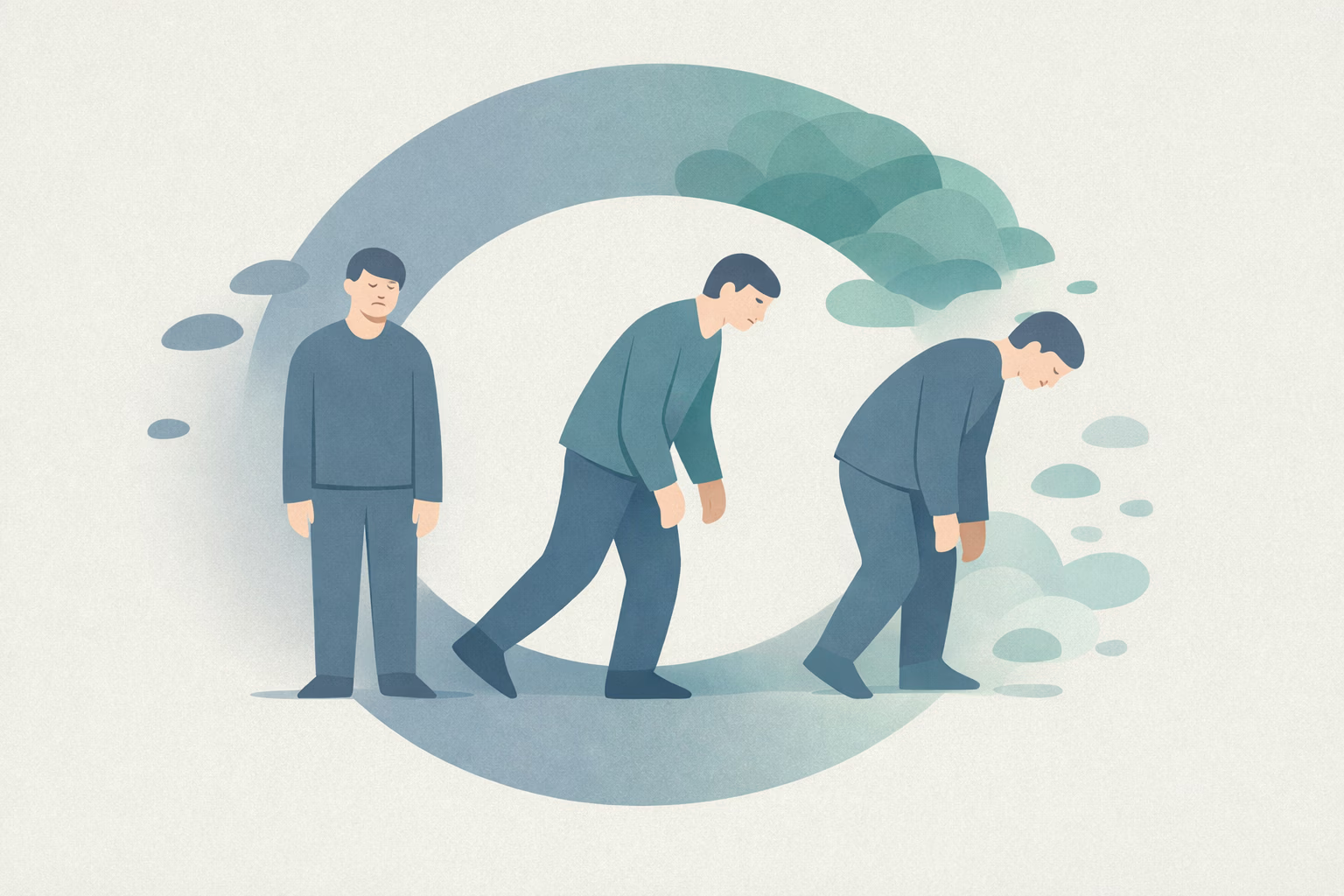
In context: This is “escalation,“ a result of the Reward system becoming less sensitive to a repeated stimulus. To get the same “hit,“ the system demands more volume, more speed, or more intensity. In the Meaning Density Model™, this is a “low-density trap.

More feels necessary again.
The stack grows without satisfaction deepening.
This is escalation, not appetite.
Seeing it clearly creates space.
Recognize escalation with DojoWell.
Explore DojowellArticles exploring the psychology behind these patterns.
This is "escalation," a result of the Reward system becoming less sensitive to a repeated stimulus. To get the same "hit," the system demands more volume, more speed, or more intensity. In the Meaning Density Model™, this is a "low-density trap." You are trying to solve a meaning crisis with more stimulation, which only further desensitizes your receptors. Escalation arises when your "pursuit" is disconnected from any meaningful "integration."
The solution to escalation is not more, but less velocity. You must intentionally lower the intensity of your triggers to allow your Reward system to recalibrate and regain its sensitivity. This is often called a "dopamine fast" or a "stimulus reset." By moving toward "high-density" activities that require patience and presence, you teach your brain to find satisfaction in the "landing" rather than just the "launch." This restores balance and prevents the cycle of endless escalation.
One Quiet Window, one insight, one reflection — every Sunday