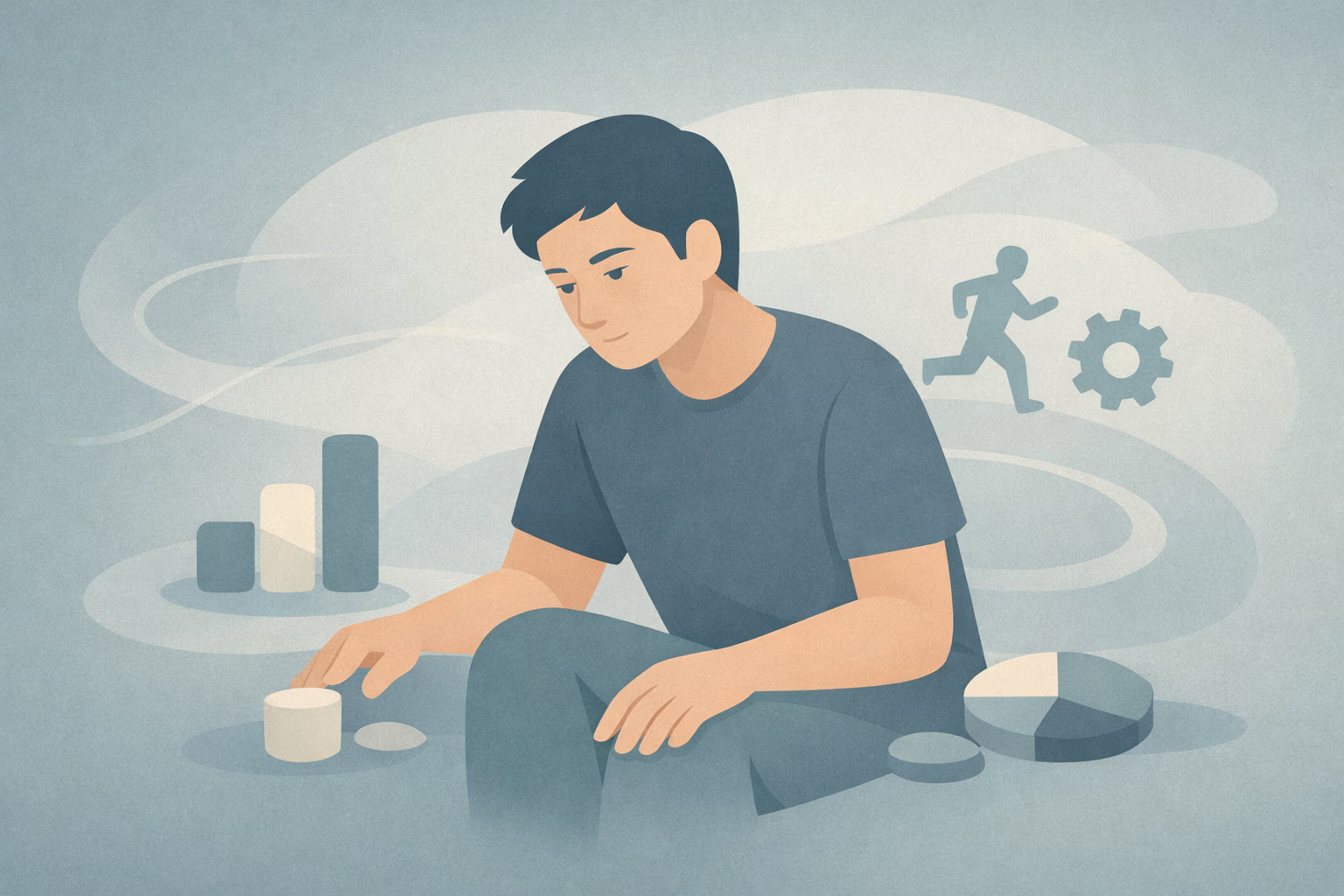
Self-Optimization as Existential Avoidance

In short: Track your sleep, refine your habits, measure your focus, raise your “score.” And sometimes they genuinely support you. But for many people, the experience quietly changes shape—growth starts to feel like an ongoing performance review.
Self-improvement apps can look like care: track your sleep, refine your habits, measure your focus, raise your “score.” And sometimes they genuinely support you. But for many people, the experience quietly changes shape—growth starts to feel like an ongoing performance review.
What if the exhaustion isn’t a lack of discipline, but a nervous system that never gets a “stand down” signal?
Optimization fatigue is often what happens when your day is filled with cues that you could be better, faster, healthier, calmer, more consistent—without any real moment where improvement resolves into relief. The issue isn’t that you’re “too sensitive” or “not motivated.” It’s that constant measurement can keep the system oriented around threat, control, and incompletion.
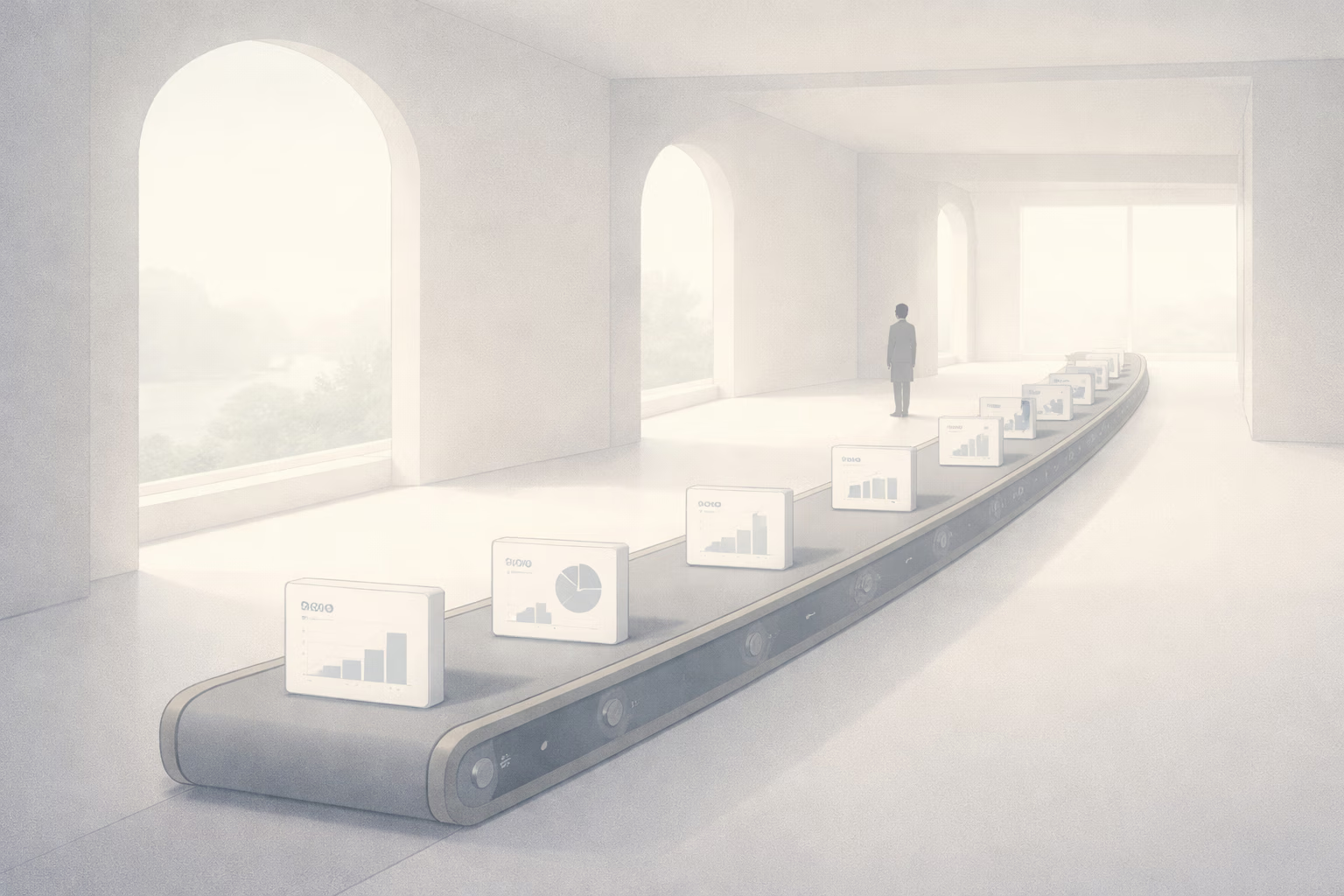
There’s a particular kind of tired that doesn’t come from effort alone—it comes from effort that doesn’t land. You log the habit, close the ring, keep the streak… and yet nothing settles. The finish line keeps moving.
In that state, “progress” becomes information without closure: another data point, another benchmark, another prompt to adjust. Even good numbers can feel oddly unsatisfying, because the underlying question never resolves: Am I finally okay? This is the weariness of always tracking, upgrading, fixing—where improvement doesn’t convert into safety. [Ref-1]
Human nervous systems are built to notice gaps: unmet needs, unresolved tasks, uncertain outcomes. In moderation, that’s useful—it helps us learn, adapt, and coordinate with others. But when improvement cues are continuous, the body can interpret “not yet” as a form of ongoing risk.
Notifications, reminders, streak warnings, and daily scores act like repeated signals of incompletion. Over time, this can keep stress physiology on a low boil—more scanning, more self-monitoring, less recovery. It’s not that you’re choosing to be tense; it’s that the environment keeps re-opening the loop. Cultural pressure around “toxic productivity” can amplify this, especially when worth feels tied to constant upgrading. [Ref-2]
The urge to improve isn’t a character flaw. Historically, being more capable, more reliable, more skilled, or more socially attuned could genuinely increase protection and belonging. In many contexts, “better” meant safer—more likely to be kept in the group, more likely to access resources, more likely to avoid conflict.
So when modern life feels uncertain, the improvement instinct can surge. Not because you’re vain or shallow, but because your system is attempting to re-establish stability through competence and readiness. That survival logic still lives in us, even when the “tribe” is now a feed, a workplace dashboard, or an app’s weekly report. [Ref-3]
Optimization offers something deeply soothing in the short term: a sense of control. If life feels unpredictable, metrics can create a temporary structure—numbers that look clear when everything else is messy.
That’s why downloading another app, adding another tracker, or refining another routine can produce a burst of relief. It’s not irrational. It’s the nervous system reaching for a controllable surface when the larger world feels unstable.
But when control becomes the main route to safety, the mind starts to treat rest as risk and “enough” as suspicious. The person isn’t broken; the system is stuck in a loop where doing more briefly reduces uncertainty, then quickly re-activates the need to do more. [Ref-4]
Self-improvement culture often sells a simple story: more tools equals more progress. But the body doesn’t interpret “more” as “better.” It interprets relentless change as ongoing demand.
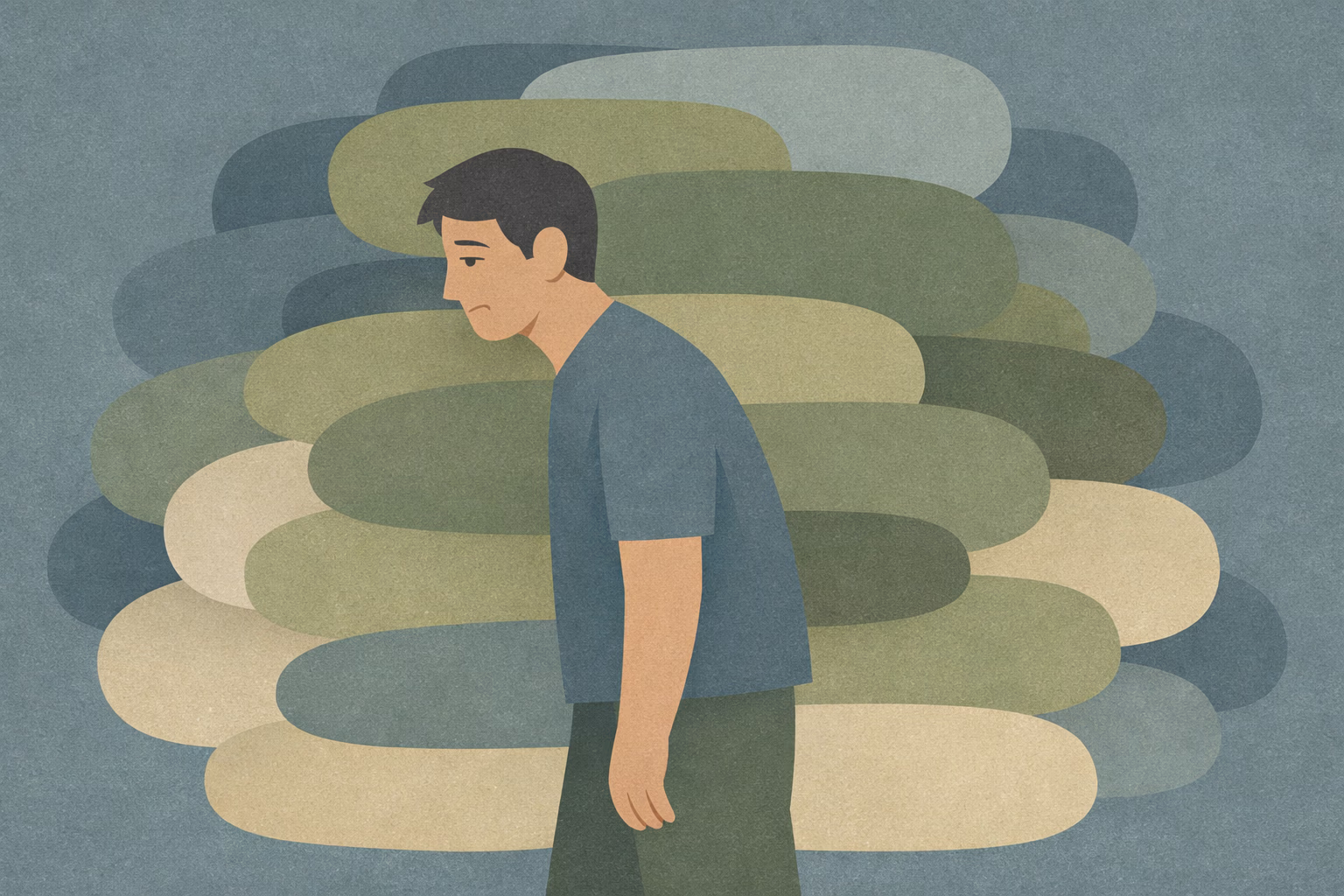
Burnout doesn’t only come from workload. It also comes from not being allowed to complete. When every domain becomes a project—sleep, meals, relationships, mood, mindset—the self can start to feel like an endless renovation site. That can erode something subtle but vital: the feeling that you already are a person, not a perpetual draft. [Ref-5]
You can be doing everything “right” and still feel like you’re falling behind, because the system never marks anything as finished.
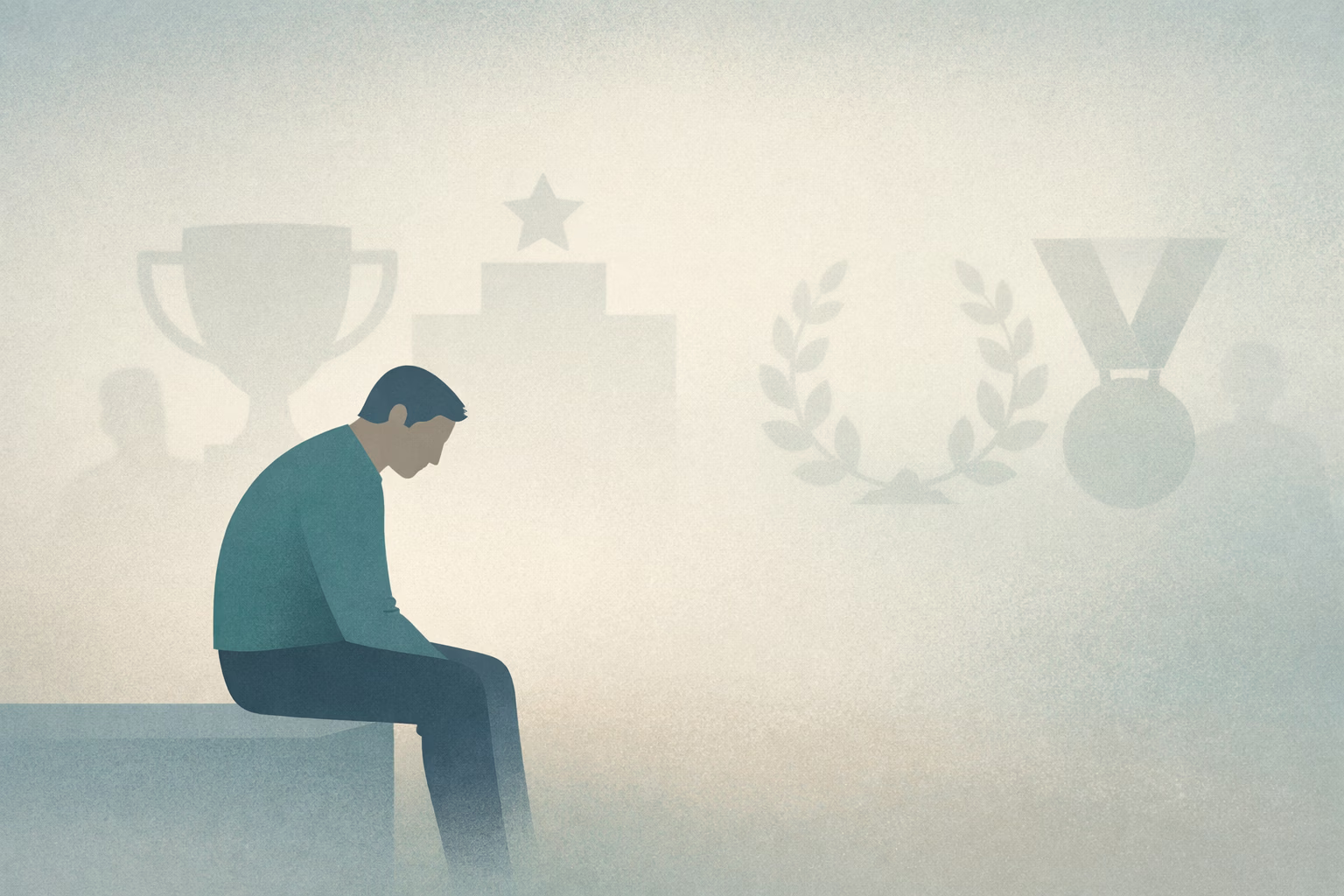
In a Power Loop, improvement isn’t just a preference—it becomes a condition for feeling okay. The standard shifts from “supporting my life” to “proving my value.” And because proof is never final, the loop stays open.
Many apps unintentionally reinforce this by rewarding consistency over completion, and by turning complex human states into scoreboards. The result can resemble perfectionistic striving: constant evaluation, constant tightening, constant self-correction. Over time, that style of striving is associated with prolonged stress reactivity rather than durable wellbeing. [Ref-6]
When the metric is the judge, when does the nervous system get to rest?
Optimization fatigue often has a recognizable pattern. Not because people are the same, but because the environment trains similar responses when it keeps reopening unfinished loops.
These are regulatory strategies: attempts to reduce uncertainty, regain control, and keep belonging secure. They’re not proof of laziness or vanity. [Ref-7]
A system can only run on urgency for so long. When self-monitoring becomes constant, the body may respond by flattening signals: less pleasure, less appetite for nuance, less ability to feel the natural “done” that used to follow effort.
This can look like numbness or indifference, but structurally it’s often overload management—reduced bandwidth after prolonged demand. And when you’ve been trained to trust the app more than your own internal timing, self-trust can weaken: you may not know whether you’re tired, hungry, satisfied, or complete unless something external confirms it.
Perfectionism and achievement pressure can intensify this trajectory, not because ambition is wrong, but because the nervous system needs completion and recovery to stay flexible. [Ref-8]
Many self-improvement apps are built around retention. That often means designing for continuity: streaks that punish interruption, progress bars that imply you’re behind, leaderboards that turn your life into a quiet competition.
These features work because they latch onto survival-based learning: avoid loss, maintain status, don’t break the chain. Even if no one is watching, the brain can treat the display as social evaluation—an always-on mirror that asks for justification.
In that context, “missing a day” doesn’t just mean missing a behavior. It can register as a threat to identity: I’m not the kind of person who follows through. The pressure is structural, not moral—and it helps explain why people feel anxious and guilty even while “doing well.” [Ref-9]
Sustainable growth tends to have a different quality than optimization. It doesn’t feel like an emergency. It feels like a life that can metabolize experience and then move on.
When safety cues are present—when there’s room for completion, when your worth isn’t being audited—effort becomes less about proving and more about aligning. The nervous system isn’t forced to stay on alert to maintain identity.
This is the quiet bridge from “fixing” to “becoming”: not a new mindset, but a different physiological backdrop where actions can resolve into settled meaning instead of reopening as the next requirement. Some discussions of productivity tools note how external validation, cognitive load, and unfinished-task tension can keep people activated rather than restored. [Ref-10]
People often assume their stress comes from internal weakness. But anxiety around optimization frequently softens in environments that don’t require constant demonstration—spaces where you’re allowed to be a person, not a project.
In “being-valued” contexts, rest isn’t interpreted as a lapse in virtue. Relationships have slack. Tasks can end. Your identity isn’t updated every day based on output. When those conditions exist, the control system can relax because it isn’t needed to defend belonging.
Interestingly, even tool-based supports can be designed to reduce mental fatigue rather than intensify self-surveillance—less scoring, more recovery cues, less performance framing. The difference is not the presence of an app, but the kind of relationship the tool creates with your nervous system. [Ref-11]
When load decreases and experiences are allowed to complete, people often notice a distinct shift. Not dramatic euphoria—more like signal return. The body can register “that was enough” again. Decisions become less brittle. You can engage without immediately turning life into a measurement project.
Curiosity tends to reappear when urgency is not running the show. You may notice interest in learning for its own sake, movement that isn’t punishment, or rest that doesn’t require justification. That’s not a personality change; it’s what nervous systems do when they’re no longer spending all day defending against incompletion.
Some wellness-oriented app roundups highlight features that support pacing and recovery rather than constant output, illustrating that the same technology can either amplify pressure or reduce it depending on design and context. [Ref-12]
Endless optimization narrows identity to a set of deficits: what you haven’t improved yet. Meaningful development widens identity into a lived story: what you’re committing to, what you’re learning, what you’re completing.
In the first mode, you’re perpetually “not there.” In the second, you’re inhabiting your life as it is—still growing, but not under threat. Growth stops being an audition and starts resembling a relationship with time: seasons of effort, seasons of consolidation, seasons where nothing needs upgrading to be real.
Becoming is quieter than optimizing. It leaves room for completion.
Even content that promotes “mindful productivity” often gestures toward this: tools that respect humane pacing and don’t treat constant intensity as the price of worth. [Ref-13]
Optimization fatigue often isn’t about apps themselves. It’s about the story the environment tells: that you must continuously correct yourself to remain acceptable. Under that story, the self never gets to arrive.
Another story is possible: growth as alignment with values, not perpetual self-correction. In that story, tools are optional supports—not authorities. Progress is allowed to resolve into closure. And your identity is not a dashboard; it’s a life that can hold completion.
Many self-care tools are framed as resilience supports for high-load lives, which can be a reminder that the goal is not endless upgrading—it’s steadier capacity and restored coherence. [Ref-14]
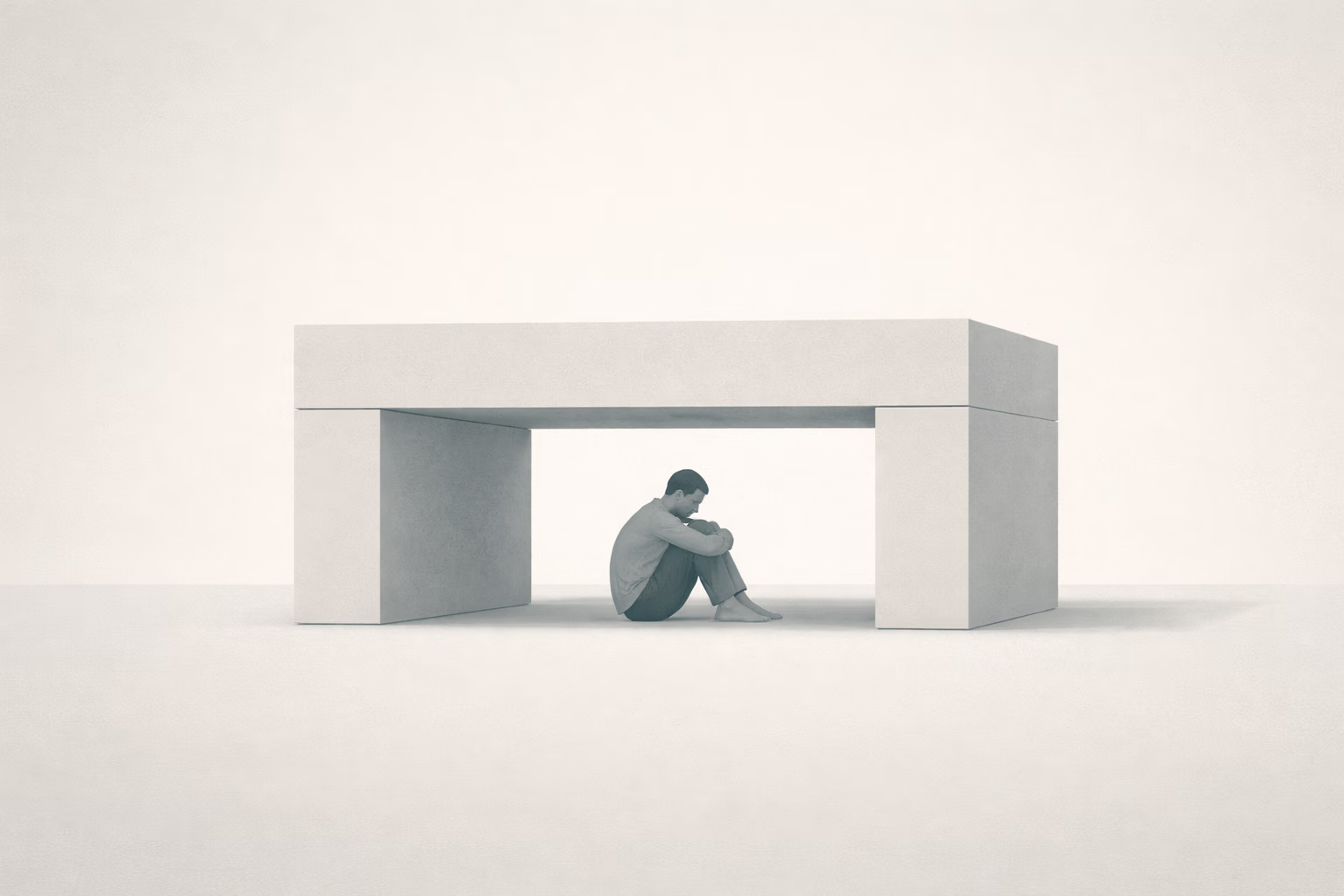
If you’ve felt trapped in self-improvement, it doesn’t mean you lack gratitude or grit. It may mean your nervous system has been asked to live in permanent evaluation, without enough experiences that truly finish.
Growth doesn’t have to mean becoming “better” as a person. It can mean becoming more whole—more able to complete things, more able to rest without threat, more able to trust the quiet sense of enough. Even tool-makers sometimes acknowledge the difference between supportive structure and pressuring surveillance: one helps you live; the other keeps you auditioning. [Ref-15]
From theory to practice — meaning forms when insight meets action.
Because constant improvement cues can keep the nervous system oriented around threat and control. Notifications, reminders, streak warnings, and daily scores act like repeated signals of incompletion. The body interprets 'not yet' as a form of ongoing risk and keeps stress physiology on a low boil — more scanning, more self-monitoring, less recovery. You log the habit, close the ring, keep the streak, and yet nothing settles. Progress becomes information without closure: another data point, another benchmark, another prompt to adjust. Even good numbers feel oddly unsatisfying because the underlying question never resolves: 'Am I finally okay?'
Because optimization offers a temporary sense of control. If life feels unpredictable, metrics create a structure — numbers that look clear when everything else is messy. Downloading another app produces a burst of relief because the nervous system is reaching for a controllable surface when the larger world feels unstable. It's not irrational. But when control becomes the main route to safety, the mind starts to treat rest as risk and 'enough' as suspicious. The Threat & Safety System gets stuck in a loop where doing more briefly reduces uncertainty, then quickly re-activates the need to do more.
Many self-improvement apps are built around retention — designed for continuity through streaks that punish interruption, progress bars implying you're behind, and leaderboards that turn life into quiet competition. These features latch onto survival-based learning: avoid loss, maintain status, don't break the chain. Even with no one watching, the brain treats the display as social evaluation. Missing a day doesn't just mean missing a behavior; it can register as a threat to identity ('I'm not the kind of person who follows through'). That's a Power Loop where worth is audited by metrics. The pressure is structural, not moral.
Optimization narrows identity to a set of deficits — what you haven't improved yet. Meaningful growth widens identity into a lived story — what you're committing to, learning, completing. Sustainable growth doesn't feel like an emergency; it feels like a life that can metabolize experience and then move on. When safety cues are present and worth isn't being audited, effort becomes less about proving and more about aligning. Becoming is quieter than optimizing — it leaves room for completion. Wholeness isn't a metric, and your identity isn't a dashboard. Tools should be optional supports, not authorities deciding whether you're acceptable today.
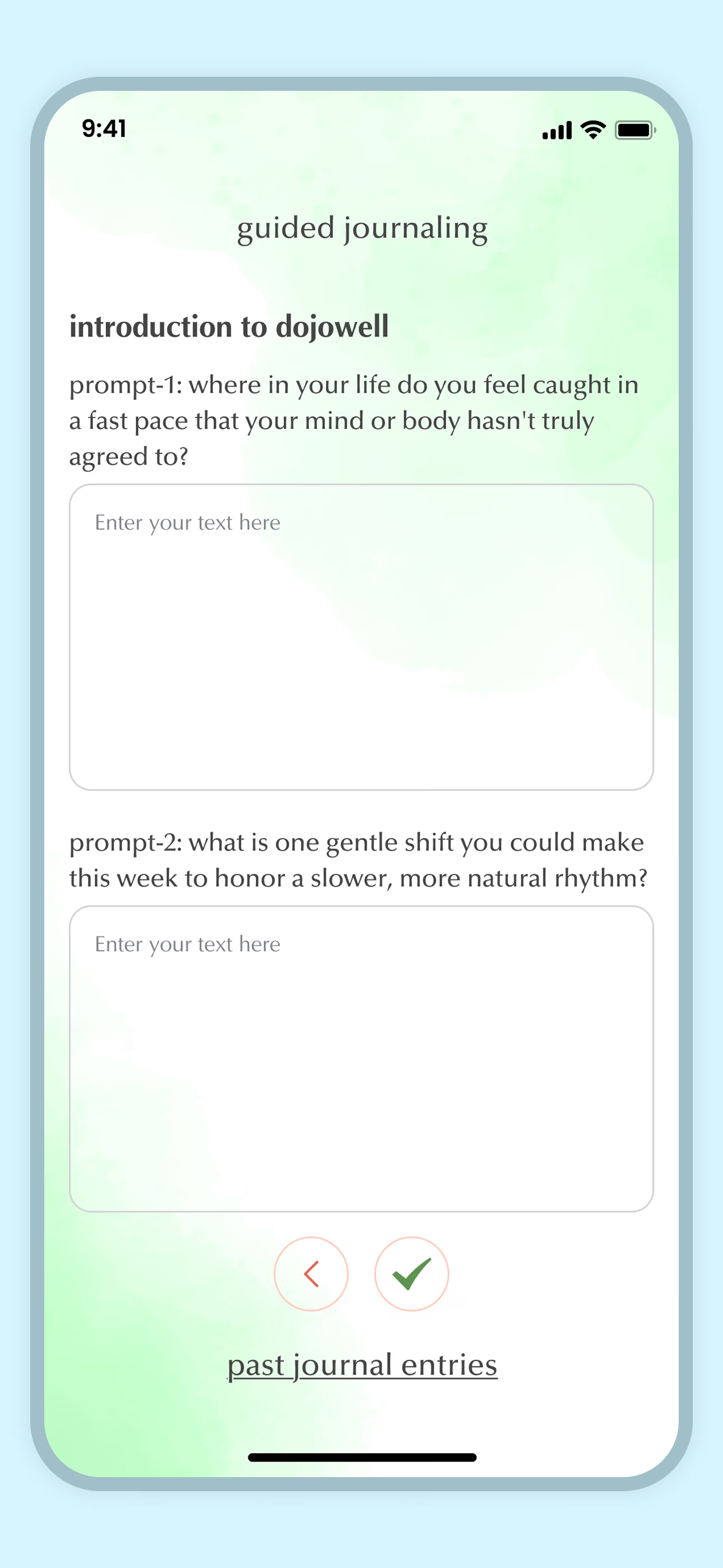
From Science to Art.
Understanding explains what is happening. Art allows you to feel it—without fixing, judging, or naming. Pause here. Let the images work quietly. Sometimes meaning settles before words do.
One Quiet Window, one insight, one reflection — every Sunday