“Learning but Never Applying” Syndrome
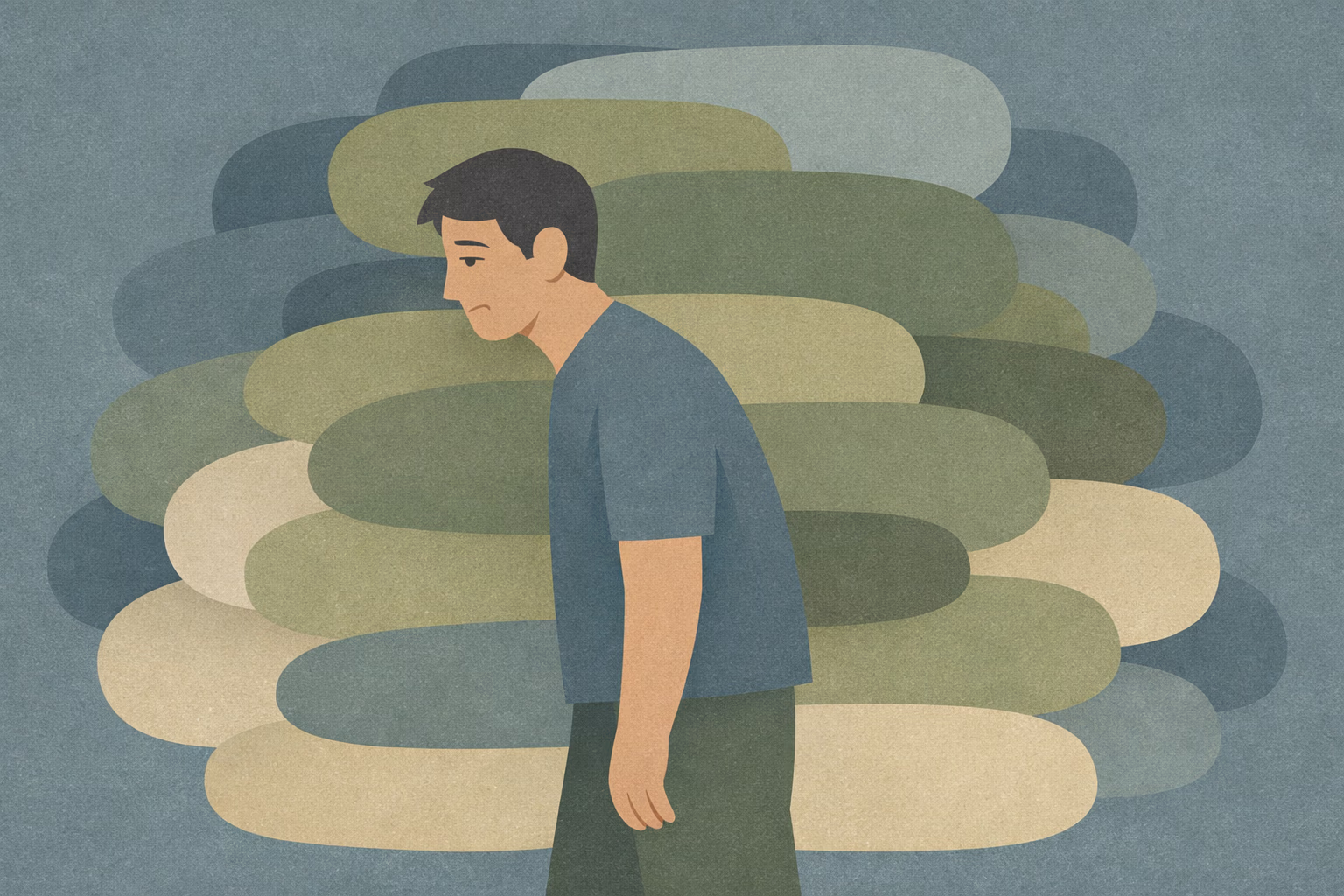
In short: Self-improvement overload isn’t a lack of discipline or gratitude. It’s what can happen when growth becomes a nonstop performance: constant self-monitoring, constant measuring, constant “not yet.” The result is often a body that stays on-duty even while the mind keeps collecting new frameworks, plans, and goals.
Self-improvement overload isn’t a lack of discipline or gratitude. It’s what can happen when growth becomes a nonstop performance: constant self-monitoring, constant measuring, constant “not yet.” The result is often a body that stays on-duty even while the mind keeps collecting new frameworks, plans, and goals.
What if the exhaustion isn’t because you’re doing growth wrong—but because your system is never getting a true “done” signal?
In that state, self-help can quietly shift from meaning-making to threat-management. Not because you’re broken, but because modern life makes completion rare and pressure plentiful—and the nervous system adapts to whatever feels required to stay safe and valued.
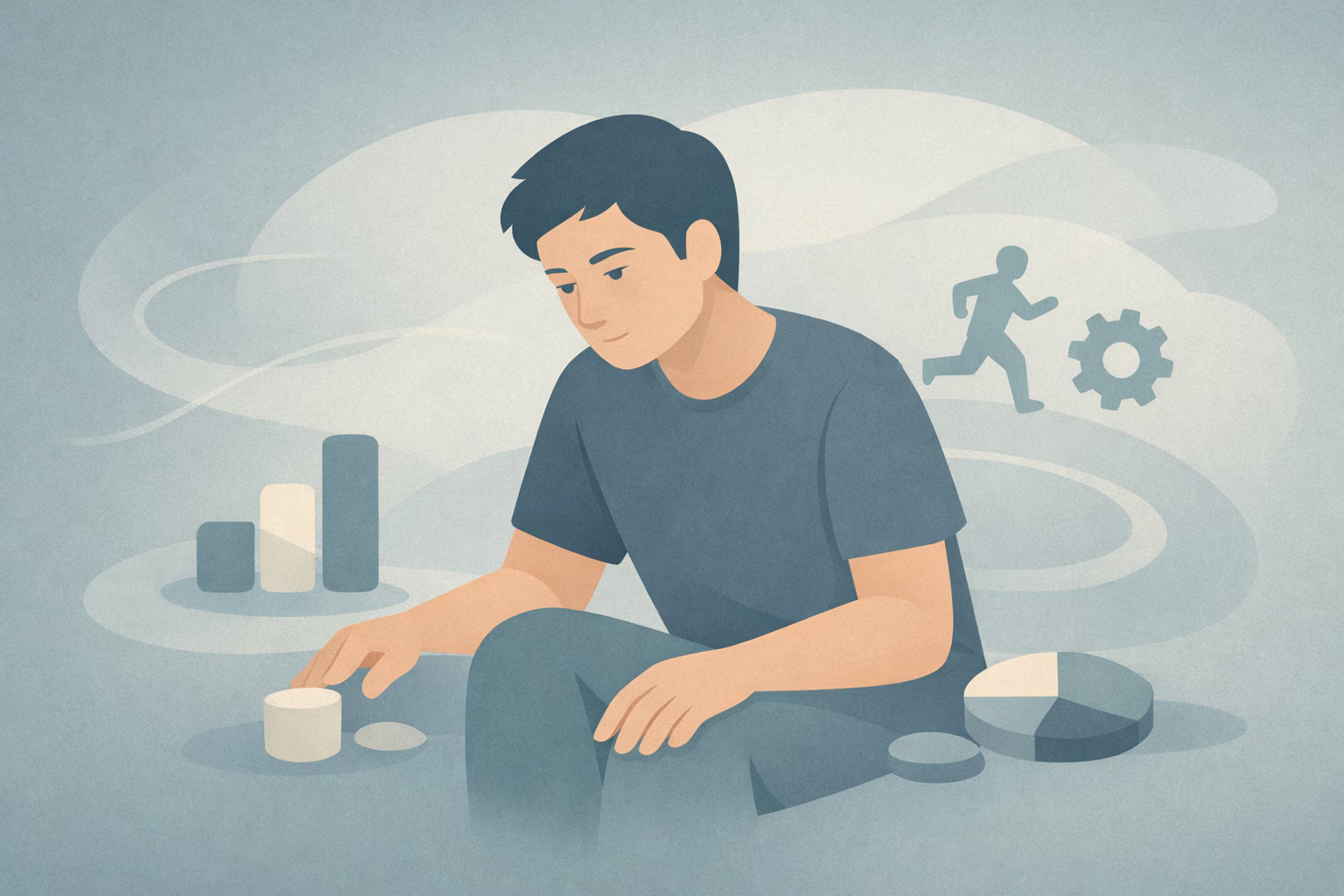
Self-improvement overload often feels like living under a permanent internal review. There’s a sense that you should be tracking, refining, correcting—almost like you’re both the worker and the supervisor, all day long. Over time, even “helpful” practices can start to carry a sharp edge: if you’re not progressing, you’re falling behind. [Ref-1]
This is why growth can start to feel strangely joyless. The system isn’t registering development as nourishment; it’s registering it as surveillance. And surveillance is metabolically expensive—especially when it never ends.
“I can’t enjoy how far I’ve come because the next thing is already waiting.”
Under sustained pressure, the body tends to recruit control: tighter focus, quicker correction, less tolerance for uncertainty. That’s not a personality flaw; it’s a regulation strategy. But when control is the main way you maintain safety, the nervous system stays organized around effort instead of recovery. [Ref-2]
In practical terms, this can look like a life filled with “tools” and “plans” that never settle into completion. The moment something works, it becomes the new baseline—and the system doesn’t get to stand down. Growth becomes a moving target, and your internal resources get spent on maintaining readiness rather than consolidating what you’ve already built.
When everything is a lever to pull, when does your system get to be finished?
Humans evolved in conditions where status, belonging, and contribution affected real safety. Being useful, competent, and respected improved access to protection and resources. In that context, vigilance and self-correction weren’t merely preferences—they were survival-friendly strategies. [Ref-3]
Self-improvement overload often reflects that older logic playing out in modern form. The nervous system can interpret “I must keep getting better” as “I must remain acceptable.” The drive isn’t shallow; it’s protective. The problem is that modern environments can keep that protective drive running without natural endpoints.
Relentless self-improvement can create a powerful sense of direction: there’s always something to work on, and working on it provides immediate structure. In uncertain seasons, that structure can feel stabilizing—like proof that you’re not stuck and not helpless. [Ref-4]
But direction isn’t the same as completion. Direction says, “keep moving.” Completion says, “this part is integrated now.” When life is full of ambiguous expectations and shifting standards, control can feel like the only reliable anchor, even as it quietly becomes the source of exhaustion.
Optimization culture suggests that if you just keep refining yourself, you’ll eventually arrive—calm, confident, satisfied. Yet many people experience the opposite: the more they “work on themselves,” the less settled they feel. The nervous system doesn’t interpret endless correction as progress; it interprets it as ongoing threat. [Ref-5]
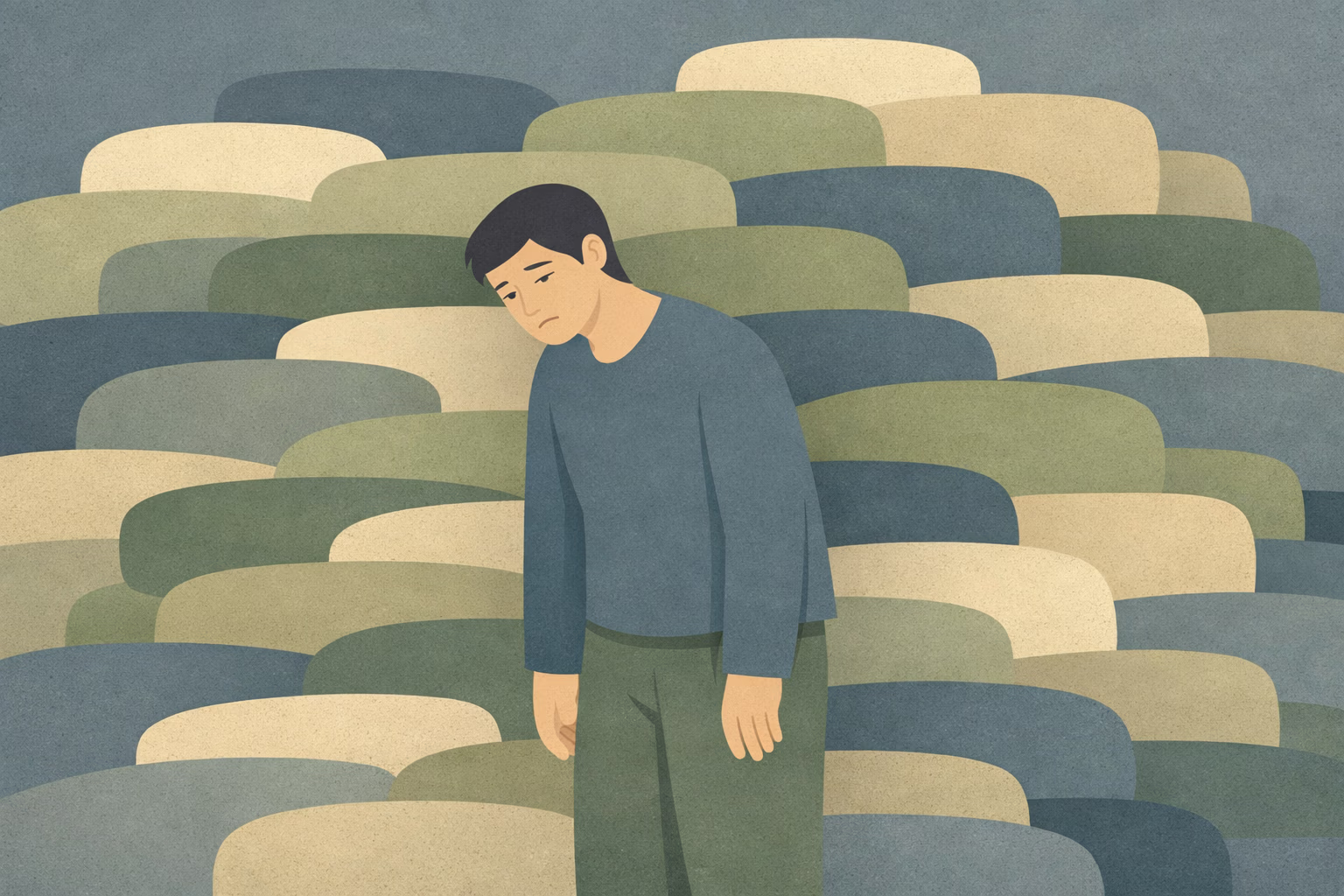
Depletion often shows up as a loss of simple enjoyment. Even wins can feel flat because they don’t complete anything internally—they merely reduce pressure for a moment. When growth becomes a demand, identity can start to feel like a project rather than a home.
In a power loop, the system learns: “Control brings relief.” So it increases control. But increased control also increases monitoring and pressure, which increases load, which makes the system crave more control. That cycle can make rest feel strangely wrong—not because you don’t want rest, but because the body associates stand-down with risk. [Ref-6]
This is one reason self-improvement can become compulsive without looking compulsive. It can be disguised as responsibility, ambition, or “being intentional.” Yet underneath, it’s often a regulation pattern trying to create safety signals in an environment that keeps changing the scoreboard.
If your body equates pausing with losing ground, how could rest feel neutral?
Self-improvement overload doesn’t always look dramatic. It often looks functional—until the strain becomes undeniable. The pattern is less about “wanting too much” and more about not reaching closure, so the system stays activated. [Ref-7]
These aren’t character traits. They’re what effort looks like when the nervous system is trying to prevent threat by staying ahead of it.
When improvement becomes the condition for feeling okay, the body receives a steady message: “As you are is not sufficient.” Over time, that message can erode intrinsic worth—the felt sense that you matter even when you’re not performing. [Ref-8]
Ironically, this can also drain motivation. Not because you become lazy, but because the system gets tired of work that doesn’t resolve anything. If every accomplishment is immediately converted into a new requirement, the nervous system stops associating effort with completion and starts associating effort with endlessness.
“I’m doing everything I’m supposed to do, but I feel less like myself.”
Many people notice a pattern: a burst of progress brings a wave of relief, maybe even pride. Then the relief fades quickly, and pressure returns—sometimes stronger. This isn’t because you’re ungrateful. It’s because reassurance is not the same thing as integration. Reassurance changes state; integration changes baseline.
In self-improvement overload, identity can become dependent on improvement: “I am the one who is always working on myself.” That identity may feel purposeful, but it also makes stillness feel like disappearance. The system keeps reaching for the next milestone to re-create the brief quiet that came from the last one. [Ref-9]
When your sense of self is tied to upgrading, what happens when there’s nothing to upgrade today?
Growth doesn’t have to be fueled by self-criticism to be real. But when the nervous system is running on threat, self-criticism often becomes the steering wheel because it produces movement fast. The cost is that the body stays in a narrow, pressured mode where nothing fully lands. [Ref-10]
When internal safety cues begin to return—when the system can sense “I’m allowed to be here even if I’m unfinished”—growth changes texture. It becomes less like self-correction and more like coherence: actions aligning with values in a way that can actually settle into identity. Not as an idea, but as a felt stand-down that makes space for completion.
“It’s not that I stopped caring. It’s that caring stopped feeling like an emergency.”
Humans calibrate safety through relationship and social context. When you’re valued only for output—or when it feels that way—pressure makes sense as a survival response. When there are reliable signals of acceptance, the system doesn’t have to work as hard to justify existence. Research on perfectionism and mental health consistently highlights how performance-contingent self-worth can intensify distress. [Ref-11]
This isn’t about “thinking positively” or forcing self-acceptance. It’s about what your environment and relationships communicate repeatedly: Are you safe and included when you’re ordinary? When those cues are present, the control system loosens, and the body has a better chance of registering completion instead of scanning for the next correction.
As overload reduces, many people describe a return of capacity: attention becomes less brittle, small tasks take less internal negotiation, and the day contains more moments that feel “enough.” This is not about heightened emotion; it’s about signal return—hunger, tiredness, interest, satisfaction—registering more clearly once the system isn’t spending everything on pressure maintenance. [Ref-12]
Curiosity often reappears here. Not the frantic kind that hunts for the next hack, but a steadier kind that explores because it’s meaningful. In that state, growth is still possible—sometimes more possible—because it’s no longer fighting the body’s need for closure.
Growth becomes less exhausting when it’s oriented around meaning rather than fear. Meaning has a different signature than pressure: it organizes choices, it creates continuity, and it allows milestones to become part of who you are—not just proof that you’re acceptable for another day. [Ref-13]
In that orientation, improvement isn’t a referendum on your worth. It’s an expression of your values. And values tend to create cleaner endpoints: not “more forever,” but “this matters, and this is enough for now.” That “enough for now” is often what gives the nervous system permission to integrate—to let progress become stable rather than immediately convertible into the next demand.
“I’m not trying to become someone else. I’m becoming more aligned with what I already care about.”
Self-improvement overload can be understood as a body doing its best under conditions that rarely allow closure: endless inputs, shifting standards, and constant comparison. Exhaustion here isn’t proof you lack willpower. It can be evidence that growth has been carrying too much of the job of safety and worth. [Ref-14]
When the nervous system has been asked to earn peace through constant upgrading, it makes sense that it would struggle to recognize “enough.” In that light, shame softens: the pattern isn’t who you are; it’s how you’ve been regulating in a world that keeps demanding more coherence than it provides.
Meaning tends to return when life offers clearer completions—moments that can land, register, and become part of you. Not as a concept, but as a quiet internal shift where your system can finally stop bracing.
There is a kind of growth that expands your life, and a kind that shrinks it into constant self-management. If you’ve been living in the second, it doesn’t mean you did something wrong—it means your system has been working overtime to secure safety, control, and belonging. [Ref-15]
Wholeness doesn’t arrive through perpetual self-correction. It arrives when experience can complete, when effort can settle, and when who you are no longer depends on staying in improvement mode.
From theory to practice — meaning forms when insight meets action.
Because growth becomes nonstop performance: constant self-monitoring, constant measuring, constant not yet. Self-improvement overload is what happens when your nervous system never gets a true Done Signal. Even helpful practices start carrying a sharp edge — if you're not progressing, you're falling behind. That makes every helpful tool feel like surveillance, which is metabolically expensive when it never ends. The body isn't registering development as nourishment; it's registering it as evaluation. The exhaustion isn't because you're doing growth wrong. It's because the system is organized around effort instead of recovery, and there's no moment where progress is allowed to actually integrate.
Through a recurring trade-off: control brings relief, so the system increases control. But increased control raises monitoring and pressure, which raises load, which makes the system crave more control. That's the Power Loop in growth form. It can make rest feel strangely wrong — not because you don't want rest, but because the body associates stand-down with risk. The pattern can look like responsibility, ambition, or being intentional, while underneath it's regulation trying to create safety signals in an environment that keeps moving the scoreboard. If your body equates pausing with losing ground, rest can't feel neutral.
Because reassurance isn't the same as integration. Reassurance changes state; integration changes baseline. A burst of progress brings relief and even pride — then it fades quickly, sometimes with stronger pressure underneath. In self-improvement overload, identity becomes dependent on improvement: I am the one who is always working on myself. That makes stillness feel like disappearance, so the system keeps reaching for the next milestone to recreate the brief quiet from the last one. Achievements register as not enough within hours, because every accomplishment immediately gets converted into a new requirement. Effort stops associating with completion and starts associating with endlessness.
Different in texture. When internal safety cues return — when the system can sense I'm allowed to be here even if I'm unfinished — growth becomes less like self-correction and more like coherence: actions aligning with values in a way that can settle into identity. Meaning has a different signature than pressure: it organizes choices, creates continuity, and lets milestones become part of who you are. Improvement stops being a referendum on your worth and becomes an expression of your values. Values create cleaner endpoints — not more forever, but this matters and this is enough for now. That permission is often what lets the nervous system finally integrate progress.
From Science to Art.
Understanding explains what is happening. Art allows you to feel it—without fixing, judging, or naming. Pause here. Let the images work quietly. Sometimes meaning settles before words do.
One Quiet Window, one insight, one reflection — every Sunday