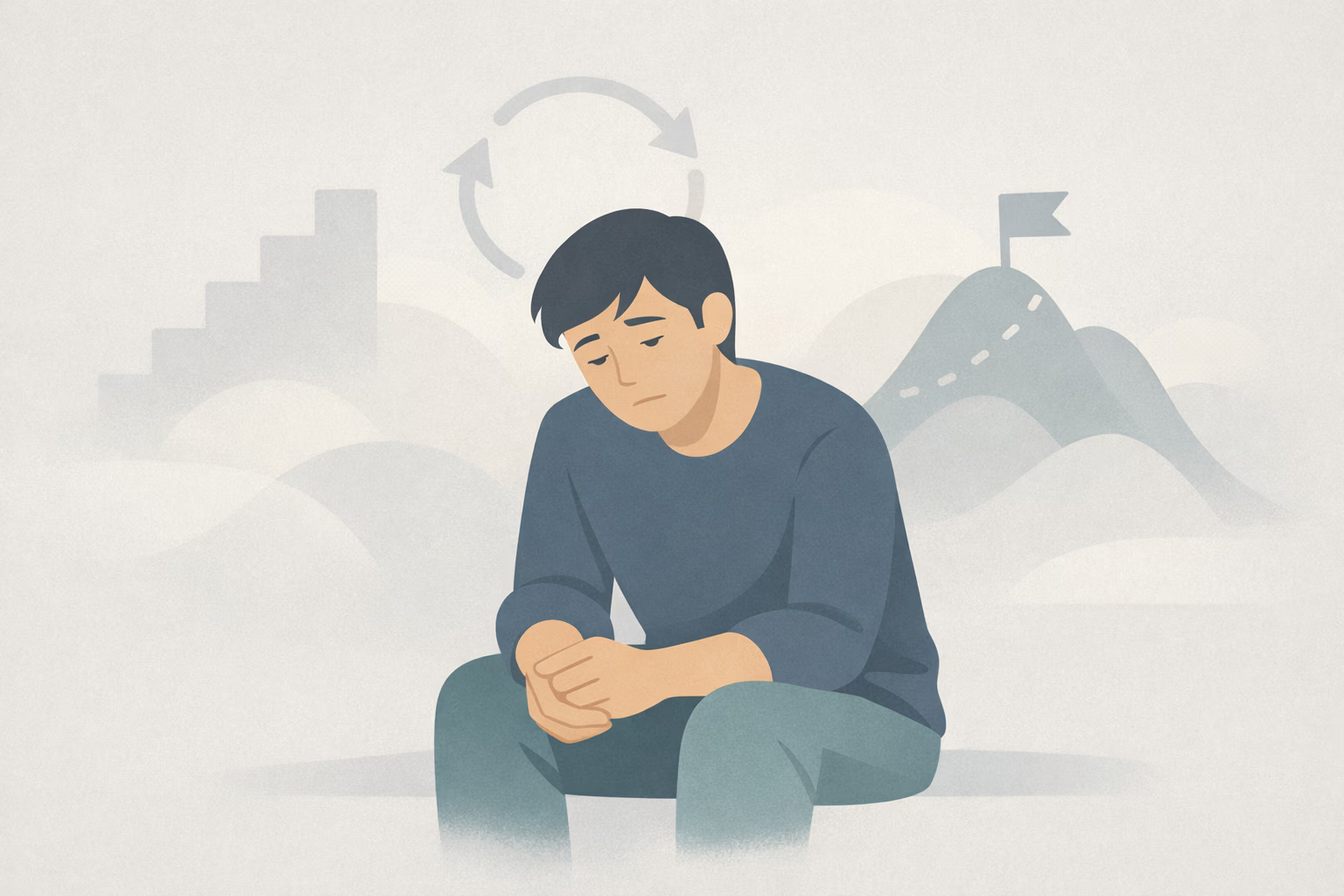


Burnout from Chasing Achievement Highs
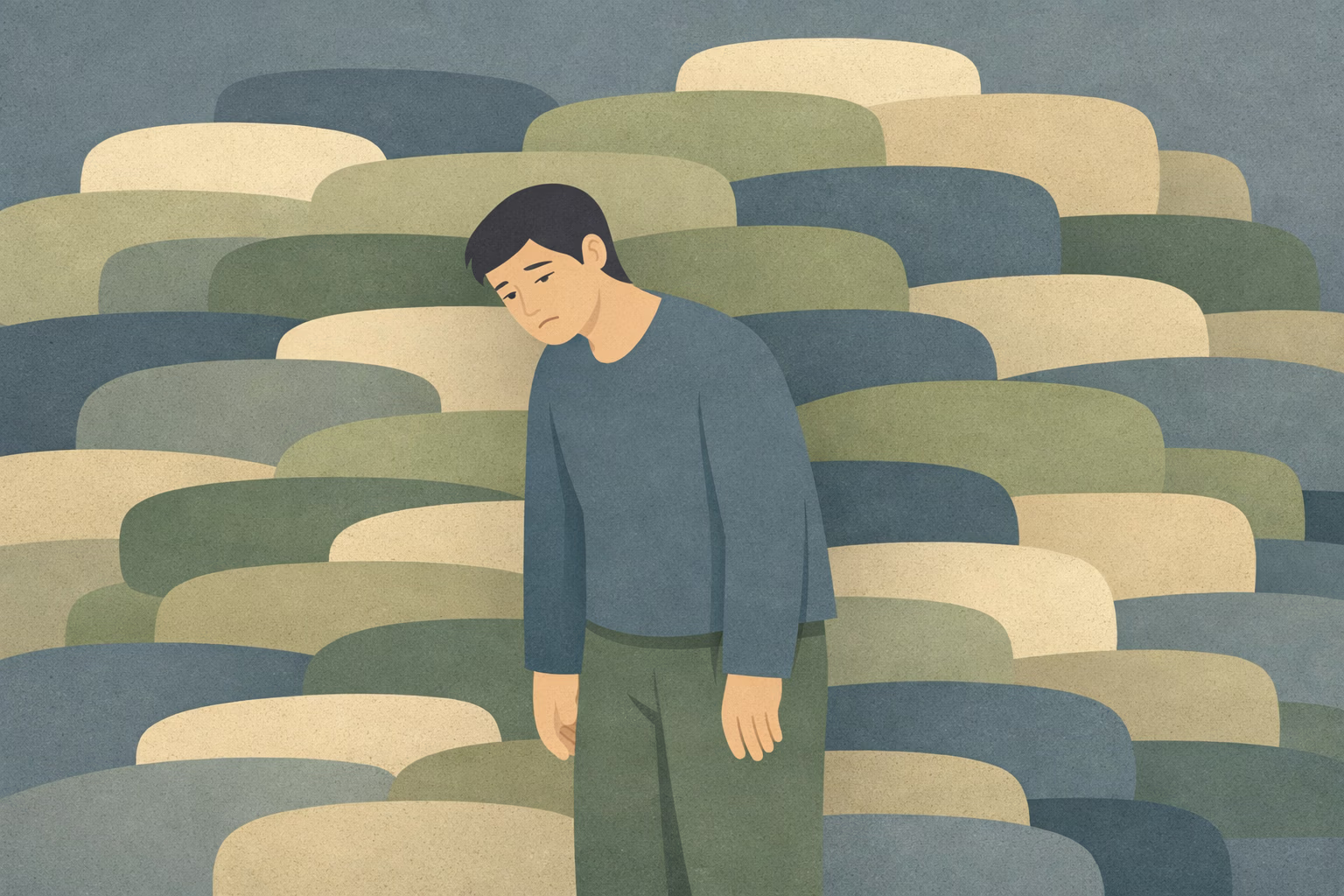
In short: Learn, adjust, upgrade, repeat. But there’s a point where “working on yourself” stops feeling like growth and starts feeling like a standing emergency—an endless sequence of corrections that never quite lands.
Self-improvement is usually framed as a hopeful thing: learn, adjust, upgrade, repeat. But there’s a point where “working on yourself” stops feeling like growth and starts feeling like a standing emergency—an endless sequence of corrections that never quite lands.
What if burnout isn’t proof you’re doing growth wrong—what if it’s proof your system never gets closure?
In a nervous system under load, self-optimization can become a way to hold safety and status in place. Not because you’re broken, but because modern life can keep the “not yet” signal running: not improved enough, not healed enough, not consistent enough. The result isn’t transformation. It’s depletion.
Self-improvement overload often shows up as a strange kind of fatigue: you’re doing “the right things,” consuming useful ideas, tracking progress, refining habits—yet motivation thins out anyway. Growth begins to feel heavy, moralized, and strangely urgent. [Ref-1]
It can also feel confusing because the effort is real. You might be more informed than ever, more skilled at noticing patterns, more capable of naming what’s happening—yet the lived experience doesn’t settle. Instead of satisfaction, there’s a persistent sense of being behind.
In Meaning Density terms, this is what it can feel like when improvement increases activity but doesn’t produce completion. Without completion, the body doesn’t get a “stand down” signal, and the mind keeps scanning for what else to fix.
Human nervous systems regulate through cycles: mobilize for effort, then return to baseline when the task resolves. When pressure is constant—especially pressure to monitor yourself—mobilization becomes the default state.
Threat-based pressure doesn’t always feel like panic. Often it feels like tight focus, mental checking, or a nagging internal scoreboard. That ongoing evaluation keeps control circuits engaged, which is why rest can feel strangely unconvincing, even when you’re physically still. [Ref-2]
What gets lost here isn’t intelligence or discipline; it’s recovery. Integration requires reduced load and genuine completion. If every day contains a silent audit—“Did I do enough?”—the system stays partially activated, and the benefits of effort don’t consolidate.
From an evolutionary angle, status and control weren’t vanity projects—they were linked to safety, access, and belonging. Being alert to mistakes, improving your standing, and anticipating outcomes could reduce risk in a social group that held real consequences. [Ref-3]
That older wiring doesn’t distinguish cleanly between a true social threat and a modern performance environment where metrics, commentary, and comparison are always available. So self-correction can become a protective posture: stay ahead, stay improving, don’t get caught slipping.
This is why self-improvement can turn into a vigilance practice without anyone choosing it. The loop isn’t “I want to suffer.” The loop is “staying on top of myself feels like how I stay safe.”
Relentless optimizing often works in the short term. Reading a new framework, reorganizing your routine, or deciding on a stricter plan can create immediate relief: a sense of order, direction, and control. [Ref-4]
But reassurance is not the same thing as completion. Reassurance changes state for a moment—like tightening a grip. Completion is what allows the grip to loosen because something has actually resolved.
In overload, the nervous system learns a specific sequence: discomfort rises, a new improvement strategy appears, relief drops in briefly, and then the baseline pressure returns. The “done” signal never arrives—so the system goes back to searching.
I’m not chasing excellence. I’m chasing the moment I can finally stop monitoring myself.
The popular promise is straightforward: keep improving and you’ll feel better. The lived reality can be the opposite. When growth is carried by pressure, it can squeeze out enjoyment, spontaneity, and the sense of being allowed to be where you are. [Ref-5]
Over time, the mind can start treating life like a backlog. Even good moments may feel like interruptions from the real task of becoming better. This isn’t a character flaw—it’s what happens when every experience gets routed through evaluation rather than received as something that can complete.
Meaning tends to thin out when nothing is permitted to land. If every outcome becomes a new input for optimization, life becomes a continuous draft, never a finished sentence.
In a power loop, the primary question quietly shifts from “What matters to me?” to “How do I stay in control?” Control can look like planning, tracking, researching, perfecting, or performing competence.
When this loop is active, rest can feel unsafe or unearned—not because of a hidden moral defect, but because control has been doing the job of stability. If control is the stabilizer, letting go of it can register as risk, even if nothing is objectively wrong. [Ref-6]
So the system doubles down: more structure, more effort, more self-surveillance. The intention is relief. The outcome is load.
Self-improvement overload often has a recognizable texture. Not dramatic, but constant. Not always visible, but pervasive. In modern culture, it can even be praised, which makes it harder to name. [Ref-7]
Notice how none of these require a story about laziness, fear, or lack of will. They can emerge simply when pressure stays high and closure stays scarce.
What if the problem isn’t you—it’s the absence of a true “done” experience?
When self-improvement becomes continuous, it draws from the same finite pool: attention, executive function, emotional bandwidth, and recovery capacity. The system can keep going—humans are adaptable—but the cost is often reduced resilience and reduced tolerance for ordinary imperfection. [Ref-8]
Intrinsic motivation tends to soften under sustained coercion, even if the coercion is internal. Growth that once felt curious can start feeling compulsory. Not because curiosity disappeared, but because it’s hard to stay genuinely interested while carrying constant evaluation.
Meaning also gets disrupted. Meaning becomes more stable when experiences integrate into identity—when effort resolves into “this is who I am now,” not “this is what I must keep proving.” Over-optimization keeps identity in a provisional state, which keeps the loop running.
The tricky part is that self-improvement often does deliver short-term calming. The new plan, the new rule, the new insight provides a temporary floor. So the system learns: “When I feel unstable, I fix.” [Ref-9]
Over time, identity can start to organize around constant repair: the self as an ongoing problem to solve. That doesn’t mean you dislike yourself. It means stability has been outsourced to correction.
This is where burnout becomes structurally self-sustaining. The more tired you get, the harder it is to feel the internal signals of completion and adequacy. The harder it is to feel completion, the more tempting it is to reach for another round of improvement to create relief.
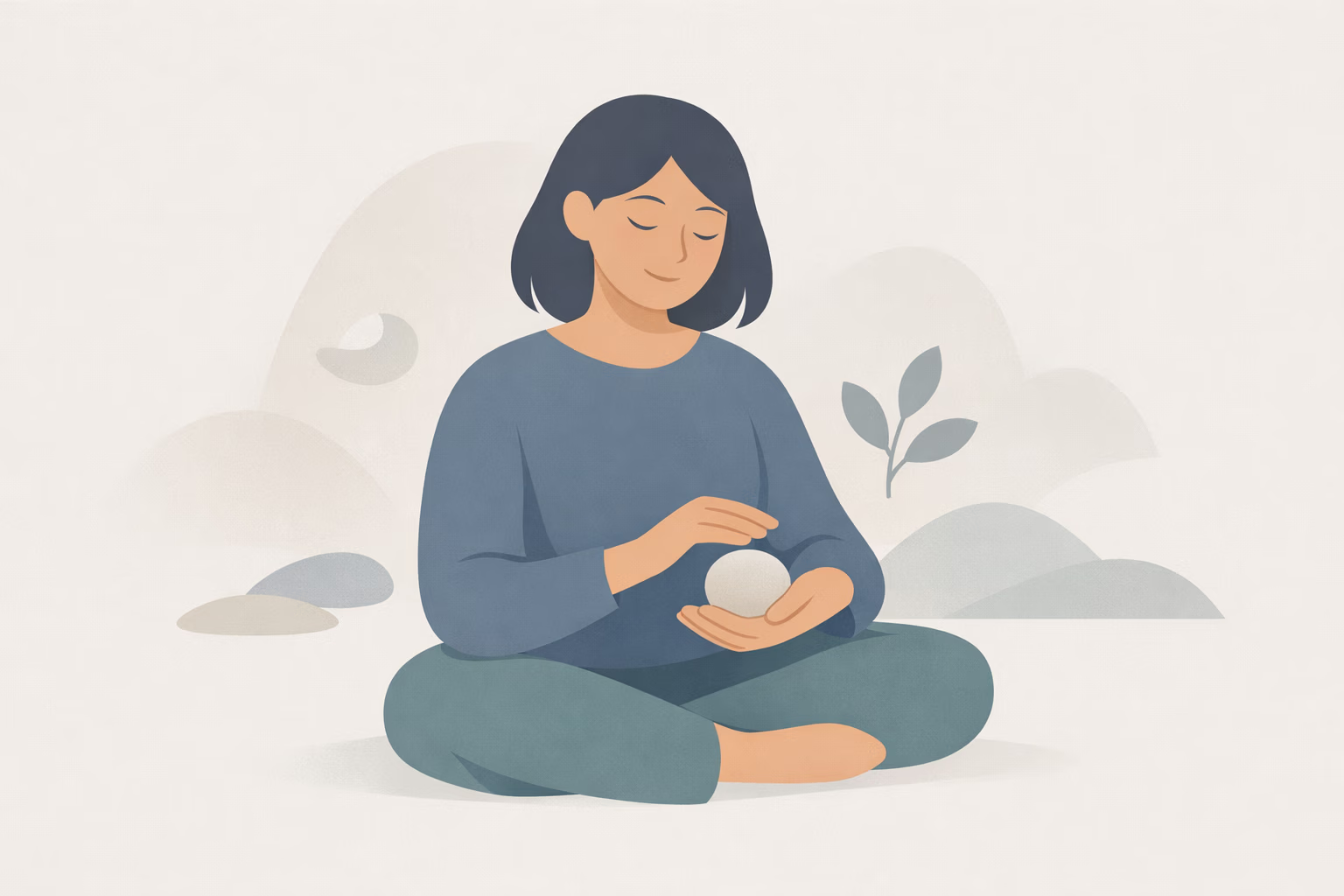
There’s a quieter possibility beneath the pressure: that your system isn’t asking for more techniques—it’s asking for legitimate internal safety. Not the kind that comes from tighter control, but the kind that comes when load decreases enough for signals to return and experiences can complete.
When internal safety is more available, effort changes texture. It becomes less like self-surveillance and more like participation. Growth can stop being an emergency response and start being something that integrates—something that settles into lived identity rather than staying in perpetual rehearsal. [Ref-10]
This is not a mindset shift. It’s a physiological shift: less activation, more room for the “done” signal to register. And when the “done” signal registers, the need to keep proving can naturally lose urgency.
Humans regulate in relationships and social contexts. When belonging is experienced as conditional—earned through output, image, or constant improvement—the nervous system often compensates with more monitoring and more control.
When being valued beyond performance becomes believable, the pressure to self-optimize can reduce, because the stakes change. Improvement no longer has to function as protection against exclusion. [Ref-11]
This doesn’t mean ambition disappears. It means ambition is less likely to be fused with survival-level consequences. Growth can exist alongside enoughness, rather than being the price of entry.
As overload eases, the most noticeable change is often not dramatic happiness. It’s capacity. More breathing room. More ability to choose. More tolerance for unfinishedness without needing to clamp down immediately.
People often describe a return of energy and a different relationship with growth—less brittle, less compulsive, more genuinely curious. The system is no longer spending so much fuel on self-evaluation, so there’s more available for living. [Ref-12]
In Meaning Density terms, coherence increases when life contains more completion—more moments that register as whole, not as evidence for or against your worth.
Threat-driven growth has a recognizable signature: urgency, tight standards, and a sense that relaxing would be dangerous. Meaning-guided growth feels different—not because it’s easier, but because it’s oriented. It aims toward a life that can be lived, not a self that must be constantly corrected.
Perfectionistic pressure can intensify burnout risk by keeping standards high while recovery remains low, especially when identity becomes contingent on performance. [Ref-13] In that terrain, improvement is rarely allowed to resolve; it must continually re-justify itself.
Meaning-guided development is more likely to create stability because it produces closure. Effort leads somewhere. Learning becomes embodied. Changes become “mine” in a way that doesn’t require constant upkeep to feel real.
Growth can be a direction of travel—not a court case you’re always defending.
Self-improvement overload is often a signal that growth has been carrying too much: safety, status, belonging, and the promise of relief. When growth is forced to do all of that, it stops being nourishment and becomes demand.
It can be clarifying to see burnout not as a collapse of character, but as a system response to chronic incompletion—standards that keep moving, tasks that never resolve, and a nervous system that rarely receives a credible “done.” Perfectionistic standards have been associated with higher burnout risk, especially when pressure is sustained. [Ref-14]
Agency tends to return when life becomes coherent again: when effort can complete, when values feel like a compass instead of a verdict, and when identity is allowed to stabilize beyond constant improvement.
Burnout doesn’t mean you weren’t trying hard enough. If anything, it often means you’ve been carrying a level of strain for a long time—running on activation, evaluation, and urgency. Burnout signs frequently include exhaustion and reduced effectiveness, especially when demands outpace recovery. [Ref-15]
There is dignity in recognizing that the system was doing its best to create stability. And there is relief in remembering that growth is most humane when it serves meaning—when it helps life feel more whole—rather than becoming a requirement to constantly become “more.”
From theory to practice — meaning forms when insight meets action.
Because growth has stopped completing. You're consuming useful ideas, tracking progress, refining habits — yet motivation thins out anyway. The effort is real, but the lived experience doesn't settle. Instead of satisfaction, there's a persistent sense of being behind. This is what it feels like when improvement increases activity but doesn't produce completion. Without completion, the body never gets a Done Signal, and the mind keeps scanning for what else to fix. Each day contains a silent audit — 'did I do enough?' — which keeps control circuits engaged and prevents the system from consolidating any benefits. The fatigue isn't from doing too much; it's from never being allowed to land.
Because when growth is carried by pressure, every experience gets routed through evaluation rather than received as something that can complete. The mind starts treating life like a backlog. Even good moments feel like interruptions from the real task of becoming better. Meaning thins out when nothing is permitted to land — if every outcome becomes a new input for optimization, life becomes a continuous draft, never a finished sentence. This is the Power Loop: the question quietly shifts from 'what matters to me?' to 'how do I stay in control?' Rest feels unsafe or unearned because control has been doing the job of stability. Letting go registers as risk.
Because reassurance is real — just temporary. Reading a new approach, reorganizing your routine, deciding on a stricter plan creates immediate calm: order, direction, control. But reassurance changes state for a moment, like tightening a grip. Completion is what allows the grip to loosen because something has actually resolved. The system learns: discomfort rises, a new strategy appears, relief drops in briefly, baseline pressure returns. The Done Signal never arrives, so the search continues. Identity starts organizing around constant repair — the self as an ongoing problem to solve. Stability gets outsourced to correction, and the loop becomes structurally self-sustaining.
Threat-driven growth has urgency, tight standards, and a sense that relaxing would be dangerous. Meaning-guided growth aims toward a life that can be lived, not a self that must be constantly corrected. Threat-driven improvement rarely resolves; it must continually re-justify itself. Meaning-guided development creates closure: effort leads somewhere, learning becomes embodied, changes become 'mine' without requiring constant upkeep to feel real. When internal safety is more available, effort becomes participation rather than self-surveillance. Growth stops being an emergency response and starts integrating into lived identity. Growth can be a direction of travel, not a court case you're always defending.
From Science to Art.
Understanding explains what is happening. Art allows you to feel it—without fixing, judging, or naming. Pause here. Let the images work quietly. Sometimes meaning settles before words do.
One Quiet Window, one insight, one reflection — every Sunday