Self-Improvement Overload: When Growth Turns Into Burnout
In short: Emotional fatigue from constant self-improvement isn’t the same as healthy growth. It’s the weariness that shows up when “working on yourself” becomes a 24/7 requirement—like you’re never allowed to arrive, only to update.
Emotional fatigue from constant self-improvement isn’t the same as healthy growth. It’s the weariness that shows up when “working on yourself” becomes a 24/7 requirement—like you’re never allowed to arrive, only to update.
In that state, the body doesn’t experience improvement as learning. It experiences it as evaluation: an unending scan for what’s missing, what needs fixing, and what you should be by now.
What if your exhaustion isn’t a lack of discipline—but a system that hasn’t been allowed to complete anything?
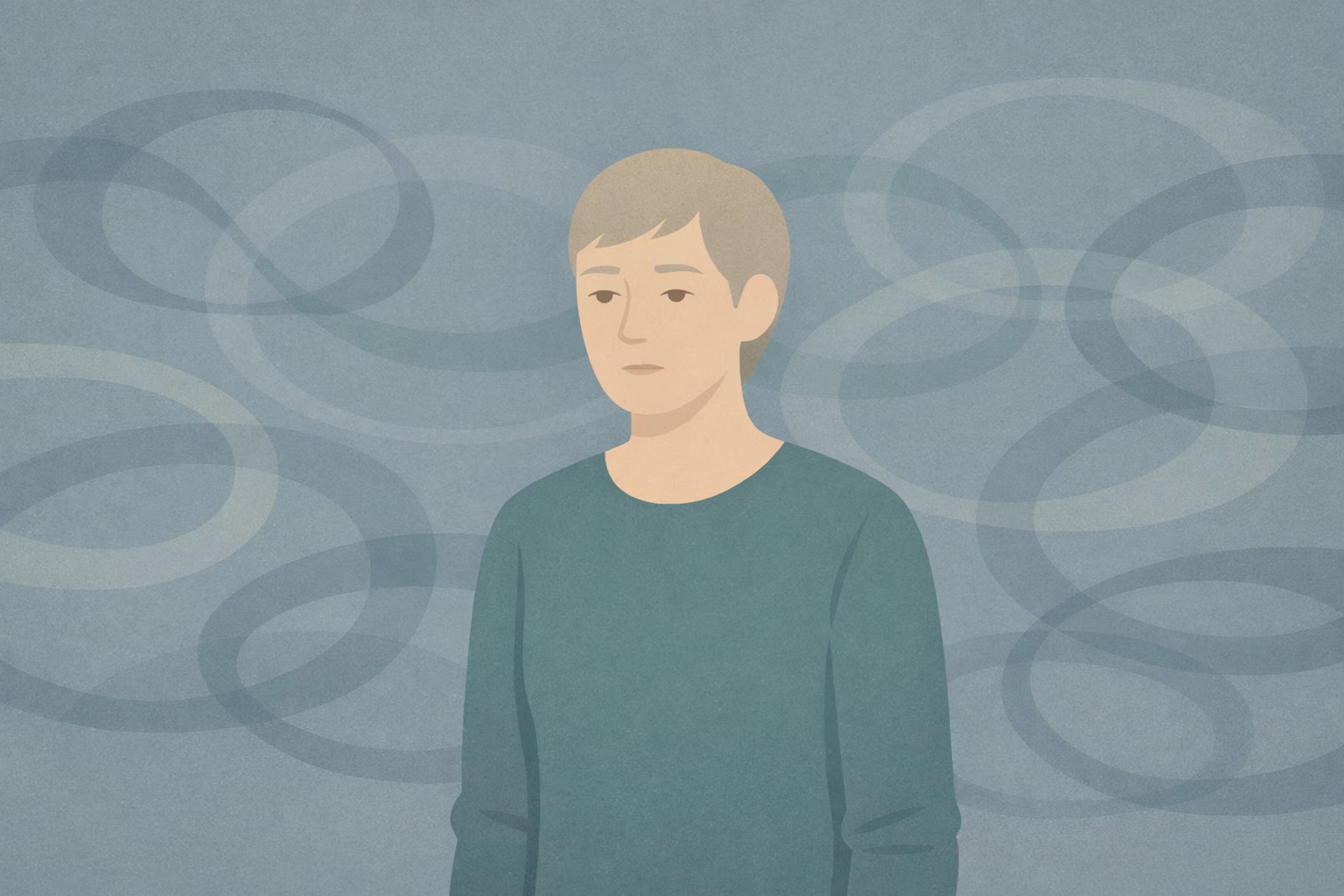
This kind of fatigue often has a particular texture: not just low energy, but a subtle resentment, flatness, or emptiness after years of trying to be better. You may still be functional. You may even be succeeding. And yet something in you feels quietly overused.
That’s because constant self-upgrading doesn’t only consume time. It consumes closure. Each new plan can reopen the question of who you are and whether you’re acceptable—so the system stays partially braced, even when the day is over. [Ref-1]
It’s hard to rest when rest feels like falling behind your own expectations.
Human attention and self-control systems are built for short arcs of effort: identify a problem, mobilize resources, address it, then stand down. But continuous self-evaluation keeps the “mobilize” switch on.
When life becomes a running performance review—tracking habits, metrics, progress, and mindset—your executive system is asked to do two jobs at once: live your life and constantly supervise your life. That double-duty load can create chronic striving, irritability, and mental saturation. [Ref-2]
Under that kind of pressure, exhaustion isn’t a character flaw. It’s a predictable signal from a system that’s been kept in management mode for too long.
Problem-solving is powerful, but it has a cost: it narrows focus toward discrepancy—what’s not working yet. That’s useful when fixing a leaky roof. It’s destabilizing when aimed at the self as a permanent project.
When attention is repeatedly trained to search for personal deficits, “who I am” can start to feel like a to-do list. Identity becomes maintenance: adjust, refine, correct, optimize. Over time, that pattern can reduce internal coherence—the felt sense that you are a whole person who belongs to your own life. [Ref-3]
What happens when your mind’s default lens is “insufficient until improved”?
It makes sense that self-improvement can be compelling. A new framework can temporarily restore direction, hope, and a sense of control—especially in periods of uncertainty. It can also provide a clean story: “If I do these steps, I’ll feel better.” [Ref-4]
In the short term, that structure can lower noise in the system. It creates a temporary “map,” which can feel like safety. The problem isn’t the desire to grow; it’s when the relief is purchased through more self-surveillance, and the finish line keeps moving.
Modern improvement culture often implies that fulfillment is earned through constant refinement. But nervous systems don’t stabilize through endless upgrading—they stabilize through completion, safety cues, and enough “done” signals to stand down.
When improvement is framed as a moral requirement, it can quietly undermine vitality. Instead of feeling supported by your efforts, you can start feeling evaluated by them. That pressure can erode self-acceptance not because acceptance is a mindset you failed to adopt, but because the environment keeps reopening the question of whether you’re allowed to be at peace. [Ref-5]
In the “power loop,” control becomes the route to safety: if you can manage yourself well enough, you won’t fall apart, fall behind, or lose standing. The future-you becomes the credential that proves you’re okay.
But that structure has a hidden trap: it postpones arrival. Worth is always one update away—after the next habit streak, the next breakthrough, the next healed pattern. This keeps the system oriented toward correction rather than integration, so effort increases while inner settlement decreases. [Ref-6]
And because the standard is internal and constantly adjustable, the loop can run even in silence—no external critic required.
Constant self-improvement fatigue often looks less like stopping and more like grinding without nourishment. People may keep consuming content, planning routines, and monitoring themselves—while feeling increasingly depleted or cynical.
These aren’t personality traits. They’re regulatory patterns that can emerge when the system doesn’t receive reliable closure.
Motivation is not an infinite resource; it’s sensitive to load. When striving becomes constant, the brain’s reward and stress systems can start to blunt: effort feels heavier, pleasure feels muted, and even meaningful goals can feel like obligations. [Ref-8]
Over time, the deeper cost is often self-trust. If every inner state becomes a project—optimize your mood, fix your focus, upgrade your confidence—then ordinary human variability can start to feel unsafe. The system learns that it must manage itself at all times, which reduces the felt permission to simply exist.
When everything is improvement, nothing is allowed to be enough.
As capacity drops, performance often drops with it. And when identity is tied to improvement, those dips can be interpreted as evidence that you’re doing something wrong. That interpretation adds pressure—and pressure increases load.
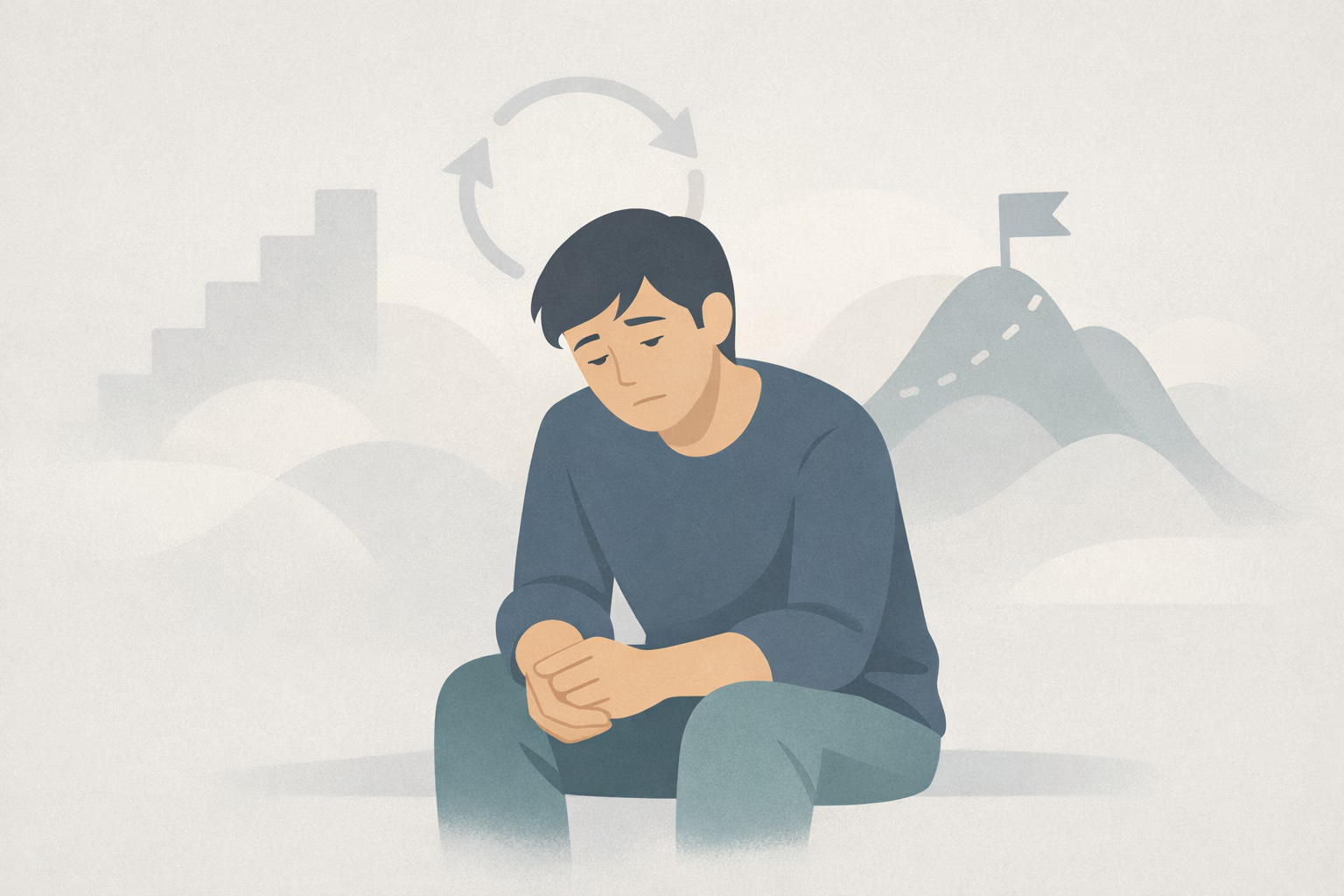
So the system enters a reinforcing cycle: fatigue → reduced output → tighter self-monitoring → more urgency → deeper fatigue. In cultures shaped by “toxic productivity,” this spiral can feel normal, even admirable, until the body makes the cost undeniable. [Ref-9]
This is not a failure of willpower. It’s what happens when regulation is attempted through constant activation instead of through completion and stand-down.
There’s a common misconception that easing self-judgment means lowering standards. But from a nervous system perspective, relentless evaluation is still a threat cue: it signals that safety depends on continuous correction.
Compassion, in this context, isn’t a pep talk or a reframe. It’s a different physiological posture toward the self—one that reduces internal conflict and allows the system to settle enough to regain signal clarity. It also supports a sense of shared humanity: that difficulty and inconsistency are part of being a person, not evidence of defect. [Ref-10]
What if stability comes from fewer internal audits, not better ones?
Humans regulate in relationship. When connection is contingent on performance—being impressive, productive, improving—identity tightens around output. But when there are places where you are not being measured, the nervous system receives a different message: you can belong without proving.
Acceptance-based relationships don’t eliminate growth; they change what growth means. Instead of self-correction to earn a place, development becomes something that happens within belonging. This kind of relational safety supports warmth toward the self and reduces isolation-driven pressure. [Ref-11]
In other words, connection can supply the “you are already allowed” signal that striving culture often withholds.
When striving softens, people often expect a dramatic transformation. More commonly, what returns is something quieter: ease. Not constant positivity, but a steadier baseline and a clearer sense of what matters.
As load reduces, the system becomes more capable of returning to neutral after activation. Attention feels less hunted. Rest feels less like a moral problem. There’s more room for ordinary satisfaction—small completions that register as complete. This is less about “feeling more” and more about the body receiving enough closure to stop scanning for what’s unfinished. [Ref-12]
Coherence often feels like you can breathe without explaining yourself.
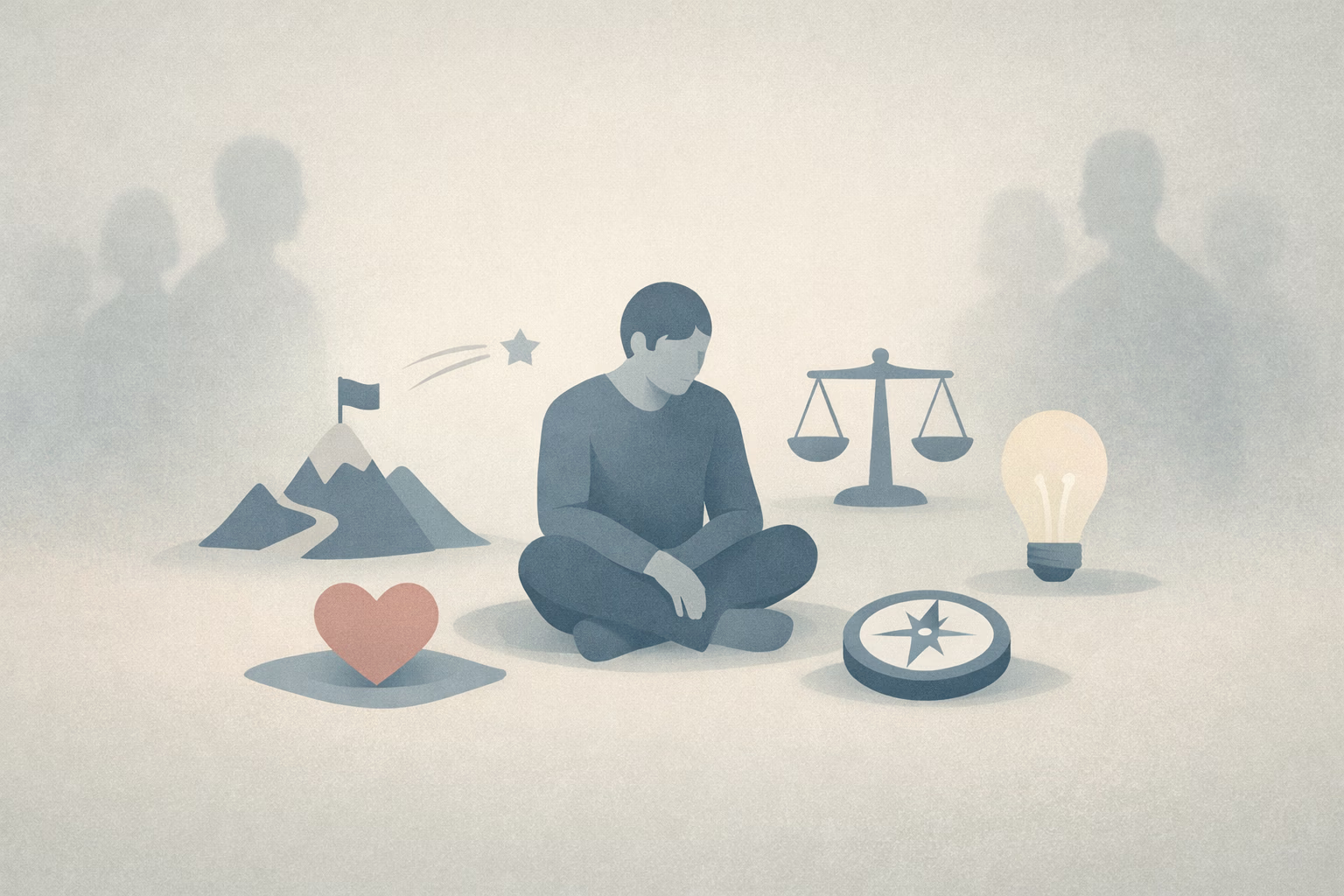
Growth becomes sustainable when it’s anchored in meaning rather than in self-erasure. Meaning isn’t a slogan; it’s what forms when experiences are lived through to completion and allowed to integrate into identity—when life events stop demanding constant interpretation and start becoming part of “who I am.”
In that orientation, improvement is no longer a rescue mission for the self. It becomes direction: chosen because it aligns with values, relationships, and purpose. Meaningful lives tend to have belonging, contribution, and coherence—not just achievement. [Ref-13]
And because the self isn’t being treated as an emergency, the nervous system can support change without turning every step into a verdict.
If constant self-improvement has started to feel like emotional depletion, it may be your system communicating something simple: the pace and the evaluative pressure have outgrown your capacity for closure.
This doesn’t mean growth was wrong. It may mean growth has been asked to carry too much—serving as identity, safety, and worth all at once. When that happens, exhaustion can be an intelligent signal that life needs more grounding: more places where you are not a project, more moments that count as complete. [Ref-14]
Agency often returns when worth is no longer postponed—when the present self is treated as someone who already belongs to the story.
Self-improvement can be a tool. But a tool isn’t supposed to become a courtroom. When the self is treated as inherently unacceptable until upgraded, the system never receives permission to settle.
Self-acceptance isn’t complacency; it’s a stable ground where life can be lived without constant self-negotiation. And from that ground, change can take on a different tone—less like correction, more like becoming. [Ref-15]
From theory to practice — meaning forms when insight meets action.
Self-improvement fatigue isn't healthy growth — it's the weariness of working on yourself becoming a 24/7 requirement. You're never allowed to arrive, only to update. The body doesn't experience this as learning; it experiences it as evaluation: an unending scan for what's missing and what you should be by now. Each new plan reopens the question of who you are and whether you're acceptable, so the system stays partially braced even when the day is over. It's hard to rest when rest feels like falling behind your own expectations. Closure never lands because the finish line keeps moving.
In a Power Loop, control becomes the route to safety: if you can manage yourself well enough, you won't fall apart, fall behind, or lose standing. The future-you becomes the credential proving you're okay. But this postpones arrival — worth is always one update away, after the next habit streak, the next breakthrough, the next healed pattern. The system stays oriented toward correction rather than integration, so effort increases while inner settlement decreases. From the Status & Control evolutionary root, this is how striving culture quietly converts the self into a permanent project. Identity becomes maintenance: adjust, refine, optimize.
As capacity drops, performance drops with it. When identity is tied to improvement, those dips get interpreted as evidence you're doing something wrong — which adds pressure, and pressure increases load. The reinforcing cycle: fatigue, reduced output, tighter self-monitoring, more urgency, deeper fatigue. In cultures shaped by toxic productivity, this spiral can feel normal until the body makes the cost undeniable. This isn't a failure of willpower; it's what happens when regulation is attempted through constant activation instead of through completion and stand-down. Relentless evaluation registers in the Threat & Safety System as a signal that safety depends on continuous correction.
Growth becomes sustainable when anchored in meaning rather than self-erasure. Meaning isn't a slogan; it's what forms when experiences are lived through to completion and allowed to integrate into identity. In that orientation, improvement isn't a rescue mission for the self — it's direction chosen because it aligns with values, relationships, and purpose. Self-acceptance isn't complacency; it's a stable ground where life can be lived without constant self-negotiation. Coherence often feels like you can breathe without explaining yourself. Meaning Density grows when the present self is treated as someone who already belongs to the story, not someone awaiting the next upgrade.
From Science to Art.
Understanding explains what is happening. Art allows you to feel it—without fixing, judging, or naming. Pause here. Let the images work quietly. Sometimes meaning settles before words do.
One Quiet Window, one insight, one reflection — every Sunday