Emotional Spending: Buying to Soothe Stress and Loneliness
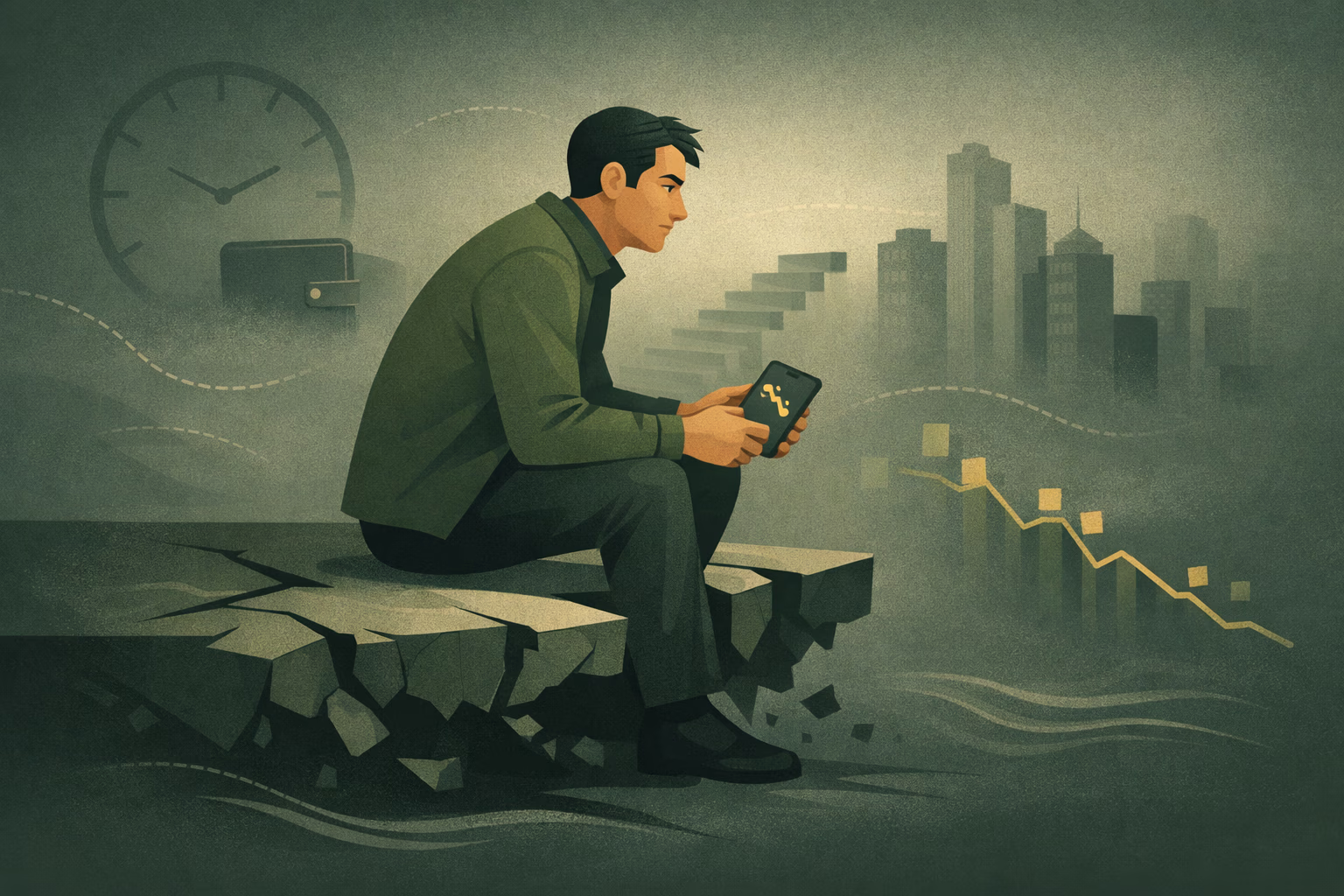
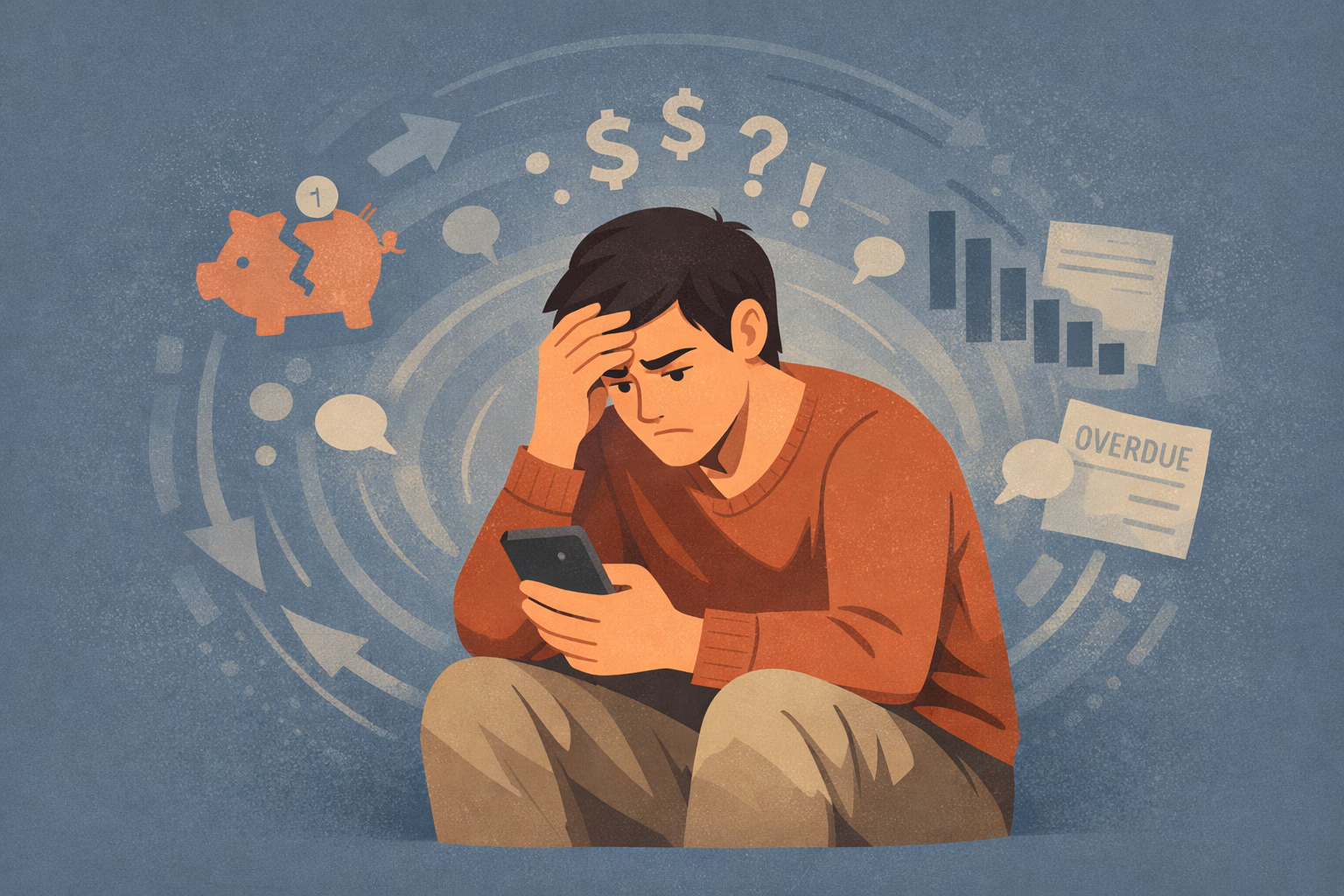
In short: Emotional spending is what happens when buying shifts from meeting a need to managing a state—especially anxiety, stress, uncertainty, or overload. The purchase isn’t the point so much as the momentary quieting of internal pressure through stimulation, novelty, or the feeling of taking action.
Emotional spending is what happens when buying shifts from meeting a need to managing a state—especially anxiety, stress, uncertainty, or overload. The purchase isn’t the point so much as the momentary quieting of internal pressure through stimulation, novelty, or the feeling of taking action.
Why can clicking “buy” feel calming—until it doesn’t?
In a fast, evaluative world, nervous systems often reach for whatever creates quick closure. Shopping can offer a clean sequence: browse, choose, confirm, receive. But when the body is asking for regulation and completion, a receipt can mimic closure without actually settling the deeper loop.
The pattern is often recognizable: a tight moment—an email, a conflict, a lonely evening, a stretch of uncertainty—followed by a sudden urge to buy. The urge can feel specific (“I need that exact thing”) even when the need is mostly internal: relief, distraction, a sense of control, a quick win.
For a brief window, the purchase can bring lightness or excitement. Then the effect fades, and what returns is often a mix of mental noise: second-guessing, guilt, regret, or renewed anxiety—now with a financial consequence attached. This isn’t a character flaw; it’s a short-lived regulation strategy that works just well enough to get repeated. [Ref-1]
It can feel like you solved something—until you realize you only changed the channel.
Buying is not only about the item. It’s also about anticipation: searching, comparing, imagining the future self who has the thing. This phase can activate reward circuits that make the present moment feel more tolerable, like a pressure valve opening.
Over time, the nervous system can start pairing spending with “safety”: discomfort rises, purchase follows, discomfort drops. The brain doesn’t need a philosophy to learn this—repetition is enough. The association becomes quicker and more automatic, especially during high load, when the body prefers fast state change over slow settling. [Ref-2]
Humans evolved to move toward resources and away from threat. When conditions were harsher and rewards were rarer, seeking novelty and securing supplies made sense. Reward signals helped organize behavior: look, pursue, obtain, rest.
Modern consumer environments amplify that same circuitry. Shopping is engineered to be frictionless and emotionally legible: limited-time deals, tailored recommendations, one-click checkout, and endless novelty. In other words, the environment offers an always-available reward loop that can stand in for the kind of completion our systems are actually looking for. [Ref-3]
When stress is high, the nervous system often narrows toward whatever reduces intensity quickly. Buying can do that in multiple ways at once: it occupies attention, it produces a small burst of pleasure, and it creates a sense of forward motion (“I handled something”). [Ref-4]
Notice how clean the sequence is compared to real-life stressors. A work relationship, a medical worry, a family situation—these don’t resolve in a neat arc. Shopping does. That neatness can momentarily substitute for the body’s need for completion, even when the original stressor remains open.
What if the purchase is functioning like a temporary “done” signal?
Emotional spending can feel like it resolves anxiety because it changes your state. But state change is not the same as closure. The original pressure—uncertainty, overload, lack of support, relentless evaluation—often continues underneath.
When the charge returns, there may be an extra layer: financial worry, clutter, secrecy, or self-doubt. That added consequence increases overall load, making the nervous system even more likely to reach for quick relief next time. The spending didn’t “cause” the anxiety, but it can postpone resolution while adding new inputs for the system to manage. [Ref-5]
In Meaning Density terms, emotional spending often becomes a Pleasure Loop: discomfort rises, a purchase delivers a brief downshift, and the aftermath increases the conditions that make discomfort more likely.
This is why it can feel both understandable and confusing. The behavior is doing a real job—reducing activation in the short term. But because the relief doesn’t complete the underlying loop, the system keeps returning to the same shortcut. Over time, the loop can tighten and become more reflexive. [Ref-6]
Emotional spending doesn’t always look dramatic. Often it’s small, frequent, and quietly compensatory—especially when life feels like constant demand without enough completion.
Some common patterns include: [Ref-7]
These patterns are better understood as regulation attempts under strain—ways a nervous system tries to reduce intensity when other forms of closure are scarce.
Repeated emotional spending can erode stability in a few parallel lanes. Financially, it can create debt, missed savings, or ongoing uncertainty. Relationally, it can introduce secrecy or conflict. Internally, it can reduce self-trust—not because you “lack discipline,” but because your actions stop feeling tethered to your stated intentions.
Over time, the nervous system may come to expect external stimulation to shift discomfort. That expectation can lower tolerance for ordinary uneventful moments—the kind of quiet that actually supports recovery. In some cases, the pattern can resemble compulsive buying tendencies, especially when it feels hard to stop despite consequences. [Ref-8]
When money stops feeling like a tool, it starts feeling like a sedative—and that’s a heavy job for any object to do.
Each time spending reduces discomfort, the association strengthens: distress → buying → relief. The brain learns by outcomes, not by long-term plans. If the nervous system gets a quick downshift, it marks the pathway as useful and makes it easier to access next time—especially when you’re tired, lonely, or cognitively overloaded. [Ref-9]
This is also why the urge can feel urgent and specific. Under load, the brain prefers the known route to relief. Not because you’re irrational, but because urgency is what an activated system generates when it believes the quickest exit matters.
There is a different kind of steadiness that can return when relief comes from actual completion rather than stimulation. It’s quieter than a dopamine spike. It feels less like “I got something” and more like “the system can stand down.” [Ref-10]
This steadiness isn’t produced by insight alone. Understanding the pattern can be clarifying, but integration is the moment the body stops asking for the shortcut—because the underlying loop has finally reached a lived, physiological “done.” When that happens, urges tend to lose their sharp edge. They may still appear, but they don’t carry the same command.
What if the goal isn’t to resist the urge, but to reduce the load that makes the urge necessary?
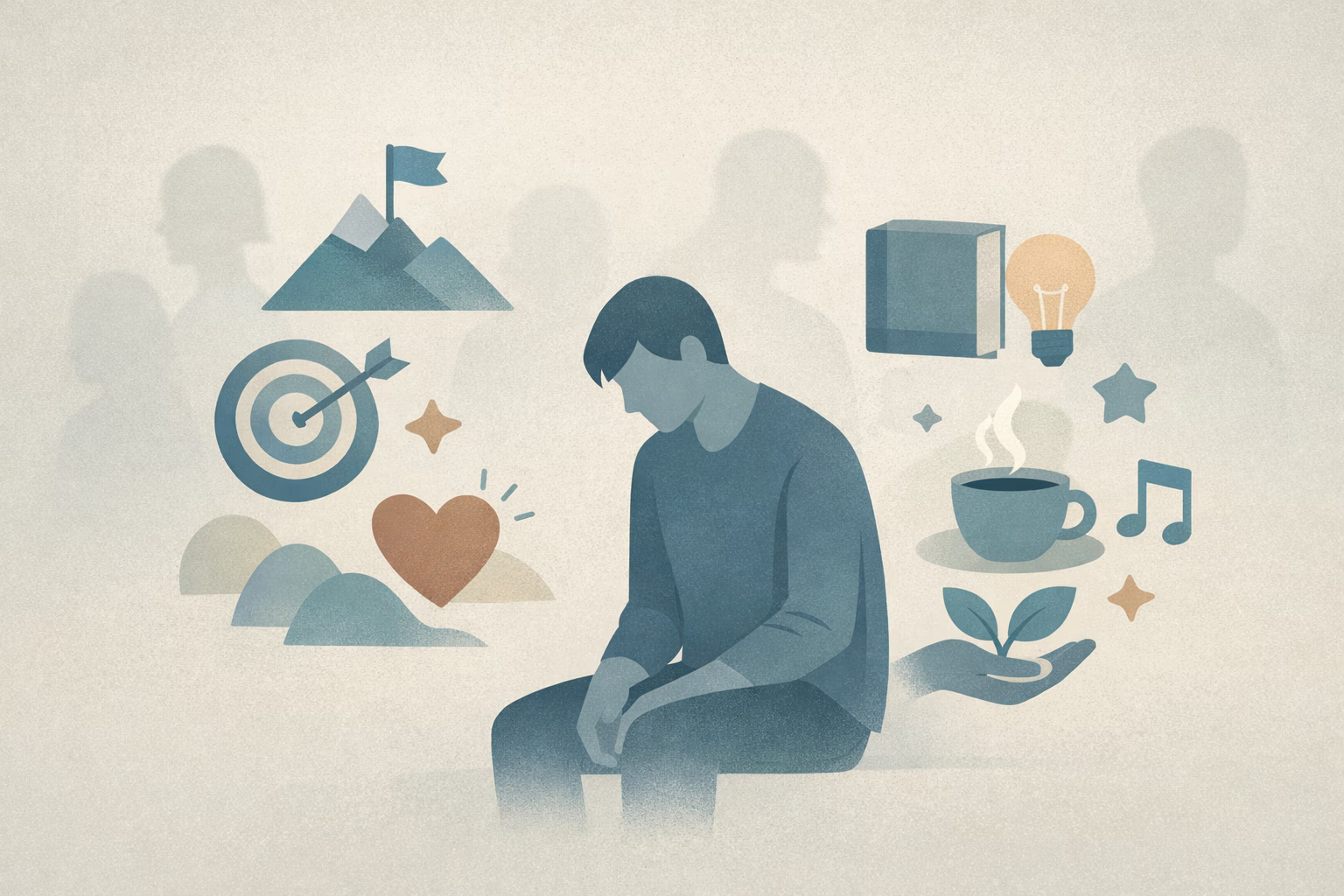
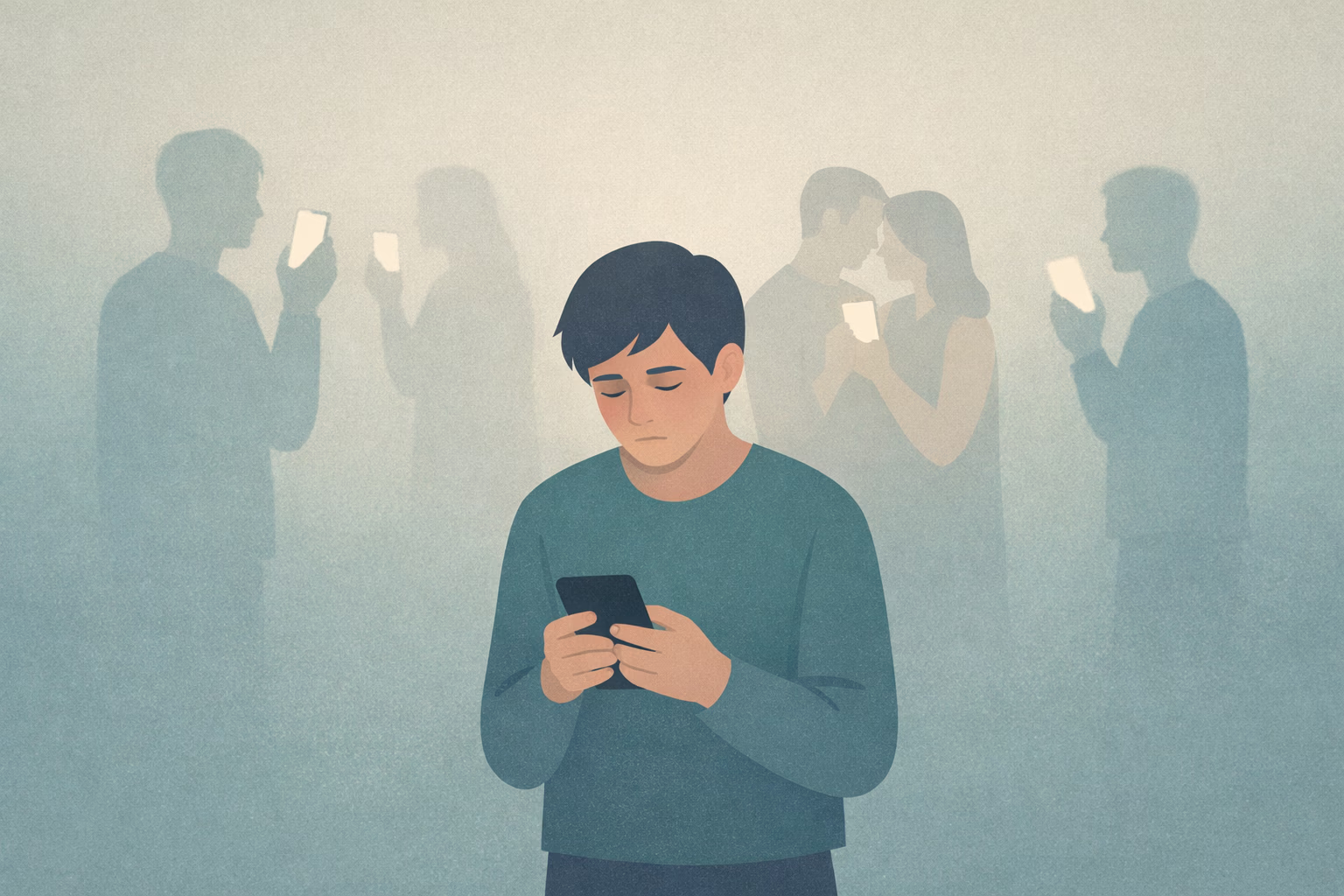
Emotional spending often thrives in private. Not because someone is “hiding,” but because shame and evaluation add threat to an already stressed system. When the pattern becomes solitary, the purchase can double as a private refuge: relief without negotiation, comfort without vulnerability.
But isolation increases nervous-system load. Shared reality—being seen in a non-judgmental way, having finances discussed in humane terms, or experiencing accountability as safety rather than surveillance—can reduce the need for private relief. The system tends to settle more easily when it has cues of connection and continuity. [Ref-11]
When a pattern is held in secrecy, it has to carry your whole nervous system by itself.
As regulation replaces impulse-driven relief, many people notice a particular sequence: urges arrive with less urgency, the mind has more “space” around them, and the body recovers faster after stress. This is less about willpower and more about capacity—having enough internal bandwidth to let a signal pass without needing an immediate external change. [Ref-12]
Clarity often returns alongside this. Not perfect clarity, but practical clarity: what’s a real need, what’s a stress reflex, what’s a value, what’s an environmental trigger. Over time, this can create a new kind of predictability—where money decisions feel less like mood management and more like self-alignment.
When the nervous system is less hijacked by urgent relief, money can return to its more humane role: a tool that supports life, relationships, and long horizons. Spending becomes less of a rescue and more of an expression—of priorities, care, and continuity.
This is where meaning density increases. Not because you “never want things,” but because purchases land inside a coherent story: who you are, what matters, and what you’re building. In that context, the quick-hit pull of emotional spending often fades—not through pressure, but through a restored ability to feel completion without needing novelty to manufacture it. [Ref-13]
Emotional spending is often a sign that something in the system is asking for relief: too much uncertainty, too little rest, too many open loops, not enough safety cues. Seen this way, the urge to buy isn’t evidence that you’re broken—it’s evidence that your nervous system is trying to regulate with the tools it can access quickly. [Ref-14]
Shame tends to fragment the story (“What’s wrong with me?”). A more stabilizing frame is coherence (“What conditions are making this the easiest exit right now?”). When the question changes, agency can return—not as self-pressure, but as orientation.
A purchase can change your state. It can even feel like comfort. But lasting calm usually comes from completion—when the body receives enough closure to stop sounding the alarm.
In that light, the receipt is not proof of failure. It’s a clue about what your system has been carrying, and how urgently it has been trying to get back to safe ground. Relief is real—but it isn’t always care. And you deserve care that actually lets your system rest. [Ref-15]
From theory to practice — meaning forms when insight meets action.
Shopping offers a clean sequence: browse, choose, confirm, receive. Real-life stressors — work relationships, medical worries, family situations — don't resolve in a neat arc. Shopping does. That neatness can momentarily substitute for the body's need for completion, even when the original stressor remains open. Anticipation activates the Reward & Stimulation System (searching, comparing, imagining the future self with the thing). The nervous system pairs spending with safety: discomfort rises, purchase follows, discomfort drops. The brain doesn't need a philosophy to learn this — repetition is enough. The purchase is functioning like a temporary Done Signal.
Discomfort rises, a purchase delivers a brief downshift, and the aftermath increases the conditions that make discomfort more likely. Trigger (uncertainty, fatigue, evaluation), shortcut (novelty and reward through buying), aftermath (financial worry, clutter, secrecy that raises baseline stress load). The behaviour is doing a real job — reducing activation in the short term — but because relief doesn't complete the underlying loop, the system keeps returning to the same shortcut. This is a Pleasure Loop from the Reward & Motivation root: the spending didn't cause the anxiety, but it postpones resolution while adding new inputs the system has to manage. Over time the loop tightens and becomes more reflexive.
Because state change isn't closure. Emotional spending changes your state but the original pressure — uncertainty, overload, lack of support, relentless evaluation — continues underneath. When the charge returns, there's often an extra layer: financial worry, clutter, secrecy, self-doubt. That added consequence increases overall load, making the nervous system even more likely to reach for quick relief next time. It can feel like you solved something until you realize you only changed the channel. When money stops feeling like a tool, it starts feeling like a sedative — and that's a heavy job for any object to do. Relief is real, but it isn't always care.
Reduced load, not more willpower. The goal isn't to resist the urge but to reduce the load that makes the urge necessary. As regulation replaces impulse-driven relief, urges arrive with less urgency, the mind has more space around them, and the body recovers faster after stress. Secrecy intensifies loops because shame and evaluation add threat to an already stressed system; shared reality softens them. When the nervous system is less hijacked by urgent relief, money returns to its humane role — a tool that supports life, relationships, and long horizons. The cart becomes a signal, not a verdict. Meaning Density grows when purchases land inside a coherent story.
From Science to Art.
Understanding explains what is happening. Art allows you to feel it—without fixing, judging, or naming. Pause here. Let the images work quietly. Sometimes meaning settles before words do.
One Quiet Window, one insight, one reflection — every Sunday