Emotional Spending: Buying to Reduce Anxiety
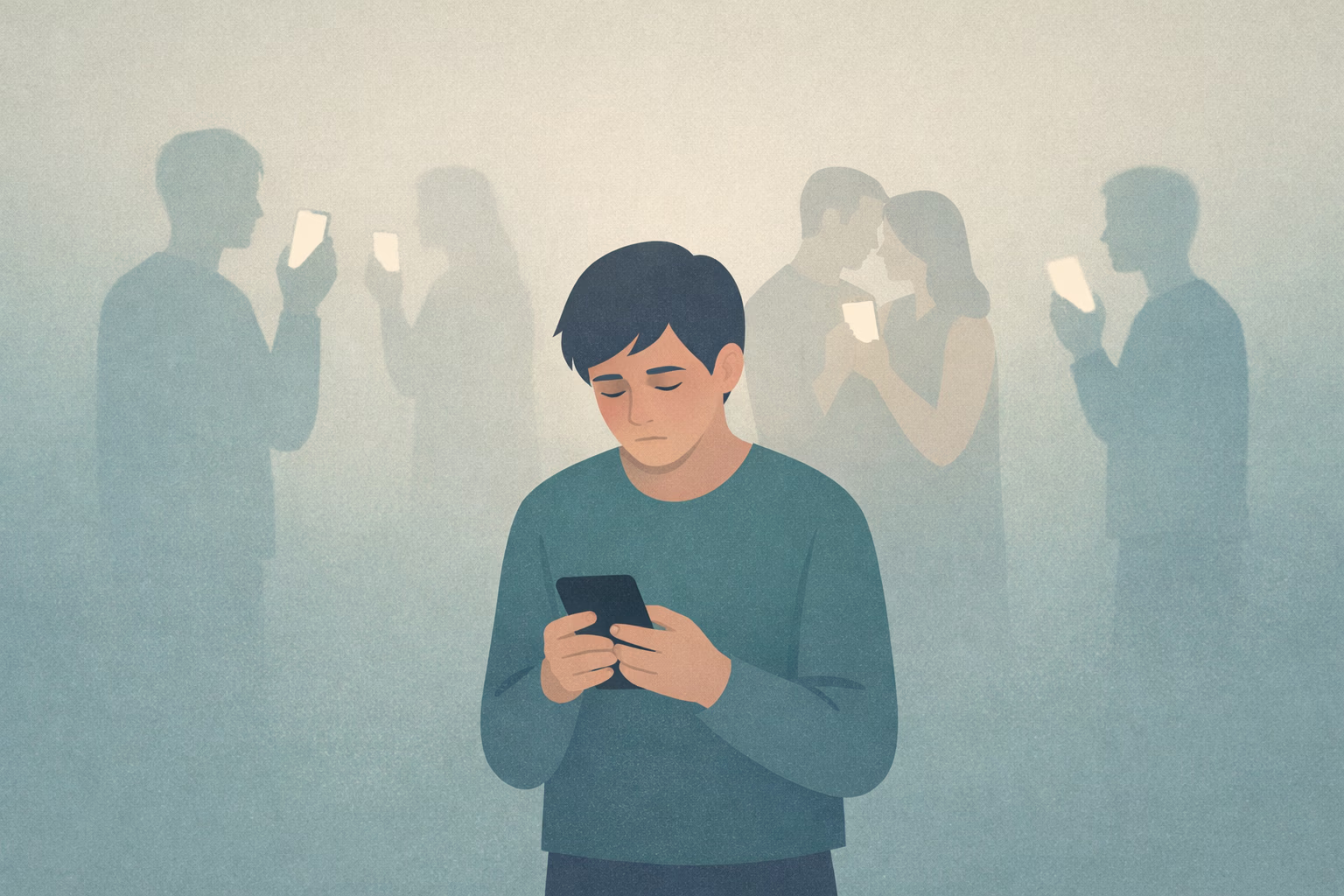
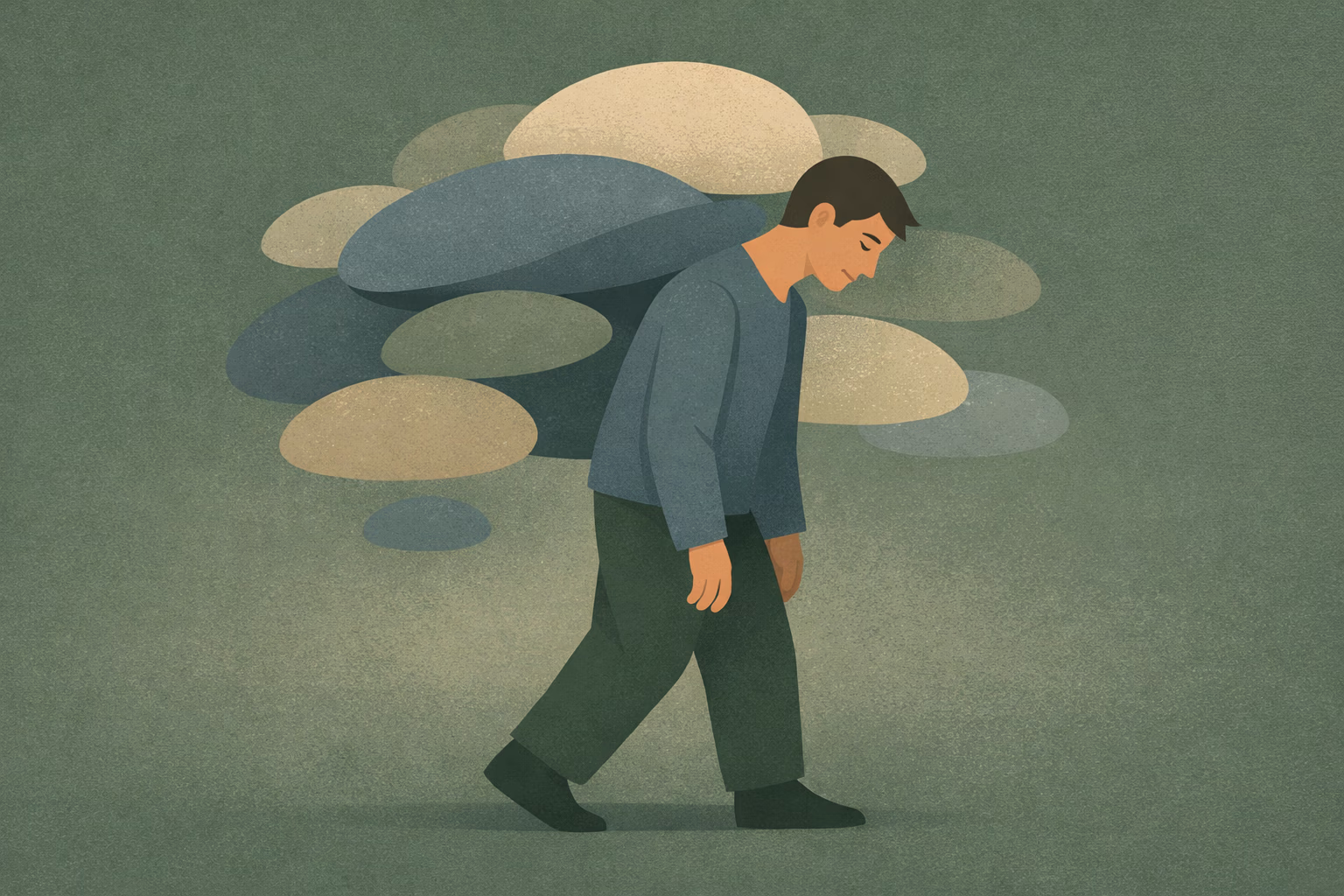
In short: Emotional spending isn’t simply “bad habits with money.” For many people, it’s what happens when a stressed or lonely nervous system finds a fast, available way to shift state—especially when life doesn’t offer enough closure, reassurance, or steadiness. What if the urge to buy is less about wanting more, and more about needing a sense of being held together?
Emotional spending isn’t simply “bad habits with money.” For many people, it’s what happens when a stressed or lonely nervous system finds a fast, available way to shift state—especially when life doesn’t offer enough closure, reassurance, or steadiness.
What if the urge to buy is less about wanting more, and more about needing a sense of being held together?
In a high-pressure world, purchasing can become a reliable shortcut to relief: a brief feeling of control, care, or connection. The problem isn’t that the relief is fake; it’s that it often doesn’t complete what the system is actually asking for, so the loop reopens.
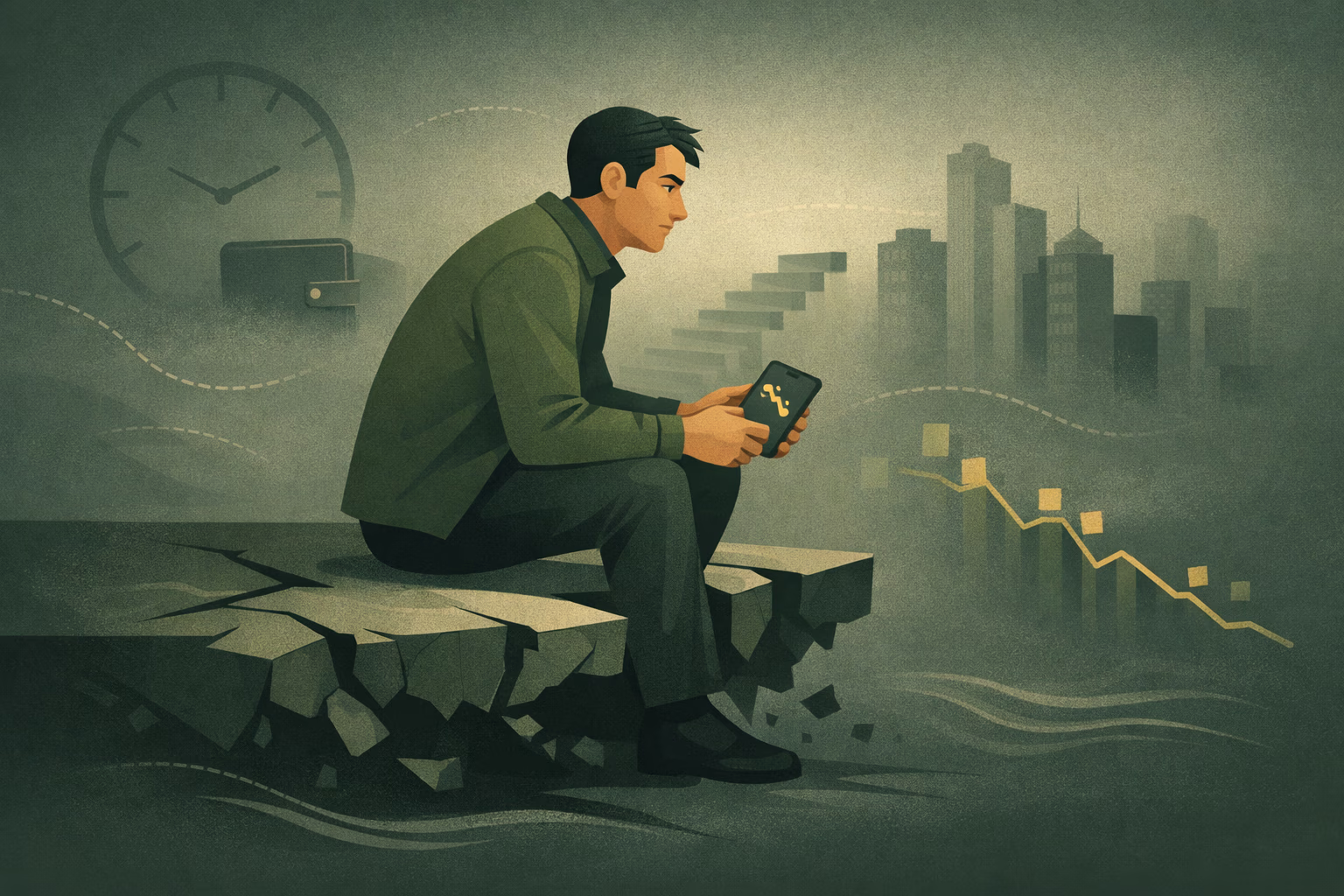
Emotional spending often shows up in a recognizable sequence: a sharp wave of stress, emptiness, or isolation; a sudden pull toward browsing; a purchase that briefly brightens the inner weather; and then a return of flatness, regret, or “Why did I do that?” [Ref-1]
That pattern can feel confusing because the purchase really can change your state. It can lower tension, lift mood, or create a small sense of “something is taken care of.” The system learns this quickly. The later crash isn’t proof of weakness—it’s often the nervous system noticing that the underlying loop didn’t get to completion.
Relief can be real and still be incomplete.
Shopping is unusually effective at shifting state because it bundles together several powerful cues: anticipation, choice, novelty, and the promise of improvement. For the brain, those cues can resemble safety signals—“I can do something,” “I can get what I need,” “Something good is coming.” [Ref-2]
Even when the item isn’t essential, the process can mimic a moment of being responded to. Clicking “buy” can resemble a completed transaction with the world: a clear cause-and-effect in a time when everything else feels uncertain or unresponsive.
When life feels blurry, isn’t a clean yes/no decision strangely soothing?
Humans evolved in conditions where stress often meant scarcity, threat, or separation. In those contexts, seeking resources and seeking closeness weren’t luxuries—they were survival moves. The same systems that push us toward food, tools, warmth, and social protection also activate when we feel strained, exposed, or alone. [Ref-3]
In modern life, the “resource” can become an object that symbolizes stability: a replacement for felt safety, a proxy for support, or a temporary anchor for identity (“At least I can manage this”). That doesn’t make the pattern irrational; it makes it coherent with how nervous systems try to reduce uncertainty.
Buying something can create a short-lived experience of care: a package arriving, a new texture, a new plan for the self. It can feel like attention landing somewhere concrete. During emotional strain, that concreteness matters. It offers a clean signal: “Something happened. Something is different.” [Ref-4]
And unlike many forms of support, it doesn’t require negotiation, timing, or vulnerability. The checkout page doesn’t misunderstand you. The order confirmation doesn’t ask you to justify your needs. In a stressed system, that frictionless responsiveness can be deeply regulating—briefly.
Purchasing can look like it’s meeting an emotional need because it changes the moment. But many emotional needs aren’t solved by acquisition; they resolve through completion: reassurance that lands, connection that settles, a day that actually ends, a pressure that genuinely stands down.
When the deeper need is for steadiness or belonging, objects may act like placeholders. They can quiet the signal temporarily, yet the original “unfinished” stays active underneath—so the next wave of stress or loneliness reactivates the urge. [Ref-5]
Emotional spending often becomes a pleasure loop: discomfort rises, consumption provides immediate relief, and the nervous system learns “this works.” But because the relief arrives without resolving what initiated the discomfort, the loop doesn’t close—it repeats. [Ref-6]
This is one reason people can genuinely intend to spend differently and still find themselves back on the same websites at the same hours. The system isn’t choosing chaos; it’s choosing a predictable state shift in the absence of a “done” signal.
When closure is missing, the brain keeps searching for an ending.
Emotional spending isn’t always dramatic. Often it’s quiet and private: an extra item added to the cart, a late-night scroll, a “small treat” that arrives like a short exhale. Over time, the pattern can become a default response whenever load climbs. [Ref-7]
Common structural signatures include:
None of these are character flaws. They’re signs that consumption has become a rapid route to nervous-system relief.
Because emotional spending works in the short term, it can slowly displace other sources of closure—especially the slow, ordinary ones that build steadiness: pacing, mutual reassurance, finishing a hard day, or letting the body fully downshift. Over time, the system may come to expect regulation through acquisition rather than completion. [Ref-8]
The costs aren’t only financial. Repetition can erode:
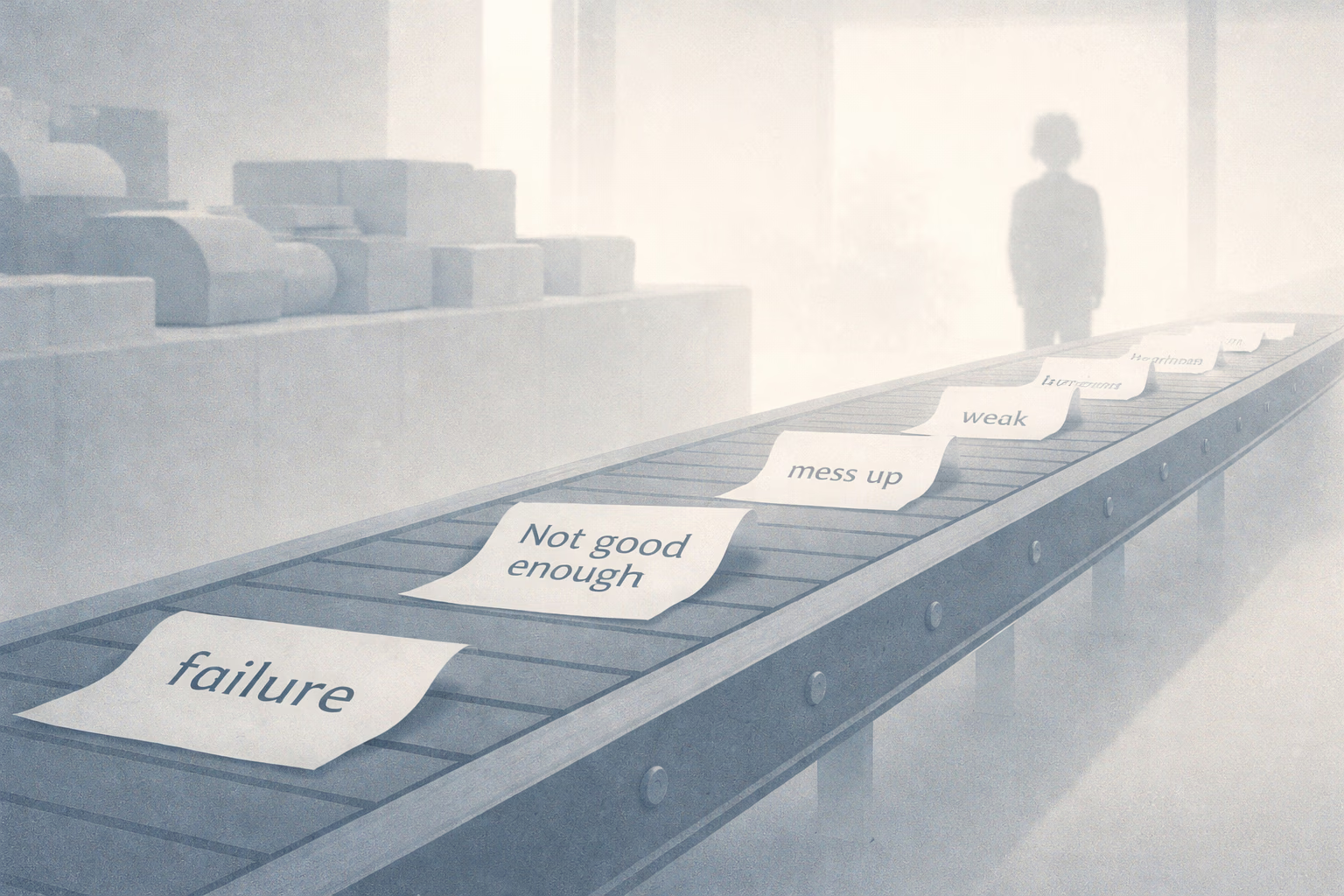
When shame enters, it adds load—making the next urge more likely, not less.
Learning happens through pairing. If stress reliably precedes browsing, and browsing reliably precedes relief, the brain links them. Over time, even mild discomfort can trigger the urge because the system has stored a simple association: “When it hurts, buy.” [Ref-9]
This conditioning can be especially strong online, where novelty is endless and purchase completion is instantaneous. The nervous system receives quick reward signals, while the deeper need (connection, safety, closure) remains open. The loop strengthens because it’s consistent, not because a person is careless.
There’s a difference between feeling better and becoming steadier. Feeling better is a state change. Steadiness is what emerges when the system can complete what it’s carrying—when there’s enough safety, time, and coherence for signals to return and settle.
When internal steadiness grows, stress and loneliness don’t have to be immediately replaced by something external. They can register as information—“I’m overloaded,” “I need contact,” “I need an ending”—rather than as emergencies that require instant consumption. [Ref-10]
What changes when the body can wait for closure instead of chasing relief?
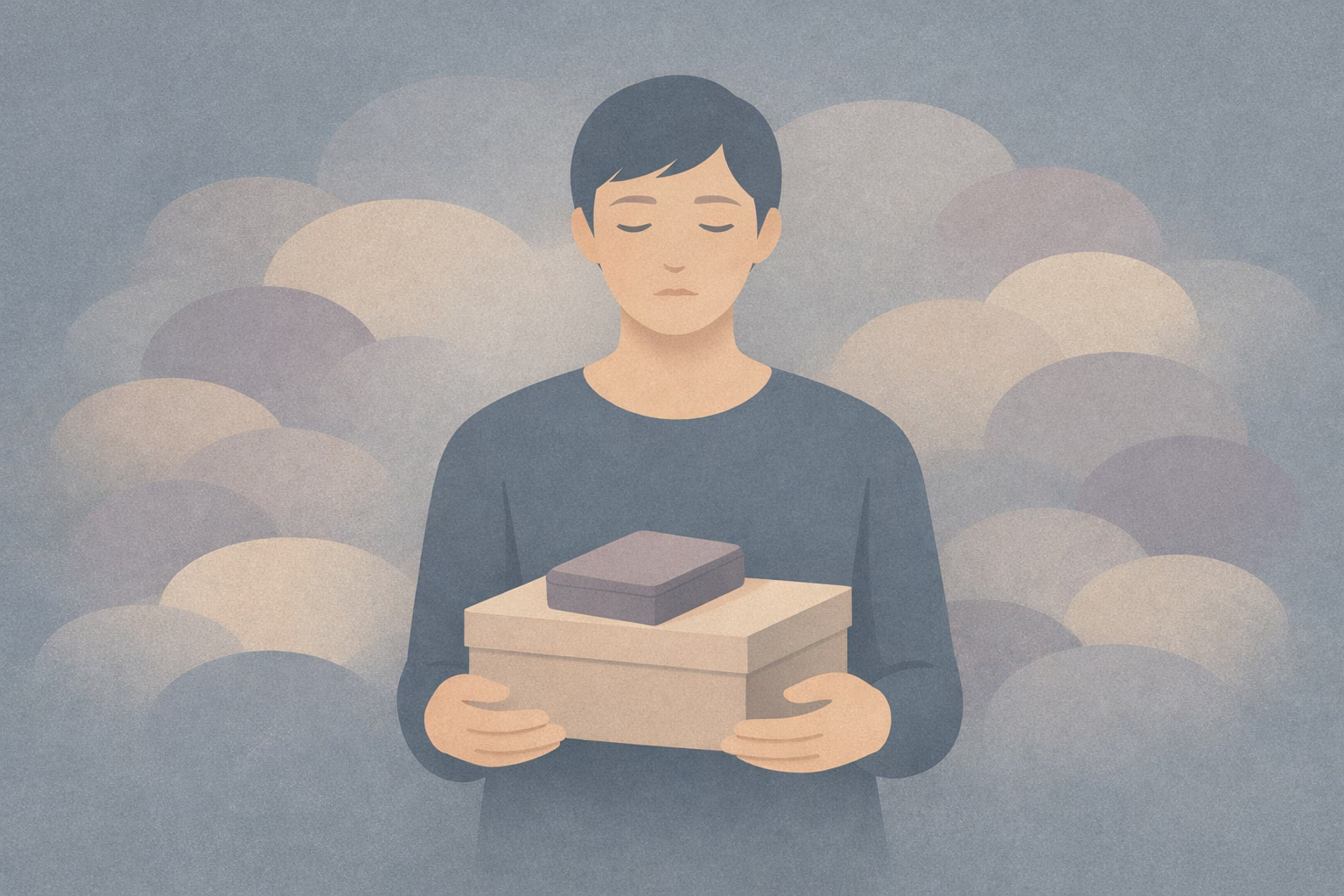
Many spending urges carry attachment needs: reassurance, belonging, being seen, being accompanied through strain. Objects can symbolize those things, but they rarely deliver the reciprocal signals that nervous systems settle into—tone of voice, mutual attention, shared time, repair after conflict. [Ref-11]
Connection is not just “socializing.” It’s the experience of co-regulation: your system receiving cues that you are not alone with what you’re carrying. When those cues land, the urge to secure comfort through purchase often loses some of its intensity because the underlying need is no longer bypassed.
Closeness is a different kind of purchase: it comes with a real receipt in the body.
As load reduces and completion becomes more available, people often describe a quiet structural change: more pause before acting, less urgency, and fewer “blackout” moments where buying happens faster than awareness. This isn’t about becoming hyper-vigilant; it’s about the nervous system regaining bandwidth. [Ref-12]
With more bandwidth, signals can return:
Importantly, this isn’t achieved by insight alone. It’s more like the system finally has room to complete cycles that used to stay open.
As coherence returns, spending choices often begin to reflect identity—care, stewardship, generosity, beauty, practicality—rather than functioning primarily as anesthesia. This can feel like moving from reaction to authorship: not forced restraint, but clearer orientation. [Ref-13]
In that shift, money becomes less of a mood-management tool and more of a meaning tool. Purchases can still be pleasurable; the difference is that pleasure isn’t being asked to carry loneliness, chronic stress, or unfinished inner pressure.
What if your spending could be a reflection of who you are, not a rescue mission?
Emotional spending is often a request for care expressed in the language the modern world makes easiest: clicks, carts, confirmations. Seen this way, the pattern isn’t an identity—it’s a regulatory response to high load and low closure.
When the system doesn’t have reliable ways to complete stress and loneliness, it reaches for what is available and fast. Research on compulsive and online shopping frequently notes links with dysregulation and dissociative “numbing” states—signals of overload rather than moral failure. [Ref-14]
There is dignity in recognizing what the urge is trying to do: reduce strain, create contact, and produce an ending. That recognition can restore agency—not by pushing harder, but by making the pattern legible.
Buying can change your state, and that’s why it’s compelling. But lasting comfort tends to come from needs being met in ways that the nervous system can actually settle into—ways that create completion rather than another open loop. [Ref-15]
When life offers more coherence—clear endings, real reassurance, values that feel lived—urges often soften on their own. Not because you became a different person, but because your system no longer has to outsource steadiness to a receipt.
From theory to practice — meaning forms when insight meets action.
The rush is real, and it's not about the object. A stressed or lonely nervous system finds a fast, available way to shift state, and purchasing reliably delivers that shift — anticipation, decision, confirmation, delivery — each step pinging the Reward & Stimulation System. The drop that follows is the giveaway. Because the underlying load wasn't actually addressed, the relief is state-change rather than completion. The body never received a real Done Signal, so the urge tends to return on a similar timeline. This is closer to a Pleasure Loop than a values-aligned choice: relief without closure, repeated.
Reframing helps here. Emotional spending isn't a moral or financial defect; it's what happens when a system under load reaches for the most available regulator. Older wiring around resources and bonding under stress is part of the picture — humans have always sought safety through gathering and through being cared for, and shopping can mimic both. Purchasing can feel like connection, control, or care, which is why it works so quickly. The pattern only becomes a problem when it's the primary way the system downshifts, because then quieter, more sustainable forms of comfort don't get practiced or developed.
Underneath the urge is usually a need the object can't fully meet: steadiness, contact, reassurance, or the sense of being held together. The urge points toward something legitimate, but the chosen tool offers a state-change rather than the missing condition itself. Connection tends to meet the underlying need more sustainably than objects, because co-regulation supplies the safety cues the Threat & Safety System actually reads. A kinder interpretation of the urge — "my system is asking for closure or contact" — opens space for a different response, without making the original impulse a moral failure.
Forcing restriction tends to backfire because it adds Power Loop pressure on top of an already loaded system. Restored capacity feels less like resistance and more like a pause — a small gap between sensation and reaction, where the urge can be felt without being immediately followed. That gap appears when baseline regulation improves: closure on open loops, real recovery, and contact-based comfort that doesn't vanish when the package arrives. When spending starts reflecting values rather than escape, money decisions stop carrying the entire weight of self-soothing, and the system has more than one door out of discomfort.
From Science to Art.
Understanding explains what is happening. Art allows you to feel it—without fixing, judging, or naming. Pause here. Let the images work quietly. Sometimes meaning settles before words do.
One Quiet Window, one insight, one reflection — every Sunday