
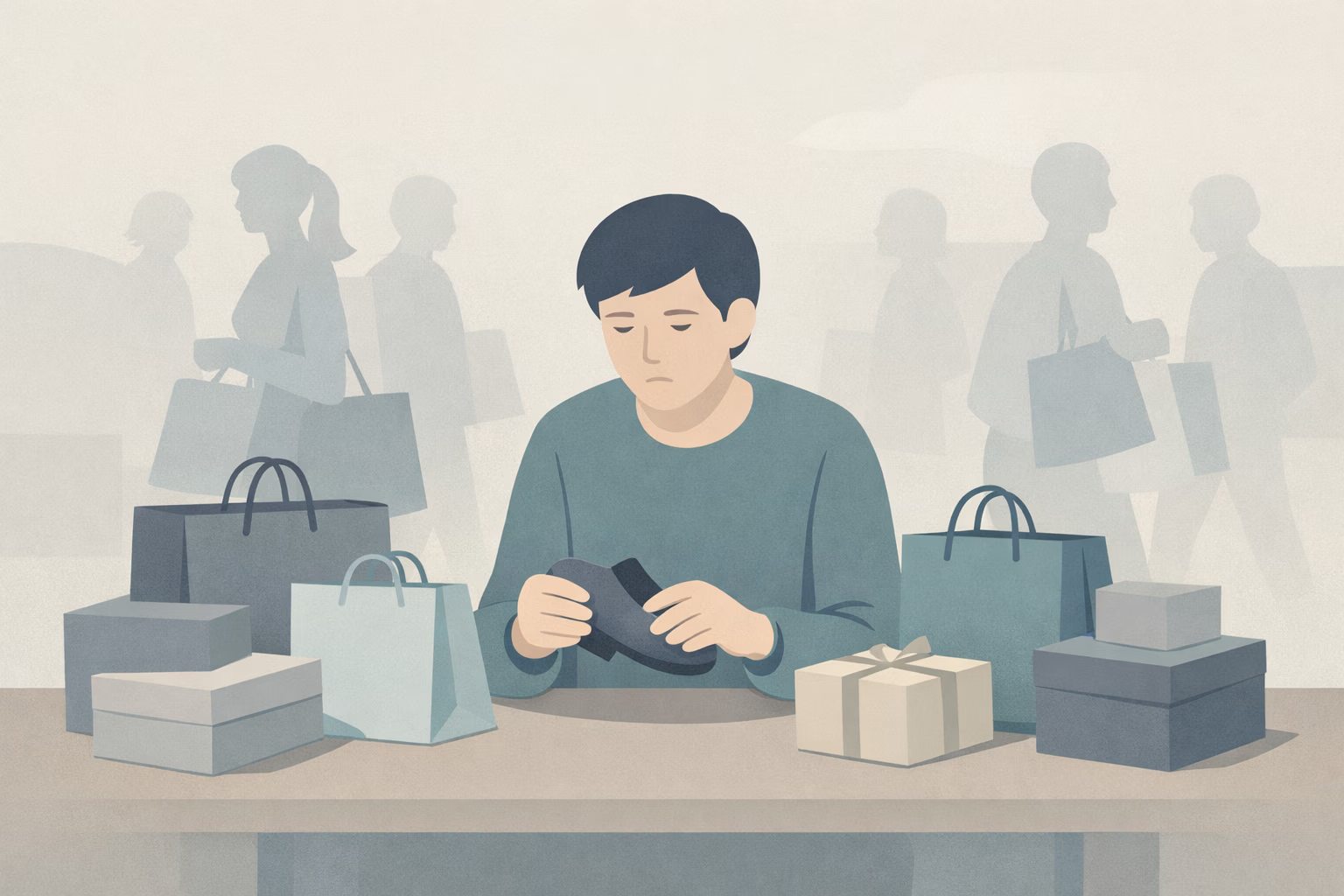
Shopping as Emotional Anaesthesia: When Buying Numbs What Hurts
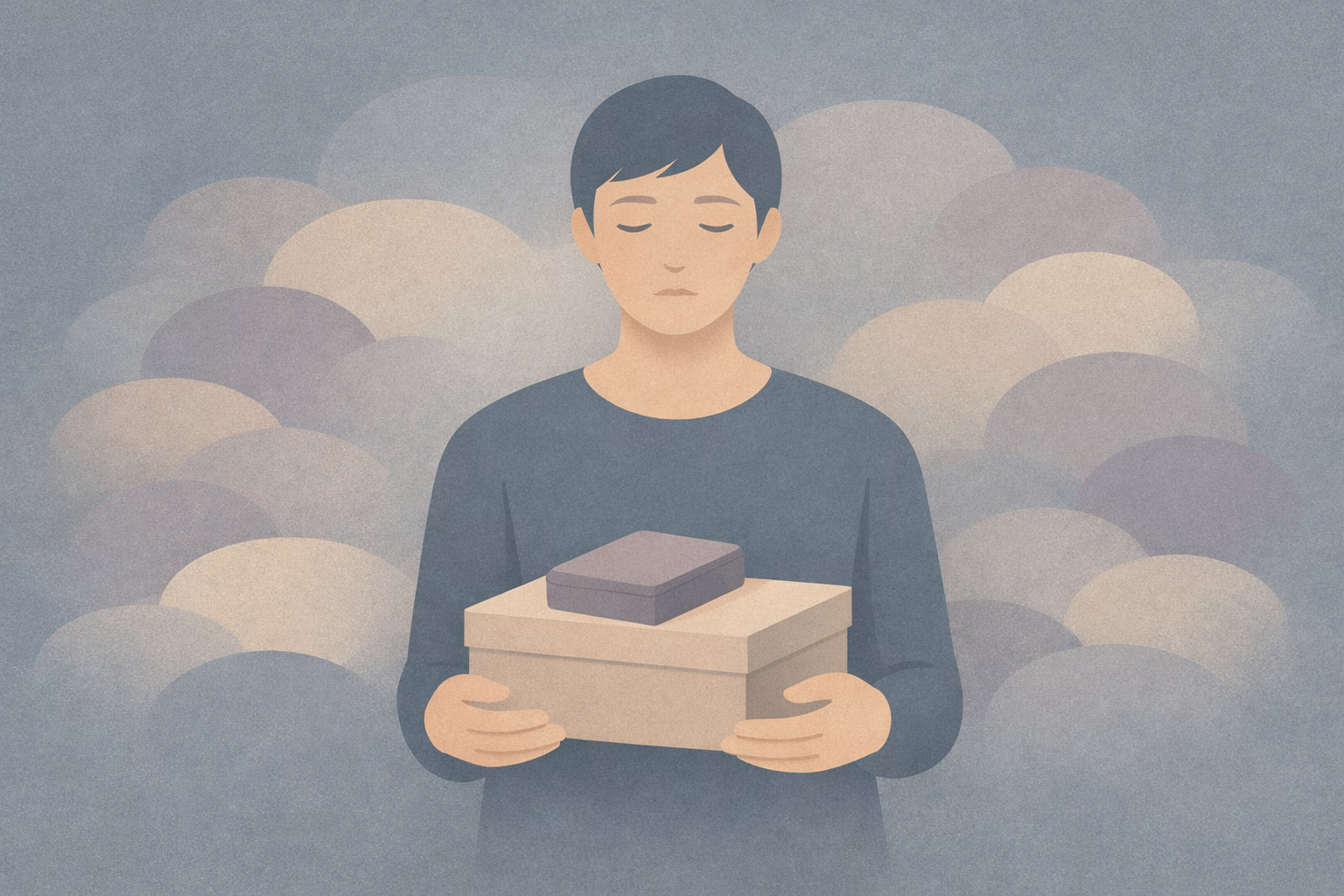
In short: For many people, shopping isn’t just shopping. It can become a fast way to change state: to soften a sharp day, to brighten a flat one, to create a sense of “something happened” when life feels stalled.
For many people, shopping isn’t just shopping. It can become a fast way to change state: to soften a sharp day, to brighten a flat one, to create a sense of “something happened” when life feels stalled. In that sense, the purchase isn’t the point—it’s the shift in the body that comes with anticipation, selection, and acquisition.
What if the urge to buy isn’t a character flaw, but a nervous system reaching for closure?
When life is loud, fragmented, or relentlessly evaluated, the mind can keep looking for a clean ending—something that resolves, something that completes. A transaction looks like completion. The bag looks like proof. But if the underlying strain is still open, the system doesn’t stand down for long.
A common pattern is surprisingly consistent: a rising internal pressure, a narrowing of attention, a sense that “this will help,” followed by a brief lift. Then—often quickly—there’s a drop-off: emptiness, irritation, regret, or a heavy self-questioning that wasn’t present while browsing. [Ref-1]
This isn’t evidence of being “bad with money” or “weak.” It’s what happens when the body borrows relief from stimulation and completion signals, and then has to return to the same unresolved load once the novelty fades.
It can feel like relief is right there—until it isn’t.
Shopping is neurologically potent because it’s built from reward ingredients that the brain prioritizes: anticipation, novelty, and the promise of acquisition. Browsing creates a stream of “maybe” moments, each one capable of briefly shifting arousal and attention. [Ref-2]
In simple terms, the system gets a short-lived quieting of discomfort—not because the discomfort was processed, but because attention and reward circuitry are temporarily engaged elsewhere. The reinforcement is immediate: the body learns that buying (or almost buying) changes the internal channel quickly.
Long before online carts and next-day shipping, nervous systems were shaped to prioritize opportunity capture: secure resources, reduce uncertainty, and keep options open. Acquisition is inherently regulating because it signals safety and preparedness at a biological level.
When modern distress is chronic and ambiguous—no clear finish line, no “done” signal—the brain may lean harder on what reliably produces a sense of completion. The shopping pathway is one of the most accessible forms of that signal: choose, obtain, confirm. [Ref-3]
So the pull isn’t mysterious. It’s a survival-era circuit meeting a high-stimulation marketplace.
Stress often comes with a specific sensory profile: urgency, constriction, and a feeling that there’s too much to hold at once. In that state, shopping can function like a controllable micro-world—filters, categories, price ranges, clear options, immediate feedback.
The lift is not imaginary. For a short window, purchasing can provide pleasure, agency, and a mood shift—especially when the rest of life feels messy, interpersonal, or uncertain. Under stress, the brain tends to prefer fast, predictable regulators. [Ref-4]
When your day has no clean ending, isn’t it understandable to reach for one?
A purchase can look like a solution because it creates a visible endpoint: confirmation email, package tracking, a new object with a name and a purpose. But the internal conditions that drove the urge—overload, loneliness, chronic evaluation, unfinished conversations, ongoing uncertainty—often remain untouched.
That’s why the relief can flip into a different kind of strain: financial pressure, clutter, secrecy, relationship tension, or a sharp dip in self-trust. The nervous system doesn’t interpret these as “lessons”; it interprets them as more load. And more load increases the likelihood of reaching for quick relief again. [Ref-5]
The result can feel confusing: “It helped… and then it made things worse.” Structurally, both can be true.
Over time, shopping can become a closed circuit: discomfort rises, desire activates, acquisition provides a brief downshift, and then the baseline discomfort returns—sometimes with added strain. The loop stays alive because it reliably changes state, not because it creates lasting completion.
In this kind of loop, dissatisfaction isn’t a personal failure—it’s a predictable outcome of using stimulation as a stand-in for closure. Relief changes the channel; integration would require an experience to feel truly “finished” in the body and in identity, which doesn’t happen through purchase alone. [Ref-6]
This is why people can buy things they don’t even want, and still feel pulled: the target isn’t the object—it’s the nervous system shift.
Buying/shopping problems are not one uniform behavior. They tend to cluster around specific conditions: high load, low rest, social comparison, or long stretches without completion. [Ref-7]
The pattern can look like:
None of these are an identity. They are strategies that make sense to a system that has learned, repeatedly, that buying produces a fast internal shift.
Compulsive buying doesn’t only affect budgets. It can gradually erode the internal sense of reliability—“I can trust myself with choice.” When purchases happen outside intention, the nervous system learns to anticipate conflict: between desire and consequence, between relief and regret. [Ref-8]
Over time, the environment itself can become loaded: unopened boxes, returns that never happen, credit statements, or a home that feels less restful. Even when items are “nice,” they can carry a residue of urgency—evidence that the system had to anesthetize something to get through.
And perhaps most subtly: constant novelty can flatten authentic satisfaction. When the brain is trained on quick reward, ordinary pleasures can register as too quiet to count.
Brains learn through pairing. When discomfort repeatedly precedes browsing and buying, and buying repeatedly precedes relief, the association strengthens: discomfort becomes a cue for consumption. With enough repetition, the urge can arrive before conscious thought—less like a decision, more like a reflexive route. [Ref-9]
This is one reason willpower often feels irrelevant in the moment. The system isn’t negotiating; it’s completing a learned sequence that has reduced arousal before. The “why am I doing this?” question can appear only after the peak has passed and the nervous system is already coming down.
In that light, relapse-like cycles are not moral failures. They are what conditioned loops look like when the underlying load keeps returning.
When internal steadiness is higher, external rewards become less urgent. Not because a person has “better insight,” but because the body can tolerate an incomplete moment without needing immediate anesthesia. In that state, an urge can arise and pass like weather—present, informative, not automatically commanding. [Ref-10]
This is a different kind of change than understanding your triggers. Understanding is cognitive; steadiness is physiological. It shows up as a greater ability to return to baseline after activation, and as fewer purchases driven by the need to escape a state.
When the system has somewhere to land, it stops grasping for landing pads.
Shopping often stands in for something relational: being seen, being held in mind, having a shared moment that makes the day feel real. Objects can symbolize belonging or renewal, but they can’t reciprocate, repair, or confirm you in the way an attuned relationship can.
When people experience validation, shared experience, and reliable social support, the nervous system receives safety cues that reduce the need for solo, rapid regulators. This doesn’t mean “just be social.” It means recognizing that many consumption urges are also signals about unmet contact, unmet recognition, or unmet tenderness in a high-pressure life. [Ref-11]
In a connected context, wanting something can remain a preference instead of becoming a rescue mission.
As the loop loses intensity, something practical returns: discernment. The difference between “I want this” and “I need this to change my state” becomes clearer—not as an epiphany, but as a quieter body signal.
People often describe a more stable internal baseline, where low moods don’t automatically demand immediate correction, and where purchases feel more proportional to actual need or genuine delight. That shift is less about becoming stricter and more about recovering choice. [Ref-12]
When the nervous system is less loaded, the mind can evaluate: cost, usefulness, long-term fit, and whether the purchase aligns with the person you recognize yourself to be.
Compulsive consumption tends to be present-focused: fix the feeling now. Values-based spending is identity-focused: build a life that feels coherent over time. The difference isn’t virtue; it’s orientation.
As meaning returns, purchases can shift from anesthesia to expression—supporting what matters rather than muting what hurts. A home becomes less of a staging area for deliveries and more of a place that reflects lived priorities. Money becomes less of a leak and more of a map. [Ref-13]
What does your spending say you’re trying to protect?
That question isn’t an interrogation. It’s a doorway into coherence: the part of you that reaches for relief is also the part that wants life to feel bearable, whole, and finished at the end of the day.
Shopping urges often arrive as a form of communication: “load is high,” “the day feels uncompleted,” “there’s not enough comfort,” “there’s too much evaluation,” “there’s not enough contact.” When the urge is treated as a verdict—proof of being out of control—shame adds more strain, and the loop gains fuel.
When the urge is treated as information, the story changes. Not into a quick fix, but into a more dignified frame: a nervous system seeking relief in the most available way. In that frame, meaning can re-enter through what reliably creates real completion—moments that settle into identity, relationships that confirm reality, creativity that produces a finished “done,” and choices that align with what you want your life to stand for. [Ref-14]
Desire is not the enemy. It’s a biological force that points toward needs, possibility, and aliveness. The trouble starts when desire is asked to do the job of integration—when purchases become the main way the body finds quiet.
Over time, the most stabilizing relief tends to come from experiences that truly complete: where the nervous system can stand down, and where life feels more coherent afterward. That kind of fulfillment doesn’t depend on constant novelty. It accumulates. And it leaves less emptiness behind. [Ref-15]
From theory to practice — meaning forms when insight meets action.
Because the loop isn't really about the object — it's about the state shift. The familiar arc is urge, purchase, drop-off. Anticipation narrows attention, novelty raises salience, and acquisition mimics completion: a clean endpoint the nervous system can register. For a moment, things feel handled. Then the lift fades, and the original load — overload, loneliness, evaluation, unfinished conversations — is still there, plus financial pressure, clutter, secrecy, or a dip in self-trust. Relief is a state change, not closure. The system never received a real Done Signal, just a borrowed one. The Pleasure Loop runs on stimulation as a stand-in for regulation.
Usually not. People often buy things they don't even want, because the target isn't the object — it's the nervous-system shift. Shopping is neurologically potent because it bundles ingredients the brain prioritizes: anticipation, novelty, the promise of acquisition. Browsing creates a stream of 'maybe' moments, each capable of briefly shifting arousal and attention. Under stress — urgency, constriction, too much to hold — shopping functions like a controllable micro-world: filters, categories, immediate feedback. A pocket of agency in a messy day. The pull isn't mysterious. It's a survival-era circuit (acquire resources, reduce uncertainty) meeting an environment engineered to keep that circuit firing.
Through repetition that trains the brain to associate discomfort with consumption. When discomfort repeatedly precedes browsing and buying, and buying repeatedly precedes relief, the association strengthens until the urge arrives before conscious thought — less like a decision, more like a reflexive route. The pattern shows up as impulse purchases that feel inevitable, mood-shifting browsing during flatness or agitation, chasing novelty (drops, sales) to keep the lift going, and concealment cycles. Willpower feels irrelevant in the moment because the system isn't negotiating; it's completing a learned sequence. The Avoidance Loop holds because it reliably produces a fast internal shift, even though it never closes the original loop.
Because shopping often stands in for something relational: being seen, being held in mind, having a shared moment that makes the day feel real. Objects can symbolize belonging or renewal, but they can't reciprocate or confirm you the way attuned contact can. When the system has steadier internal capacity, an urge can arise and pass like weather — present, informative, not automatically commanding. As the Avoidance Loop loses intensity, discernment returns: the difference between 'I want this' and 'I need this to change my state' becomes clearer. Purchases align more with values than anesthesia. Money becomes less of a leak and more of a map.
From Science to Art.
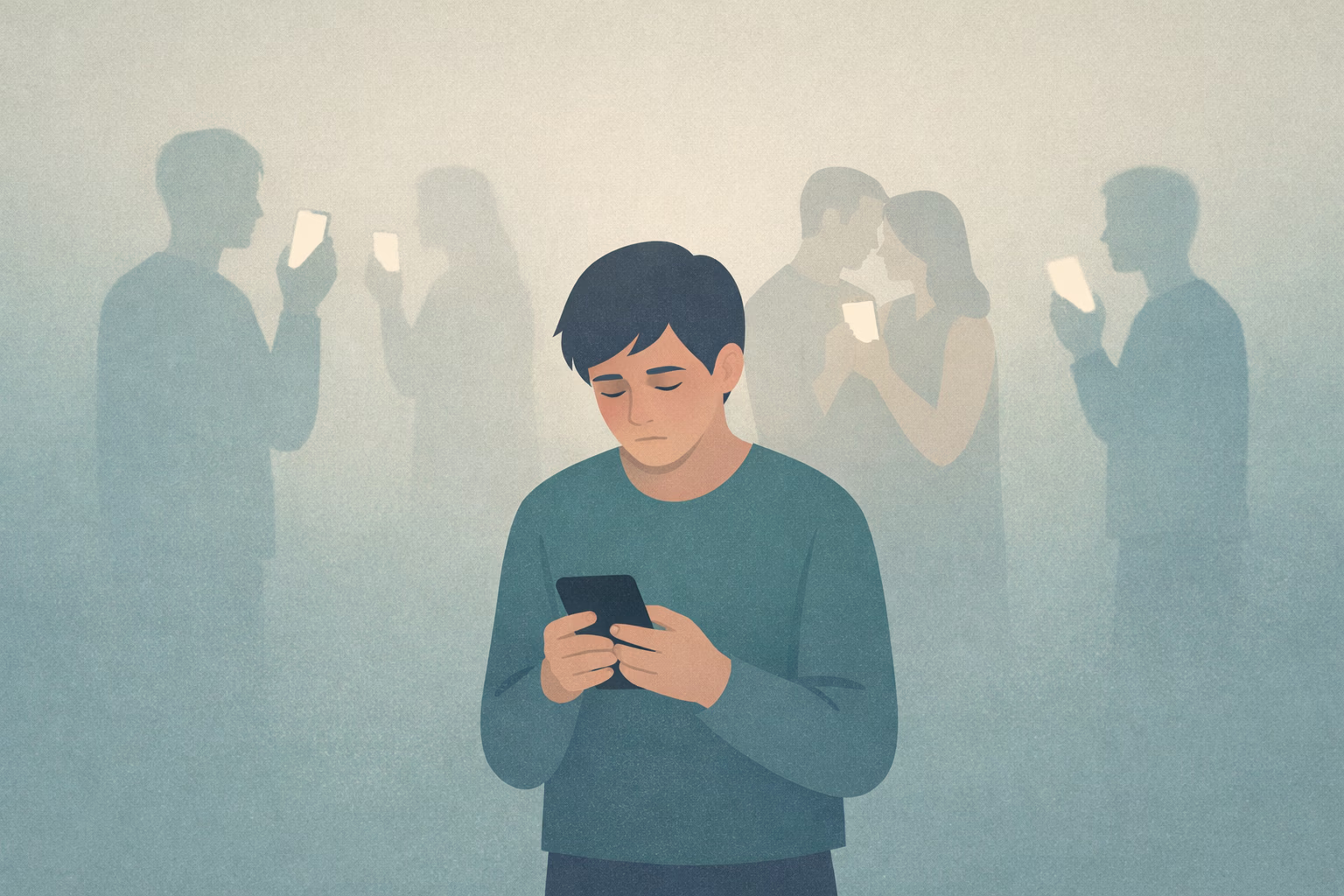
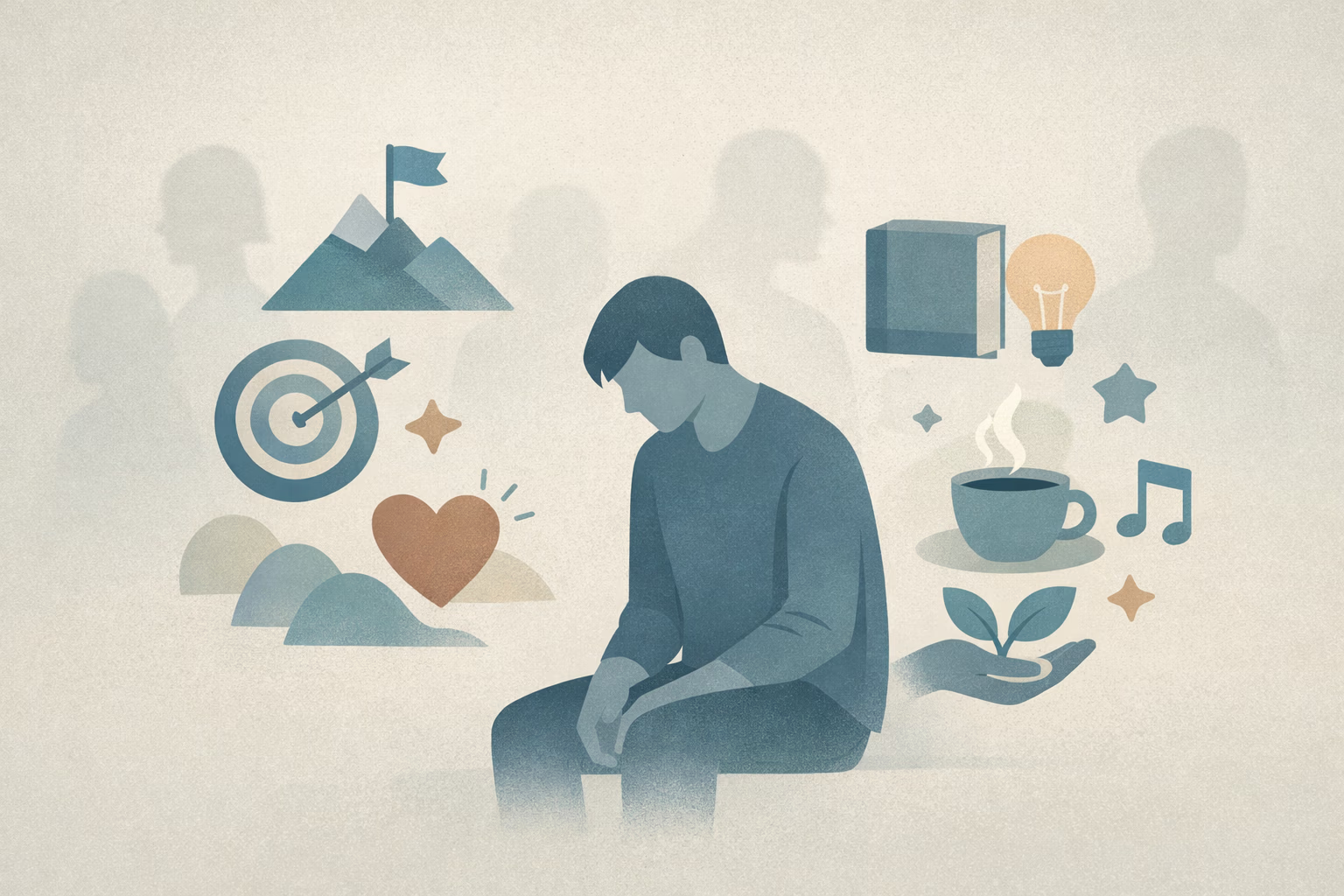
Understanding explains what is happening. Art allows you to feel it—without fixing, judging, or naming. Pause here. Let the images work quietly. Sometimes meaning settles before words do.
One Quiet Window, one insight, one reflection — every Sunday