
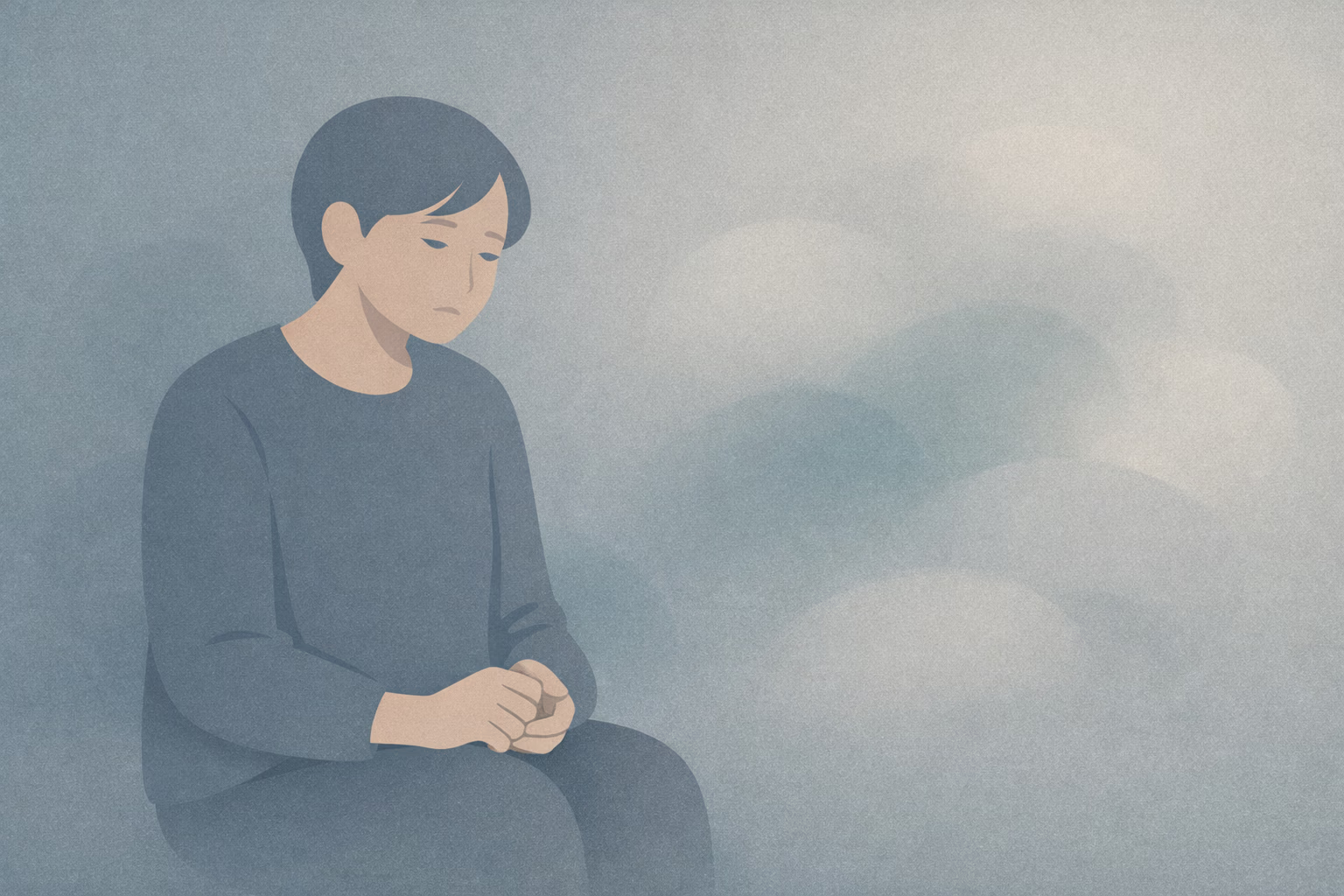
Emotional Numbing Habits: How You Avoid Feeling
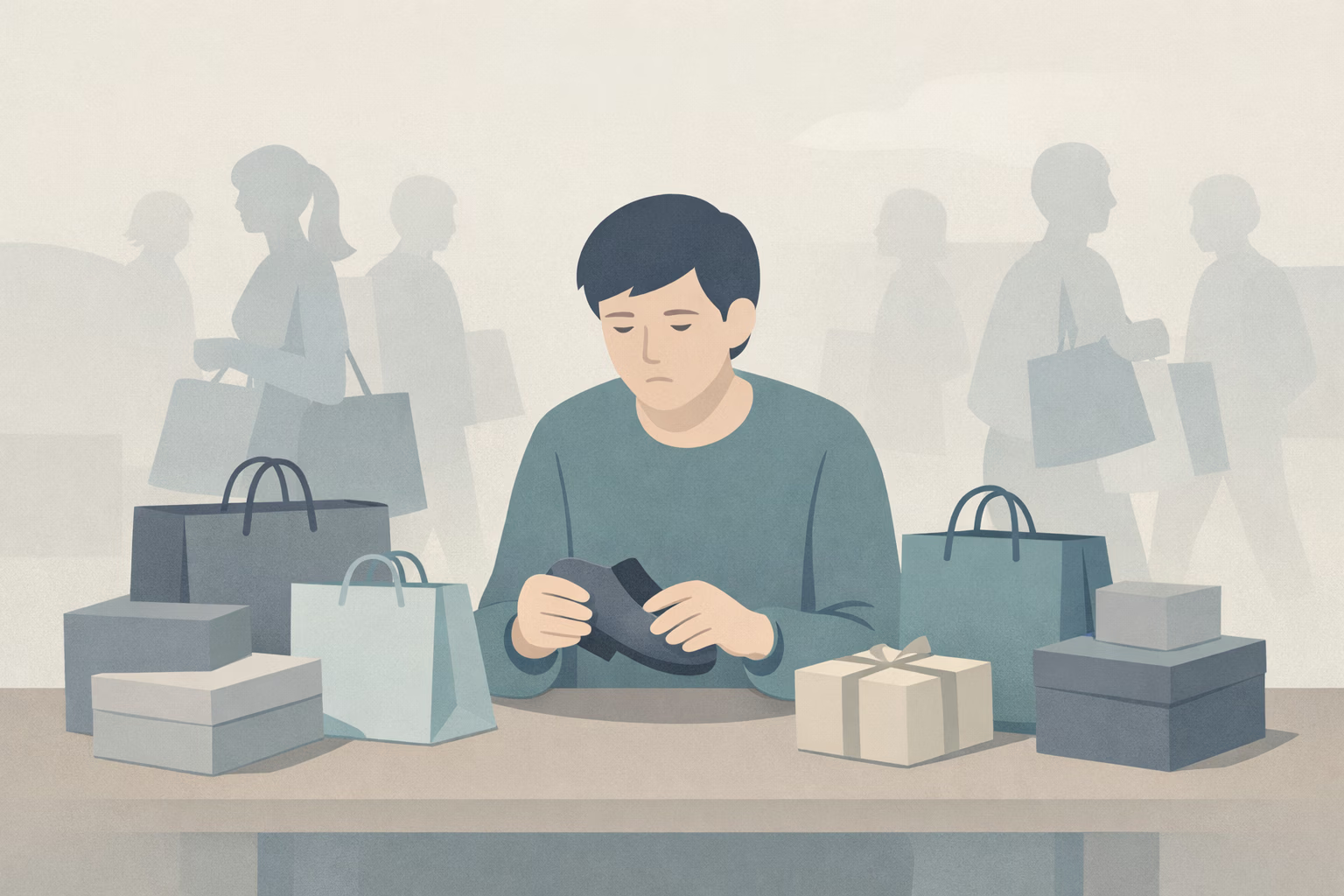
In short: Sometimes shopping isn’t about liking things. It’s about getting a few minutes where the inside noise quiets down—where the body feels less cornered, less restless, less full of unnamed pressure.
Sometimes shopping isn’t about liking things. It’s about getting a few minutes where the inside noise quiets down—where the body feels less cornered, less restless, less full of unnamed pressure.
What if the urge to buy is less a flaw in willpower—and more a nervous system trying to find a quick “done” signal?
This pattern is often called “retail therapy,” but that phrase can flatten what’s actually happening. Buying can function like emotional anaesthesia: not a dramatic escape, but a small, repeatable way to mute discomfort and regain a sense of control—without the deeper experience ever reaching closure.
Emotional-anaesthesia shopping often starts the same way: a wave of stress, emptiness, agitation, loneliness, or overload—followed by a sudden pull toward browsing or buying. For a moment, the body shifts: attention narrows, urgency has a target, and there’s a clean, concrete “next step.”
Then the moment passes. The package arrives, the tags come off, the receipt lands in your inbox, and the original sensation returns—sometimes with extra static layered on top, like regret or self-doubt. The loop doesn’t mean you “failed.” It means the relief you got was real, but temporary and incomplete. [Ref-1]
Shopping can change state before anything is even purchased. Anticipation, comparison, and the act of selecting can create small reward signals in the brain—micro-surges that sharpen focus and briefly mute competing internal signals.
In plain terms: browsing can act like a narrow beam of attention that makes diffuse discomfort harder to feel. The brain likes clear options and immediate feedback; a cart, a deal, and a checkout button provide fast certainty when the rest of life feels ambiguous. That’s not moral weakness—it’s a predictable response to a system seeking quick stabilization through reward and resolution. [Ref-2]
Human reward systems evolved in environments where acquiring resources often meant safety: food, tools, shelter, signals of belonging, and cues of status that reduced social threat. In that context, “getting something” could legitimately lower danger.
Modern shopping leverages the same circuitry, but now the rewards are abundant, rapid, and socially amplified. What used to be occasional, effortful acquisition becomes always-available micro-acquisition—each one offering a small drop in tension and a brief sense of being equipped, improved, or more acceptable. [Ref-3]
Under high stress load, the nervous system tends to prefer experiences with clear boundaries: start, middle, finish. Shopping offers that shape. There’s a problem (“I feel off”), a task (“find the right thing”), and a conclusion (“purchased”).
Even when the item isn’t needed, the process can temporarily restore a sense of control. It also provides structured distraction: a stream of images, prices, reviews, and decisions that are easier to manage than vague internal pressure. The relief isn’t imaginary—it’s the body shifting into a narrower, more organized state. [Ref-4]
The difficult part is that the purchase can look like it “worked,” because the state change is immediate. But the original discomfort wasn’t a problem of not having enough objects; it was a signal of unmet needs, depleted capacity, or an unfinished experience that hasn’t reached completion.
So the system returns to the same baseline after the novelty fades. The emptiness isn’t cured by the item, because the emptiness wasn’t caused by the absence of the item. The result can be a confusing mismatch: visible evidence of “treating yourself” paired with an internal sense of still-not-done—sometimes complicated by financial strain that adds more background pressure. [Ref-5]
In this pattern, consumption becomes a stand-in for regulation. Instead of the nervous system moving toward completion—where an experience settles and no longer demands attention—it moves toward repeated state changes: browse, buy, unbox, repeat.
Relief and stimulation are not the same as integration. Relief can quiet signals. Stimulation can overwrite them. But the underlying loop remains “open” when there’s no true completion: no felt sense of resolved meaning, no internal stand-down, no identity-level settling that says, “This is accounted for.” The body may then request the next purchase not because the last one was “wrong,” but because it never produced closure. [Ref-6]
“It’s not that the new thing is disappointing. It’s that the quiet doesn’t last.”
Emotional anaesthesia shopping isn’t always dramatic. Often it’s woven into ordinary moments—after a hard meeting, during a lonely night, while waiting for news, or when the day feels shapeless and heavy.
These are regulatory moves: attempts to reduce internal noise and create a quick endpoint in a world that rarely provides one. [Ref-7]
When buying becomes a frequent anesthetic, two things can slowly change. First, finances become another layer of background activation—bills, credit anxiety, or a subtle sense of being “behind” that keeps the system braced.
Second, self-trust can erode. Not because you are unreliable, but because the body repeatedly experiences: “I had an urge, I acted, and later I felt worse.” Over time, that can make internal signals feel less trustworthy—either too loud (urgent cravings) or oddly muted (numbness, flatness, dissociation-like disconnection). The more often discomfort is bypassed with fast relief, the less practice the system gets in returning to baseline through completion. [Ref-8]
Learning systems are simple: what brings relief gets repeated. If purchasing reliably drops tension—even briefly—the brain links the earliest hint of discomfort with the fastest available regulator.
That association can become automatic: a difficult email, a quiet evening, a body sensation of restlessness—and the mind is already opening tabs. This isn’t “lack of discipline.” It’s conditioning under load: a well-trained pathway from activation to acquisition, strengthened by the immediacy of relief and the clarity of the shopping sequence. [Ref-9]
There’s a difference between being able to name what’s happening and being able to not need the anesthetic. The second is about capacity—what your nervous system can hold without urgently outsourcing regulation to a purchase.
When internal steadiness is more available, discomfort can pass through the system without requiring an external “plug-in” to mute it. That doesn’t mean discomfort feels pleasant or that life becomes emotionally effortless. It means signals can rise and fall without immediately converting into action, because the body expects a return to baseline. In many discussions of retail therapy, the key shift is recognizing the short-lived mood lift and the longer-term need for sturdier regulation and support. [Ref-10]
What changes when your system believes, at a body level, that the moment will complete?
Humans are social regulators. Feeling seen, validated, or accompanied can lower threat responses and reduce the sense that you must manage everything alone. In that context, shopping doesn’t have to carry the entire burden of comfort.
Not all support is intimate or dramatic. Sometimes it’s the quiet stabilization of shared reality: another person reflecting your experience, a community making space for struggle, or a relationship that reduces constant self-evaluation. When relational cues of safety increase, the urgency for quick private relief often decreases—because the nervous system is no longer operating as if it’s isolated on a high-wire. [Ref-11]
As load reduces and more experiences reach completion, many people notice subtle shifts: more pause between urge and action, less intensity in the pull to browse, and fewer purchases that feel like a foggy blackout.
This can look like clearer decision-making: wanting something and still being able to wait; buying with less adrenaline; feeling less “taken over” by the promise of a new item. Research on shopping and mood suggests that shopping can sometimes regulate emotion in the short term, but longer-term well-being tends to rely on broader stability and regulation capacities rather than repeated consumption-based repair. [Ref-12]
Importantly, restored coherence isn’t a constant high. It’s a more reliable return: the system settles more often, and the urge doesn’t need to be obeyed to quiet down.
In a more coherent state, purchases can return to their simpler roles: practical support, genuine enjoyment, occasional beauty. They no longer have to function as emotional triage.
That shift often feels like identity clarity. Not “I am a person who never shops,” but “I know what this purchase is for.” Spending starts to reflect values—care, creativity, comfort, generosity, sustainability, simplicity—rather than an urgent attempt to outrun internal discomfort. The difference is not purity. It’s meaning: buying becomes part of a life narrative that feels integrated instead of a detour that temporarily suspends it. [Ref-13]
When shopping becomes emotional anaesthesia, it’s often a sign that something inside is running without closure: chronic stress, unresolved hurt, loneliness, identity pressure, or a long season of having to “perform okay.” In that light, the urge to buy is not evidence of shallowness—it’s evidence of strain and an intelligent system reaching for fast relief.
Many pathways can feed this pattern, including earlier experiences that shaped how the nervous system manages distress and self-soothing. The important point is structural: when inner difficulty has nowhere to complete, the brain will prefer what reliably lowers activation quickly. [Ref-14]
Agency tends to return not through harsher self-talk, but through restored coherence—when life offers more real endings, more support, and more moments that settle all the way through.
Buying something can change your state. That’s why it works—briefly. But stability tends to come from completion: when what hurts is no longer circling for an exit, and the nervous system can register that the moment is truly over.
When that kind of closure becomes more available, shopping can be just shopping again—an ordinary choice, not an anesthetic. And the parts of you that reached for relief were never “bad parts.” They were responding to load, doing their best to create quiet in a world that rarely offers a natural stop signal. [Ref-15]
From theory to practice — meaning forms when insight meets action.
Because shopping has a clear shape — start, middle, finish — and under stress the nervous system prefers experiences with defined edges. There's a problem (I feel off), a task (find the right thing), and a conclusion (purchased). Anticipation and the act of selecting create small reward signals that briefly mute diffuse internal sensations. Browsing acts like a narrow beam of attention that makes vague discomfort harder to feel, and a cart and checkout deliver fast certainty when life feels ambiguous. The Pleasure Loop fires before completion can land. The relief is real — it's just incomplete, which is why it doesn't last.
Because the discomfort wasn't caused by the absence of the item. Emptiness, restlessness, loneliness, overload — those signal unmet needs, depleted capacity, or experiences that haven't reached closure. The purchase changed your state, but it didn't address what was actually unfinished. So the system returns to baseline once novelty fades, and sometimes returns with extra static layered on: regret, clutter-stress, financial pressure. The mismatch — visible evidence of treating yourself paired with internal still-not-done — is the loop running without ever delivering a real Done Signal. Consumption replaces closure, but it can't substitute for it.
Yes — and one the brain reinforces fast. Learning systems repeat what brings relief, so if purchasing reliably drops tension even briefly, the earliest hint of discomfort gets linked to the fastest available regulator. A difficult email, a quiet evening, a body sensation of restlessness — and the mind is already opening tabs. This isn't lack of discipline; it's well-trained conditioning under load. Acquisition also makes sense to an ancient nervous system: getting something once meant safety, tools, status. Modern shopping leverages that circuitry with always-available micro-acquisition. Evolutionary Mismatch turns occasional resource-securing into a constant anaesthetic.
Subtler. More pause between urge and action, less intensity in the pull to browse, fewer purchases that feel like a foggy blackout. Wanting something and still being able to wait. Buying with less adrenaline. Feeling less taken over by the promise of the new item. This isn't constant calm — it's a more reliable return: the system settles more often, and the urge doesn't need to be obeyed to quiet down. Purchases return to their simpler roles: practical support, genuine enjoyment, occasional beauty. Spending starts reflecting values rather than running emotional rescue duty. Identity clarity replaces the need for triage.
From Science to Art.
Understanding explains what is happening. Art allows you to feel it—without fixing, judging, or naming. Pause here. Let the images work quietly. Sometimes meaning settles before words do.
One Quiet Window, one insight, one reflection — every Sunday