Fear of Being Left Behind (FOMO Version 2.0)
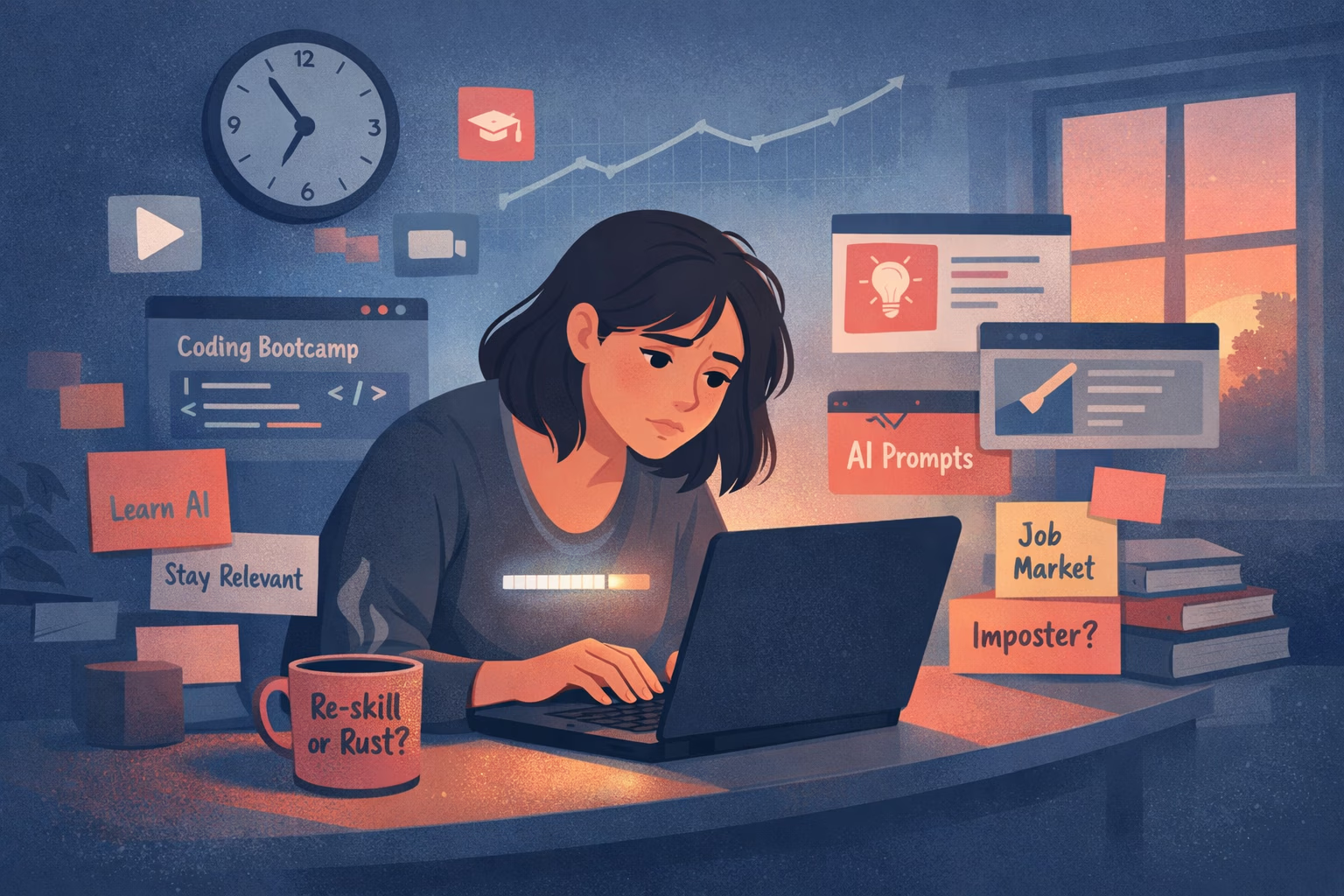
In short: Reskilling pressure is the chronic stress created by continuous demands to learn, update, and adapt faster than most cognitive systems can comfortably absorb. It often shows up as a background urgency: another course, another tool, another “must-know” trend—paired with a stubborn sense that nothing you learn actually lands.
Reskilling pressure is the chronic stress created by continuous demands to learn, update, and adapt faster than most cognitive systems can comfortably absorb. It often shows up as a background urgency: another course, another tool, another “must-know” trend—paired with a stubborn sense that nothing you learn actually lands.
What if the “always behind” feeling is a nervous-system signal about load and unfinished learning loops—not a verdict on your capability?
When your environment keeps reopening the same loop (“catch up, prove you’re current”), your system stays mobilized. And when there’s no reliable “done” signal, competence can remain fragile—more like a temporary state than a stable part of who you are.
Endless tabs, courses, newsletters, micro-certifications, and shifting job requirements can create a specific kind of fatigue: you can be working hard and still feel like you’re standing still. The issue isn’t effort. It’s that the learning process is being asked to stay permanently open, with no moment where your system can register completion. [Ref-1]
In healthier learning conditions, skill-building has edges: a beginning, a period of practice, feedback, and an eventual “this is now mine.” Under reskilling pressure, those edges blur. Mastery gets replaced by continual updating, and your sense of competence doesn’t get the chance to consolidate into something steady.
When the finish line keeps moving, it’s hard for the body to stop running.
Learning isn’t just absorbing information—it’s allocating attention, holding details in working memory, and building durable patterns through repetition. Information overload taxes those systems by forcing constant selection, switching, and triage. Over time, the brain starts treating the learning field itself as high-stakes noise rather than coherent input. [Ref-2]
In that state, retention can drop—not because you’re incapable, but because attention is being spent on managing volume. When working memory is crowded, new material has fewer “hooks” to attach to. The result can look like forgetting, rereading, or skimming without landing, even when motivation is present.
Why does it feel harder to learn the more you try to learn?
Because the system isn’t failing. It’s protecting bandwidth.
For most of human history, skills were transmitted through slower rhythms: apprenticeship, observation, repeated practice, and stable tools that stayed relevant long enough to become embodied. Modern reskilling often asks for the opposite—rapid acquisition, frequent tool changes, and performance proof before the skill has had time to settle. [Ref-3]
When the environment changes faster than integration can occur, the nervous system reads the landscape as unstable. That can create a background vigilance: if the ground keeps shifting, the safest move is to stay on alert. In that stance, learning becomes less like exploration and more like hazard management.
When demands are overwhelming, avoidance and procrastination can function as short-term regulation. Not as a moral failure, and not necessarily as “fear”—but as a structural move that reduces contact with an environment that has become too dense, too evaluative, or too open-ended. [Ref-4]
Pulling back lowers immediate pressure: fewer inputs, fewer decisions, fewer moments of feeling behind. The nervous system gets a brief reduction in load. But because the underlying loop is still open (“you should be learning”), disengagement can also leave a residue of unfinishedness—an internal sense that something is still pending.
So the cycle can repeat: pressure rises, engagement becomes costly, avoidance reduces the cost, and the loop stays incomplete.
Reskilling is often sold as a path to security: keep learning and you’ll stay employable. But when learning is pursued under continuous threat of obsolescence, the process can become physiologically incompatible with mastery. Overload makes it harder to consolidate knowledge, which then erodes confidence, which then increases pressure to keep acquiring more. [Ref-5]
This is one reason people can have impressive libraries of courses and still feel underqualified. The environment rewards accumulation signals—enrollment, badges, “staying current”—even when the nervous system hasn’t had the closure required for competence to feel stable.
In an Avoidance Loop, overwhelm leads to disengagement, and disengagement intensifies the sense of risk. The loop isn’t psychological drama; it’s a predictable pattern when the system is asked to carry more open tasks than it can close. [Ref-6]
Overwhelm often shows up as scattered attention, difficulty choosing what matters, and a persistent internal clock. Disengagement then offers immediate relief by reducing exposure to the demand field. But afterward, the environment hasn’t changed—deadlines, industry narratives, and comparison remain—so the sense of being behind can return with more force.
Under reskilling pressure, many people develop patterns that are actually attempts to find stability inside a high-velocity learning economy. These are not identities; they’re regulatory responses to a system that keeps reopening the same loop. [Ref-7]
None of these prove a lack of discipline. They often indicate that the system is trying to manage too many competing signals at once.
When learning stays fused to urgency, the cost isn’t only fatigue. Over time, sustained cognitive pressure can reduce learning capacity itself—attention narrows, novelty becomes irritating, and even enjoyable growth can start to feel like a demand. [Ref-8]
Identity can also become less stable. Instead of “I’m a competent person who learns,” the internal narrative can shift toward “I’m someone who’s perpetually catching up.” That story isn’t a belief you choose; it’s a coherence problem created by repeated incompletion. When nothing gets to feel finished, the self can feel unfinished too.
It’s hard to enjoy growth when growth is treated like a survival requirement.
Modern work culture often delivers rapid-change narratives that constantly reset expectations: new frameworks, new tools, new role definitions, new “baseline skills.” Even when you learn something meaningful, the context can quickly imply it’s already outdated. This repeated resetting can keep the nervous system in a state of re-mobilization before learning has time to consolidate. [Ref-9]
Closure requires relative stability—enough continuity for practice to create a “done” signal. When the environment repeatedly signals “not enough yet,” the system learns that completion is unsafe to trust. The result is a chronic readiness state: always preparing, rarely arriving.
There is a distinct kind of steadiness that can return when learning demands match cognitive limits: attention becomes less fragmented, choices feel less punishing, and curiosity can reappear without immediately turning into pressure. This isn’t about “thinking positively.” It’s what happens when load drops enough for the system to stop bracing against the next wave. [Ref-10]
In that steadier state, learning can become trackable again. Not in the sense of constant measurement, but in the sense that experiences can actually complete—information turns into usable knowledge, and knowledge has a chance to settle into identity as competence.
What changes when you’re no longer learning under threat?
The body stops treating every skill gap as an emergency, and the mind has room to link effort with outcome.
Reskilling pressure intensifies when learning is solitary and constantly evaluated. In isolation, it’s easy to assume everyone else is moving faster, choosing better, and keeping up more smoothly. Shared pacing—through mentorship, teams, or realistic organizational expectations—can reduce the sense that you’re personally responsible for outrunning an entire labor market. [Ref-11]
When learning is socially scaffolded, the nervous system receives safety cues: your pace is visible, your questions are normal, and competence is built through relationship and feedback rather than private strain. That reduces the need for comparison as a regulator, and it becomes easier to trust that progress can be gradual and still legitimate.
Focus and memory often return not through intensified effort, but through reduced interference. When there are fewer simultaneous inputs and fewer open loops, the brain can allocate attention more cleanly. Retention improves when material is encountered in a way that allows repetition, context, and completion rather than constant switching. [Ref-12]
As that happens, a sense of competence can reappear in a quiet way: not a performance high, but a stable recognition that “I can do this.” The system doesn’t have to hype itself into learning; it has enough capacity to let learning complete and settle.
One of the most stabilizing shifts is when skills are selected to serve identity and meaning, rather than to keep panic at bay. Fear-driven accumulation tends to stay open-ended: there is always another gap, another credential, another trend. Meaning-guided learning, by contrast, has contours—it connects to values, roles, and a lived sense of contribution. [Ref-13]
This doesn’t make learning “easy.” It makes learning coherent. And coherence is what allows experiences to integrate: the skill becomes part of how you move through the world, not just something you chase to avoid being left behind.
In a culture that treats change as constant emergency, it makes sense that many people feel chronically behind. But that feeling often reflects an environment that’s too fast, too evaluative, and too fragmented to allow closure—rather than a person who is “not enough.” [Ref-14]
When learning is framed as a lifelong rhythm, it can belong to a human pace: seasons of focus, periods of use, and moments where knowledge becomes reliable. That rhythm supports agency because it reconnects learning to purpose and identity—not to a moving target of adequacy.
Sustainable growth isn’t created by chasing every new requirement. It’s created when what you learn can complete, settle, and become part of your lived competence. The goal isn’t constant updating—it’s coherence: skills that fit your life, your role, and your sense of who you are becoming. [Ref-15]
From theory to practice — meaning forms when insight meets action.
Because the finish line keeps moving. Endless courses, certifications, and shifting requirements create a specific fatigue: you can be working hard and still feel stuck. The issue isn't effort — it's that the learning process is being asked to stay permanently open, with no moment where the system registers completion. In healthier learning conditions, skill-building has edges: practice, feedback, and an eventual this is now mine. Under reskilling pressure, those edges blur. Mastery gets replaced by continual updating, and your sense of competence never gets to consolidate into something steady. The always-behind feeling is a load signal, not a verdict on capability.
Because information overload taxes the systems learning depends on: attention, working memory, and durable pattern-building. When working memory is crowded, new material has fewer hooks to attach to. The brain starts treating the learning field itself as high-stakes noise rather than coherent input, so retention drops — not because you're incapable, but because attention is being spent on managing volume. The result looks like forgetting, rereading, or skimming without landing, even when motivation is present. The system isn't failing; it's protecting bandwidth. Humans evolved for gradual skill transmission through apprenticeship and repeated practice, not constant replatforming.
Through a predictable feedback cycle. Overwhelm raises the cognitive cost of engagement, so disengagement reduces immediate load — fewer inputs, fewer decisions, fewer moments of feeling behind. But the underlying loop is still open (you should be learning), so disengagement leaves a residue of unfinishedness. Pressure rises again, often with harsher self-evaluation. This isn't laziness; it's a structural move when the environment becomes too dense, evaluative, or open-ended. Compulsive course-collecting, shallow skimming, scattered focus, and guilt during rest are regulatory responses to a system that keeps reopening the same loop without ever delivering a Done Signal.
Fear-driven accumulation tends to stay open-ended: there's always another gap, another credential, another trend. The pace stays urgent, the loop stays unfinished, and the body treats every skill gap as an emergency. Meaning-guided learning has contours — it connects to values, roles, and a lived sense of contribution. It's bounded and contextual, so experiences can integrate. The skill becomes part of how you move through the world, not just something you chase to avoid being left behind. This doesn't make learning easier; it makes it coherent. And coherence is what allows knowledge to settle into identity as competence rather than a temporary credential.
From Science to Art.
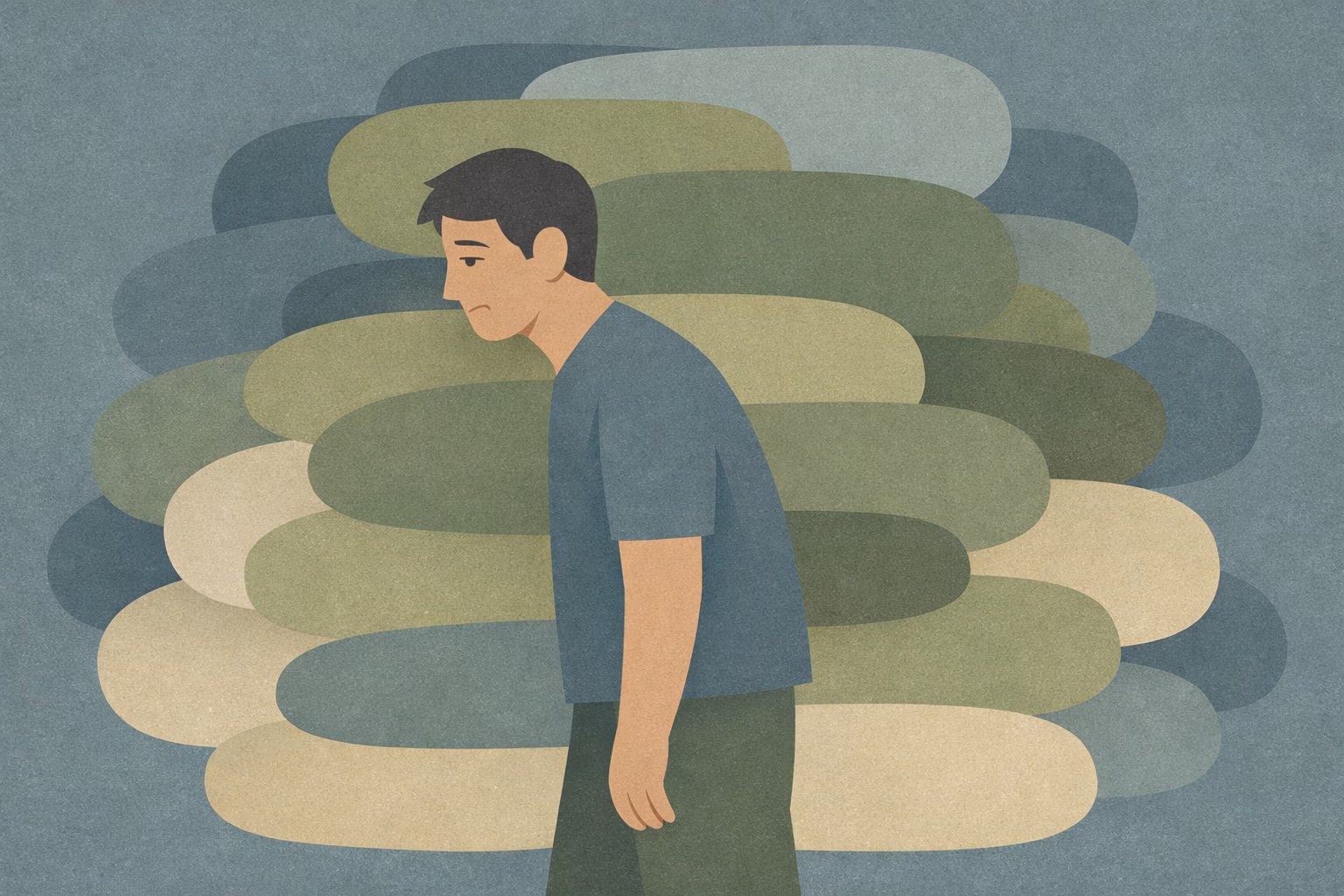
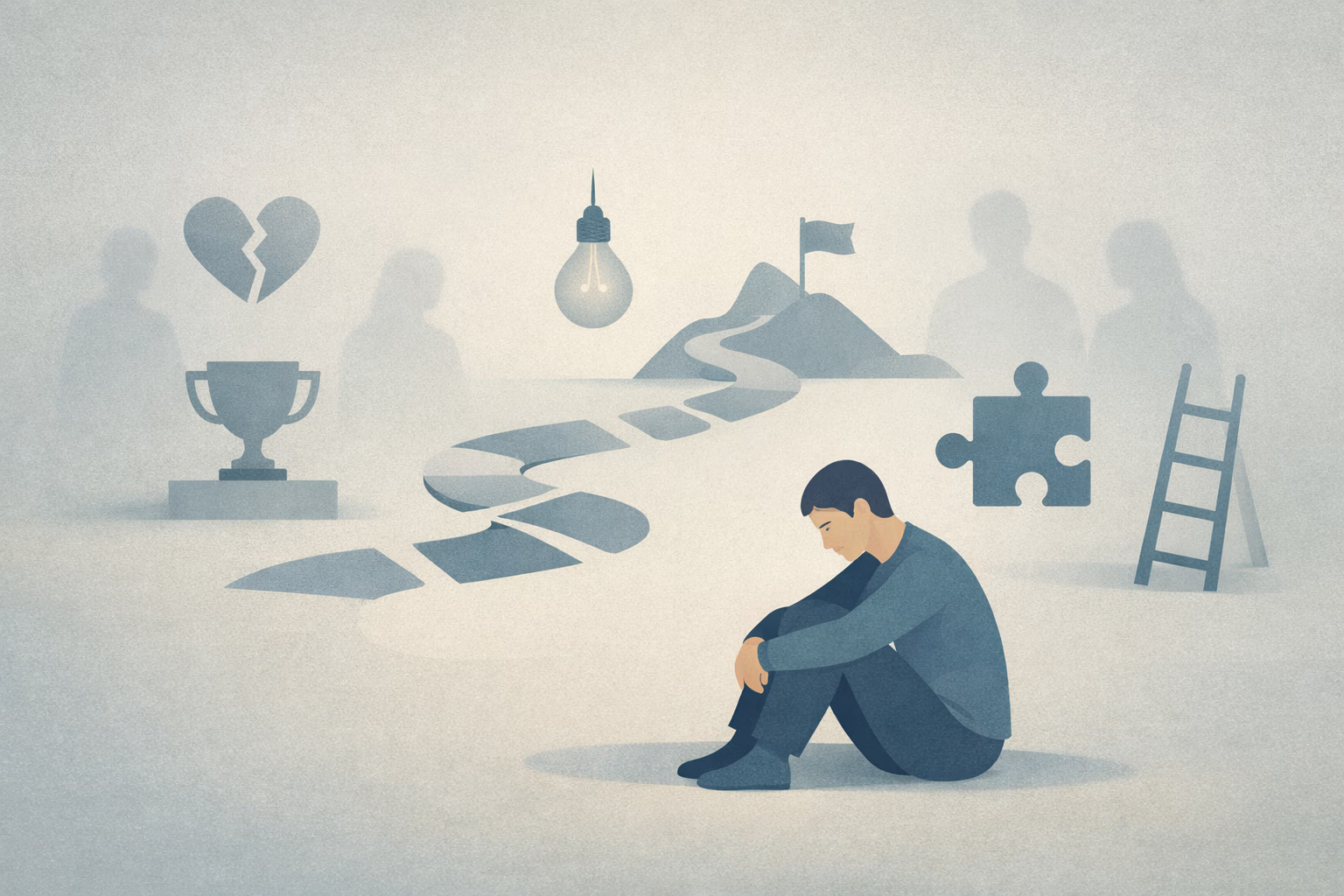
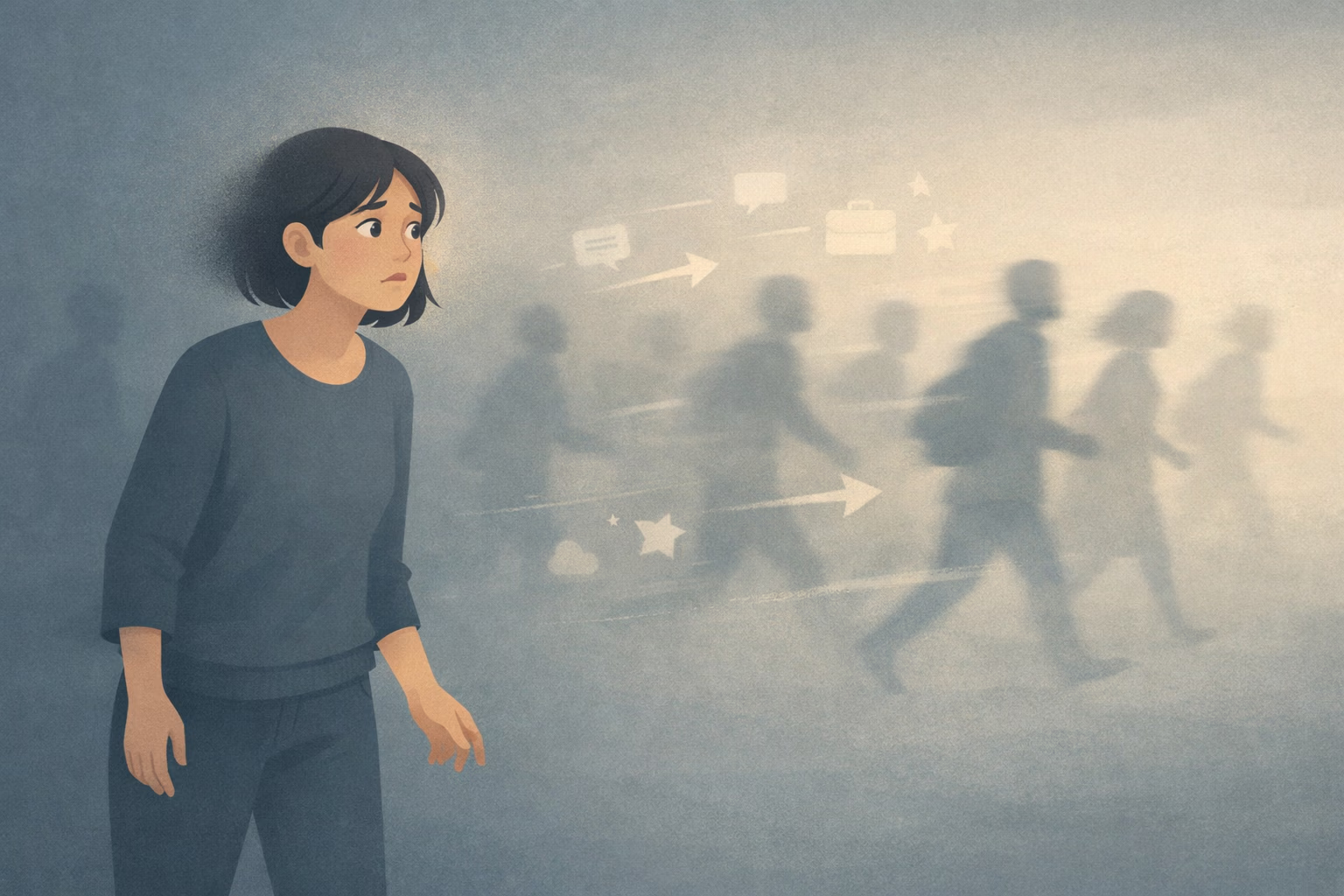
Understanding explains what is happening. Art allows you to feel it—without fixing, judging, or naming. Pause here. Let the images work quietly. Sometimes meaning settles before words do.
One Quiet Window, one insight, one reflection — every Sunday