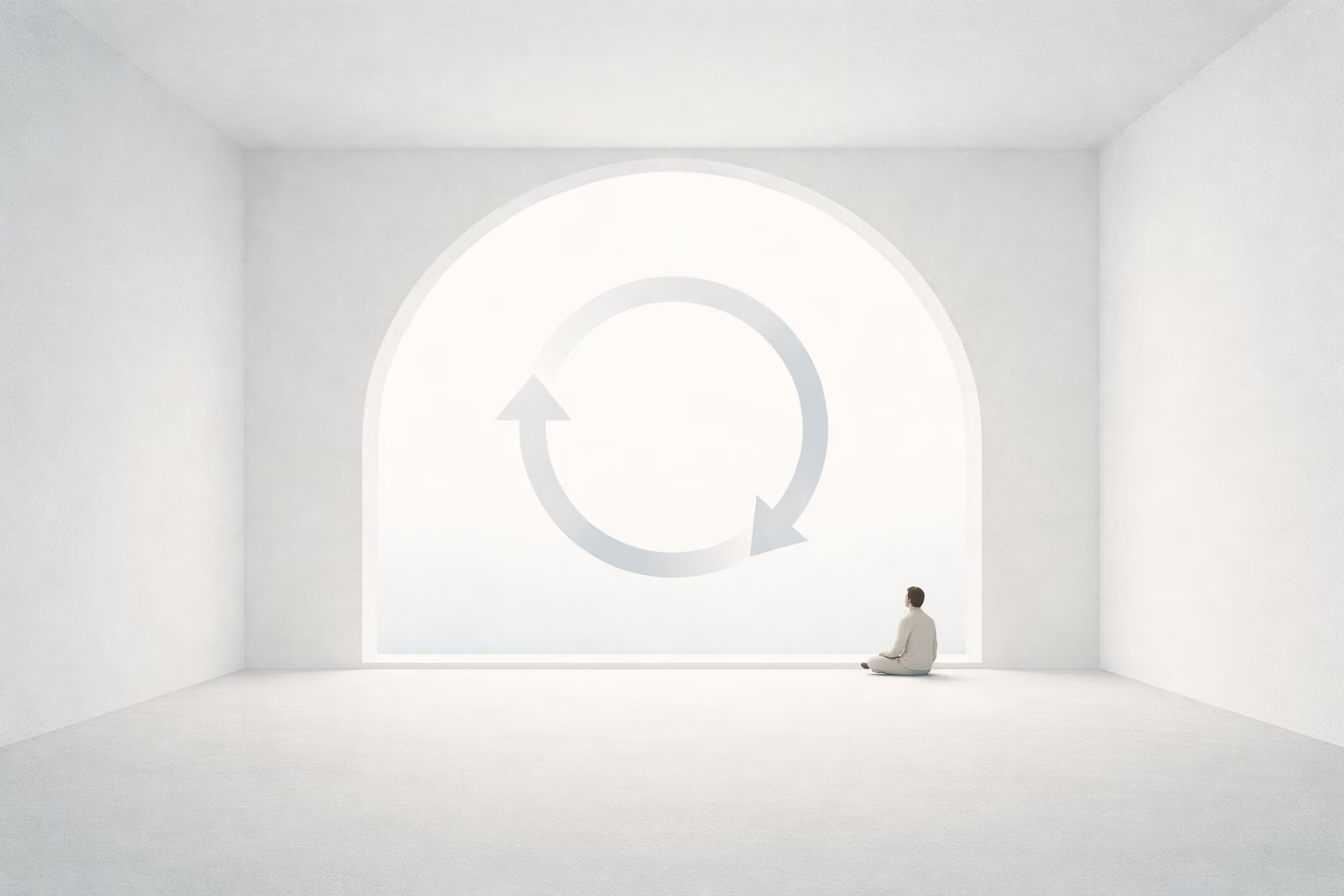
FOMO: The Fear of Missing Out in a Hyperconnected World
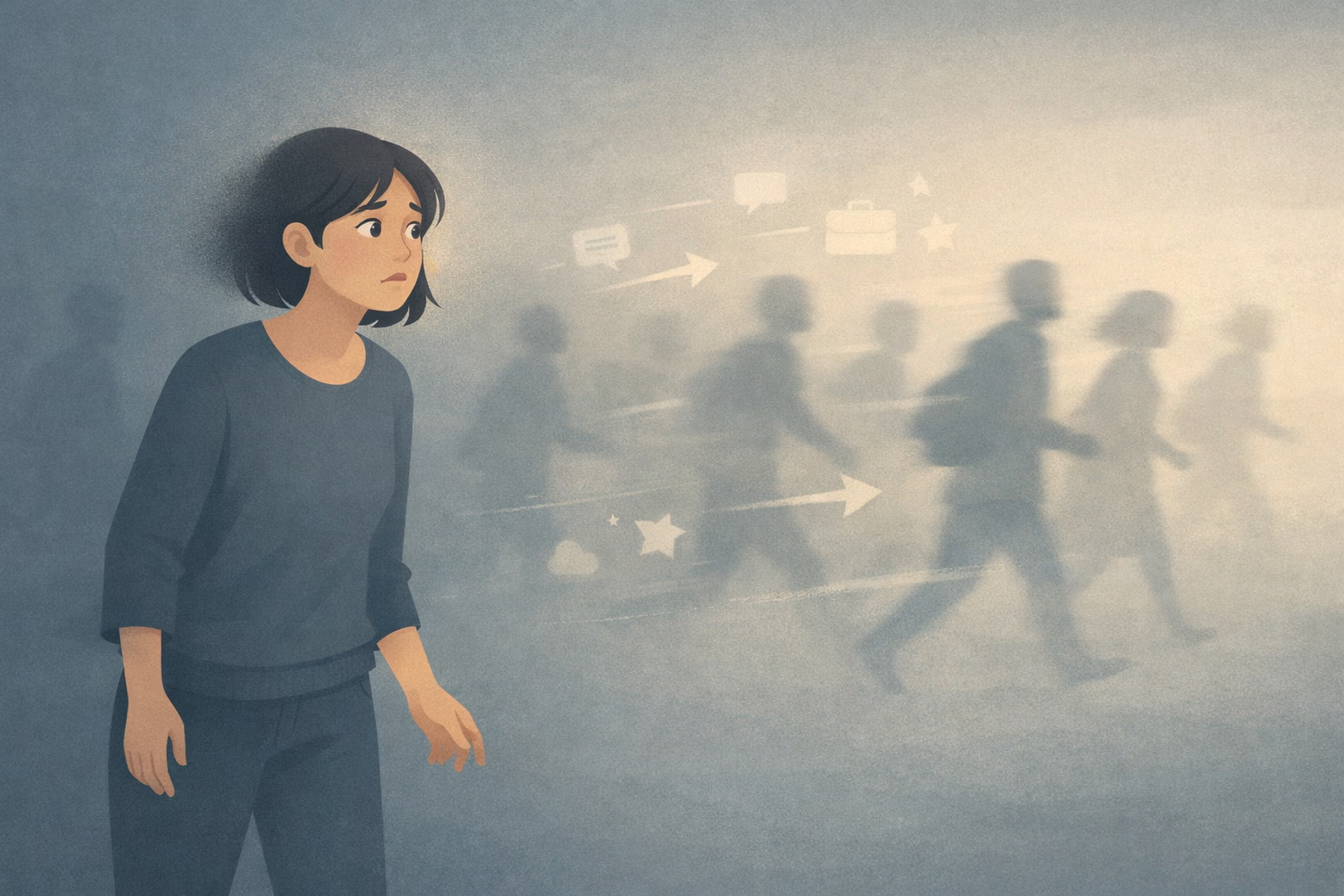
In short: Fear of Being Left Behind (FOMO 2.0) isn’t just “wanting more.” It’s the modern strain that shows up when other people’s timelines are always visible—promotions, pivots, launches, credentials—until your own pace starts to register as danger. What if the pressure to keep up isn’t a personal flaw, but a nervous system response to constant ranking?
Fear of Being Left Behind (FOMO 2.0) isn’t just “wanting more.” It’s the modern strain that shows up when other people’s timelines are always visible—promotions, pivots, launches, credentials—until your own pace starts to register as danger.
What if the pressure to keep up isn’t a personal flaw, but a nervous system response to constant ranking?
In a world where progress is publicly displayed and quietly scored, urgency can become the default state. Not because you’re incapable of contentment, but because your system is being asked to stay on alert without enough closure—without enough “done” signals that let identity settle.
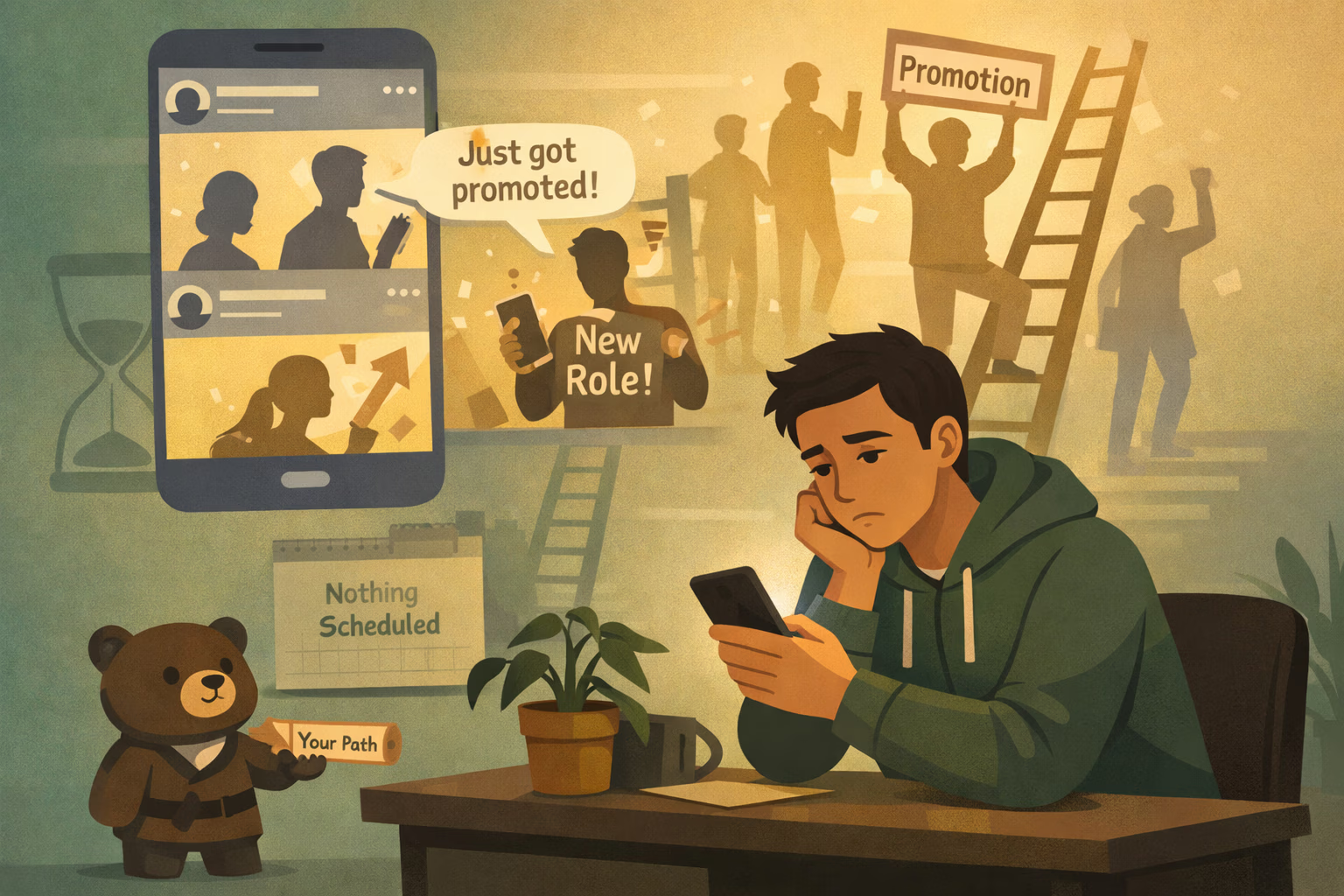
It often starts as a small dip in the stomach: you scroll past someone’s new title, funding, certification, or announcement, and something in you tightens. The mind may translate that sensation into a story—I’m behind—but the first experience is usually physical: restlessness, heat, a sharp internal clock.
Underneath the story is a state shift. Attention narrows. Time feels scarce. Small decisions begin to carry the weight of survival—because your system is tracking status signals the way it would track safety cues in a group. This is why the feeling can arrive even when your life is objectively “fine.” [Ref-1]
It can feel like your life is on pause while everyone else’s highlight reel becomes a scoreboard.
Social comparison doesn’t only create thoughts; it reorganizes perception. When the brain detects a potential drop in standing, it tends to increase vigilance: scanning for evidence, monitoring others, recalculating your position. The goal becomes “don’t fall,” not “where am I going.” [Ref-2]
In this mode, attention prefers measurable markers: titles, speed, income, followers, credentials, proximity to powerful people. Learning and exploration can feel inefficient, because the system is not oriented toward curiosity—it’s oriented toward rank detection.
Humans evolved in small groups where status signals mattered. Not as vanity, but as a practical organizer of access: protection, resources, influence, belonging. Tracking where you stood helped you predict what was safe to ask for, when to push, and when to wait. [Ref-3]
That system works differently when the “group” becomes global and continuously updated. Instead of comparing yourself to a handful of familiar peers, you’re exposed to an endless stream of upward comparison—people who seem faster, younger, better funded, more connected, more certain. The nervous system treats that visibility as real social data, even when it’s curated, selective, and decontextualized.
Comparison pressure can temporarily create something that feels stabilizing: momentum. Urgency produces motion, and motion can register as control. In workplaces and career cultures, that push can even look like “high performance,” because it generates output quickly. [Ref-4]
But the relief is often state-based, not integration-based. It’s the system shifting into action readiness—reducing the discomfort of uncertainty by doing something. The problem is that movement isn’t the same as completion, and speed isn’t the same as coherence.
When you move fast, do you feel more oriented—or just less exposed?
FOMO 2.0 often carries an implicit promise: if you match the pace around you, you’ll regain worth, safety, and calm. But comparison-driven motion usually can’t deliver that calm for long, because the measuring system never closes. There is always a new post, a new milestone, a new metric. [Ref-5]
Over time, this can fragment identity. Instead of feeling like a person with a direction, you can start to feel like a set of moving parts—skills to acquire, optics to manage, outcomes to prove. Satisfaction erodes not because you’re ungrateful, but because your system is prevented from receiving “done” signals that allow lived progress to settle.
In a Power Loop, the mind keeps returning to the same question: “Where do I rank?” Status monitoring becomes the organizing principle, and the nervous system learns that checking reduces uncertainty—at least briefly. This creates a reinforcement cycle: comparison spikes discomfort, checking or accelerating reduces it, and the brain tags that sequence as important. [Ref-6]
The cost is subtle but serious: identity gets outsourced to external signals. Instead of “I know what matters to me,” the internal map becomes “Tell me how I’m doing.” The loop can run even when you dislike it, because the system is not chasing pleasure—it’s chasing predictability.
When people describe FOMO 2.0, they often judge themselves for being “obsessed,” “insecure,” or “behind.” But many of the behaviors are simply what a body-brain does when closure is missing and rank feels continuously evaluated.
These aren’t identities. They’re regulatory responses shaped by conditions. [Ref-7]
Over time, constant upward comparison can erode the internal signals that make decisions feel clear. When your system is repeatedly asked to abandon your pace for someone else’s tempo, it becomes harder to sense what is sustainable, what is meaningful, and what is actually yours.
This can show up as burnout, resentment, or a quiet disengagement that looks like “laziness” from the outside but is often a capacity problem: too much vigilance, not enough closure. The system can start to conserve energy by reducing initiative—not as self-sabotage, but as protection under load. [Ref-8]
When everything is a race, even rest can feel like falling behind.
Modern platforms and career cultures make progress visible, but visibility is not neutral. It changes the incentives of attention. Visibility fuels comparison; comparison fuels urgency; urgency drives action that may be misaligned; misalignment creates outcomes that don’t settle—then insecurity deepens. [Ref-9]
In that cycle, the issue isn’t that you “don’t know your values” or “lack confidence.” The issue is structural: the system keeps being pulled into ranking, which prevents completion from registering. Without completion, there’s no stand-down signal, so the loop stays active.
There is a different internal experience that can emerge when pace and ranking loosen their grip. It’s not a sudden revelation, and it’s not just a new thought. It’s more like a physiological de-escalation: the body stops bracing, attention widens, and decisions feel less like emergency exits.
In that state, worth isn’t something you win by staying ahead. It becomes less contested—less dependent on daily proof. The mind can still notice other people’s progress, but it doesn’t automatically convert it into a threat signal. That shift creates room for clearer interpretation of your own trajectory. [Ref-10]
What changes when “their timeline” stops being evidence about your value?
When status pressure is high, relationships can quietly become transactional: Who is ahead? Who is useful? Who is a reminder of what you haven’t done yet? Even kind people can start to feel like mirrors you can’t control.
As the ranking lens softens, relationships often become less performative. Conversations can carry more honesty and less positioning. Support becomes possible without the subtle aftertaste of comparison. This is one reason competitive social media climates can strain teams and communities—everyone is managing visibility at once. [Ref-11]
As comparison intensity decreases, the earliest change many people notice is not “joy” or “passion,” but steadiness. The nervous system has more capacity to process signals without immediate mobilization. Patience becomes less forced. Confidence becomes less theatrical.
This steadiness is not a mindset trick. It’s what can happen when the brain is no longer repeatedly triggered into rank-defense mode. With fewer spikes of urgency, attention can return to longer time horizons—and recovery becomes more available. [Ref-12]
When a person is less activated by ranking, a different guidance system can come online: values, fit, craft, contribution, season of life. This is not about ignoring reality or pretending status doesn’t matter. It’s about no longer letting status be the sole interpreter of reality.
In a more regulated state, you can hold multiple comparisons without collapsing into them—upward, downward, horizontal—because the system isn’t using them as a verdict. That flexibility supports persistence, adjustment, and a steadier sense of self across changing environments. [Ref-13]
Not every signal is a verdict. Some are just information—once your system has the room to hold it.
Fear of being left behind often means your environment is asking your nervous system to live inside other people’s pace. The discomfort isn’t proof that you’re failing—it’s evidence that comparison has become the primary organizer, and your system is registering the cost.
When fear is seen as a signal of misaligned comparison rather than a personal defect, the story changes. The question becomes less “How do I catch up?” and more “What kind of progress would actually count as mine?” That shift is where agency begins to feel real again—not through more pressure, but through restored coherence. [Ref-14]
Measured against others, your life can start to look like a gap that needs closing. Measured from within, it can start to look like a path with seasons, constraints, and purpose.
FOMO 2.0 thrives where visibility is constant and closure is scarce. But genuine movement tends to begin when direction is no longer outsourced to the crowd—when what you’re building can finally settle into identity, not just proof. [Ref-15]
From theory to practice — meaning forms when insight meets action.
Because the Threat & Safety System tracks status signals the way it would track survival cues in a group. Seeing someone's new title, funding, or milestone triggers a state shift — attention narrows, time feels scarce, small decisions begin to carry the weight of survival. The mind translates the sensation into a story ("I'm behind"), but the first experience is physical: restlessness, heat, a sharp internal clock. The feeling can arrive even when your life is objectively fine. That's because comparison reorganizes perception around ranking: the goal becomes "don't fall," not "where am I going."
Status sensitivity is a human design feature, not vanity. Humans evolved in small groups where status signals organized access — protection, resources, influence, belonging. Tracking where you stood helped predict what was safe to ask for. The system works differently when the group becomes global and continuously updated, because you're exposed to endless upward comparison with people who seem faster or better funded. The nervous system treats that visibility as real social data, even though it's curated. The strain isn't shallow — it's a survival system running in an environment that keeps the ranking question permanently open.
Because comparison pressure produces motion, and motion can register as control. In career cultures, that push can even look like high performance — output happens fast. But the relief is state-based, not integration-based. The system is shifting into action readiness to reduce the discomfort of uncertainty. Movement isn't the same as completion, and speed isn't the same as coherence. The Power Loop keeps running: comparison spikes discomfort, checking or accelerating reduces it briefly, and the brain tags that sequence as important. Identity gets outsourced to external signals, and the internal map becomes "tell me how I'm doing" rather than "I know what matters."
When pace and ranking lose their grip, what emerges is a physiological de-escalation: the body stops bracing, attention widens, decisions feel less like emergency exits. Worth becomes less contested — less dependent on daily proof. The mind can still notice others' progress without automatically converting it into a threat signal. As ranking softens, relationships become less performative; conversations carry more honesty and less positioning. Steadiness returns first, then values and fit can come online as a different guidance system. The question shifts from "how do I catch up?" to "what kind of progress would actually count as mine?"
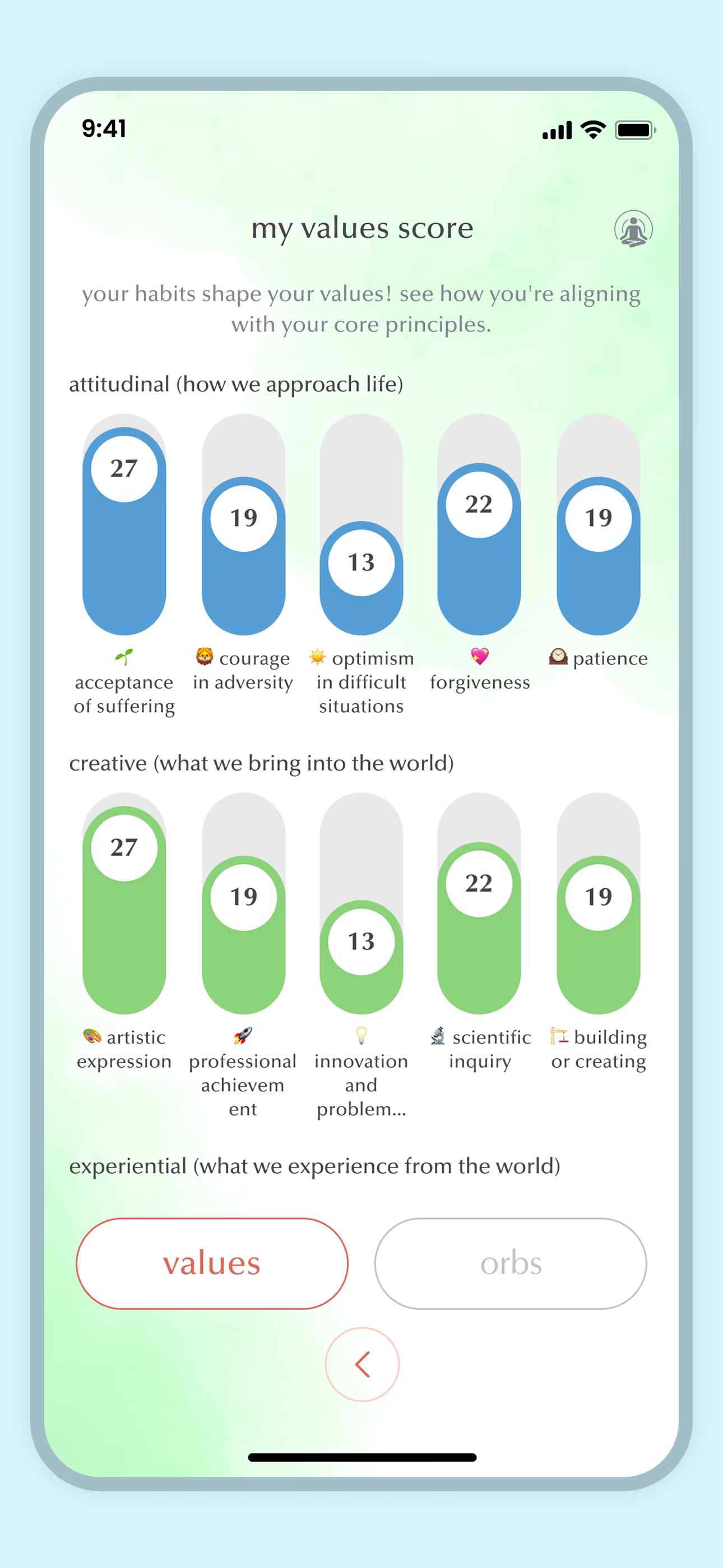
From Science to Art.
Understanding explains what is happening. Art allows you to feel it—without fixing, judging, or naming. Pause here. Let the images work quietly. Sometimes meaning settles before words do.
One Quiet Window, one insight, one reflection — every Sunday