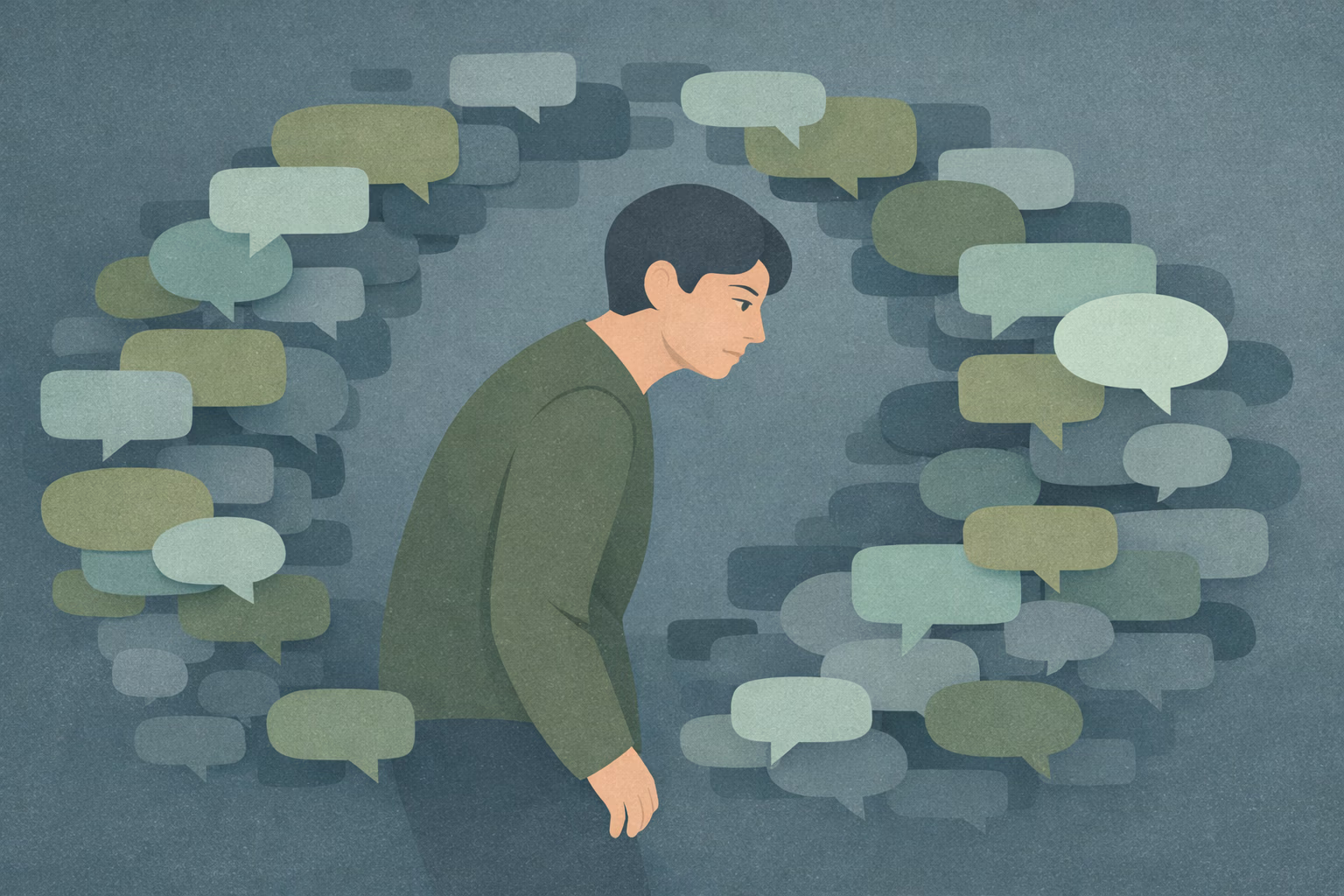
Doomscrolling as a Survival Response
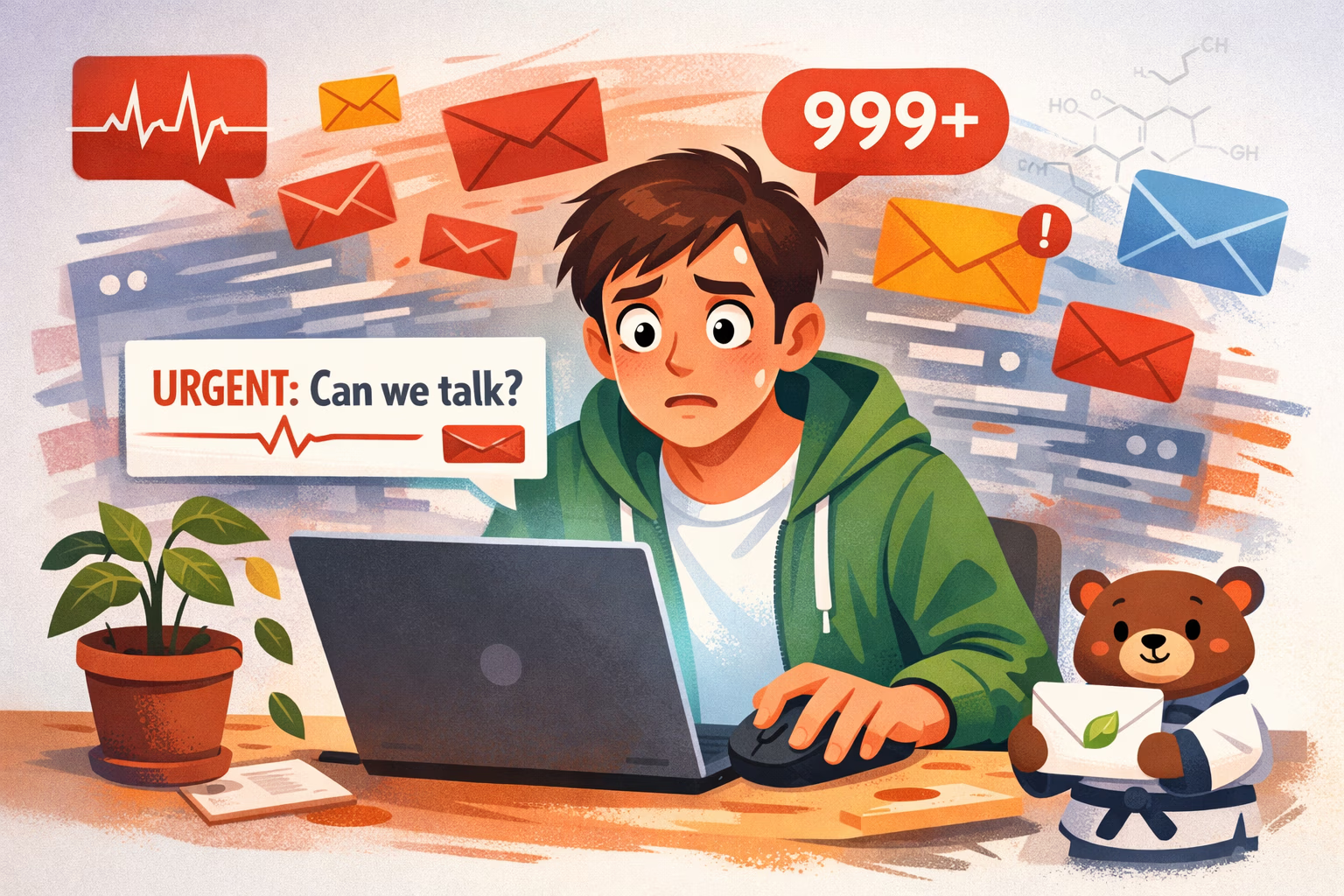
In short: Email anxiety is the stress response that shows up when unread messages start to feel like accumulating obligations: requests, evaluations, deadlines, and interpersonal ambiguity. It can look like “just an inbox problem,” but it often lands in the body as a nervous-system load problem—an ongoing signal that something is pending and socially consequential.
Email anxiety is the stress response that shows up when unread messages start to feel like accumulating obligations: requests, evaluations, deadlines, and interpersonal ambiguity. It can look like “just an inbox problem,” but it often lands in the body as a nervous-system load problem—an ongoing signal that something is pending and socially consequential.
Why can a few unread emails feel heavier than the work itself?
Because the inbox isn’t only information. It’s a stream of cues about expectations, status, and whether you’re “caught up” enough to be safe. When those cues don’t resolve into completion, the system stays on standby—alert, scanning, and repeatedly interrupted.
Email anxiety often arrives as a physical narrowing: tight chest, shallow breathing, clenched jaw, an uneasy stomach, or a restless “can’t settle” energy. Mentally, it can feel like noise—an open loop running in the background that keeps tugging attention away from whatever you’re doing.
A growing inbox can also represent invisible workload: not just tasks, but tracking, remembering, anticipating reactions, and managing tone. That’s not a personality flaw—it’s extra cognitive and social labor, and it adds weight even before you open a single message. [Ref-1]
Notifications, badges, and subject lines function like micro-alerts: brief signals that something has changed and may require response. In a nervous system built to prioritize uncertainty and potential consequences, repeated cues can keep threat-monitoring online—especially when the content involves people, deadlines, or evaluation. [Ref-2]
This is one reason unread messages can correlate with stress physiology. The brain is not only reading words; it’s assessing stakes. Frequent interruptions fragment attention, and that fragmentation itself increases load—because the mind has to re-orient again and again.
Human beings are intensely shaped by social context. A message from a manager, client, professor, or family member isn’t neutral data—it can carry implied rank, expectation, and timing pressure. Historically, being “called” by others in your group often meant something urgent: coordination, conflict, belonging, or survival-related decisions.
Modern work email extends that summons across the entire day, including evenings and weekends, which can create anticipatory strain: the body stays ready because it can’t predict when a demand will arrive or how it will be judged. [Ref-3]
Email anxiety often creates two opposing impulses: compulsive checking (to reduce uncertainty fast) or avoidance (to reduce stimulation fast). Both can lower tension briefly because they change state: either you get a hit of “I know now,” or you get a break from the cue.
But neither automatically produces closure. Checking can become scanning—new inputs arriving faster than completion signals. Avoidance can mute the cue temporarily while the unresolved responsibility remains active in the background. In after-hours contexts, this loop can bleed into home life, keeping the system partially on-duty even when the day is technically over. [Ref-4]
Constant inbox monitoring can feel like control because it reduces the chance of surprise. Yet biologically, it can function like sustained vigilance: the system stays activated because it’s repeatedly reminded that something might need action.
When volume is high, monitoring also produces a particular kind of overwhelm: you’re exposed to the full field of demands without the time or capacity to complete them. That gap—between what is signaled and what can be finished—keeps the nervous system from receiving a “done” message. [Ref-5]
An Avoidance Loop forms when engagement feels expensive and delay feels temporarily protective. The inbox becomes a dense cluster of pending outcomes, so the system postpones contact with it. But delay changes the meaning of the inbox: unread messages begin to represent not only tasks, but accumulating consequence.
Over time, the brain can learn “inbox = threat,” even when many messages are neutral. This is not about weakness or lack of discipline; it’s a predictable response to repeated cues, social stakes, and insufficient closure. Notification overload can intensify hypervigilance and anxiety-like arousal. [Ref-6]
Email anxiety doesn’t have one look. It often shows up as a set of regulatory strategies—ways the nervous system tries to reduce uncertainty, reduce stimulation, or postpone cost.
These patterns are often misread as personal shortcomings. More accurately, they’re attempts to regulate exposure to unfinished obligations.
When your day contains hundreds of small “maybe urgent” cues, your attention system is asked to switch contexts repeatedly. That’s costly. Over time, chronic digital load can reduce focus quality and shorten the distance between trigger and reaction—because capacity is already spent. [Ref-8]
Sleep is especially vulnerable. If the nervous system learns that messages can arrive at any hour and carry real consequences, downshifting at night becomes harder. The body doesn’t interpret “it’s bedtime” as a closure signal if the environment keeps broadcasting “stay available.”
Every unresolved message is a small unfinished loop: a pending response, a possible evaluation, an unclear next step. When many loops are open at once, the brain increases monitoring because it can’t confidently stand down.
Over time, the vigilance can generalize. Even away from the inbox, the system may keep scanning—replaying drafts, anticipating replies, or bracing for what might be waiting. This is one reason email anxiety can appear as “random” tension: the trigger isn’t only the notification; it’s the accumulated incompletion it represents. [Ref-9]
Relief is a change in state—less pressure in the moment. Stability is different: it’s what happens when the nervous system receives credible closure signals and no longer has to allocate resources to monitoring.
With email, closure is less about understanding your stress and more about experiences completing: messages landing into a clear outcome (answered, scheduled, declined, delegated, archived) and expectations becoming legible. When engagement is structured enough to create real “done” moments, the body can downshift because the environment finally communicates completion. [Ref-10]
When the loop completes, the mind stops rehearsing it.
Email is a social system, not just a tool. When response expectations are vague—How fast is “fast”? Is silence punished? Does after-hours mean “always on”?—the nervous system tends to assume higher stakes and keep vigilance active.
Clear norms reduce social threat cues because they reduce ambiguity. When teams, clients, or households share expectations about timing, urgency, and what counts as an emergency, fewer messages read as alarms by default. This is less about “better habits” and more about a safer signal environment. [Ref-11]
When email load is contained—by clearer expectations, fewer surprise demands, and more completion—the shift is often quiet. Attention returns in longer spans. Decisions feel less costly. The body stops jumping at minor cues because it no longer has evidence that every cue could become a late-night problem.
Many people notice a particular kind of mental quiet: not euphoria, not constant calm, but a reduced need to monitor. Research summaries on after-hours email expectations link ongoing availability pressure with exhaustion, which helps explain why containment can restore basic energy and regulation capacity. [Ref-12]
What changes when you don’t have to be “on call” to be safe?
When the inbox is treated as a measure of worth—responsiveness as virtue, immediacy as loyalty—email becomes an identity arena. That framing intensifies threat. In contrast, when email is held as coordination in service of a purpose, it becomes easier for the nervous system to categorize messages as information rather than judgment.
Purpose creates hierarchy: some messages matter because they connect to commitments, relationships, and real responsibilities; others are noise, churn, or misdirected urgency. When communication aligns with what you’re actually here to do, vigilance has less room to masquerade as responsibility. Professional discussions of email stress often point back to expectations and boundaries as the conditions that allow this shift. [Ref-13]
An unread count can look like evidence that you’re behind in life. But it’s usually evidence that the channel is high-volume, socially loaded, and designed to keep you reachable. The stress response that follows is not proof of inadequacy; it’s your system responding to persistent signals of pending evaluation and unresolved obligation.
When email is understood as a coordination tool, its messages become situational rather than personal. Urgency becomes a property of the work, not a property of you. And worth stops being measured in response latency. Even brief notification cues can disrupt focus and stress chemistry, which is one reason this reframing matters at the nervous-system level. [Ref-14]
Always-connected channels can make “available” feel like the baseline, even when the body is quietly paying for it. Digital overload doesn’t just create busyness; it can thin sleep, shorten patience, and keep the system keyed up. [Ref-15]
It helps to remember: a message is a request for coordination, not a verdict on your character. When life contains more completion and fewer open loops, attention becomes easier to inhabit—and meaning has space to settle into identity, rather than staying suspended in urgency.
From theory to practice — meaning forms when insight meets action.
Because the inbox isn't only information — it's a stream of cues about expectations, status, and whether you're 'caught up' enough to be safe. Each unread message is a small unfinished loop: a pending response, a possible evaluation, an unclear next step. Notifications and badges function like micro-alerts, signaling change that may require response. The Threat & Safety System reads them as social summons, not neutral data. When many loops are open at once, the brain increases monitoring because it can't confidently stand down — even before you've opened anything.
It can be both checking and avoidance — both lower tension briefly because they change state. Compulsive checking gives a hit of 'I know now.' Avoidance gives a break from the cue. Neither produces closure. Checking becomes scanning, where new inputs arrive faster than completion signals. Avoidance mutes the cue while the unresolved responsibility stays active in the background. Over time, the brain learns 'inbox = threat,' even when most messages are neutral. This isn't weakness; it's a predictable response to repeated cues with insufficient closure.
Because if the system learns that messages can arrive at any hour and carry real consequences, downshifting at night becomes harder. The body doesn't interpret 'it's bedtime' as a closure signal if the environment keeps broadcasting 'stay available.' Vigilance generalizes — even away from the inbox, the system keeps scanning, replaying drafts, anticipating replies. Email anxiety can show up as 'random' tension because the trigger isn't only the notification; it's the accumulated incompletion it represents. After-hours expectations are linked with exhaustion for exactly this reason.
Because email is a social system, not just a tool. When response expectations are vague — How fast is fast? Is silence punished? — the nervous system assumes higher stakes and keeps vigilance active. Clear norms reduce social threat cues by reducing ambiguity. When teams or households share expectations about timing, urgency, and what counts as an emergency, fewer messages read as alarms by default. This isn't 'better habits'; it's a safer signal environment. Email becomes coordination in service of purpose, not a scoreboard measuring your worth in response latency.
From Science to Art.
Understanding explains what is happening. Art allows you to feel it—without fixing, judging, or naming. Pause here. Let the images work quietly. Sometimes meaning settles before words do.
One Quiet Window, one insight, one reflection — every Sunday