
Rest vs. Recovery: Why They’re Not the Same
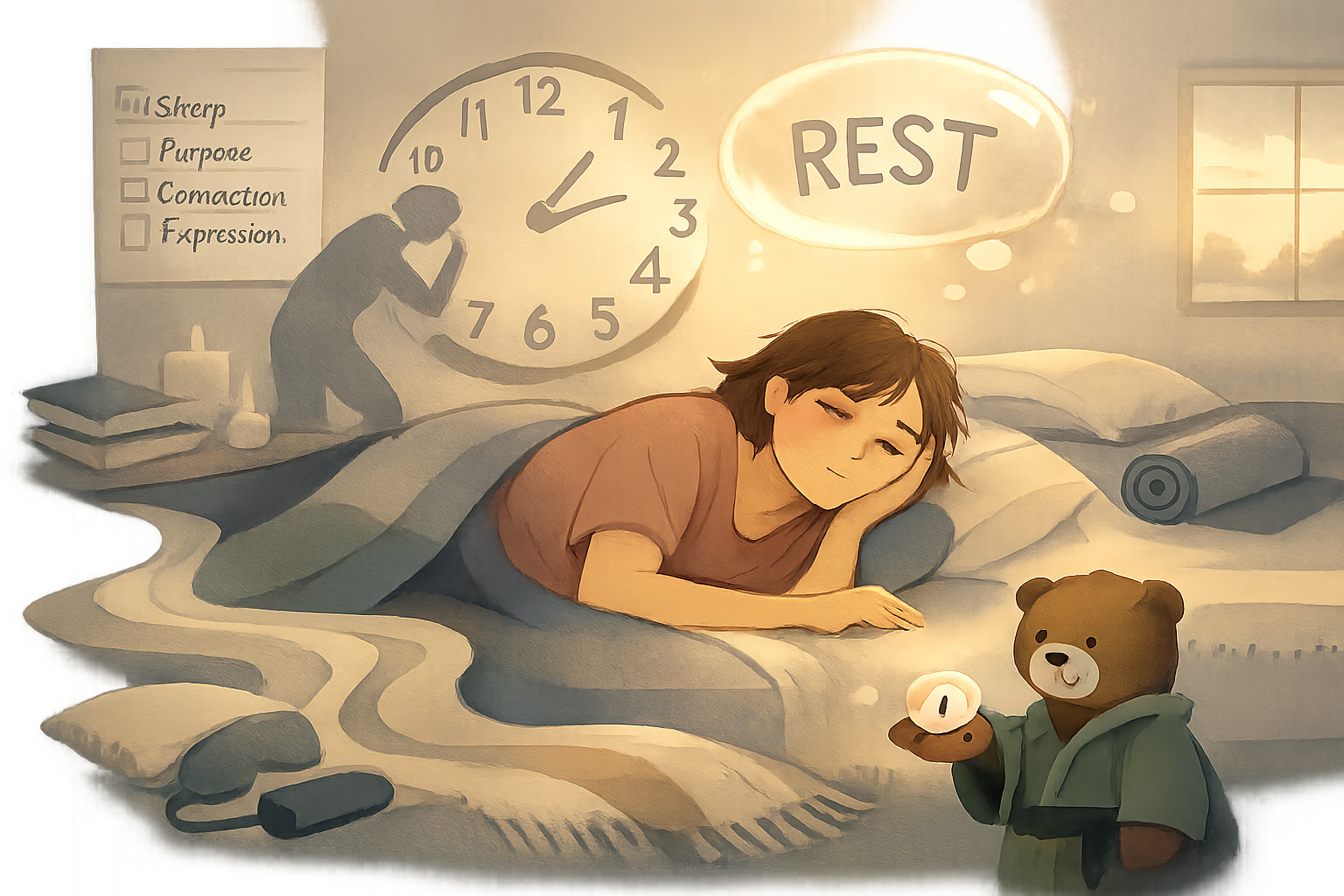
In short: Burnout has a popular storyline: you’re depleted, so you rest, and then you bounce back. For some kinds of fatigue, that’s true. But many people discover a more confusing reality—time off happens, sleep improves, and yet something still doesn’t return.
Burnout has a popular storyline: you’re depleted, so you rest, and then you bounce back. For some kinds of fatigue, that’s true. But many people discover a more confusing reality—time off happens, sleep improves, and yet something still doesn’t return.
Why can you be “rested” and still feel drained?
One grounded way to understand this is to see burnout not only as low energy, but as low coherence: too many unfinished loops, too much ongoing evaluation, and a life structure that doesn’t reliably deliver closure. In that state, rest can reduce pressure without restoring orientation. The body may stand down a little, while the identity system stays on watch.
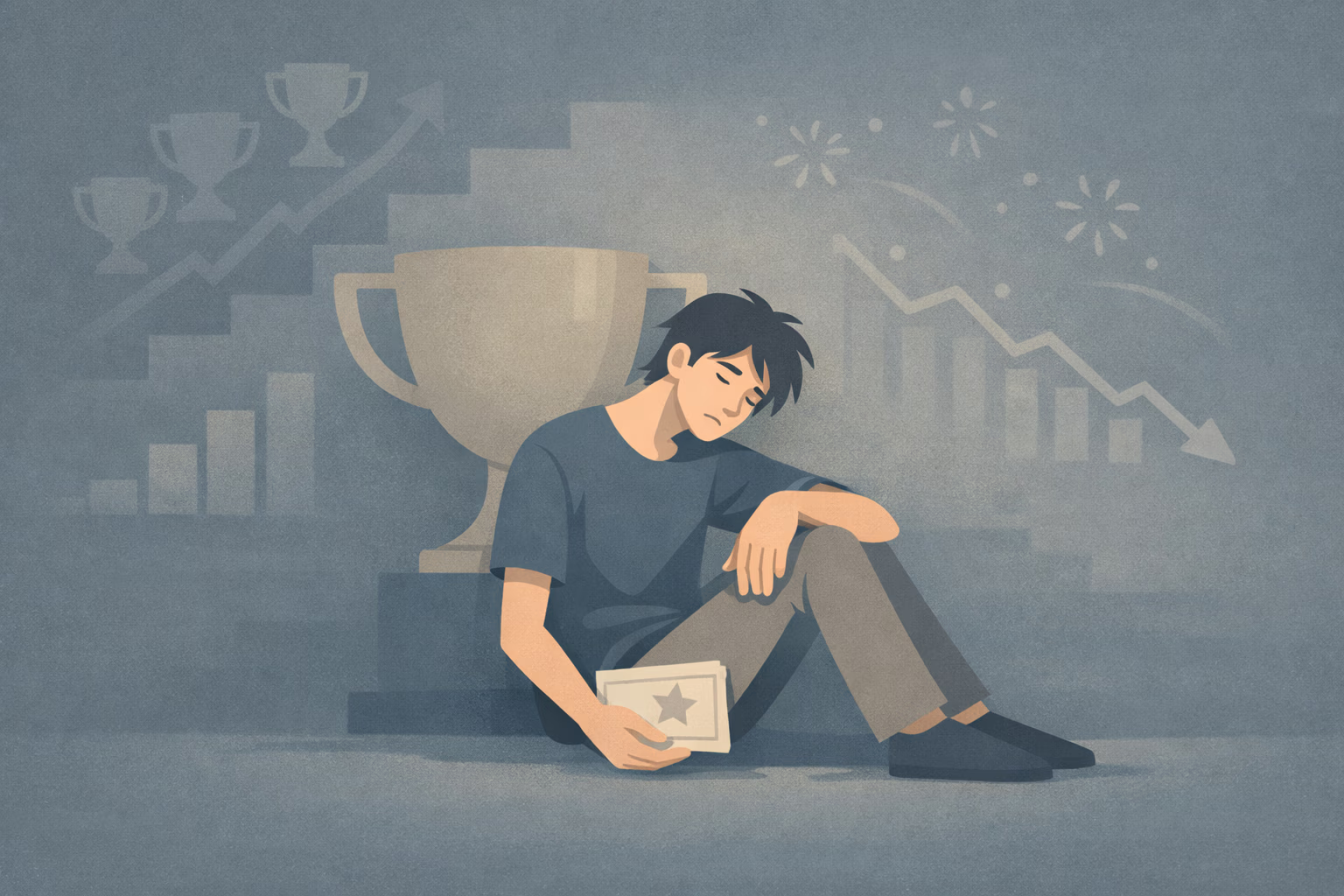
There’s a particular kind of despair in doing the “right” recovery things—sleeping in, taking leave, cancelling plans—and feeling no lighter afterward. Not necessarily sad, not necessarily anxious. Just unchanged, like the break didn’t register.
When this happens, it often isn’t because rest “failed.” It’s because rest is only one ingredient in the nervous system’s accounting. If the conditions that signaled threat, urgency, or constant performance are still present (or still anticipated), the system can treat downtime as a brief pause between demands, not true completion. [Ref-1]
Sometimes the break ends, and your body acts like it never believed the break was real.
Physical tiredness is real in burnout, but burnout often spreads into the systems that manage attention, appraisal, and self-concept. You can have enough sleep and still have a nervous system that stays braced—tracking expectations, scanning for consequences, and trying to maintain a version of you that “works.”
That’s why recovery can feel oddly personal. Not because burnout is a personal defect, but because modern work and life can tether worth to output, responsiveness, and consistency. When those links tighten over time, the strain isn’t just muscular or metabolic; it becomes an ongoing identity task—maintaining legitimacy, avoiding disappointment, staying “on.” [Ref-2]
Burnout can be a workload, and also a self-load.
Humans are meaning-oriented organisms. We don’t just spend energy; we spend it toward something, inside some story of “why this matters” and “who I am when I do it.” When that story collapses—or becomes contradictory—energy doesn’t automatically return on schedule.
In a meaning-collapsed state, rest can create quiet without creating safety. Stillness may even feel vaguely threatening, because it removes structure while leaving unresolved questions in the background: What am I doing this for? What happens if I can’t keep up? Who am I if I stop performing? That’s not “overthinking.” It’s the system noticing that the loop isn’t closed. [Ref-3]
Rest is a clean explanation. It promises relief without requiring renegotiation—no difficult conversations, no re-evaluation of identity roles, no confrontation with misfit. In a culture that prizes endurance, “I just need a break” can feel safer than “this setup doesn’t work for me.”
But when burnout is partly a misalignment problem, rest functions like temporary anesthesia: it reduces sensation while leaving the underlying friction intact. Returning to the same role, the same evaluation pressure, or the same self-definition can quickly reactivate the same load. [Ref-4]
Vacations, weekends, and lighter weeks can absolutely bring down stress load. They can improve sleep, soften irritability, and create distance from the immediate demands. That matters.
Yet burnout often involves a structural drain: ongoing mismatch between what’s required and what’s sustainable, between what you value and what you repeatedly have to do, or between what you are asked to be and what you can authentically maintain. In that case, time off is like refilling a bucket with a hole—helpful, but not repairing. [Ref-5]
It’s also why some people experience a painful “Sunday spike”: the nervous system isn’t reacting to the day of the week, but to the predicted reopening of unfinished loops.
In an Avoidance Loop, a strategy brings short-term relief while quietly extending what the system can’t yet complete. Rest can become part of that loop—not because rest is wrong, but because it can be used as a stand-in for resolution.
When rest is framed as the solution, it can postpone the deeper sources of depletion: unclear limits, chronic role overreach, constant performance monitoring, or a life that no longer feels internally consistent. Then the system learns a bleak lesson: “I rested and nothing changed.” That lesson increases vigilance and reduces hope—two conditions that make recovery harder to register. [Ref-6]
This pattern has a recognizable texture. Not dramatic, not always visible, often mistaken for laziness or lack of gratitude—when it’s actually a nervous system that still doesn’t have closure.
These aren’t character flaws. They’re indicators that rest reduced pressure, but completion didn’t occur.
Repeated failed recovery can reshape identity quickly. If you take time off and still feel depleted, it’s common to conclude something is wrong with you—your resilience, your mindset, your work ethic, your capacity to cope.
But another possibility is simpler and kinder: the system is accurately tracking that the loop is still open. When life remains high-stakes, ambiguous, or misaligned, the body can’t issue a reliable “done” signal. Over time, that can create hopelessness, disengagement, and a foggy sense of self—not as an emotion problem, but as an orientation problem. [Ref-8]
You can be away from work and still be living inside its consequences.
Modern culture loves recovery narratives that don’t disrupt the machine. “Take a break” is socially acceptable. “Re-negotiate expectations,” “change the meaning contract,” or “stop masking who you are to stay safe” are much harder conversations.
There’s also an algorithmic mismatch: our environments deliver rapid stimulation and constant comparison, but very few clean endings. Messages keep coming. Metrics keep updating. Identity becomes a performance surface. Under those conditions, rest can be treated as a pit stop—useful, but not transformative—because the larger system keeps implying that you must return unchanged. [Ref-9]
And for many people—especially those who have been chronically monitoring how they’re perceived—“time off” doesn’t reduce vigilance. It simply removes structure while the monitoring continues.
Energy tends to return when the system stops paying ongoing costs. That can happen when self-worth loosens from overfunctioning, when the consequences of “not doing enough” become less total, and when roles become more truthful.
This is not the same as insight or a new perspective. You can understand your patterns perfectly and still feel depleted. What changes recovery is completion: the nervous system receives enough evidence—over time—that certain pressures are no longer required, certain loops are no longer open, and certain identity performances are no longer necessary for belonging or safety. [Ref-10]
Rest can change your state. Closure changes your baseline.
Burnout often includes a relational math problem: unspoken expectations, one-sided responsibility, unclear authority, or chronic emotional labor. These drains persist even when you sleep more, because they’re embedded in coordination—how tasks, people, and consequences are arranged.
When those arrangements become more honest, the nervous system frequently downshifts without needing to be forced. Not because you “communicated better” as a self-improvement project, but because the environment starts delivering clearer signals: responsibility is shared, needs are named, and the cost of existing in the role decreases. [Ref-11]
Support also matters as a biological cue. Being accurately met—by colleagues, friends, partners, communities—reduces the need for constant self-management.
When repair replaces avoidance, many people notice something subtle before they notice “motivation.” There’s less internal negotiation to begin. Fewer micro-decisions. Less bracing. A clearer sense of what matters and what doesn’t.
Coherence doesn’t necessarily feel like euphoria. It often feels like signal return: appetite, curiosity, and initiative come back in a grounded way. Not because pressure increased, but because the system has more bandwidth once the chronic open loops are reduced. In research on job crafting and resources at work, improvements often show up through increased autonomy and fit—conditions that reduce ongoing strain and support sustained functioning. [Ref-12]
Over time, burnout recovery tends to evolve from symptom relief into reorientation. Not a dramatic reinvention, but a shift toward a life that generates more endings, more truthful roles, and fewer constant alarms.
This is where meaning becomes practical. When what you do is more aligned with what you value—and when your non-work life also contains real sources of completion and identity—your system gets more chances to settle. Studies on off-job crafting suggest that shaping life outside of work (relationships, learning, recreation, contribution) can buffer burnout by restoring resources and a sense of agency beyond the job title. [Ref-13]
Recovery isn’t only getting your energy back. It’s getting your direction back.
If rest hasn’t fixed your burnout, it doesn’t mean you rested wrong. It may mean your system is responding accurately to a life that hasn’t delivered closure yet.
Burnout can be understood as a signal: the current structure—roles, expectations, identity contracts, consequence patterns—has become too costly to sustain. When that signal is taken seriously, the path forward is not more pressure or more self-blame. It’s a gradual return of coherence as life becomes more livable from the inside. In broader workplace health discussions, meaning, autonomy, and social support repeatedly show up as central—alongside rest—because they change the conditions that keep the system activated. [Ref-14]
Real recovery isn’t a personality makeover, and it isn’t a permanent vacation. It’s the quiet restoration of stability: rest begins to register, effort begins to have endpoints, and your sense of self becomes less dependent on constant output.
When burnout lifts in a durable way, the most noticeable change is often not extra energy, but a steadier orientation—less chasing, less bracing, more internal permission to be finite. That kind of recovery protects well-being because it restores direction, not just stamina. [Ref-15]
From theory to practice — meaning forms when insight meets action.
Because rest is only one ingredient in the nervous system's accounting. If the conditions that signaled threat, urgency, or constant performance are still present (or still anticipated), the system treats downtime as a brief pause between demands, not true completion. Burnout isn't only low energy — it's low coherence: too many unfinished loops, too much ongoing evaluation, and a life structure that doesn't reliably deliver closure. Rest can reduce pressure without restoring orientation. The body stands down a little while the identity system stays on watch, scanning for the next round of expectations.
Not really. Burnout often spreads into the systems that manage attention, appraisal, and self-concept — you can have enough sleep and still have a nervous system that stays braced. Modern work tethers worth to output and responsiveness, and over time that becomes an ongoing identity task: maintaining legitimacy, avoiding disappointment, staying on. That's why the Avoidance Loop shows up here — rest gets used as a stand-in for resolution while the deeper sources of depletion (unclear limits, role overreach, performance monitoring) stay intact. Burnout is a workload, and it's also a self-load.
The Sunday spike isn't a reaction to the day — it's the nervous system reacting to the predicted reopening of unfinished loops. Vacations and weekends can bring down stress load, but if burnout involves a structural drain (mismatch between what's required and what's sustainable, between what you value and what you have to do), time off is like refilling a bucket with a hole. The system anticipates the same pressure resuming, and because closure never arrived, it stays braced. The dread is accurate signal, not pessimism.
Real recovery happens when load resolves, not when energy gets refilled. The nervous system needs evidence over time that certain pressures are no longer required, certain loops are no longer open, and certain identity performances are no longer necessary for belonging or safety. That often means renegotiating roles, naming needs, and aligning what you do with what you value — so non-work life also contains real sources of completion. Coherence doesn't feel like euphoria; it feels like signal return: tasks become finishable, rest starts to count, self-talk becomes less punitive because less policing is required.
From Science to Art.
Understanding explains what is happening. Art allows you to feel it—without fixing, judging, or naming. Pause here. Let the images work quietly. Sometimes meaning settles before words do.
One Quiet Window, one insight, one reflection — every Sunday