Rest vs. Recovery: Why They’re Not the Same
In short: There are stretches of life where you can still function, still show up, still look “fine” from the outside—yet internally, things feel strangely unstitched. The familiar ways you’ve motivated yourself don’t land.
There are stretches of life where you can still function, still show up, still look “fine” from the outside—yet internally, things feel strangely unstitched. The familiar ways you’ve motivated yourself don’t land. Old roles feel too tight. Even your preferences can feel less reliable than they used to.
What if this isn’t you falling apart—but your system clearing space for a more coherent version of you?
The internal renewal cycle is a natural process through which the mind releases outdated organizing structures, completes unfinished loops, and quietly reorganizes identity over time. It’s less like “finding the right mindset” and more like the nervous system getting the conditions it needs to stand down, sort, and re-stabilize.
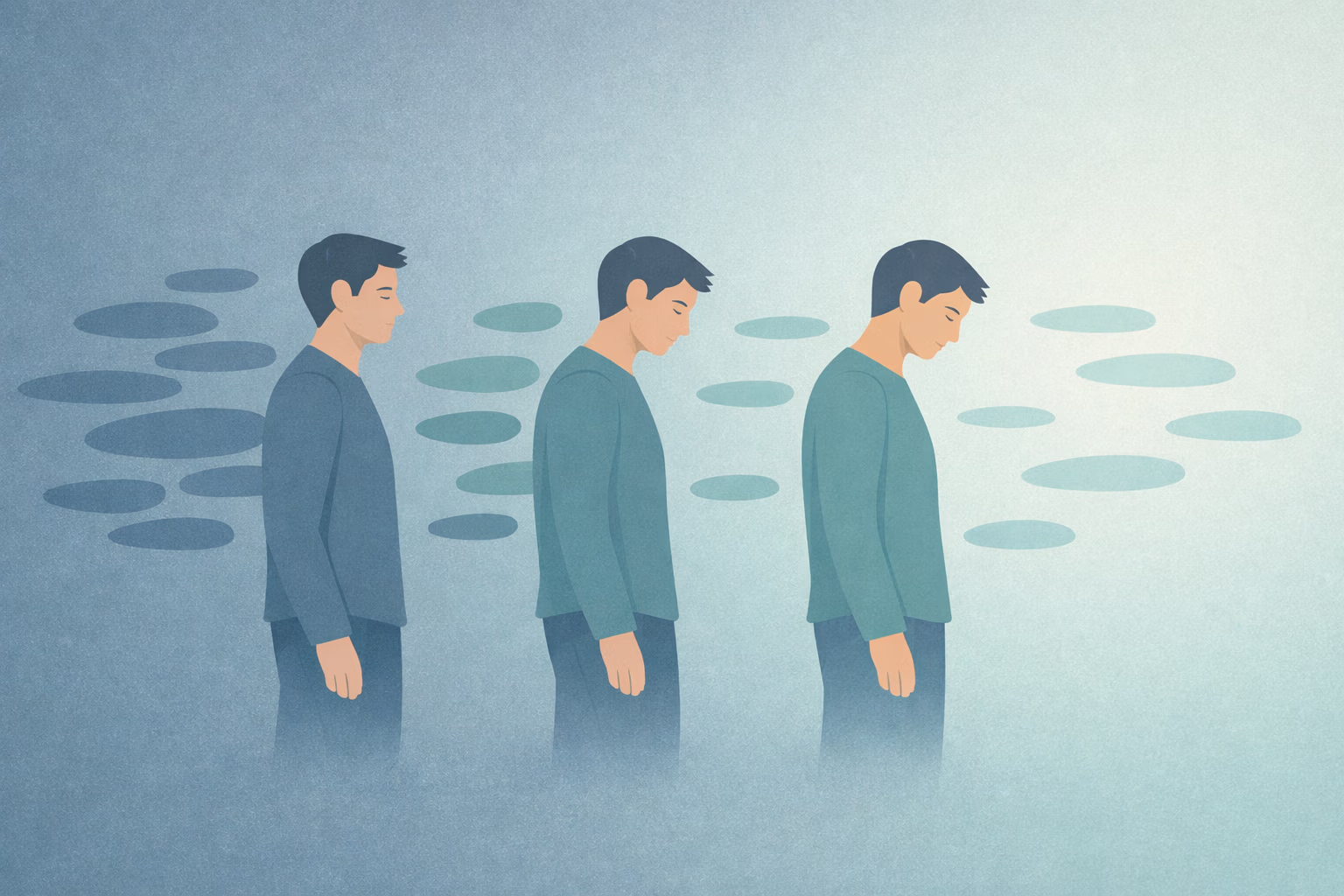
Internal renewal often begins with a subtle mismatch: the identity that used to guide your choices stops producing a clean sense of “yes.” You may still be capable and competent, but the inner alignment is off. It can feel like living between versions of yourself—no longer who you were, not yet settled into who you’re becoming. [Ref-1]
This can be disorienting because humans rely on continuity as a safety cue. When continuity weakens, the system searches for orientation: what matters, what counts, what to keep, what to release. The discomfort isn’t proof of defect; it’s often the sensation of reorganization in progress.
Sometimes the instability isn’t a crisis of character. It’s a transition where the old map no longer matches the terrain.
Renewal tends to arrive in phases. First, existing structures loosen—beliefs, priorities, relationships to work, even the way you measure your worth. This loosening can feel like uncertainty, but it also creates mobility: a chance for the mind to stop forcing coherence from an outdated template. [Ref-2]
Then comes a quieter phase that looks unimpressive from the outside: decreased push, more internal sorting, a need for fewer inputs. This isn’t “insight” doing the heavy lifting. The deeper shift happens when experience reaches completion—when the nervous system receives enough closure to stop flagging the same unresolved threads and can begin to refile them into identity-level stability.
In the final phase, the new structure becomes usable. Not as an idea, but as a lived orientation—choices start to feel simpler again, because they require less internal negotiation.
Long-term survival has always depended on cycling: activation followed by recovery, effort followed by repair. The nervous system isn’t built for constant high output; it’s built for responsiveness. When demands are sustained without adequate closure and stand-down, the system remains on alert, even if your calendar looks “normal.” [Ref-3]
Renewal is one way the mind-body system protects long-range functioning. It reduces reliance on brittle strategies and searches for a configuration that costs less to maintain. In this sense, renewal is not an interruption of life—it’s part of the organism’s maintenance schedule.
When people describe “I don’t feel like myself,” it can be the nervous system signaling that the current self-organization is too expensive, too incoherent, or too loaded to keep running indefinitely.
During renewal, there’s often an added burden: the pressure to perform continuity. To keep the same pace, the same persona, the same certainty—so no one worries, so nothing destabilizes further, so you can keep meeting expectations.
But transformation periods aren’t just “mental.” They are physiological transitions: attention reorganizes, rewards shift, tolerance for noise changes, and the system becomes more sensitive to mismatch. The cost of acting unchanged can become a second job—one that burns capacity that would otherwise support completion and re-stabilization. [Ref-4]
What if the strain isn’t coming from change—but from having to look unchanged while change is happening?
Many people interpret renewal as evidence that something is wrong: “I should be more consistent,” “I’m regressing,” “I’m losing my drive.” In reality, consistency isn’t always a sign of health. Sometimes it’s a sign of tight control holding a structure together past its natural lifespan. [Ref-5]
In growth periods, the mind may temporarily loosen its grip on old organizing rules so it can build a truer, more sustainable coherence. That can feel like instability because the “done signals” haven’t arrived yet. The system is still mid-process.
Seen this way, renewal is not a detour. It’s how psychological evolution happens without you having to force it through willpower.
Resistance to renewal often isn’t about fear in the dramatic sense. It’s structural: when the future feels undefined, the mind struggles to close loops. Without closure, the nervous system keeps scanning, revisiting, rechecking—trying to manufacture certainty from insufficient information. [Ref-6]
This can create a paradox. The system needs reduced load and fewer demands to complete reorganization, yet the lack of immediate clarity can push a person toward more activity, more control, more distraction—anything that temporarily restores a sense of certainty.
In Meaning Density terms, the loop is interrupted: actions don’t consolidate into identity-level “this is who I am now,” so the system keeps searching for a completion point.
Renewal phases can have a recognizable texture: a liminal feeling of being in-between—where old motivations don’t initiate cleanly and new ones haven’t stabilized. [Ref-7]
These signals are often regulatory responses to transition load and incomplete closure, not proof of laziness or fragility:
Notice the pattern: the system is not “doing nothing.” It’s reallocating resources away from output and toward reorganization.
When renewal cycles are cut short—by constant urgency, constant evaluation, constant stimulation—the mind may keep patching the old structure instead of completing the transition. Over time, this can look like stagnation, burnout, or a brittle sense of identity that requires continual maintenance. [Ref-8]
People often describe feeling “stuck,” but structurally, the system may be caught in unfinished loops: too activated to settle, too loaded to complete. Instead of integration, there’s repetition—same problems resurfacing, same decisions revisited, same internal debates replaying.
Stuckness can be a sign that your system never got the “done” signal it needed to move on.
Liminal seasons tend to resolve faster when the mind is allowed to finish what it started: to let old meanings end, to let new meanings form, and to let the nervous system register completion. Resisting the transition often keeps the system in high monitoring—continuously attempting to recover certainty without the conditions that create closure. [Ref-9]
This is why forcing “back to normal” can prolong the unsettled feeling. It’s not that the person is unwilling. It’s that the renewal process is incomplete, and incomplete processes keep recruiting attention.
Honoring renewal doesn’t mean “liking it.” It means recognizing what the system is doing: reorganizing toward a more coherent identity that costs less to hold together.
In the middle of renewal, many people worry that any slowing will lead to collapse. But often, the opposite is true: when pressure reduces, the system can stop bracing and start consolidating. Containment—fewer competing demands, fewer identity performances, fewer constant inputs—creates the conditions where unfinished loops can finally complete. [Ref-10]
This isn’t a motivational strategy. It’s a biological reality: systems under sustained load prioritize short-term protection over long-term reorganization. When the load eases, the body can return to maintenance—digesting experience, updating meaning, and allowing new patterns to settle into identity-level orientation.
Not more effort—more completion. That’s the bridge.
Humans don’t transition in isolation well. Not because we need fixing, but because social context provides safety cues: signals that uncertainty won’t cost belonging. When someone’s renewal phase is normalized—treated as a legitimate season rather than a problem—internal monitoring often decreases. [Ref-11]
That reduction matters. Less monitoring frees capacity for closure. It also reduces the impulse to overexplain yourself, overperform stability, or lock into a premature identity just to stop feeling exposed.
Support, here, is not pep talks. It’s steadiness: a relational environment that doesn’t demand instant answers about who you are becoming.
Renewal completes gradually, often quietly. The signs are less dramatic than the earlier discomfort: decisions require fewer internal arguments; your attention stops orbiting the same unresolved themes; your energy returns in a more steady, less urgent form. [Ref-12]
This isn’t “understanding yourself better” as an intellectual achievement. It’s an organism-level settling: the system receives enough completion signals that it no longer has to keep the old loops active. You don’t have to keep proving your identity to yourself.
Clarity becomes less like a breakthrough and more like a stable orientation. You can feel what fits without needing to force it.
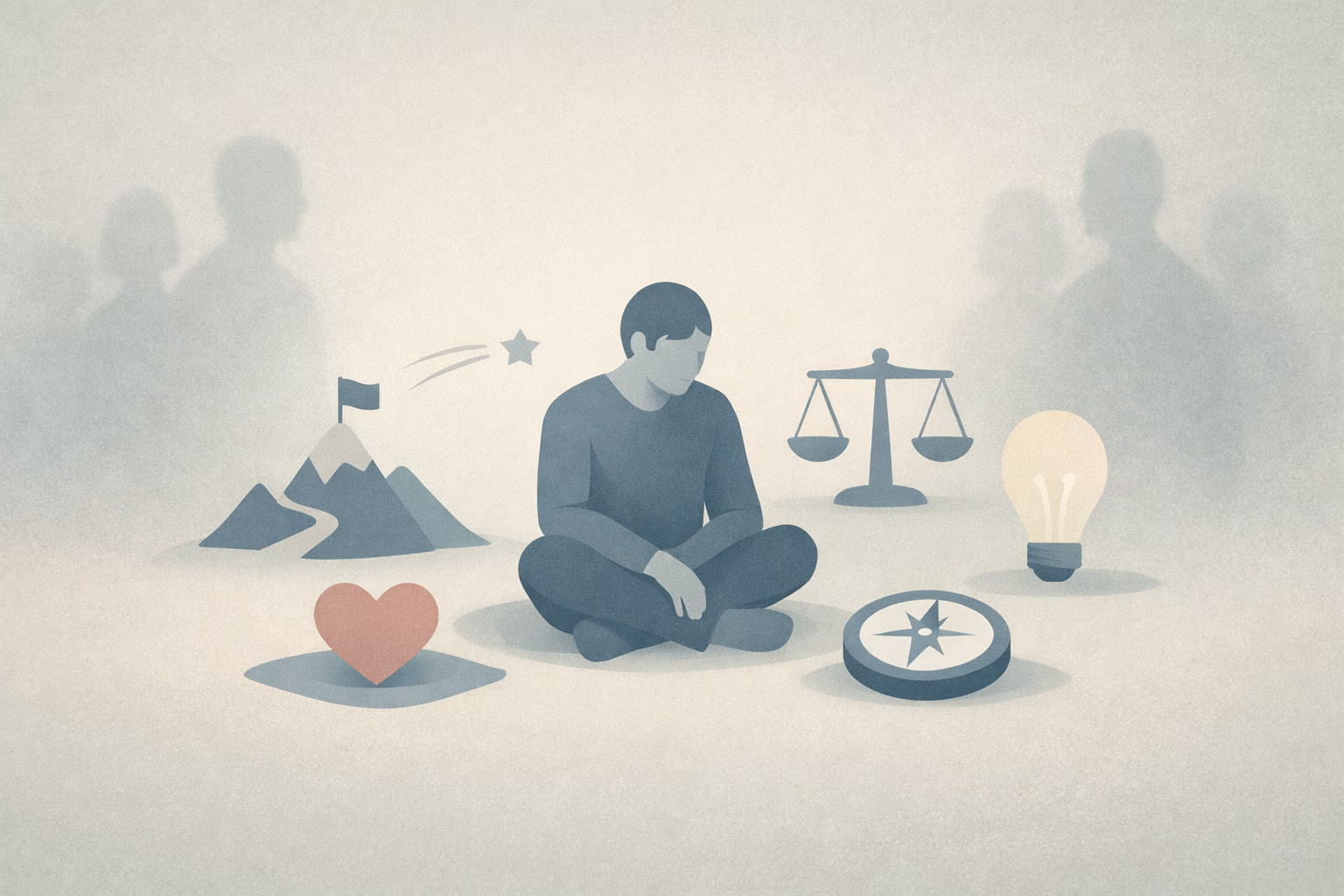
When renewal finishes, meaning tends to reassemble on its own. Values become easier to access not because you worked harder at them, but because the internal noise floor is lower. The body has more capacity for signal return—subtle preferences, genuine interest, clean boundaries, realistic desire. [Ref-13]
A renewed identity often brings a different relationship to direction. Not constant certainty, but steadier coherence: what you say yes to aligns more naturally with what you can sustain. What you say no to feels less like deprivation and more like integrity.
In this way, meaning doesn’t need to be hunted. It emerges when experience is completed enough to become part of who you are.
Internal renewal can look like a pause, but it’s often a clearing process: the mind releasing structures that no longer produce stability, so something more coherent can form. The discomfort is real, yet it often reflects load, unfinished loops, and a nervous system trying to complete what life has placed in motion—not a personal deficiency. [Ref-14]
When renewal is understood as a normal cycle, shame tends to loosen. And when shame loosens, the system has a better chance to finish the transition—so meaning can reappear as lived orientation, not as pressure.
Change is rarely linear. Some seasons dissolve old structures before new ones can stand. That can feel like losing yourself, when it may actually be the mind’s way of becoming more whole—reorganizing toward a life that costs less to hold together. [Ref-15]
You don’t have to treat the in-between as evidence that you’re failing. For many people, it’s evidence that something inside is finishing, updating, and preparing to settle—so the next chapter can be lived with more coherence and less internal force.
From theory to practice — meaning forms when insight meets action.
Internal renewal often begins with a subtle mismatch: the identity that used to guide your choices stops producing a clean 'yes.' You may still be capable and competent, but inner alignment is off. It feels like living between versions of yourself — no longer who you were, not yet settled into who you're becoming. Humans rely on continuity as a safety cue, so when continuity weakens, the system searches for orientation. The discomfort isn't proof of defect; it's often the sensation of reorganization in progress. Sometimes instability isn't a crisis of character — it's a transition where the old map no longer matches the terrain.
Yes — and it can be a signal of healthy evolution rather than regression. Consistency isn't always a sign of health; sometimes it's tight control holding a structure together past its natural lifespan. Renewal moves through phases: existing structures loosen (beliefs, priorities, work, worth measures), then a quieter phase of internal sorting and fewer inputs, then re-formation. The middle looks unimpressive from outside — decreased push, more reflection — but the deeper shift happens when experience reaches completion. The system receives enough closure to stop flagging unresolved threads and refile them into identity-level stability. It's the maintenance schedule, not a malfunction.
Because acting unchanged becomes a second job — one that burns capacity which would otherwise support completion and re-stabilization. Transformation periods aren't just mental; they're physiological transitions where attention reorganizes, rewards shift, tolerance for noise changes, and the system becomes more sensitive to mismatch. The strain often isn't coming from change itself — it's from having to look unchanged while change is happening. Forcing 'back to normal' prolongs the unsettled feeling because the renewal process is incomplete, and incomplete processes keep recruiting attention. Honoring renewal doesn't mean liking it; it means recognizing what the system is doing.
Renewal completes gradually and quietly. Decisions require fewer internal arguments. Attention stops orbiting the same unresolved themes. Energy returns in a steadier, less urgent form. It's not understanding yourself better as an intellectual achievement — it's an organism-level settling. Reduced demand supports renewal without collapse: when pressure eases, the system stops bracing and starts consolidating. Containment — fewer competing demands, fewer identity performances — creates conditions where unfinished loops finish. Not more effort, more completion. After renewal, meaning reassembles on its own. Values become easier to access, not because you worked harder, but because the internal noise floor is lower.
From Science to Art.
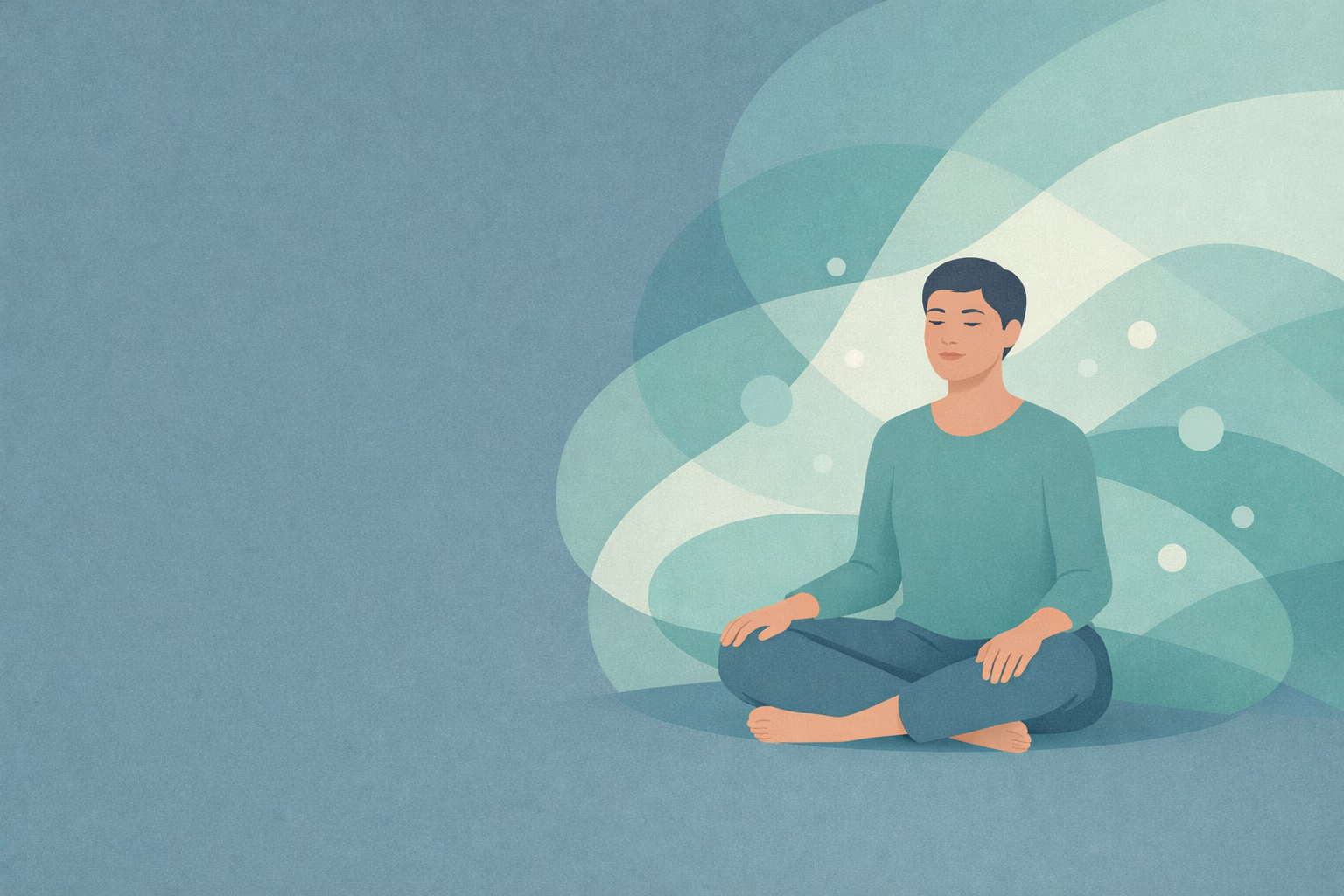
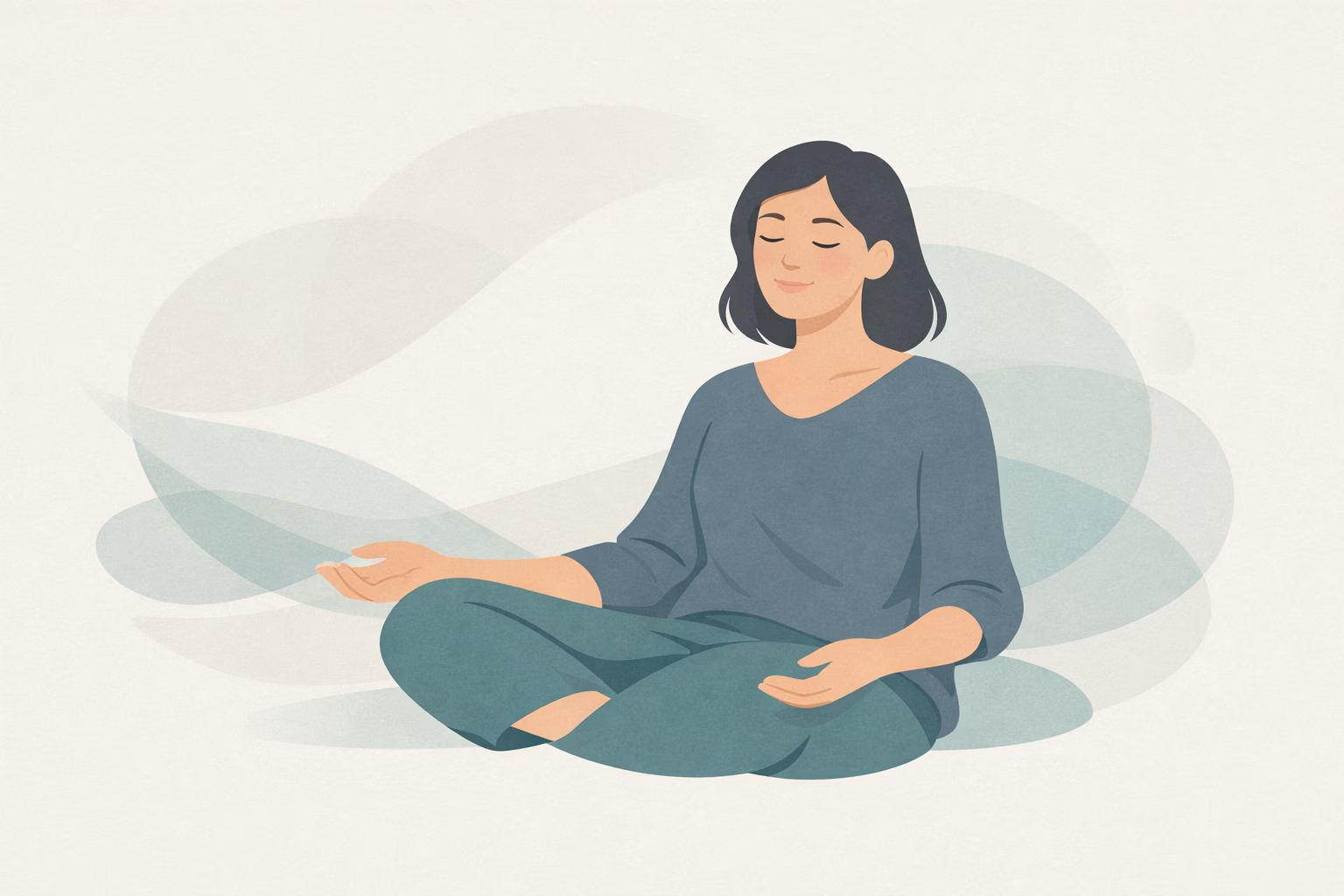
Understanding explains what is happening. Art allows you to feel it—without fixing, judging, or naming. Pause here. Let the images work quietly. Sometimes meaning settles before words do.
One Quiet Window, one insight, one reflection — every Sunday