
Lifestyle Inflation: When “More” Quietly Steals Your Peace
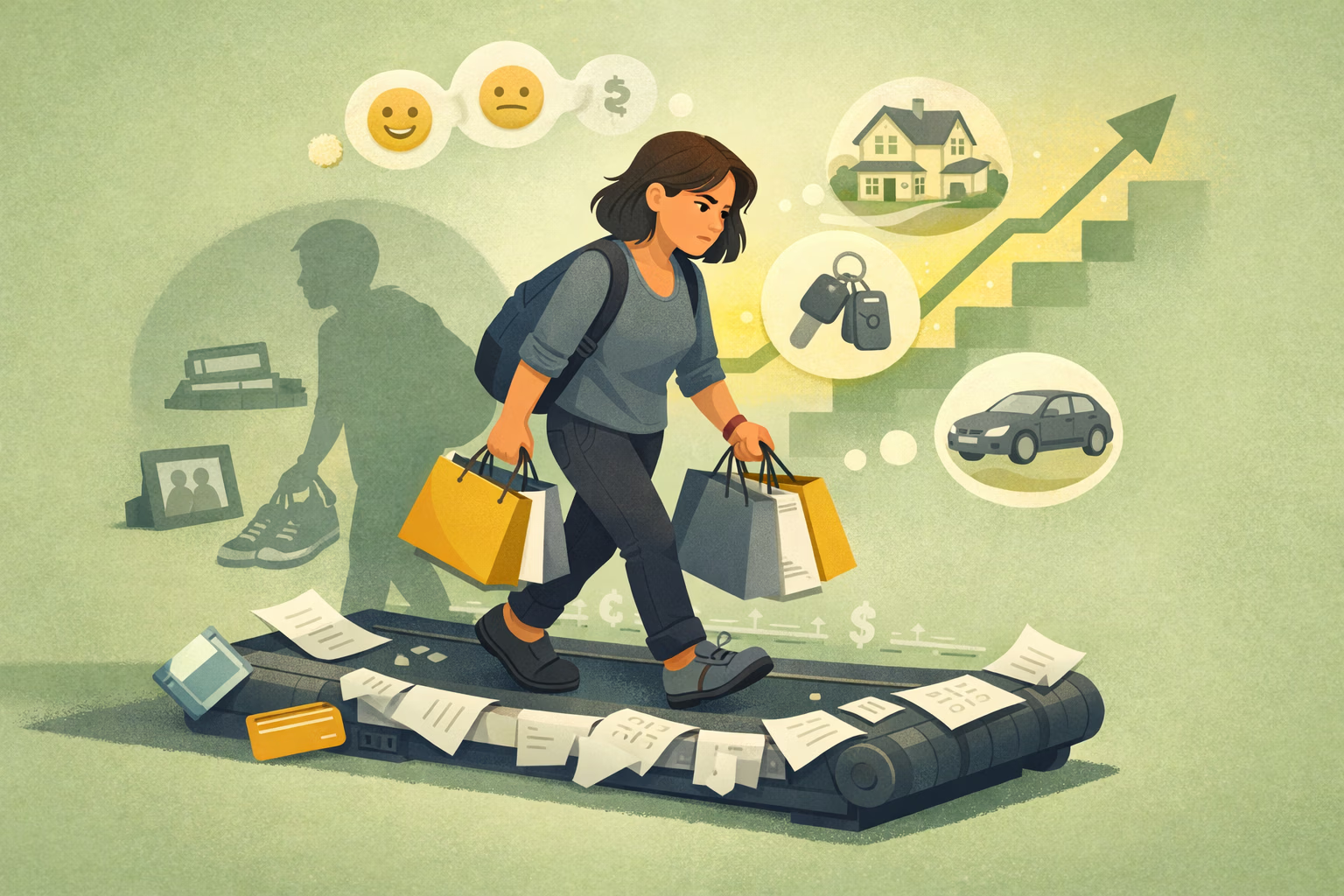
In short: Lifestyle inflation is the pattern where increased income raises your baseline expectations—so satisfaction resets instead of deepening. The outside improves, but the inner sense of “we’re okay now” doesn’t reliably arrive.
Lifestyle inflation is the pattern where increased income raises your baseline expectations—so satisfaction resets instead of deepening. The outside improves, but the inner sense of “we’re okay now” doesn’t reliably arrive.
In the Meaning Density Model™, this isn’t framed as a character flaw or a lack of gratitude. It’s what happens when a reward system built for short cycles of effort-and-relief is placed inside a modern environment where “better” is endless, visible, and socially compared.
Why can a raise feel like relief for a week—and pressure for the next year?
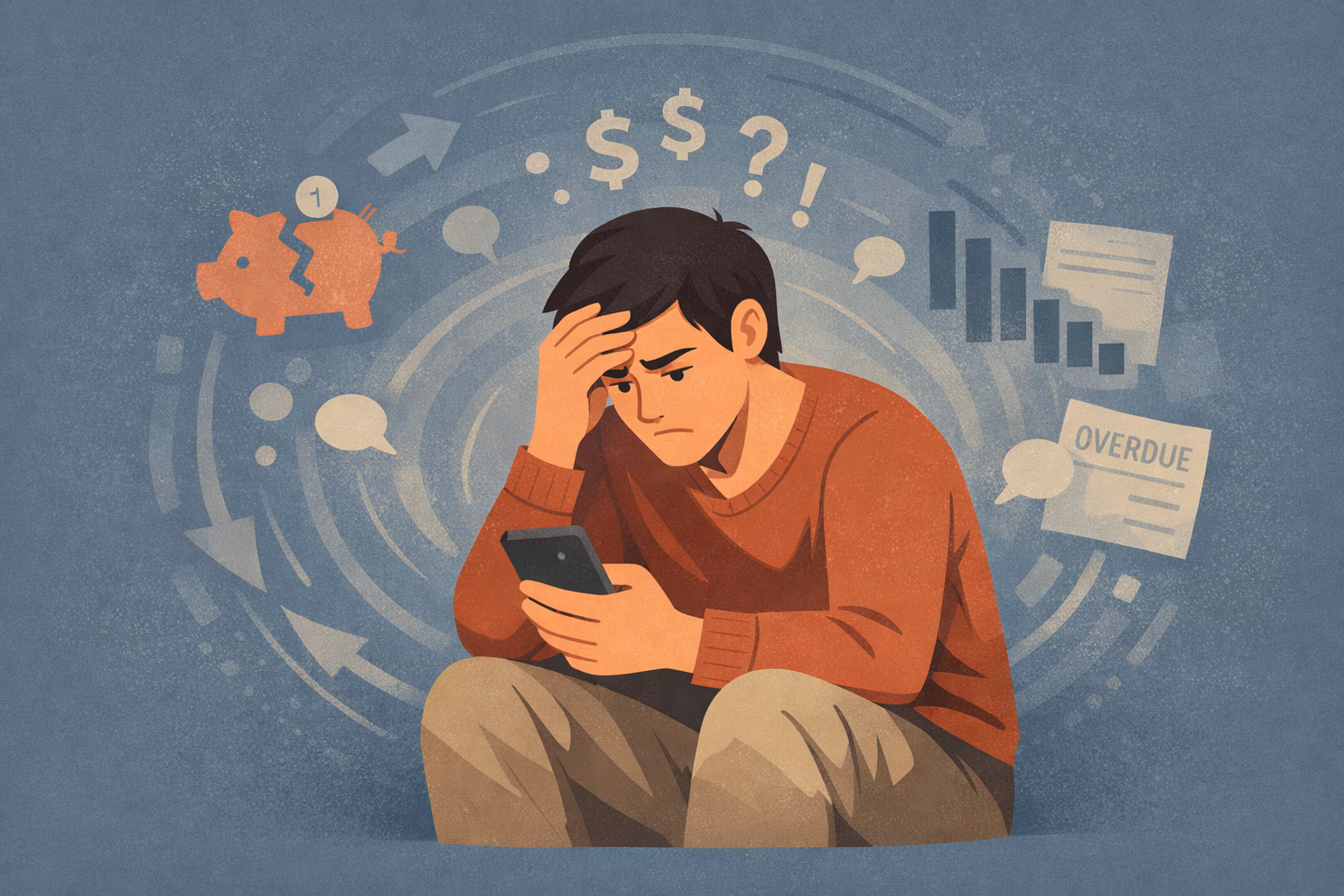
One of the most disorienting experiences with money is earning more and still feeling tight, watched, or behind. The numbers change, but your internal load doesn’t. That can make people question their maturity, their gratitude, or their ability to manage life.
Often, what changed was not only income—but the standard that income is now expected to maintain. The nicer apartment becomes “normal.” The upgraded grocery run becomes “just how we eat.” The higher payment becomes “the new non-negotiable.” Relief doesn’t last because the system never receives a lasting closure signal—only a new baseline to protect. [Ref-1]
It’s not that you can’t appreciate what you have. It’s that what you have quickly becomes what you must keep.
Human reward circuitry is designed to respond strongly to change—especially improvement. When something gets better, the nervous system marks it as important. But that intensity is meant to fade. The fading isn’t cynicism; it’s how the system stays sensitive to new information.
So the first month of a better salary, a new car, or a higher-status role can feel like a genuine lift. Then the signal quiets. Your daily life stops registering it as “good news” and starts registering it as “the current conditions.” The drive returns—not because you’re broken, but because the biology of reward is built to keep scanning for what’s next. [Ref-2]
Hedonic adaptation is the well-studied tendency for satisfaction to drift back toward a personal baseline after positive (or negative) changes. In evolutionary terms, this makes sense: if improved conditions created permanent contentment, organisms would stop seeking food, shelter, protection, and social standing.
That “reset” function helped humans survive in unstable environments. But in a world with continuous options, advertising, and comparison, the same mechanism can keep people in motion long after their basic needs are met. The system is doing what it evolved to do—yet the modern context gives it no natural finish line. [Ref-3]
An upgrade tends to deliver three quick signals: sensory pleasure (comfort, convenience), social reassurance (belonging, status safety), and a storyline of forward movement (“I’m building a better life”). Those are powerful regulators. For a moment, they reduce uncertainty and tighten the sense of identity.
Then, as the upgrade becomes familiar, the emotional “contrast” disappears. What once felt like a gift becomes a background assumption. At that point, maintaining it can start to feel heavier than enjoying it—because now it carries ongoing cost, attention, and risk. The nervous system shifts from receiving to protecting. [Ref-4]
Many of us are taught—explicitly or implicitly—that more income should purchase calm. But calm isn’t only about resources; it’s also about expectations, identity demands, and how often your environment signals that you’re being evaluated.
When expectations rise in parallel with income, the felt sense of security can stay flat. The mind can keep producing “not enough” even in objectively improved circumstances, because the standard for “enough” has moved. And in cultures where work and worth are tightly linked, income increases can intensify identity pressure rather than resolve it. [Ref-5]
What if the missing piece isn’t more money—but a real internal “stand-down” signal?
Lifestyle inflation often behaves like a Pleasure Loop: a cycle where a reward (an upgrade) briefly lifts state, then becomes neutral, which reactivates the urge for another lift. The loop isn’t “greed.” It’s a predictable pattern when stimulation is used as a stand-in for closure.
In a Pleasure Loop, the system learns: when discomfort returns, escalate. Not because a person is shallow, but because the environment reliably offers quick escalations—more features, more convenience, more status cues. Over time, the loop can tighten until “maintain and upgrade” becomes the default orientation. [Ref-6]
Lifestyle inflation isn’t always dramatic. It’s often quiet, socially reinforced, and easy to rationalize. People can be financially “doing well” while living with persistent background urgency.
It may show up as:
These patterns are regulatory responses to an environment that keeps reopening loops—new comparisons, new offerings, new standards.
When upgrades become the main way relief is accessed, the margin for real stability often shrinks. Financial resilience—buffer, flexibility, choice—tends to come from slack. Lifestyle inflation quietly eats slack.
Stress also rises because higher fixed costs increase the consequences of disruption. The nervous system tracks consequence. When “missing a paycheck” or “losing momentum” would now mean losing the life you’ve normalized, the body stays more alert. Over time, the link between income and meaning can weaken, replaced by income-as-maintenance. [Ref-8]
Adaptation dulls pleasure quickly, and the mind tends to fill that dulled space with new wants. This isn’t mere marketing influence; it’s also an aspiration mechanism. Humans gauge wellbeing partly through relative position and imagined futures, not only current comfort.
Research on income, aspirations, and satisfaction suggests that when aspirations rise, gains can be absorbed without producing sustained increases in wellbeing. The baseline resets again and again—especially when comparison and possibility are always present. [Ref-9]
The problem isn’t wanting things. The problem is when wanting becomes the only way the system knows it’s alive.
A different kind of stability can emerge when the sense of worth and “how I’m doing” is not continuously negotiated through purchases, aesthetics, or lifestyle signals. This isn’t about rejecting comfort. It’s about where your nervous system looks for the signal that life is coherent.
When satisfaction is outsourced to upgrades, identity remains externally tethered: the environment must keep confirming you. When satisfaction is grounded in values and lived direction, the system can register continuity—I know what I’m building and why—which is a different kind of settling than a dopamine spike. The hedonic treadmill framing captures how easy it is for external gains to become emotionally neutral without deeper completion. [Ref-10]
Consumption often doubles as communication: “I belong,” “I’m safe,” “I’m successful,” “I’m not falling behind.” In relationships, that can create silent performance pressure—shared spending that functions as reassurance rather than genuine preference.
When shared values become more central than shared signaling, relationships tend to feel less evaluative and more orienting. People can experience more “we-ness” with fewer props, because the bond is stabilized by coherence, not constant proof. This matters because social safety cues are among the strongest regulators we have; when they’re tied to lifestyle maintenance, the nervous system stays on guard. [Ref-11]
Calm isn’t a moral achievement. It’s a state that becomes available when load reduces and the system receives enough closure to stop scanning. In the “never enough” loop, the system is trained to expect the next escalation, the next comparison, the next requirement—so it stays mobilized.
As the chase for reward escalation quiets, people often report a more stable sense of sufficiency—less urgency to update, prove, or refresh. Gratitude in this context is not forced positivity; it’s what can arise when the nervous system can finally register what is already complete and safe enough to stand down. [Ref-12]
Money is a tool, but the nervous system experiences it as many things at once: safety, belonging, power, choice, and identity. Lifestyle inflation tends to steer money toward continual upgrading—because upgrades are immediate, legible, and socially reinforced.
When income is oriented toward meaning, it can support forms of stability that upgrades can’t reliably provide: time flexibility, reduced consequence, room to recover, alignment with what matters, and contribution that feels like a lived signature. In that orientation, spending becomes less about keeping pace and more about expressing direction—an identity-level coherence that can actually settle. [Ref-13]
Lifestyle inflation is not proof that you’re ungrateful or incapable of contentment. It’s what a human reward system often does in a high-velocity world: it adapts, it normalizes, and it keeps reaching for the next signal of relief. The hedonic treadmill is a description of a loop, not a verdict on a person. [Ref-14]
When the loop is named, shame tends to loosen. And when shame loosens, more options become visible—especially options that restore coherence rather than merely changing state. Meaning doesn’t arrive through pressure. It arrives when life begins to feel internally consistent enough for the system to stop negotiating worth with every upgrade.
There may always be another tier, another feature, another lifestyle that looks like the solution. But “enough” isn’t located at the end of a shopping list or a salary ladder.
“Enough” is what it feels like when resources, values, and direction align—when your nervous system can register completion and your identity isn’t required to re-prove itself each month. That kind of alignment tends to be quieter than an upgrade, and far more stabilizing. [Ref-15]
From theory to practice — meaning forms when insight meets action.
Because hedonic adaptation resets your baseline faster than expected. The article explains this carefully: human reward circuitry is designed to respond strongly to change, then fade. The first month of better salary, a new car, or higher-status role feels like a genuine lift — then the signal quiets. Daily life stops registering it as good news and starts registering it as the current conditions. The drive returns. This isn't ingratitude or shallow biology — it's how the system stays sensitive to new information. The fading helped survival in unstable environments by keeping organisms motivated. In a world of continuous options, that same mechanism leaves you reaching long after basic needs are met.
Yes — the article places it there directly. A Pleasure Loop is a cycle where reward briefly lifts state, then becomes neutral, which reactivates the urge for another lift. Lifestyle inflation isn't greed; it's a predictable pattern when stimulation substitutes for closure. Upgrades deliver three quick signals — sensory pleasure, social reassurance, forward-movement storyline. Powerful regulators that reduce uncertainty for a moment. Then contrast disappears, what felt like a gift becomes background assumption, and maintaining it feels heavier than enjoying it. The system shifts from receiving to protecting. The loop tightens until 'maintain and upgrade' becomes the default orientation.
Because the standard for 'enough' moves with you. The article describes this trap precisely: when expectations rise in parallel with income, felt security stays flat. The mind keeps producing 'not enough' even in objectively improved circumstances because the baseline reset. Higher fixed costs also increase the consequences of disruption. Missing a paycheck or losing momentum would now mean losing the life you've normalized, so the body stays alert. Resilience comes from slack, and lifestyle inflation quietly eats slack. Income shifts from creating freedom to requiring maintenance. The link between earning and meaning weakens, replaced by income-as-protection.
A state, not a tier. The article lands here directly: enough isn't located at the end of a shopping list or salary ladder. It's what life feels like when resources, values, and direction align — when your nervous system can register completion and identity isn't required to re-prove itself each month. When worth stops being outsourced to upgrades, the Pleasure Loop loosens. Calm becomes biologically available because the system isn't trained to expect the next escalation. Income oriented toward meaning supports time flexibility, room to recover, contribution that feels like a lived signature. Spending becomes expression of direction rather than pace-keeping. Quieter than an upgrade — and far more stabilizing.
From Science to Art.
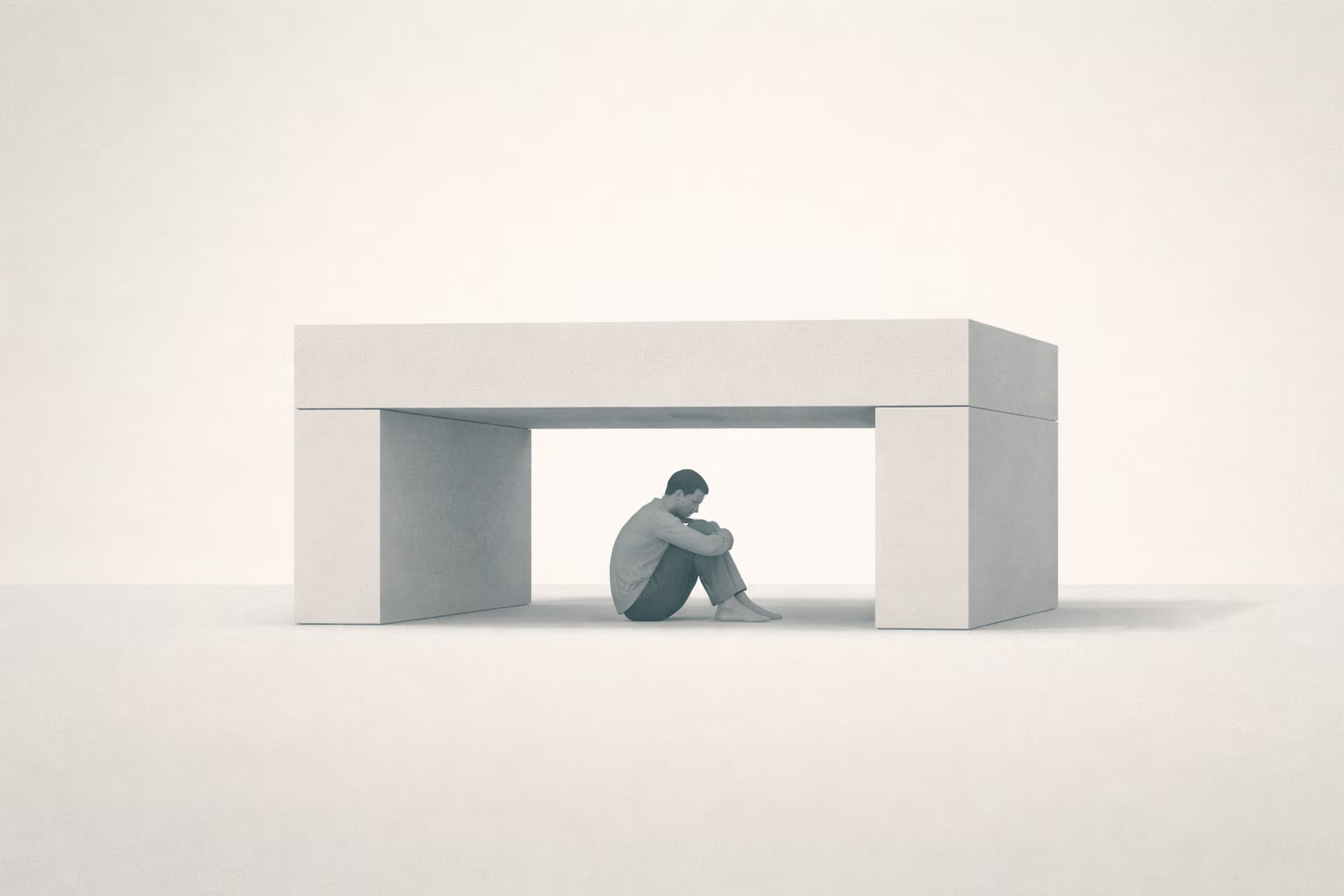
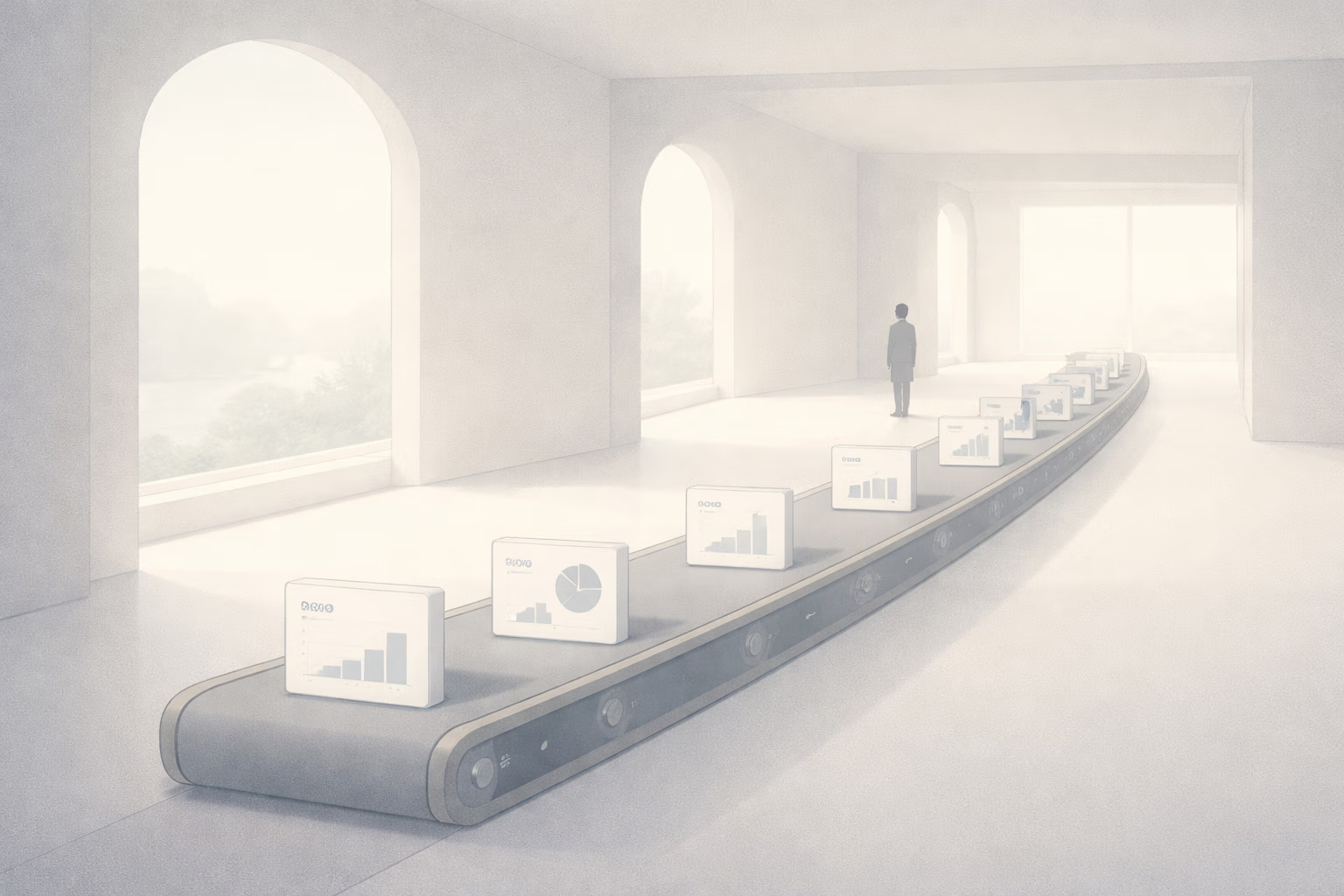
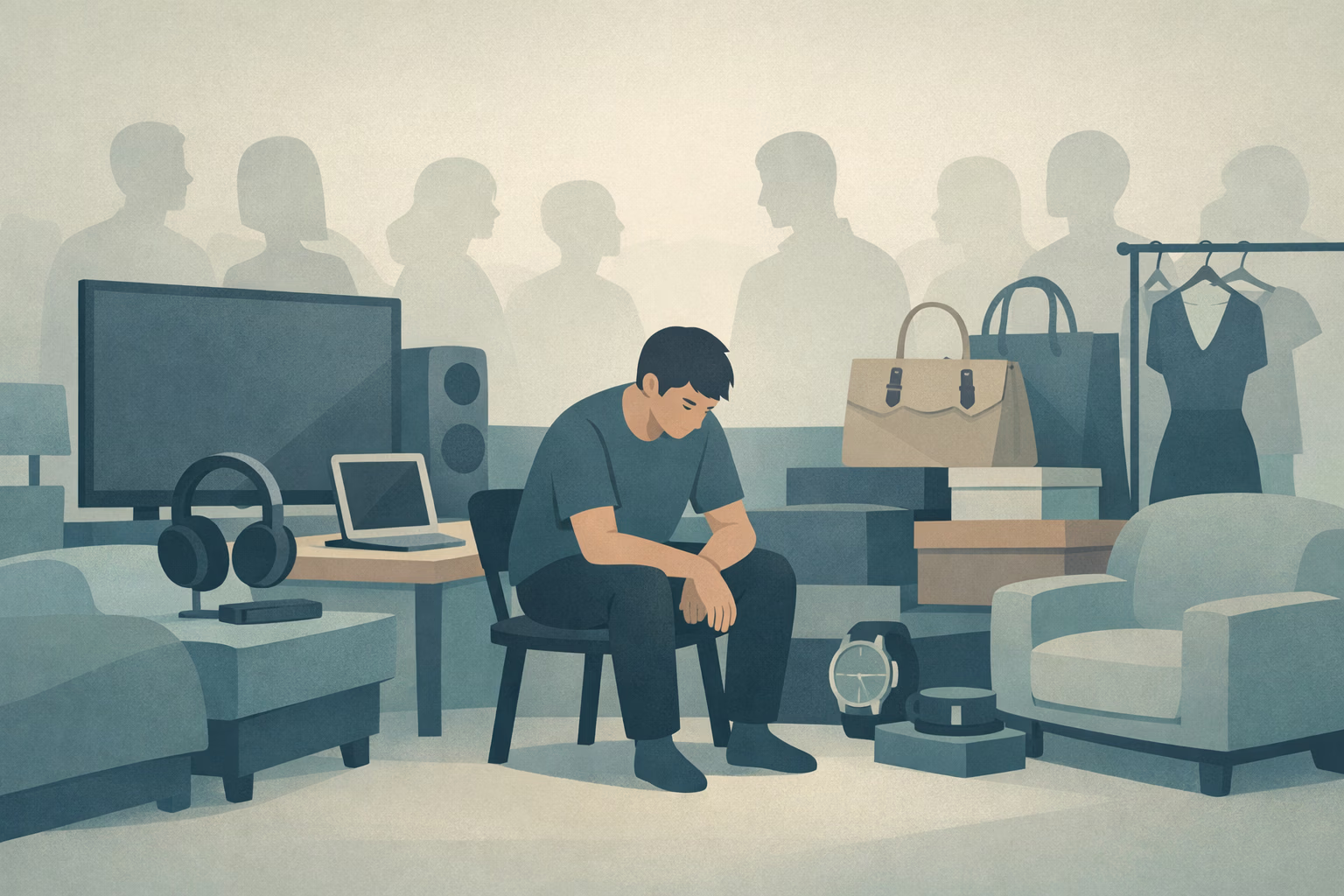
Understanding explains what is happening. Art allows you to feel it—without fixing, judging, or naming. Pause here. Let the images work quietly. Sometimes meaning settles before words do.
One Quiet Window, one insight, one reflection — every Sunday