Scarcity Mindset in an Age of Abundance
In short: Scarcity mindset is often described like a thought pattern, but for many people it behaves more like a persistent survival-state perception: the world may be stable, income may be steady, savings may exist—and yet the system still tracks resources as insufficient or about to disappear. This can be confusing and isolating because it doesn’t respond well to reassurance.
Scarcity mindset is often described like a thought pattern, but for many people it behaves more like a persistent survival-state perception: the world may be stable, income may be steady, savings may exist—and yet the system still tracks resources as insufficient or about to disappear.
This can be confusing and isolating because it doesn’t respond well to reassurance. Even good news can feel temporary. Relief arrives, but it doesn’t “land,” as if the body never receives a clear signal that the loop is complete.
If you have enough, why can’t you feel safe?
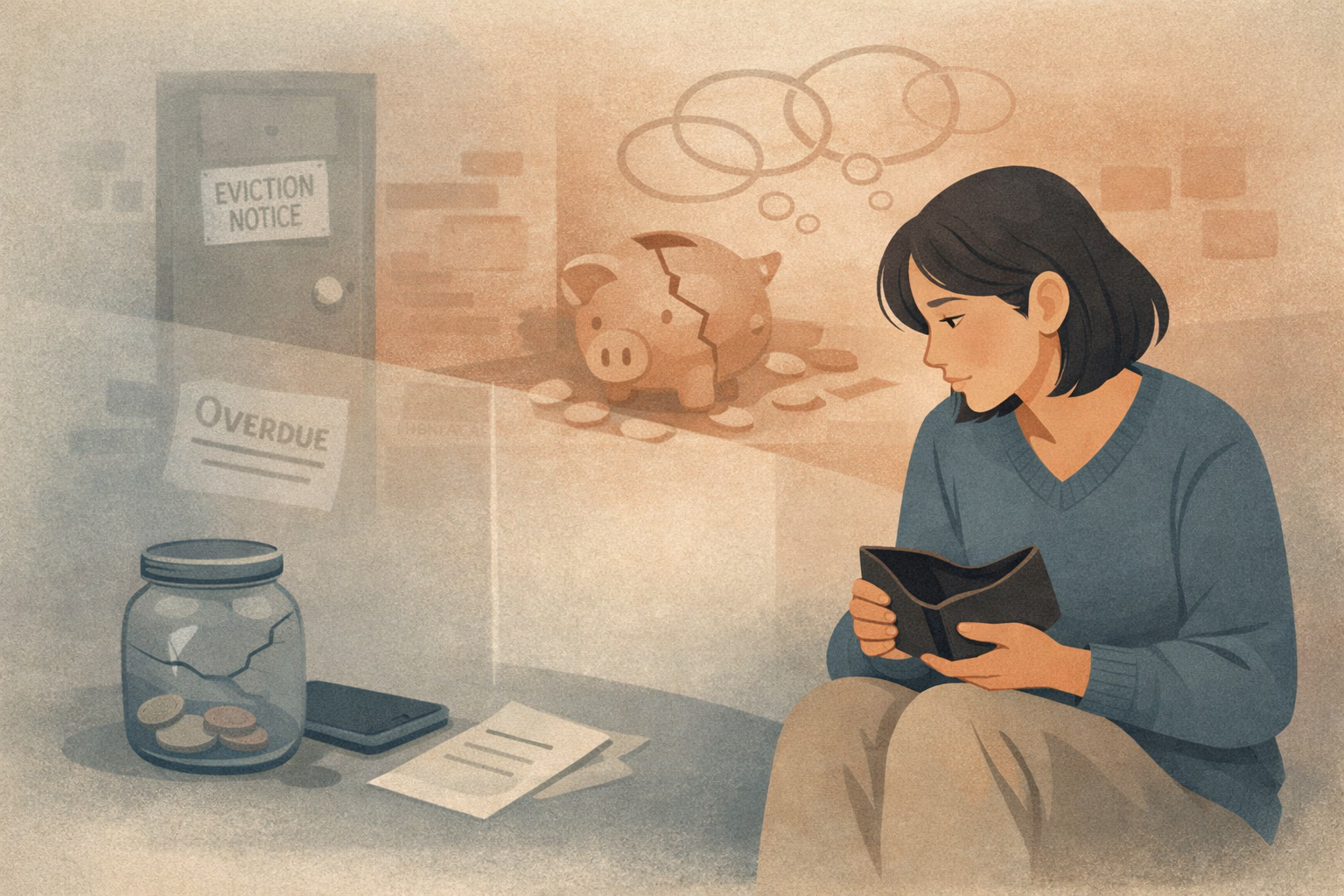
Scarcity mindset often shows up as background tension rather than a dramatic crisis: a subtle tightness around money, time, food, space, or opportunity. You may notice an urge to hold, stock, postpone enjoyment, or prepare for a loss you can’t name—even when your current conditions are stable. [Ref-1]
It can also look like difficulty inhabiting stability. A raise, a paid-off bill, or a full pantry might register intellectually, yet the internal state stays braced. The “done” signal doesn’t arrive, so the system continues scanning for what could undo the safety.
“I can see that I’m fine. I just can’t feel that I’m fine.”
When uncertainty is present—economic, relational, health-related, or social—threat and control circuits tend to stay online. Attention becomes biased toward potential loss, and decision-making narrows toward what reduces risk quickly. [Ref-2]
This is not a character flaw; it’s a protective allocation of resources. In a threat-leaning state, the nervous system spends more capacity on monitoring and less on integrating safety cues. As a result, even objectively good conditions may not register as “secure,” because the system is oriented toward what could change.
In a survival state, “enough” is not a number—it’s a signal.
Humans evolved under conditions where unpredictability was common: seasons changed, food supplies fluctuated, and safety could shift quickly. A bias toward vigilance and conserving resources helped people persist through unstable periods.
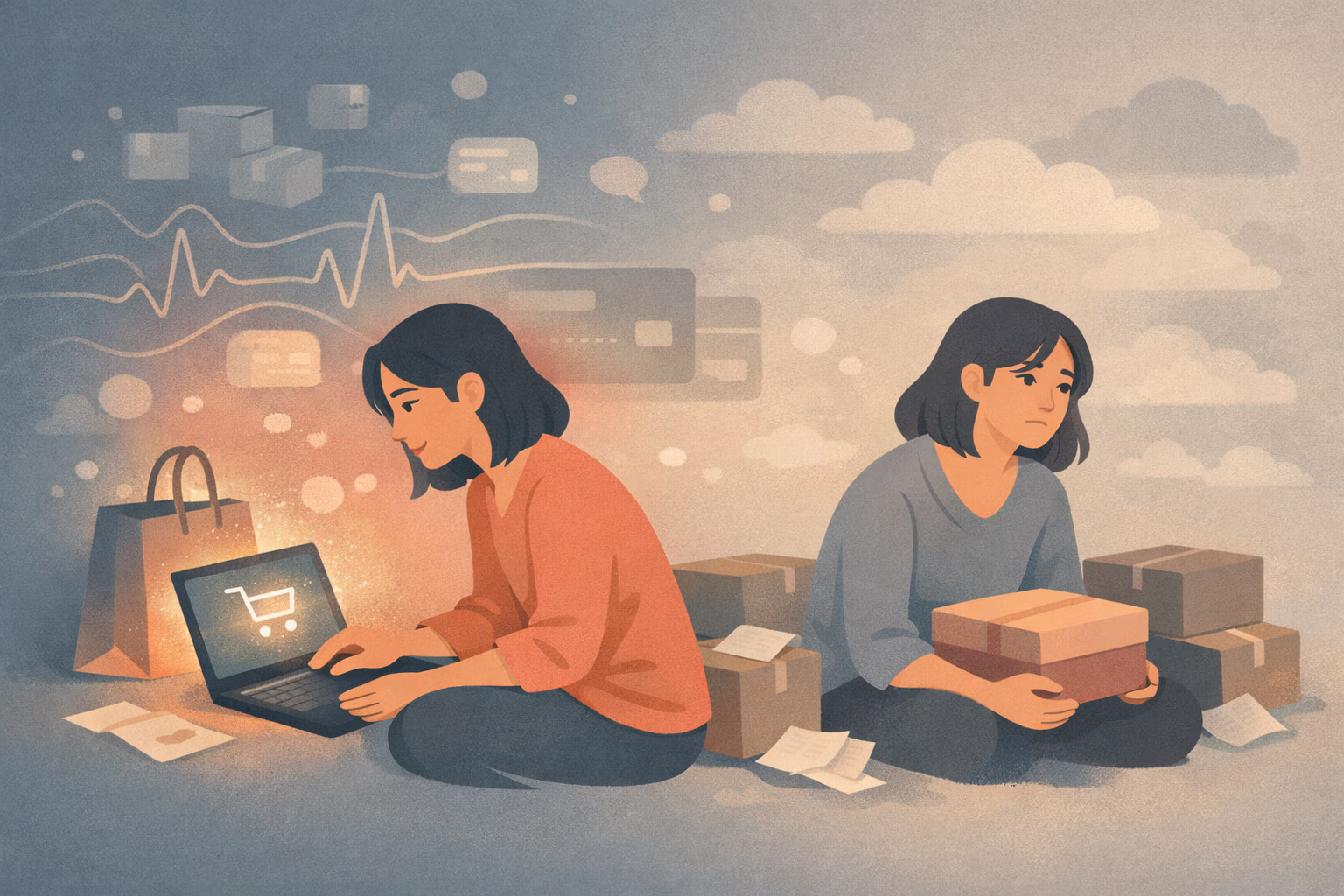
In modern environments, many people live with relative abundance compared to ancestral conditions—yet volatility still exists, and social comparisons are constant. Research suggests scarcity framing can alter neural processing involved in consumer decisions, making tradeoffs feel more urgent and loss-focused. [Ref-3]
So the mismatch isn’t that your system is “wrong.” It’s that modern life can keep old threat programs activated even when immediate survival needs are met.
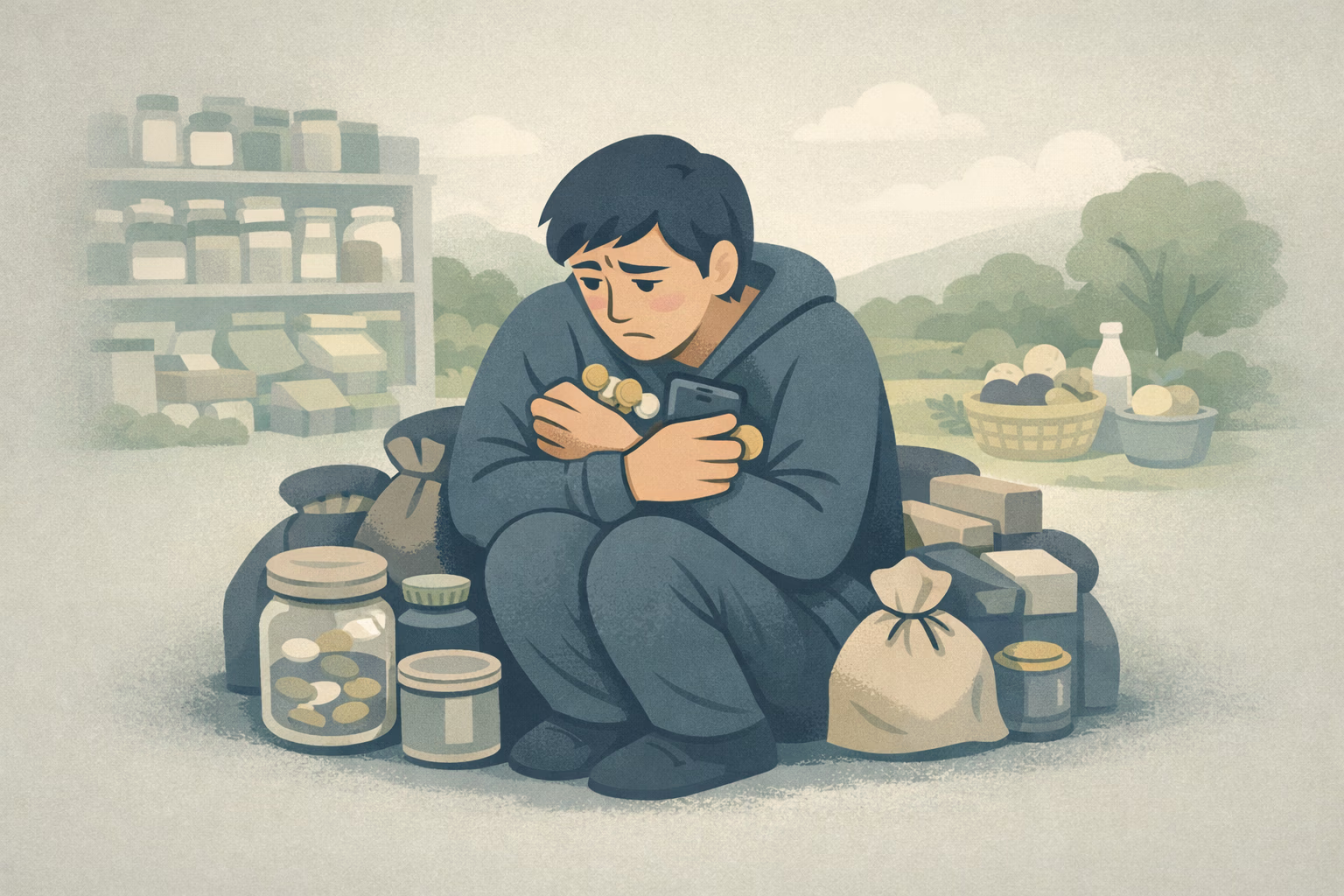
Scarcity-driven behaviors—checking balances repeatedly, over-researching purchases, holding cash “just in case,” or delaying enjoyment—often produce a short-lived sense of preparedness. That temporary steadiness can feel like proof that the vigilance is necessary. [Ref-4]
But preparedness is not the same as closure. If the underlying loop never completes—if the system never receives a stable “we are safe now” signal—then the behaviors must repeat to recreate the same brief relief. The result is a cycle where safety is constantly approximated, but rarely embodied as settled reality.
There’s a common belief that constant caution prevents loss. Sometimes caution is appropriate. The problem is when caution becomes the only available state—when it suppresses joy, generosity, and the ability to plan beyond the next risk horizon. [Ref-5]
In a chronically braced state, “future” can feel like a threat rather than a space for meaning. Decisions get pulled toward immediate protection: what preserves resources right now, what prevents regret, what avoids vulnerability to change. That can keep the body busy, but it can also keep life small.
What if the point isn’t to be less careful, but to be less cornered?
One way to understand scarcity mindset is as an Avoidance Loop: a protective contraction that reduces exposure to uncertainty. The loop isn’t driven by laziness or lack of gratitude. It’s driven by an internal prediction: “If I loosen my grip, something will take this away.” [Ref-6]
In avoidance loops, the system privileges short-term certainty over long-term coherence. The person may avoid spending, avoid opportunities, avoid asking for support, or avoid celebrating wins—not because they don’t want a fuller life, but because expansion can feel like increased risk.
Over time, contraction becomes familiar. Familiar can read as safe, even when it’s uncomfortable.
Scarcity doesn’t always look like overspending or chaos. Often it looks like tight control—or like a mind that can’t stop running calculations. These are regulatory responses to an environment that hasn’t provided consistent closure. [Ref-7]
None of these prove you’re “irrational.” They show where your system expects consequence without reliable protection.
Prolonged scarcity orientation can drain well-being in ways that are easy to miss because they’re socially rewarded as “responsible.” Over time it can reduce creativity, make rest feel undeserved, and turn ordinary choices into threat calculations. [Ref-8]
Relationships can be affected too. Scarcity can make generosity feel unsafe, transparency feel risky, and receiving feel like debt. Even when love and support are present, the system may interpret closeness as another place resources could be demanded or lost.
When life is organized around preventing loss, it becomes harder to experience sufficiency—not because sufficiency isn’t real, but because the body doesn’t get to complete the “safe enough” cycle.
Hyper-vigilance reinforces the very threat perception it’s trying to manage. Constant monitoring keeps attention trained on risk cues, which can degrade executive functioning and widen the sense that you must keep controlling everything to stay okay. [Ref-9]
In other words: the more the system practices scanning, the more scanning becomes the default. The nervous system can get stuck in a loop of “not yet,” where no amount of evidence fully closes the file.
This is why people can accumulate more resources and still feel less safe. The limiting factor isn’t the amount—it’s the system’s ability to stand down and integrate completion.
There is a distinct shift that can occur when internal safety is restored: the environment looks the same, but the nervous system reads it differently. The mind can still notice risks, yet it no longer treats every risk as imminent. The body stops acting like it must solve the future right now. [Ref-10]
This isn’t positive thinking, and it isn’t simply understanding where scarcity came from. It’s a physiological settling that tends to follow actual completion—moments where pressures reduce, consequences become clearer, and the system receives credible cues of continuity.
“I didn’t become careless. I became less braced.”
In that state, “enough” isn’t a forced conclusion; it’s a signal that returns when the alarm no longer has to stay on.
Scarcity often intensifies in isolation. When decisions and worries are carried alone, the nervous system has fewer external safety cues—less evidence that support, clarity, and continuity exist beyond individual control.
Shared security can look like trust, transparency, and predictable agreements in relationships, households, or teams. When expectations are clearer and support is more reliable, scarcity-driven behaviors often soften on their own because the system no longer has to compensate for uncertainty by gripping harder. [Ref-11]
Sometimes the deepest relief is not more money, but more reliability.
When the scarcity alarm quiets, people often notice a return of ease—not as constant calm, but as more capacity. Choices require less self-negotiation. Small purchases stop feeling like moral events. Time feels less like it’s slipping away.
Generosity can reappear in a grounded form: not impulsive giving for approval, and not withholding for protection, but a steadier ability to share without feeling endangered. Presence returns because attention is no longer continually pulled forward into imagined consequences. [Ref-12]
When regulation improves, resources can be used in service of values rather than fear. Money becomes less like a fragile shield and more like a tool that supports identity: care for family, creative work, learning, contribution, or stability that actually feels livable.
This is where meaning becomes protective. Values-based use tends to create coherence—experiences that complete rather than perpetually defer. In that coherence, the nervous system receives more “done” signals: evidence that life is not only being guarded, but also being lived. [Ref-13]
Scarcity doesn’t disappear because you convince yourself it’s irrational. It loosens when your system repeatedly encounters completion—enough moments where safety is credible, sustained, and integrated into who you understand yourself to be.
Scarcity mindset often began as protection: a way to stay intact in environments that were unstable, evaluative, or unpredictable. In that context, tightening made sense. The tragedy is when the inheritance outlasts the conditions—when the nervous system keeps defending against a past that is no longer fully present. [Ref-14]
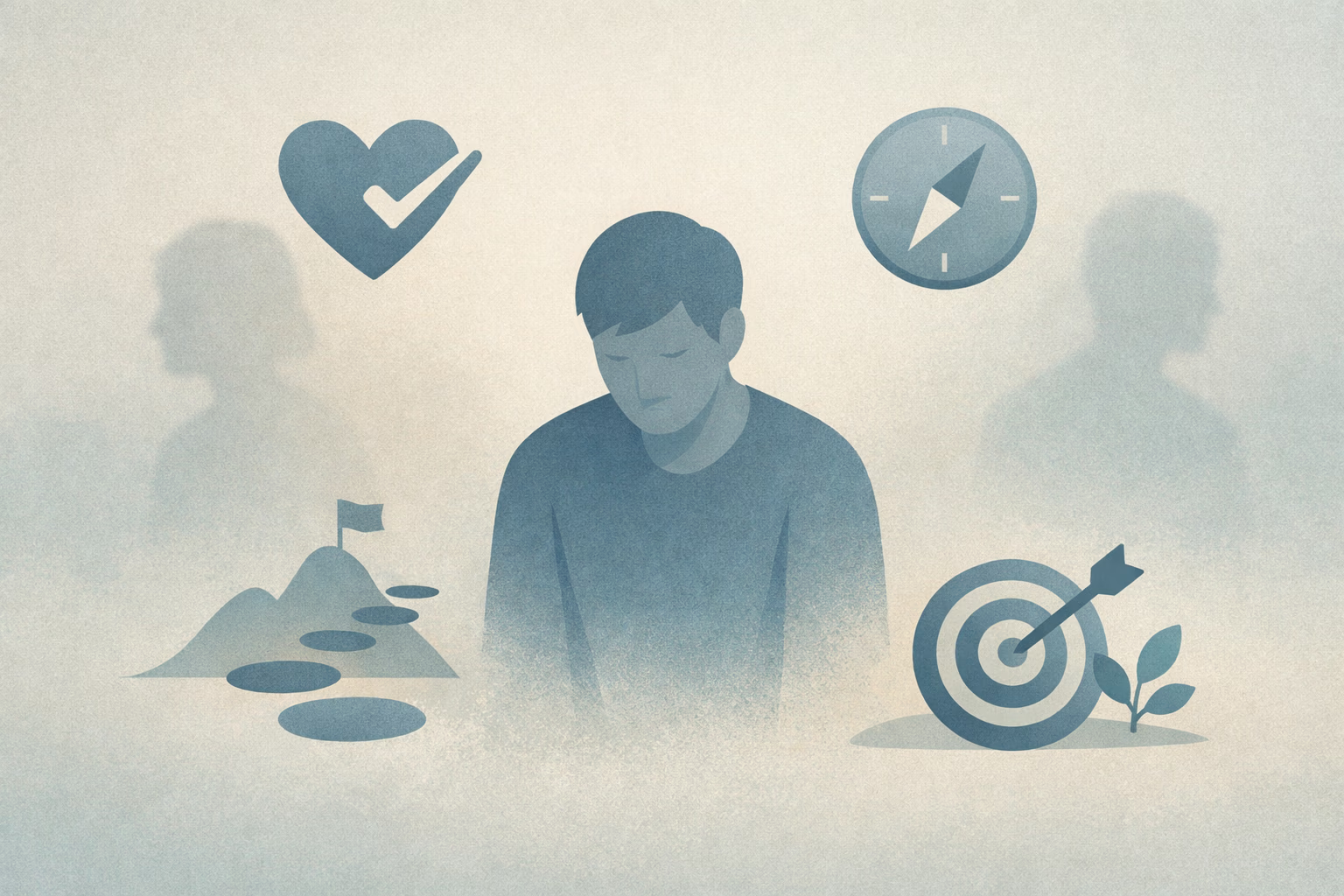
Reframed this way, the question becomes less “What’s wrong with me?” and more “What has my system been asked to carry, for how long, without closure?” That shift doesn’t solve everything, but it restores dignity—and dignity is a form of orientation.
When life starts to organize around meaning-based sufficiency—what truly matters, what is steady, what is coherent—scarcity has less territory to govern. Not because vigilance is defeated, but because it’s no longer needed to hold the whole world together.
Abundance is not only what you have. It’s what your nervous system believes is safe to rely on, safe to receive, and safe to let be “enough.” When scarcity has been the long-standing language of protection, stability can take time to register as real—because the system is waiting for completion, not persuasion.
And when completion finally arrives—when the alarm stands down in a durable way—enough becomes less like a claim you make and more like a reality you can inhabit. [Ref-15]
From theory to practice — meaning forms when insight meets action.
Because scarcity mindset behaves less like a thought pattern and more like a persistent survival-state perception. The world may be stable, income steady, savings present — and the system still tracks resources as insufficient or about to disappear. The article frames this as the nervous system never receiving a clear signal that the loop is complete. Even good news doesn't land. A raise or paid-off bill registers intellectually but the internal state stays braced because the Threat & Safety System keeps scanning for what could undo the safety. 'I can see I'm fine, I just can't feel I'm fine' captures the gap between cognitive knowing and embodied closure.
Because hyper-vigilance reinforces the threat perception it tries to manage. Constant monitoring keeps attention trained on risk cues, and the more the system practices scanning the more scanning becomes the default. People can accumulate more resources and still feel less safe — the limiting factor isn't the amount but the system's ability to stand down and integrate completion. The article frames scarcity as an Avoidance Loop: short-term certainty is privileged over long-term coherence, and contraction becomes familiar. Familiar reads as safe even when uncomfortable. In a survival state, 'enough' is not a number — it's a signal that has to return.
Background tension rather than dramatic crisis. The article describes subtle tightness around money, time, food, space, or opportunity, an urge to hold or postpone enjoyment, difficulty inhabiting stability when it arrives. It can show up as fear of spending on small comforts even when affordable, chronic comparison treating someone else's lifestyle as a threat signal, over-saving that creates daily strain, anxiety spikes during normal financial decisions, or generosity feeling unsafe and receiving feeling like debt. None of these prove irrationality — they show where the system expects consequence without reliable protection. They get socially rewarded as 'responsible' which makes them harder to recognize as load.
Through physiological settling that follows actual completion, not persuasion or insight. The article frames this clearly: the environment looks the same but the nervous system reads it differently. The mind still notices risks but no longer treats every risk as imminent. Shared security helps — when expectations are clearer and support more reliable, scarcity-driven gripping softens because the system isn't compensating for uncertainty alone. 'I didn't become careless, I became less braced.' Sometimes the deepest relief isn't more money but more reliability. When the alarm stands down durably, enough becomes less like a claim you make and more like a reality you can inhabit.
From Science to Art.
Understanding explains what is happening. Art allows you to feel it—without fixing, judging, or naming. Pause here. Let the images work quietly. Sometimes meaning settles before words do.
One Quiet Window, one insight, one reflection — every Sunday