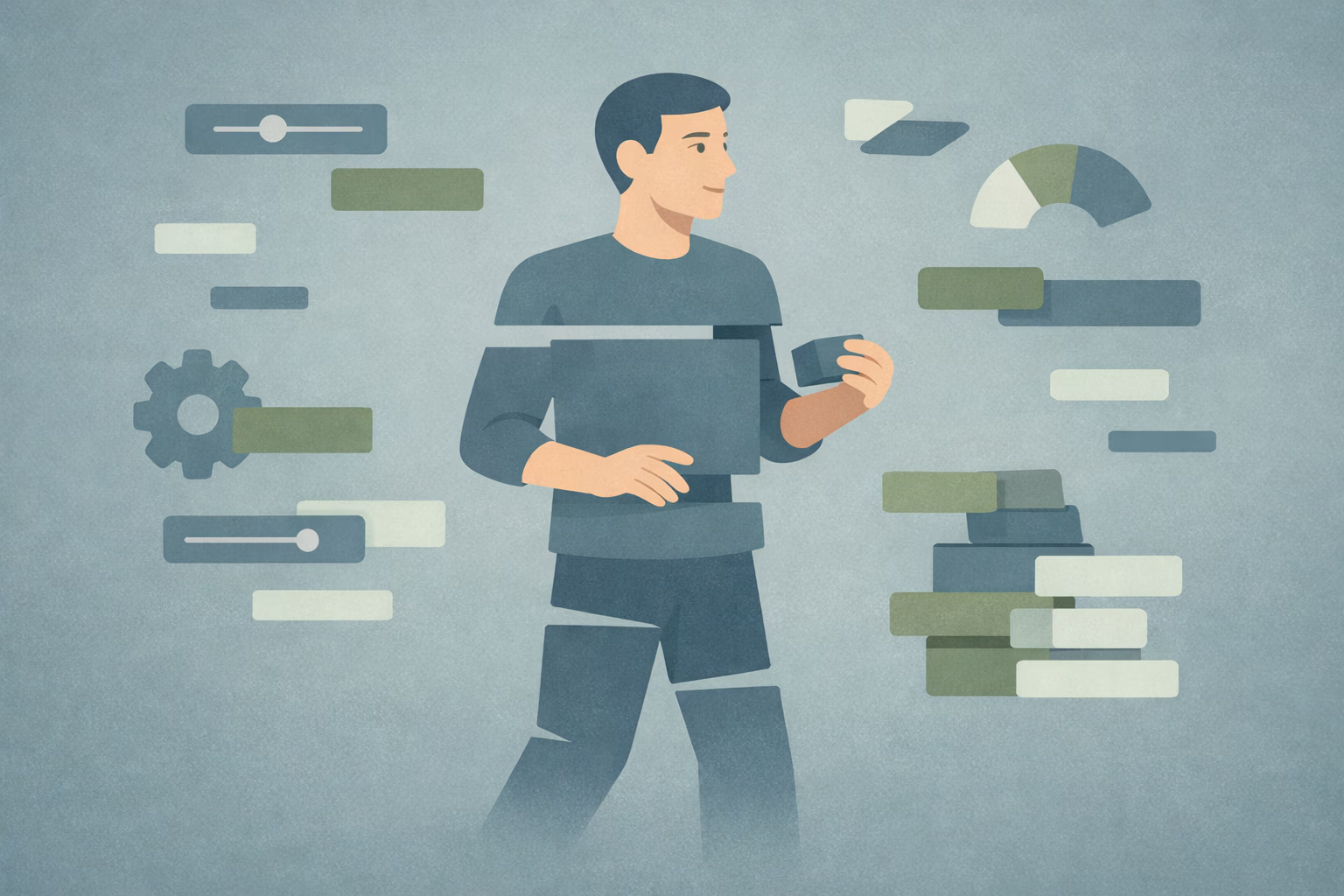
Life Hack Culture: The Productivity Illusion
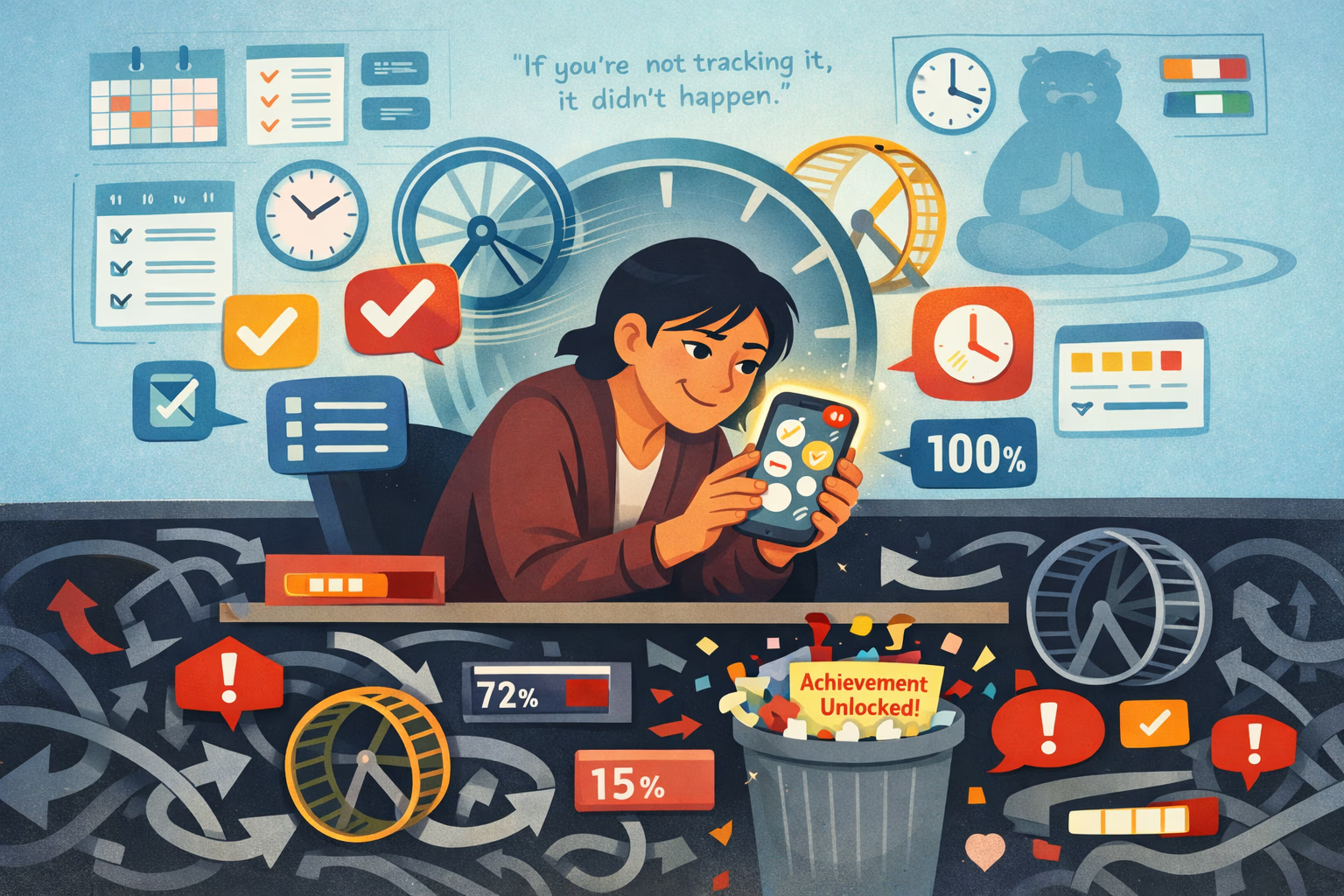
In short: They hold reminders, reduce mental clutter, and make complex work feel organized. But many people notice a subtle shift over time—less clarity, more urgency.
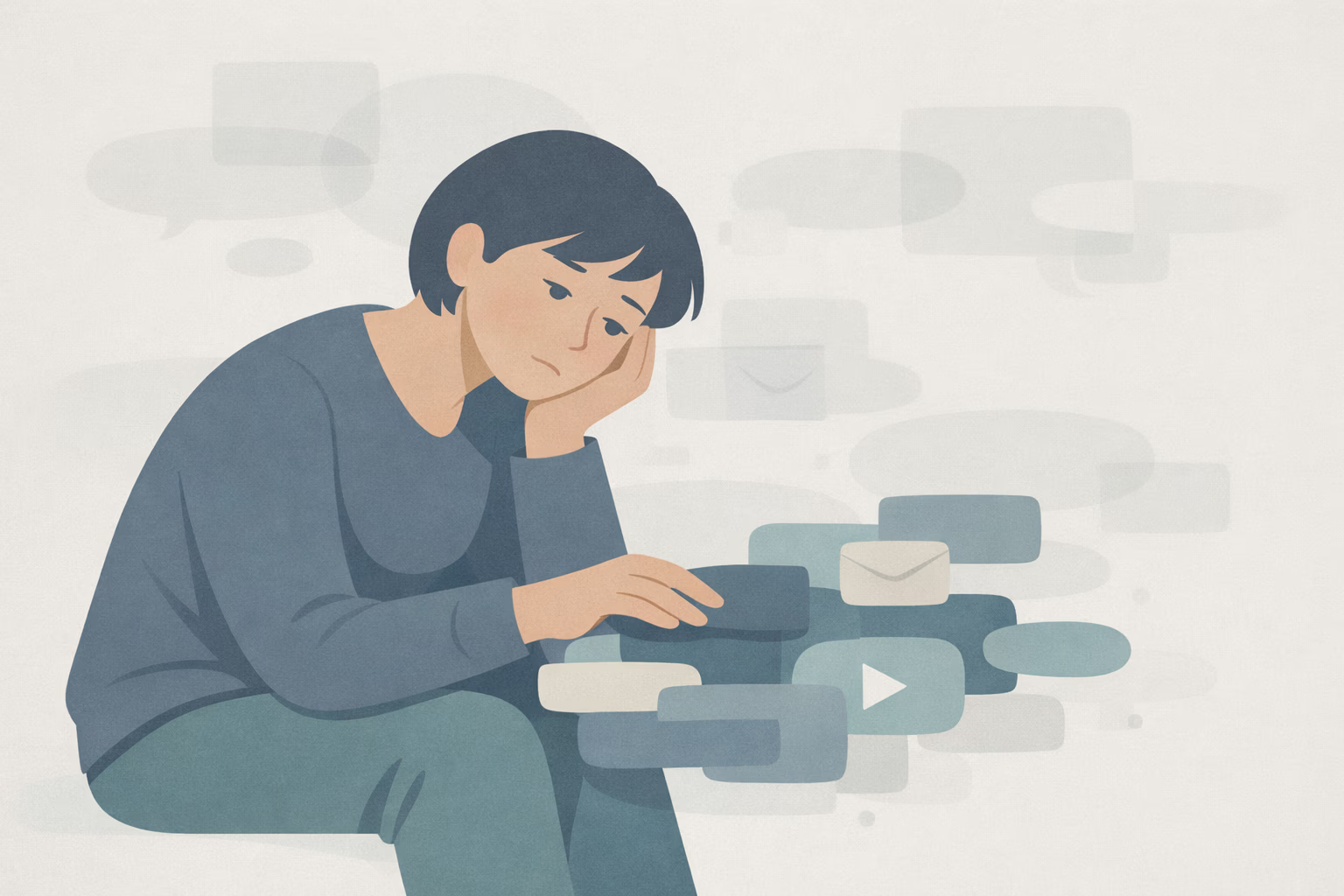
Productivity apps can be genuinely supportive: they hold reminders, reduce mental clutter, and make complex work feel organized. But many people notice a subtle shift over time—less clarity, more urgency. The tool stops feeling like a helper and starts feeling like a scoreboard that’s always running.
What if the pressure you feel isn’t a personal flaw—what if it’s a predictable nervous-system response to constant measurement?
In modern life, “being on track” can become an endless demand rather than a steady orientation. When a system is repeatedly asked to prove output, maintain streaks, or display progress, it can lose access to the internal “done” signal that allows genuine stand-down.
Many productivity apps are built around visible progress: streaks, charts, completion rates, overdue counts. On paper, this seems neutral—just information. In the body, it can land as a living message: you are not caught up yet.
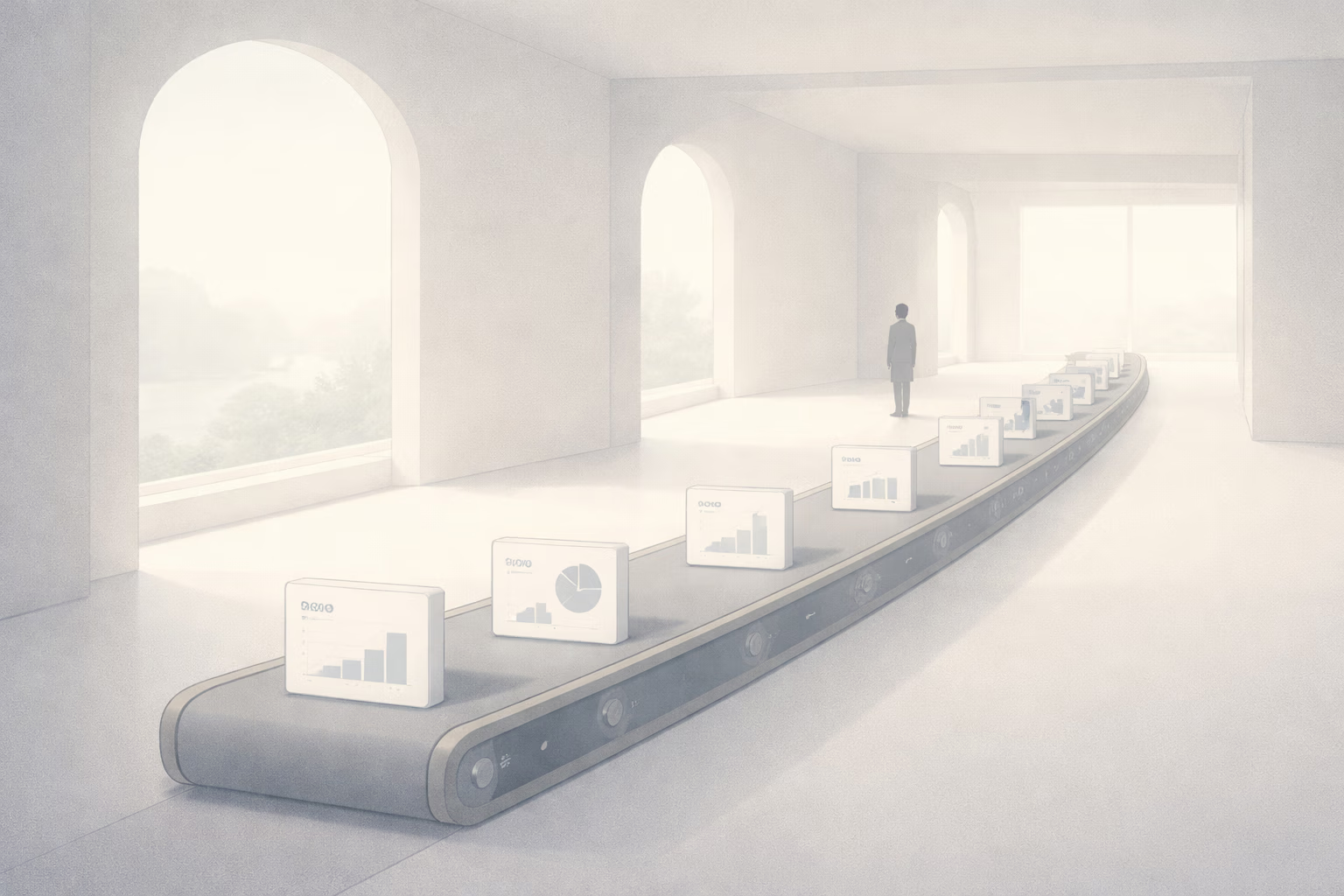
That feeling doesn’t always come from the amount of work. It often comes from the structure of the display. A dashboard is designed to be revisited, and what it shows is usually the gap between “now” and “ideal.” When the gap is always visible, urgency becomes a default state rather than a situational response. [Ref-1]
Over time, it can stop mattering what you completed. The system learns to scan for what remains. The mind may call it “motivation,” but the nervous system often treats it as continuous incompletion.
Tracking is not only cognitive; it is relational. It creates a perceived observer—even if no one else can see your data. When the day is structured around checkmarks, timers, scores, or “daily goals,” the body can interpret normal fluctuations in energy as a risk: today might not count. [Ref-2]
Gamified features can amplify this by turning ordinary tasks into repeated performance tests. The result is often a prolonged “ready stance”: more self-monitoring, faster checking, less settling. This can look like drive from the outside, while internally it can feel like pressure without an off-switch.
Humans didn’t evolve as neutral data processors. For most of history, being monitored meant something: evaluation, hierarchy, inclusion or exclusion, access to resources. Even when modern tracking is self-chosen, the nervous system can still treat measurement as a power signal. [Ref-3]
That’s one reason an app can feel “loud” even when it’s silent. A leaderboard, a percentile, a comparison chart, or a weekly report can activate old circuitry that asks: Where do I stand? The answer doesn’t need to be catastrophic to create tension; it only needs to remain unresolved.
When your day becomes a number, it’s easy for your worth to feel numeric too.
It makes sense that productivity tools can feel soothing—especially during overload, transition, or uncertainty. They offer an immediate form of order: a list, a plan, a structure. That structure can reduce ambiguity, and ambiguity is expensive for a stressed nervous system.
In that early phase, the tool can provide a quick “closure substitute”: tasks are captured, the day looks containable, and the mind gets a brief sense of control. Wearable and tracking research often notes both benefits and the risk of becoming dependent on data for decision-making—because the relief is real. [Ref-4]
The complication is that relief and integration are not the same. Relief changes state. Integration requires completion—an internal settling that arrives when loops actually close.
A common cultural story is: if you can measure it, you can manage it. But constant measurement can quietly remove recovery time—the very thing that makes sustained effort possible. When every moment can be logged, improved, or evaluated, the system loses the space where “nothing is demanded.”
Gamification research and critical reviews frequently note that game-like elements can increase engagement while also creating pressure, dependency, or stress in some contexts. The same feature that boosts consistency can also keep the system aroused. [Ref-5]
Burnout isn’t only about working a lot. It’s often about carrying unclosed loops for too long—without enough physiological stand-down.
When life feels uncertain, control becomes appealing. Productivity apps can then shift from supporting work to protecting against uncertainty. The tool becomes a way to manage threat: if the list is perfect, if the metrics improve, maybe the future is safer.
This is the Power Loop: more control is used to relieve pressure, but the control itself increases pressure by making performance constantly visible. Feature-rich systems can even create overload—more settings, more prompts, more dashboards—until the tool that promised simplicity becomes another demand. [Ref-6]
In this loop, “more optimization” doesn’t create completion. It creates more surfaces where incompletion can be detected.
When an app becomes a nervous-system regulator, certain patterns tend to appear. These aren’t character flaws; they’re predictable adaptations to ongoing evaluation and incomplete closure. [Ref-7]
What if the problem isn’t you “lacking discipline,” but the environment constantly reopening the loop?
Externalized productivity means the tool becomes the primary reference point for “what matters.” Over time, this can dull internal signals: natural pacing, curiosity, and the quiet sense of readiness that supports deep work. Creativity often requires slack—unscored time where ideas can connect without being graded.
Digital systems also fragment attention. Alerts, micro-rewards, and constant check-ins can condition the mind toward short cycles and fast returns, which can make slower forms of engagement feel strangely inaccessible. [Ref-8]
This isn’t about willpower. It’s about what the environment rehearses: quick proof over slow completion.
Many productivity apps use rewards that are small but frequent: badges, points, progress bars, confetti, daily “wins.” These aren’t inherently harmful. The issue is that they can become a proxy for meaning—especially when life already feels pressured.
When a system is under load, it often seeks fast certainty. A visual indicator provides instant feedback: I’m okay right now. Over time, the brain can learn to rely on the tool for that signal, which subtly shifts worth and direction outward. [Ref-9]
The result can be a brittle stability: you feel steady when the numbers look good, and unsteady when they don’t—even if your actual life is fine.
There is a form of productivity that feels quieter. It isn’t lazy and it isn’t frantic. It tends to arise when your system is allowed to register capacity—when effort matches what your body and life can actually carry, rather than what a metric implies you should carry.
This steadiness often comes with fewer internal negotiations. Work becomes less like a performance to verify and more like a sequence that can complete. The “done” signal becomes more available because the system isn’t repeatedly asked to display progress for its own sake.
Many tools can be configured around visibility—streaks, rankings, public progress—because visibility drives engagement. But engagement is not the same as coherence. [Ref-10]
App pressure rarely lives only inside an app. It lives in a wider culture of constant evaluation: rapid response expectations, public metrics, competitive comparison, and the sense that rest must be justified.
When teams, families, or communities normalize pacing and autonomy, the nervous system receives different cues. Less monitoring means fewer threat signals; fewer threat signals make it easier to finish a day and actually stand down. In contrast, systems that emphasize rankings, achievements, and time-pressure can keep people braced. [Ref-11]
Sometimes the most regulating thing isn’t a better system—it’s a kinder standard.
When constant scoring is less central, focus often becomes less reactive. Priorities can feel clearer because they’re not being repeatedly renegotiated against a dashboard. Attention can return in longer arcs, and the mind has more room to stay with one thing without checking whether it “counts.”
This is not a sudden insight; it’s a shift in load and closure. With fewer prompts for urgency, the system spends less time in evaluation mode. Over time, the capacity for signal return increases: concentration, rest, and relational presence become more accessible again.
Gamification is frequently described as creating ongoing engagement through frequent rewards and feedback loops. That same mechanism can also keep the system in continuous “not finished yet.” [Ref-12]
Tools aren’t the enemy. The question is what they serve. A planner can support contribution, care, craft, learning, or stability—without turning your life into a perpetual audition.
In a values-led relationship with tools, metrics become occasional references rather than constant judges. The point is not to eliminate structure; it’s to let structure support completion. Some tool designs explicitly aim to reduce burnout pressure by emphasizing realistic planning and humane pacing rather than constant acceleration. [Ref-13]
When actions align with what matters to you—and those actions can actually complete—meaning tends to consolidate. Identity stops feeling like a project, and starts feeling like a lived direction.
It’s easy to assume the uncomfortable feeling around productivity apps means you’re doing something wrong. Often, it simply means your nervous system is responding to an environment of continuous measurement.
A tool can support memory, coordination, and follow-through. But meaning should decide what deserves effort—not a streak, not a chart, not a weekly report. When metrics-first design becomes the primary compass, it can crowd out the quieter signals that help a life feel coherent. [Ref-14]
There is agency in remembering this: you are not here to satisfy a dashboard. You are here to live a life that can complete, settle, and matter.
Real productivity is rarely experienced as constant activation. It more often feels like appropriate effort, followed by genuine stand-down—work that can end, not just pause.
If you’ve ever gotten lost in tracking systems, streaks, and endless optimization, you’re not alone. Many people describe how quickly measurement can expand until it becomes another form of pressure. [Ref-15]
What counts most isn’t how much you track. It’s how wisely your energy is directed—toward what you value, what you can carry, and what can truly be finished.
From theory to practice — meaning forms when insight meets action.
Because dashboards are designed around the visible gap between now and ideal — and what gets revisited is what remains, not what's done. The display structure itself communicates you are not caught up yet, regardless of how much you actually completed. Over time, urgency stops being situational and becomes a default state. The mind calls it motivation; the nervous system reads it as continuous incompletion. Streaks, charts, overdue counts: each is technically just information, but in the body it lands as ongoing demand. The Done Signal that should arrive after finishing keeps getting reopened by the next look at the screen.
When life feels uncertain, control becomes appealing — and a productivity app shifts from supporting work to protecting against uncertainty. The logic runs: if the list is perfect and the metrics improve, maybe the future is safer. But the control itself increases pressure by making performance constantly visible. More dashboards, more settings, more prompts mean more surfaces where incompletion can be detected. That's the Power Loop in compressed form: control used to relieve threat, control increasing threat. Optimization stops creating completion and starts producing more places where the system can register not yet finished.
Because tracking is relational, not just cognitive — it creates a perceived observer even when no one else can see your data. Humans didn't evolve as neutral data processors; for most of history, being monitored meant evaluation, hierarchy, inclusion or exclusion. Even self-chosen measurement activates Status & Control circuitry that asks where do I stand. Gamified streaks, points, and badges turn ordinary tasks into repeated performance tests. Worth and direction get outsourced to a visual indicator, which makes stability brittle: you feel steady when the numbers look good and unsteady when they don't, even if your actual life is fine.
Quieter. Not lazy, not frantic — appropriate effort followed by genuine stand-down. Work becomes less like a performance to verify and more like a sequence that can complete. Priorities clarify because they aren't being repeatedly renegotiated against a dashboard. Attention returns in longer arcs, and the mind has more room to stay with one thing without checking whether it counts. The Done Signal becomes available again because the system isn't asked to display progress for its own sake. Tools become servants — supporting memory, coordination, follow-through — while meaning, not metrics, decides what deserves effort.
From Science to Art.
Understanding explains what is happening. Art allows you to feel it—without fixing, judging, or naming. Pause here. Let the images work quietly. Sometimes meaning settles before words do.
One Quiet Window, one insight, one reflection — every Sunday