Self-Improvement Overload: When Growth Becomes Exhausting
In short: Life-hack culture promises a specific kind of relief: the sense that if you just find the right tool, routine, template, or shortcut, life will finally cooperate. For many people, it doesn’t start as vanity or avoidance.
Life-hack culture promises a specific kind of relief: the sense that if you just find the right tool, routine, template, or shortcut, life will finally cooperate. For many people, it doesn’t start as vanity or avoidance. It starts as a sincere wish to feel effective again—to stop carrying so much friction.
What if the pull toward “better systems” is less about ambition, and more about a nervous system trying to find a stable ending?
When daily life is fragmented, evaluated, and constantly updated, quick optimizations can act like small “done signals.” They create motion and clarity in the moment. The problem is that motion isn’t the same as completion—and without completion, the body keeps scanning for the next adjustment.
A familiar pattern: you refine your workflow, change your app stack, reorganize your notes, update your morning routine, buy a new planner—then feel a brief lift. For a moment, things look cleaner. More possible. Then the lift fades, and frustration returns, often sharper than before.
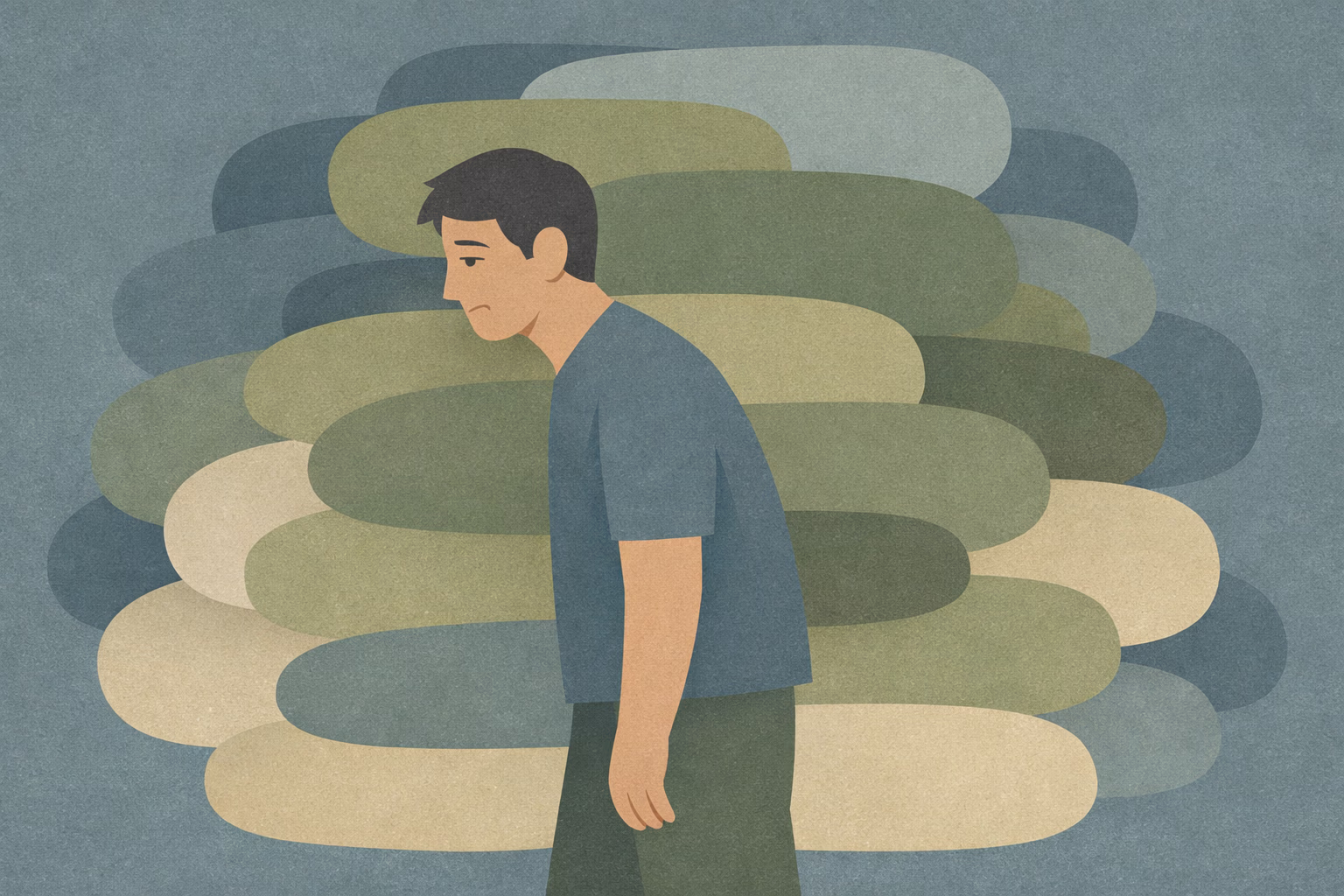
This isn’t because you’re incapable of follow-through. It’s because the system you’re using is designed for quick improvement signals, not for closure. Constant tweaking creates the sensation of work without the physiological settling that comes when something is actually completed and absorbed into lived identity.
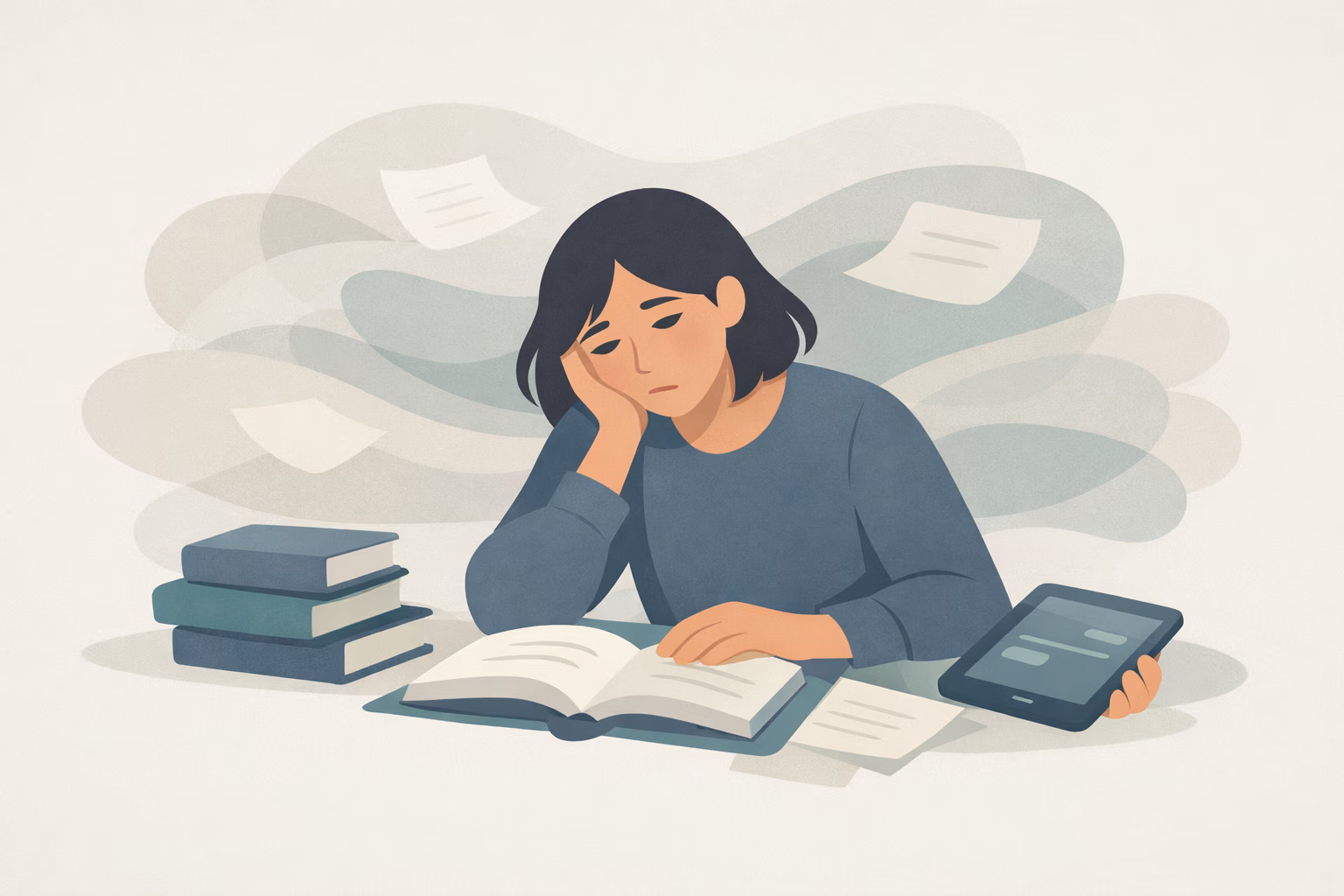
Over time, the gap can widen: lots of movement, little arrival. The mind stays busy, but the body doesn’t receive the message that life is handled. [Ref-1]
Humans are built to register progress. A checklist tick, a cleaner calendar, a new shortcut—these are clear cues that something improved. That clarity matters because it briefly reduces uncertainty, and uncertainty is expensive for the nervous system.
Novelty and quick gains also recruit dopamine pathways associated with “seeking” and exploration. Dopamine is less about pleasure and more about energizing pursuit—moving toward the next useful thing. When the payoff is immediate (a new trick, a reorganized system), the reward system gets a crisp signal that reinforces the behavior. [Ref-2]
The catch is that fast reinforcement can train attention toward what produces quick feedback, not what produces completion. You can end up collecting “progress cues” while the deeper tasks—relationships, skills, commitments, repairs—remain open loops.
In environments where time and resources were limited, the ability to find shortcuts and conserve energy was protective. Quick learning, tool use, and efficiency weren’t character traits; they were survival advantages.
So it’s not surprising that the brain leans toward tactics that promise: “same result, less cost.” In that light, life-hack culture isn’t a modern moral failure. It’s an ancient efficiency bias meeting an environment that can supply endless micro-optimizations on demand.
When the surrounding world keeps offering new methods, the system can stay in “search mode”—not because you love novelty for its own sake, but because the environment keeps implying that the missing piece is just one more discovery away. [Ref-3]
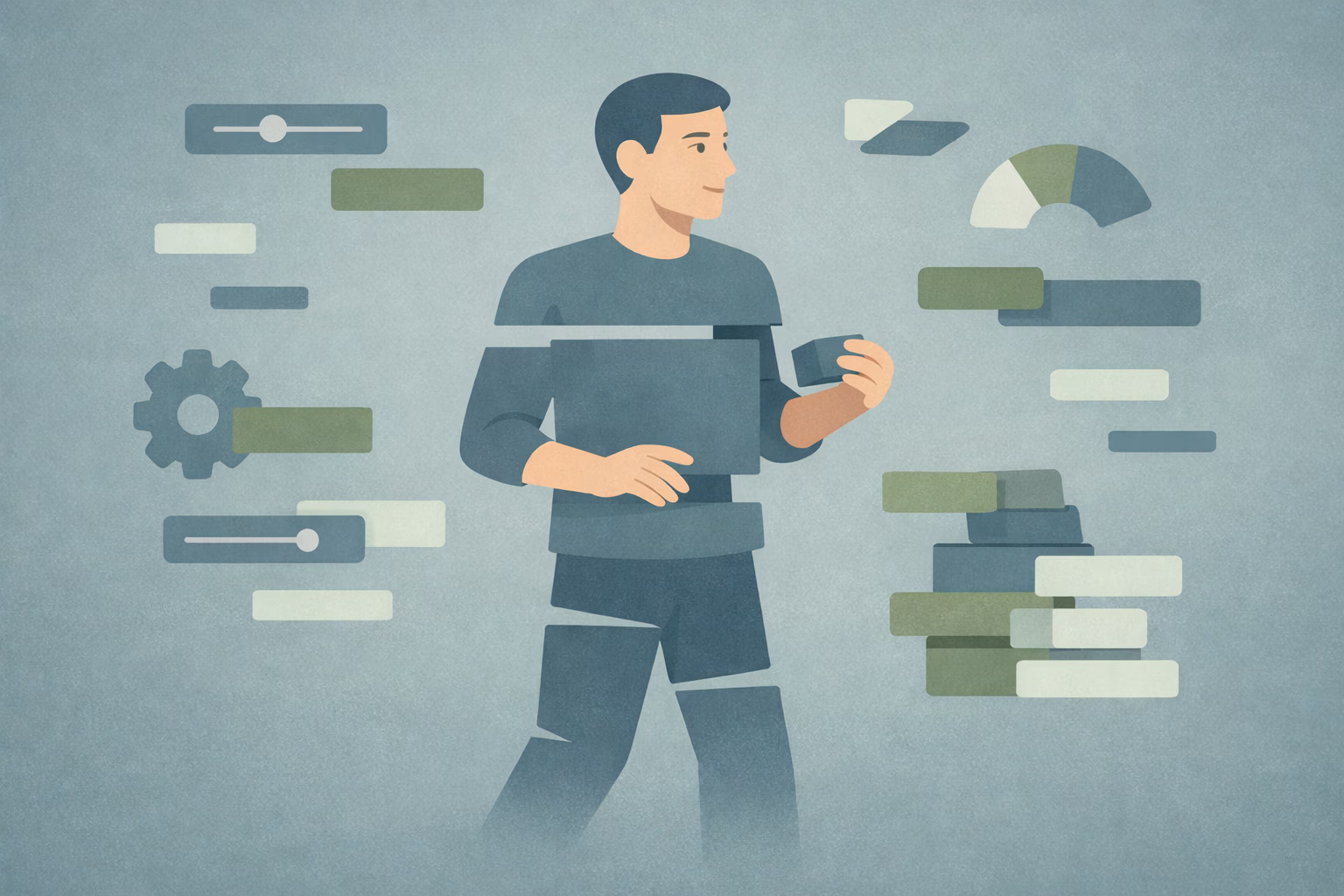
Many hacks do something emotionally practical: they restore a sense of agency quickly. When life feels sprawling, reorganizing a system can shrink the world into manageable shapes. It can create the felt sense of competence: “I’m on top of it.”
This matters under high load. When you’re stretched thin, the nervous system often prefers what is controllable, modular, and immediately solvable. Hacks offer that: clean inputs, measurable outputs, quick closure inside a small box.
But some forms of change don’t fit into small boxes. They involve longer arcs—learning, repairing, negotiating, grieving, committing, practicing. Hacks can imitate the feeling of approach without requiring the identity-level reorientation that long-arc change eventually asks for. [Ref-4]
Life-hack culture often confuses two different experiences: feeling more prepared and being more complete. Preparation can be valuable, but it doesn’t automatically translate into closure. You can become exquisitely prepared for a life you’re not living.
Because novelty amplifies reward signals, optimization can feel like progress even when it leaves the core structure untouched. The system learns: “New method = relief.” Then, when discomfort returns, it reaches for the same lever again. Research on dopamine and novelty-seeking helps explain why new options can become disproportionately compelling, even when gains are shallow. [Ref-5]
Stagnation here isn’t laziness. It’s a predictable outcome when the environment rewards reconfiguration more reliably than it rewards completion.
In a pleasure loop, the cycle is less “work → finish” and more “tension → quick relief → tension again.” Optimization can function as relief because it creates immediate order and possibility. But because it often doesn’t close the underlying open loops, tension returns—and the urge to optimize returns with it.
When cognitive load is high, shallow adjustments are especially attractive. They are easier to initiate, easier to measure, and less likely to trigger the full complexity of real change. The result can look like dedication from the outside, while inside it feels like constantly resetting the starting line. [Ref-6]
“I keep improving my system, but I don’t feel more settled—just more busy.”
The productivity illusion isn’t one behavior—it’s a family of behaviors that share a common signature: high activity, quick feedback, low closure. Many people cycle through these without realizing the loop is intact.
These patterns are reinforced by seeking-reward dynamics: the brain stays oriented toward what promises immediate improvement signals, even when the payoff plateaus. [Ref-7]
When the nervous system becomes accustomed to fast feedback, slower processes can start to feel unusually heavy. Not impossible—just strangely intolerable. Depth can register as “stuck,” and the early phases of real learning can feel like failure because they don’t produce immediate payoff signals.
Over time, this can erode confidence—not in a self-esteem sense, but in a more practical sense: the felt belief that sustained effort will lead anywhere. The system has been trained on quick wins, so it expects quick returns. When reality doesn’t comply, it reaches for more novelty.
This resembles the hedonic treadmill problem: rewards that spike quickly also fade quickly, which can make the next spike feel necessary. [Ref-8]
Quick optimization wins are not designed to last. Their reward signal is sharp because it’s new, clean, and measurable. But once the newness becomes familiar, the signal weakens. The nervous system is left with the original open loops—plus a new one: “I should find a better way.”
So the cycle continues: more searching, more tweaking, more micro-closure, more fading. This can look like “high standards” or “being driven,” but structurally it’s a system trying to stabilize itself through repeated bursts of relief.
The deeper work—whatever it is for you—keeps waiting in the background, not because it’s feared, but because it requires conditions that allow completion: time, continuity, and a body that can tolerate slow feedback without needing to reset the loop. [Ref-9]
There’s a different kind of productivity that doesn’t depend on constant upgrades: the kind that comes from internal steadiness. In that state, you don’t need every step to be rewarding. You can hold a longer arc without demanding immediate proof that it’s working.
This is not about motivation or insight. It’s about the body receiving enough safety cues and enough closure that it can stay with a process. When the system isn’t overloaded, discomfort doesn’t automatically trigger a search for a faster route; it becomes one signal among many, not an emergency alarm.
People often describe this shift as quieter than they expected: less urgency, less grasping, more continuity. The “done” signal becomes available again—not because life is perfect, but because actions are allowed to complete and settle into identity over time. [Ref-10]
Life-hack culture is often solitary: you alone, trying to engineer your way into a better life. But humans regulate and orient in groups. Mentorship, shared practice, and accountability can reduce fragmentation by making the path more concrete and less negotiable.
Not in a pressure-based way—more in a coherence-based way. When another person is present (a teacher, teammate, colleague, community), the work becomes less about inventing the perfect system and more about inhabiting a real one. The standards are embodied, the timeline is shared, and progress is tied to participation rather than constant redesign.
In that context, depth has a container. You don’t need to generate endless novelty to keep yourself moving. [Ref-11]
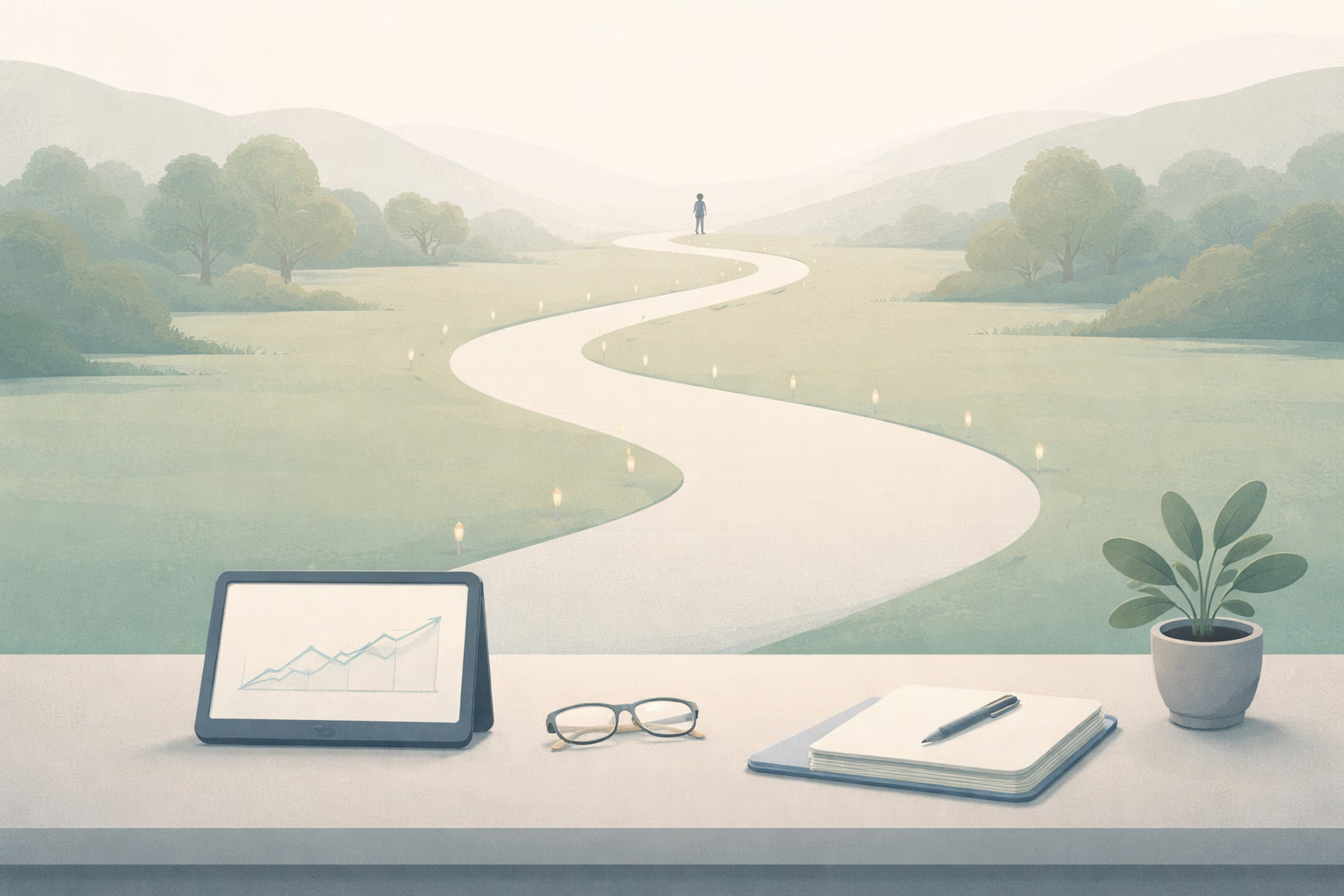
When the loop loosens, the most noticeable change is often carryover: what you do today continues tomorrow without needing to be rebuilt. Attention comes back online in longer stretches. Decisions require less re-litigating. You stop needing a new system to re-enter your own life.
There’s also a return of patience—not as a virtue, but as a capacity. The nervous system can wait for slower feedback. The early, messy phase of learning becomes more tolerable because it no longer reads as a sign that you chose the wrong method.
This is where the difference between shallow work and deep work becomes less like a moral distinction and more like a structural reality: deep work produces fewer immediate dopamine hits, but it produces integration—skills and identity-level continuity that don’t evaporate overnight. [Ref-12]
The most durable shift is when the organizing question changes. Instead of “What’s the best system?” the question becomes, “What am I building, and who am I becoming while I build it?” That’s an identity-level orientation, and it tends to create more stable behavior than chasing the next improvement cue.
Values-based alignment doesn’t mean everything feels easy. It means actions start to cohere: what you choose matches what matters, and that match creates a quieter form of reinforcement. The nervous system receives a different kind of signal—not a spike of novelty, but a settling sense of consistency.
In online conversations about “productive procrastination,” people often recognize the same phenomenon: impressive-looking activity that postpones the real thing. Naming it isn’t integration, but it can clarify the structural trade: optimization can be a detour when it stops serving the life underneath it. [Ref-13]
If life hacks have been a refuge, it may be because you were trying to meet a legitimate need: effectiveness, relief, clarity, a sense that your effort matters. The desire itself is not the problem. It’s a signal that something in your life wants to feel more workable and more complete.
In a fragmented environment, it’s easy for the nervous system to accept “better tools” as a substitute for “finished loops.” And it’s understandable to reach for what provides immediate order when the deeper structures are complex, slow, or socially shaped.
There is dignity in wanting your life to function. The question is whether the kind of progress you’re chasing can actually deliver the settling you’re looking for—or whether it keeps you in search mode. Many people eventually notice that meaning doesn’t arrive through shortcuts; it arrives when experiences are allowed to complete and become part of who you are. [Ref-14]
Life-hack culture often sells intensity: new systems, new tricks, new urgency. But the kind of change that lasts tends to be less performative and more integrated—built from continuity, completion, and the slow credibility that comes from lived follow-through.
If you’ve spent years refining your tools, that doesn’t mean you failed. It may mean you were trying to create stability in an unstable context. And when stability begins to return, the need for constant optimization often softens on its own—because the nervous system finally gets the “done” signal it was reaching for all along. [Ref-15]
From theory to practice — meaning forms when insight meets action.
Because the system you're using is designed for quick improvement signals, not for closure. Constant tweaking creates the sensation of work without the physiological settling that comes when something is actually completed and absorbed into lived identity. You refine your workflow, change apps, reorganize notes, buy a new planner — feel a brief lift, then frustration returns sharper than before. The mind stays busy, but the body doesn't receive the message that life is handled. Lots of movement, little arrival. Optimization can imitate the feeling of approach without requiring the identity-level reorientation real change asks for.
Yes — disguised as productivity. The cycle is tension → quick relief → tension again. Optimization creates immediate order and possibility, which feels like relief. But because it doesn't close the underlying open loops, tension returns, and the urge to optimize returns with it. Small wins light up the reward system because novelty and quick gains recruit dopamine pathways associated with seeking. The system gets a crisp signal: this works, do it again. The result: collecting 'progress cues' while the deeper tasks — relationships, skills, commitments, repairs — remain open loops.
Because they restore a sense of agency quickly. When life feels sprawling, reorganizing a system shrinks the world into manageable shapes. It creates the felt sense of competence: 'I'm on top of it.' Under high load, the nervous system prefers what's controllable, modular, immediately solvable. Hacks offer that — clean inputs, measurable outputs, quick closure inside a small box. But some forms of change don't fit small boxes — learning, repairing, negotiating, grieving, committing, practicing. Hacks make sense in an organism designed for efficiency; they become a problem when they substitute for the longer arcs you actually need.
Quieter and more integrated. The most noticeable change when the loop loosens is carryover — what you do today continues tomorrow without being rebuilt. Attention comes online in longer stretches. Decisions need less re-litigating. You stop needing a new system to re-enter your own life. Patience returns as capacity, not virtue: the nervous system can wait for slower feedback, the messy early phase of learning becomes more tolerable. The organizing question changes from 'What's the best system?' to 'What am I building, and who am I becoming while I build it?' That's identity-level orientation, and it stabilizes behavior more than any tactic.
From Science to Art.
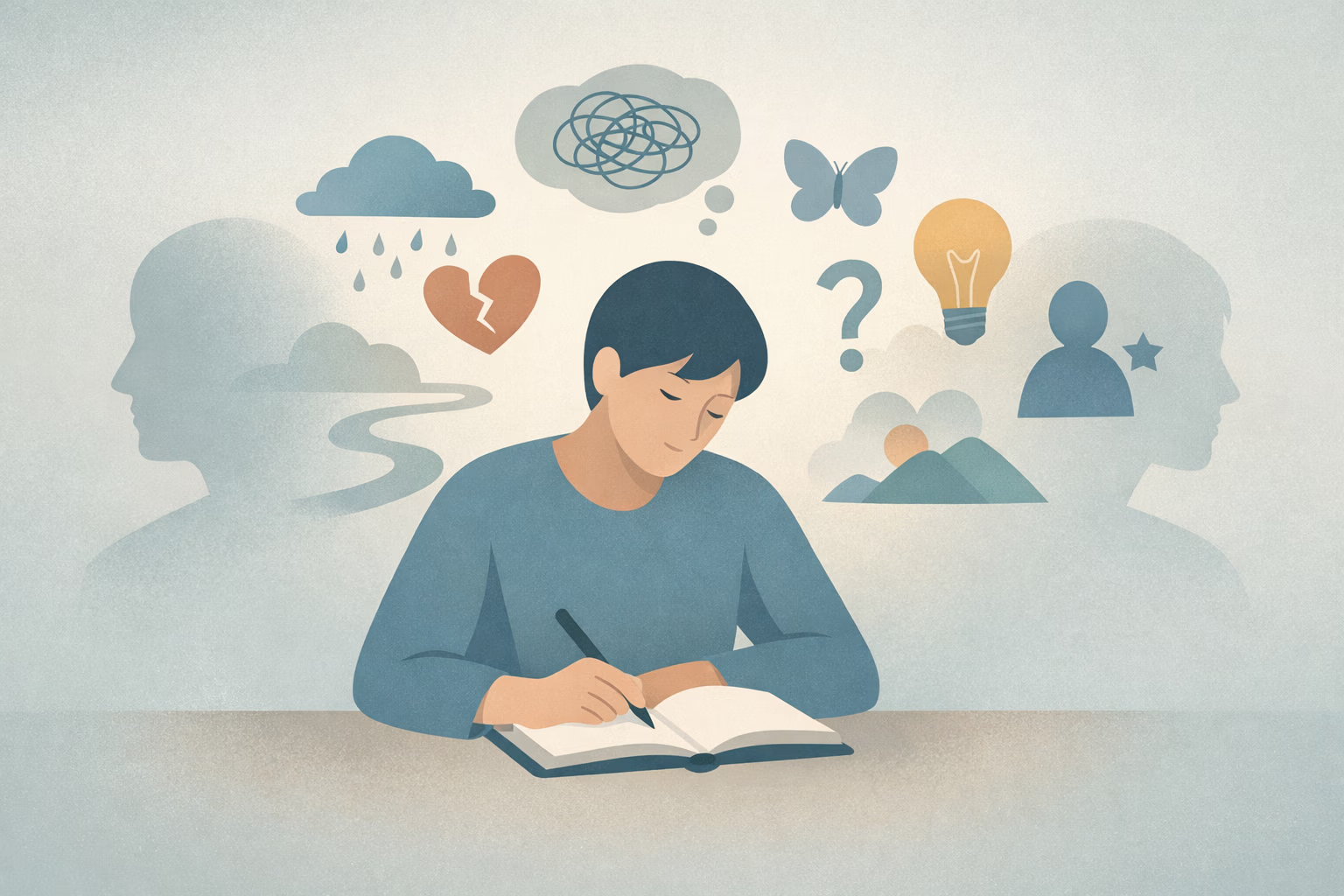
Understanding explains what is happening. Art allows you to feel it—without fixing, judging, or naming. Pause here. Let the images work quietly. Sometimes meaning settles before words do.
One Quiet Window, one insight, one reflection — every Sunday