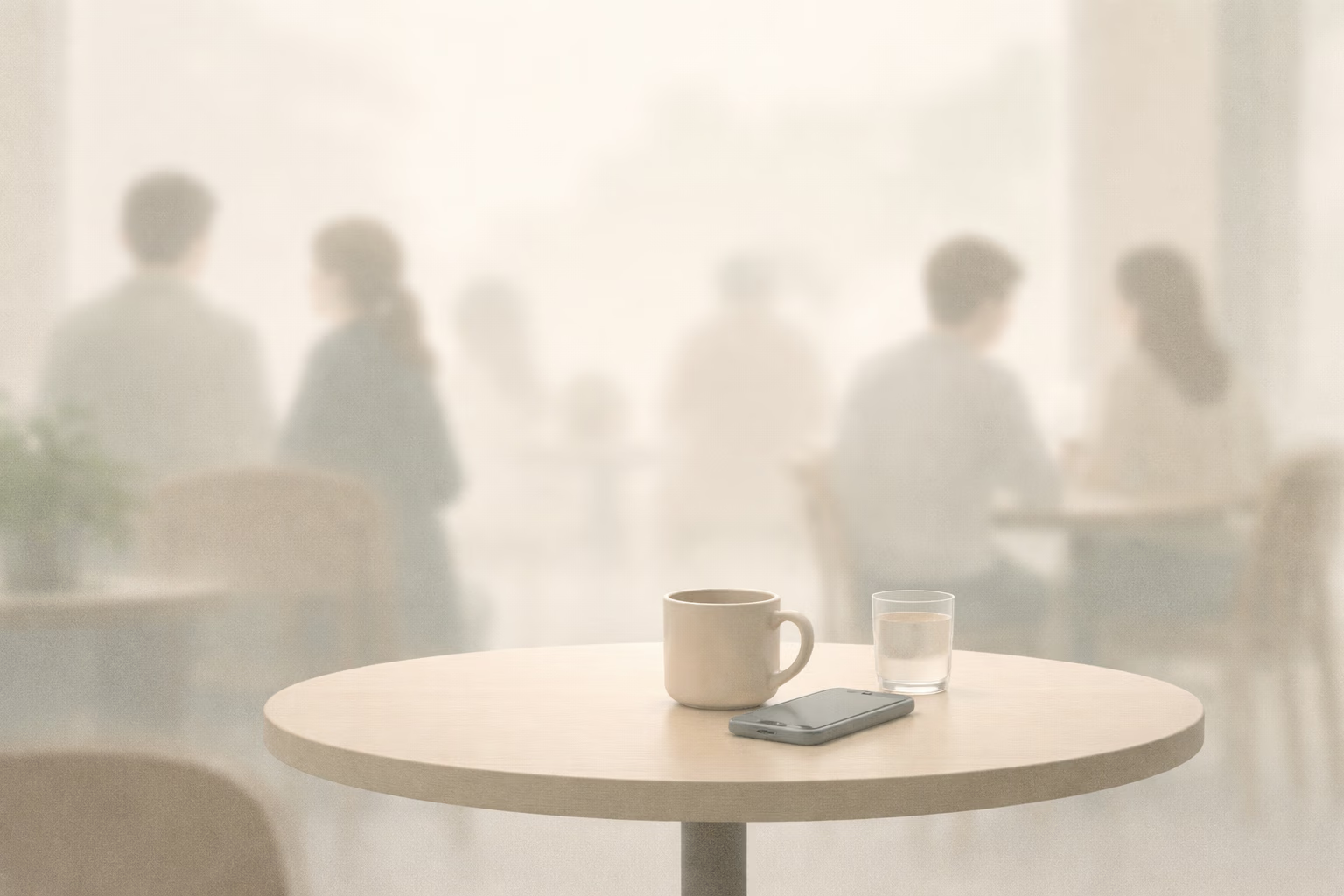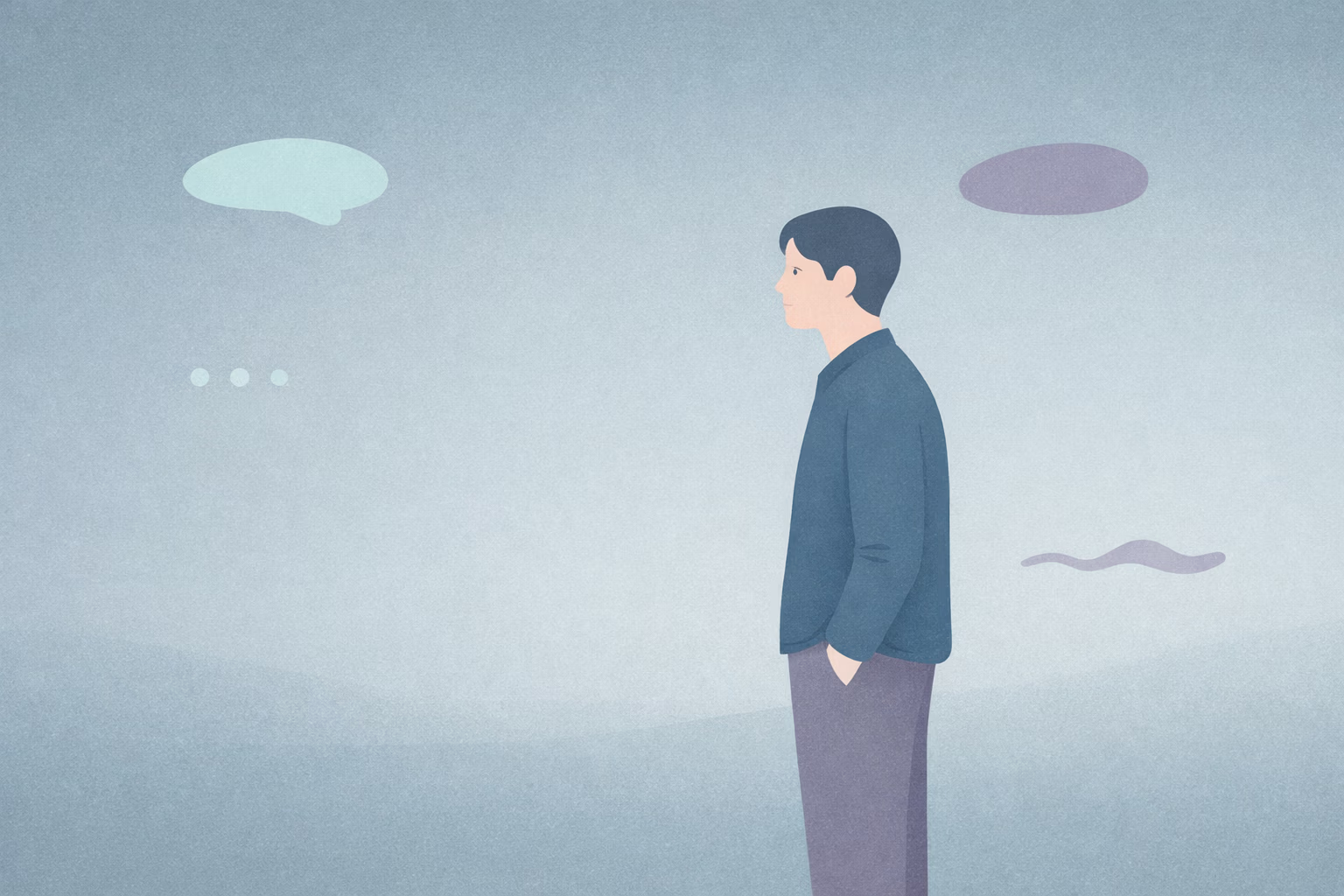
Remote Work Disconnection: Why Digital Freedom Feels Lonely
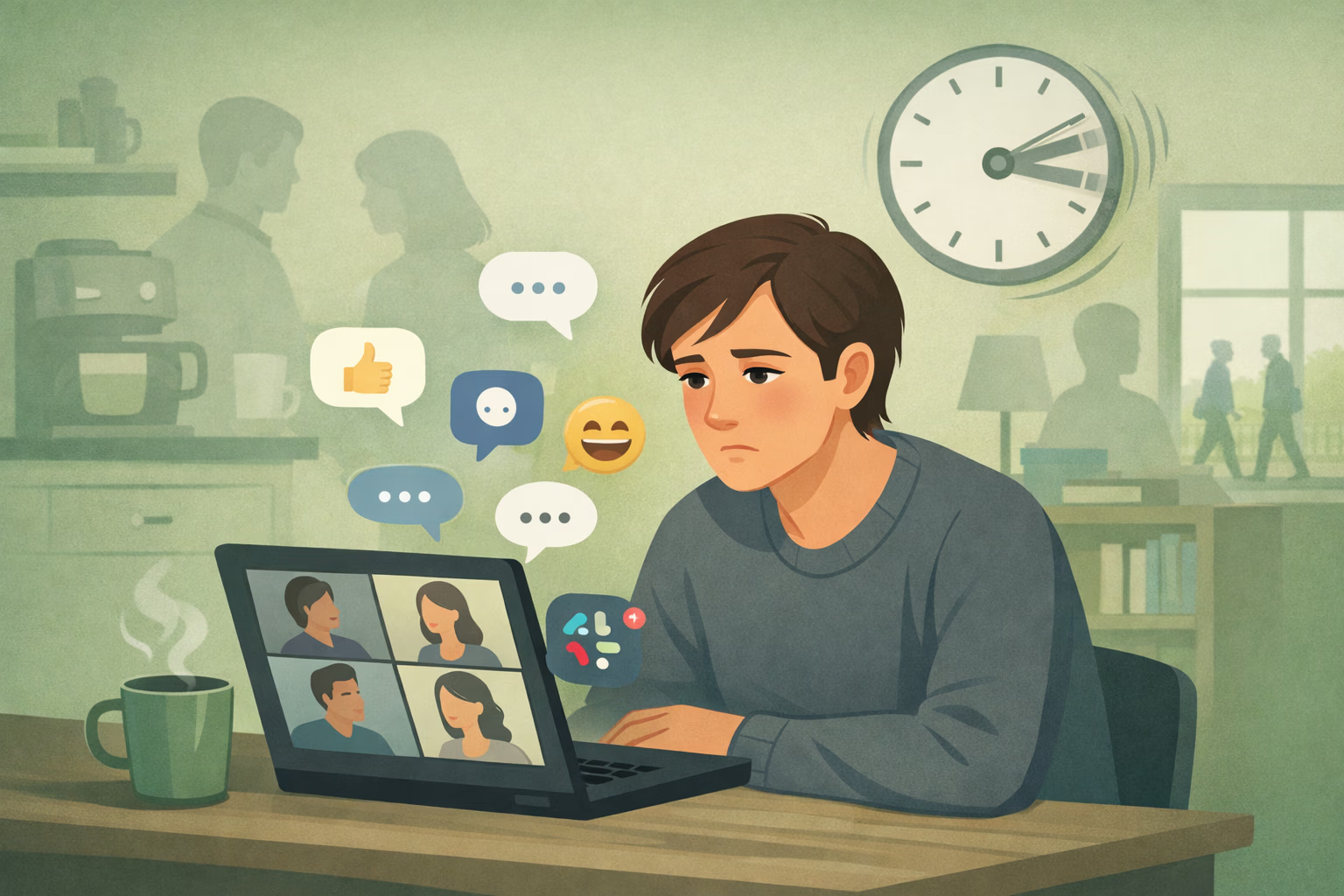
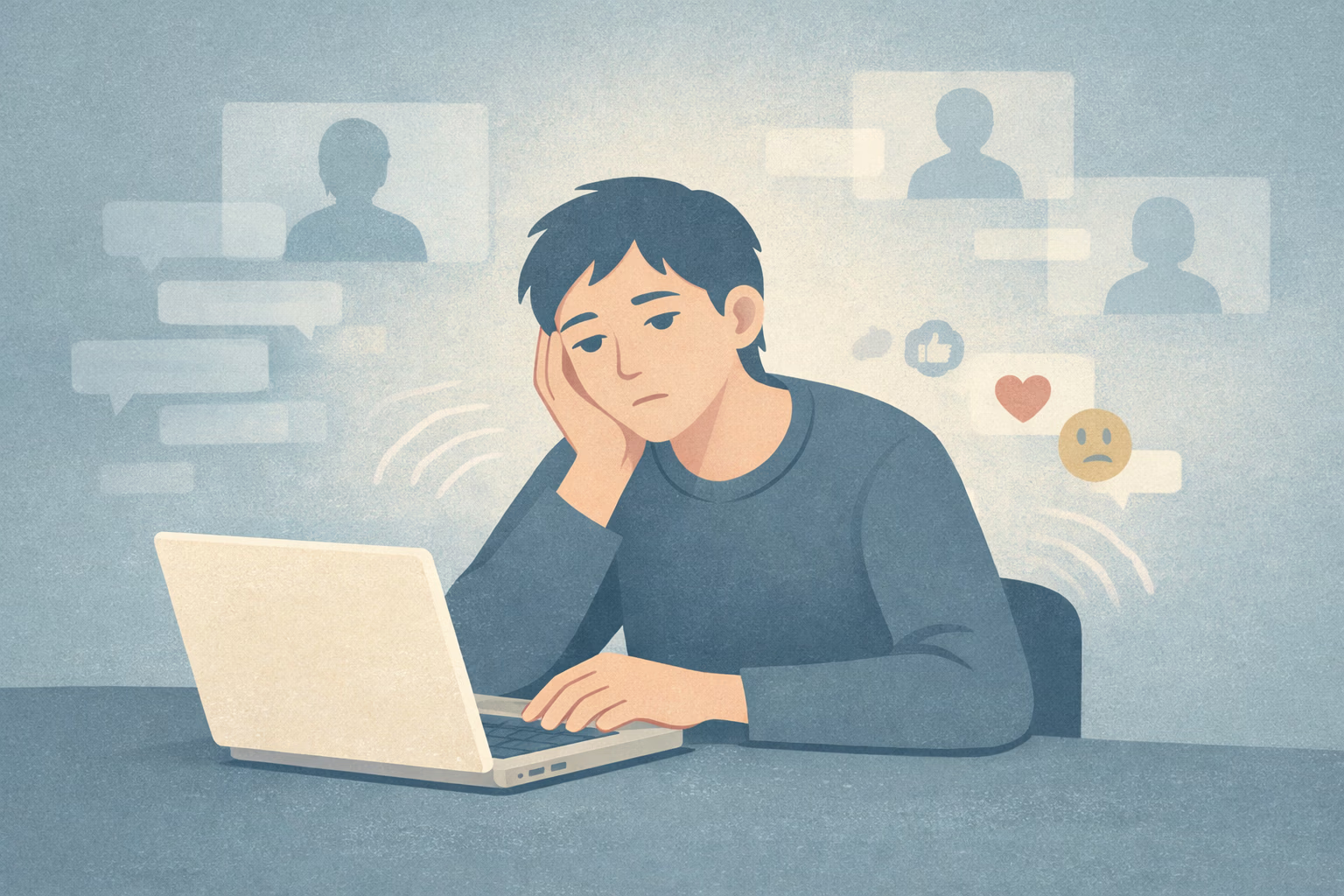
In short: Remote work can look socially full on paper: calendars, chats, video calls, notifications. Yet many people report a quieter strain underneath—an odd detachment, a drifting sense of “am I still part of this?” even while staying productive.
Remote work can look socially full on paper: calendars, chats, video calls, notifications. Yet many people report a quieter strain underneath—an odd detachment, a drifting sense of “am I still part of this?” even while staying productive.
This isn’t a personal failure or a lack of gratitude for flexibility. It’s what can happen when the tiny, ordinary signals that regulate belonging—shared laughter in a hallway, a nod, a quick “good catch,” a moment of synchronized attention—are missing for long stretches.
What happens to a nervous system when it loses the small signals that say, “You’re safe here, you’re seen, you’re still in the group”?
Remote work isolation often doesn’t feel like obvious sadness. It can feel like neutrality that won’t lift—days moving by with very little human feedback that lands in the body as real contact. People describe finishing tasks, closing tabs, sending deliverables, and still feeling oddly unfinished.
That “unfinished” quality is important. Work normally contains dozens of micro-endings: a glance of confirmation, a shared reaction, a quick repair after a misunderstanding. When those closures disappear, your system can keep a low-grade sense that it’s still waiting for the rest of the interaction to arrive—even if you had plenty of digital communication. [Ref-1]
Over time, the absence can start to resemble emptiness: not a crisis, but a thinning. Not “no one likes me,” but “there’s nothing here that tells my body I belong.”
In person, social regulation is constant and low-stakes. Your nervous system reads faces, timing, tone, and movement—often without conscious thought. These signals reduce uncertainty: you can tell whether your message landed, whether the room is tense, whether you’re aligned.
When those signals go missing, the system has fewer “safety cues” to downshift. The result can look like increased vigilance (checking messages repeatedly), emotional flatness (because nothing is feeding the social system), or a subtle sense of strain that doesn’t match your workload. [Ref-2]
This isn’t about being extroverted or introverted. It’s about how human bodies allocate effort under uncertainty. When the social environment becomes harder to read, the cost of everyday participation can quietly rise.
Across most of human history, work happened inside a living social field: you could see who was nearby, who was available, and whether you were in good standing. Belonging wasn’t a weekly meeting—it was a steady stream of small confirmations.
When contact drops, the attachment and belonging system doesn’t interpret it as “efficient.” It can interpret it as possible exclusion or disconnection—an old survival problem, translated into modern life as low-level tension or social hunger. [Ref-3]
Because of that evolutionary wiring, micro-signals don’t just improve mood. They help the body decide how much effort and risk it can carry. Without them, even simple outreach can feel heavier than it “should.”
For many people, remote work initially brings relief. Fewer interruptions. Less sensory and social noise. Less immediate evaluation. The nervous system gets a break from constant impression management, conflict, commuting, and the subtle pressure of being watched. [Ref-4]
That relief is real. And it can be especially pronounced for anyone who has been running on high social vigilance for years—people in new roles, marginalized workers, or those navigating complex office politics. In that context, distance can reduce load.
But a reduction in pressure isn’t the same thing as restoration. If the price of “less pressure” is “less social nourishment,” the system may feel calmer short-term and less stable over time.
A quiet calendar can look like peace. Yet the nervous system doesn’t only need fewer demands—it needs enough completion signals to stand down. In-person environments provide many small “done” moments that close loops: a shared chuckle after a mistake, a quick repair, a visible “we’re good.”
Remote communication often removes those endings. Messages can be read without response. Video calls can feel scripted. The space between interactions can become long and ambiguous. Over time, ambiguity tends to amplify internal monitoring: “Did I misunderstand? Did I do enough? Am I still included?” [Ref-5]
When social closure decreases, identity coherence can quietly wobble. Not because you’re fragile, but because so much of “who I am at work” is normally reinforced by small relational feedback.
Remote work isolation can become a self-reinforcing loop without anyone choosing it. Reduced contact lowers social energy. Lower social energy makes interaction feel effortful and high-stakes. When interaction feels high-stakes, the system naturally selects the path that costs less in the moment: fewer reach-outs, fewer spontaneous check-ins, fewer “small talk” bridges.
This isn’t driven by a character flaw or a simple fear story. It’s structural: fewer cues create more uncertainty; more uncertainty raises the perceived cost of engagement; higher cost leads to minimized contact; minimized contact further reduces cues. [Ref-6]
In this loop, avoidance isn’t an identity. It’s a temporary efficiency strategy under conditions where the social environment provides fewer low-cost entry points.
When micro-social signals thin out, the effects can be surprisingly physical and practical. People often notice changes in energy, initiative, and their sense of “place,” rather than dramatic emotion.
These patterns can be understood as regulation responses: the system conserving effort when social nourishment is low and uncertainty is high. [Ref-7]
Work meaning isn’t only about goals or performance. It’s also about felt contribution inside a group: “My effort lands somewhere,” “I’m part of a living system,” “My presence makes a difference.”
Prolonged isolation can erode those signals. You may still know your role intellectually, but the body doesn’t receive the steady interpersonal confirmation that makes the role feel real. When that happens, motivation can become more mechanical, and identity can feel less anchored—like you’re doing tasks in a vacuum. [Ref-8]
This is one way modern fragmentation reduces coherence: the actions continue, but the relational context that helps them integrate into identity is faint or inconsistent.
Social contact isn’t just emotional; it’s metabolically relevant. In social baseline research, supportive proximity and connection can reduce the perceived cost of effort and threat, allowing the nervous system to allocate resources more efficiently. [Ref-9]
When you’re socially “alone” in your workday, the system may treat more things as solely yours to carry: uncertainty, decision load, interpretation load, self-presentation load. Even if your team is kind, the body lacks the ambient evidence of shared load.
As the perceived cost rises, initiative naturally drops. Not because you don’t care, but because initiating contact begins to register as an expensive activity with unclear payoff—so the day becomes more solitary, reinforcing the same conditions.
There’s a particular kind of internal steadiness that shows up when social needs are treated as legitimate signals rather than inconveniences. The nervous system stops arguing with itself: “I shouldn’t need this.” The question shifts from self-judgment to orientation: “What inputs does my system require to feel safely included?”
In social baseline terms, humans are built to regulate effort through connection; being able to rely on others changes what the body predicts it must handle alone. [Ref-10] When that reliance is missing, strain makes sense. When it’s present—even in small ways—load can feel more shared, and the system can soften its constant scanning.
This isn’t about insight as a solution. It’s about a basic biological accounting: when the environment supplies enough relational signal, the body receives a “you’re not carrying this alone” message that allows stand-down.
Not all connection is intense. In fact, the most regulating social inputs are often small, predictable, and low-demand—brief moments that confirm mutual awareness and goodwill.
Research building on social baseline theory emphasizes that regular, supportive social contact can function as a resource that lowers perceived effort and risk. [Ref-11] That matters in remote work, where the problem is often not a lack of people, but a lack of everyday “signal return.”
Sometimes what we miss isn’t conversation. It’s the felt sense that someone is there, and that our presence registers.
When micro-connections exist, the system doesn’t have to escalate to big gestures to feel included. The environment starts providing small closures again.
People often assume that if they don’t feel warm or engaged, something is wrong inside them. But social engagement is frequently an output of conditions: it becomes easier when the environment supplies enough real-time feedback to make interaction feel safe and worth the energy.
Evidence suggests face-to-face interaction can have distinct benefits for mental health compared to digital communication alone, likely because it carries richer, more synchronous social cues. [Ref-12] That doesn’t mean remote contact is meaningless; it means the signal quality can differ, and bodies notice.
As richer cues return—timing, laughter, shared attention—many people experience a gradual increase in capacity: more natural responsiveness, more spontaneous interest, and fewer “should I say something?” calculations. It can feel like signal return after a long period of static.
Meaning at work becomes more stable when contribution is not only measured, but felt. That felt sense typically comes from being witnessed in small ways: a colleague’s quick appreciation, a moment of mutual problem-solving, a shared reaction that marks “we did that together.”
Studies of social interaction during distancing have found that both in-person and virtual interactions can support well-being, with in-person contact often showing stronger effects—again pointing to the value of richer social signaling. [Ref-13]
When those signals are present enough, identity coherence tends to rebuild: not through motivation or self-improvement, but through repeated completion loops that say, “I’m part of this; my effort lands; my role is real.”
If remote work has left you feeling strangely detached, it can help to hold a simple, dignity-preserving frame: this is what happens when a belonging system loses its everyday inputs. The experience is information about conditions, not a verdict about your personality.
During periods like the COVID-19 era, research has linked social contact—especially higher-quality connection—to well-being, while also showing that digital communication doesn’t always replace the effects of in-person signal richness. [Ref-14] In other words: wanting more real connection is not indulgent. It’s a human requirement.
Agency often begins as orientation. When you can name the missing ingredient as “micro-social signal loss,” the story shifts from “something is wrong with me” to “my system is underfed.” That shift alone can reduce shame and create room for belonging to become imaginable again.
Modern work can be efficient while still being socially thin. When micro-signals disappear, the nervous system may conserve, flatten, and pull inward—not as defeat, but as an adaptive response to reduced safety cues and incomplete social loops.
And when connection returns in ordinary ways, many people notice something quiet but profound: more steadiness, more flexibility, more ability to engage without force. Social connectedness has been associated with better everyday emotion regulation in real-world tracking, which fits what so many people feel in their bodies—coherence is easier when we’re not alone in the social field. [Ref-15]
Belonging doesn’t have to be dramatic to be real. Sometimes meaning comes back the same way it left: through small, repeated signals that say, “You’re here. You count. We’re in this together.”
From theory to practice — meaning forms when insight meets action.
Because calendar density and social nourishment aren't the same thing. In person, work normally contains dozens of micro-endings — a glance of confirmation, a shared reaction, a quick repair after a misunderstanding. Those are the small closures that tell your nervous system the interaction landed and you can move on. Remote communication strips most of that out: messages get read without response, calls feel scripted, the space between interactions is long and ambiguous. Your system keeps a low-grade sense that it's still waiting for the rest of the interaction to arrive. The result isn't dramatic loneliness — it's a quieter thinning.
Yes. They're a regulation system, not just nice-to-have. The Attachment & Belonging System reads faces, timing, tone, and movement constantly without conscious thought, using those signals to reduce uncertainty and downshift effort. When the signals go missing, the system has fewer safety cues, so it stays slightly braced — checking messages repeatedly, flatness because nothing is feeding the social channel, strain that doesn't match workload. This isn't extrovert vs introvert; it's how human bodies allocate effort under uncertainty. Belonging in ancestral life wasn't a weekly meeting — it was a steady stream of small confirmations. Modern remote work is Evolutionary Mismatch in social form.
Because of a structural Avoidance Loop the article describes — and no one's choosing it. Reduced contact lowers social energy. Lower energy makes interaction feel effortful and high-stakes. When interaction feels high-stakes, the system selects the cheaper path: fewer reach-outs, fewer spontaneous check-ins, fewer small-talk bridges. Fewer cues create more uncertainty; uncertainty raises perceived cost; higher cost reduces contact; reduced contact removes more cues. It tightens itself. This isn't a character flaw or a fear story — it's a temporary efficiency strategy under conditions where the social environment provides fewer low-cost entry points for re-entry.
Engagement and warmth tend to return as outputs of conditions, not as proof you fixed yourself. When richer cues come back — timing, laughter, shared attention, a quick this lands — capacity rises gradually: more natural responsiveness, more spontaneous interest, fewer should-I-say-something calculations. Identity coherence rebuilds through repeated completion loops that say I'm part of this, my effort lands, my role is real. Recognizing the missing ingredient as micro-social signal loss reframes the experience from something is wrong with me to my system is underfed. Belonging doesn't have to be dramatic to be real — just consistent enough to feed.
From Science to Art.
Understanding explains what is happening. Art allows you to feel it—without fixing, judging, or naming. Pause here. Let the images work quietly. Sometimes meaning settles before words do.
One Quiet Window, one insight, one reflection — every Sunday