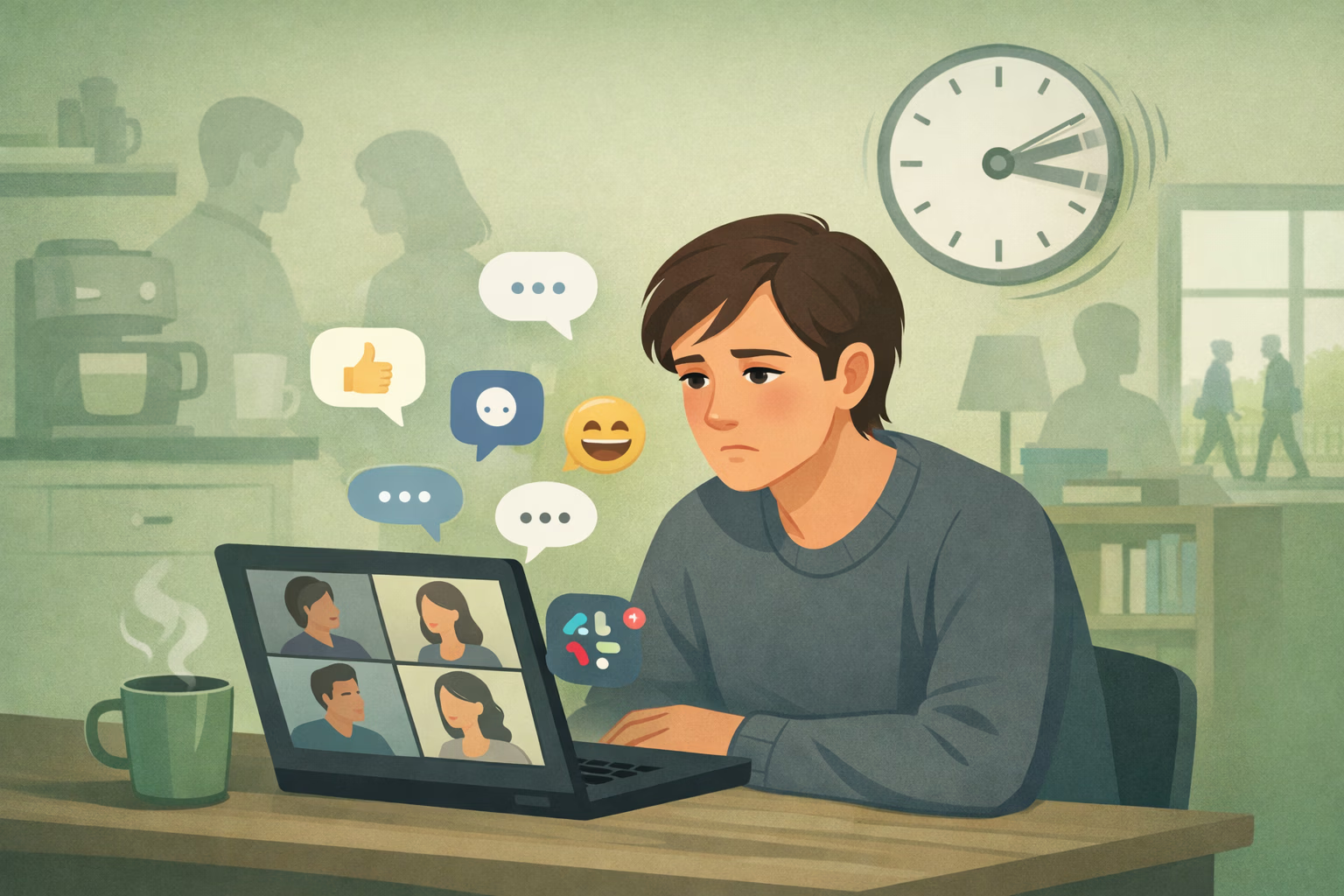
Remote Work Isolation: Losing Micro-Social Signals
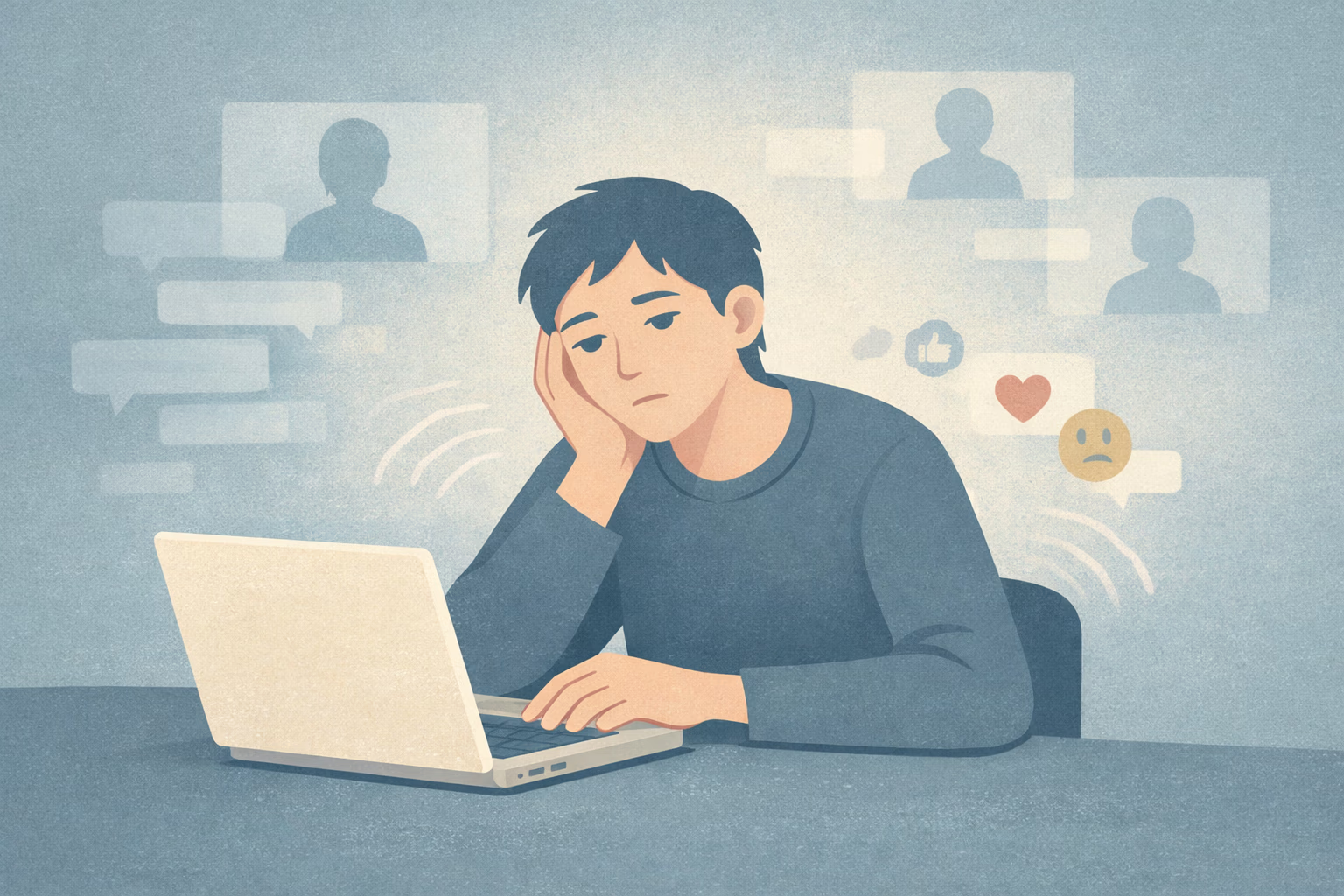
In short: Zoom fatigue isn’t a personal weakness, a social flaw, or evidence that you “can’t handle” modern work. It’s a predictable form of depletion that shows up when virtual interaction asks the brain and body to run a social program without the signals that program evolved to use.
Zoom fatigue isn’t a personal weakness, a social flaw, or evidence that you “can’t handle” modern work. It’s a predictable form of depletion that shows up when virtual interaction asks the brain and body to run a social program without the signals that program evolved to use.
Why can a one-hour video call feel harder than a full afternoon with people in real life?
What many people call “drained” is often the nervous system doing extra translation work—tracking faces, timing, gaze, and meaning through a narrow channel—while getting fewer cues of safety, completion, and connection in return.
Zoom fatigue tends to feel like a fast drop in usable capacity: mental fog, irritability, and a strange sense of being “spent” even if you barely moved. That’s not mysterious. Social interaction is one of the most signal-dense things humans do, and when the signal quality drops, the system compensates by working harder.
After a run of video calls, people often describe a sharp shift: it’s harder to speak fluidly, to make simple decisions, to stay generous, or to feel interested. That shift can look like mood, but it often functions like load—too many micro-demands without enough closure. [Ref-1]
It can feel like you were “on” the whole time, and then suddenly there’s nothing left.
In-person conversation carries a wide band of information: posture, distance, small movements, shared environment, and naturally timed turn-taking. Video compresses that into a face-forward rectangle, often with delay, glitches, and reduced body context. The nervous system still tries to create a coherent read—and that effort costs energy.
Common strain points include prolonged simulated eye contact, the cognitive work of interpreting slight timing delays, and the pressure of monitoring your own image. Even when you aren’t thinking about these actively, your system is still tracking them as ongoing inputs that don’t resolve cleanly. [Ref-2]
Human social regulation is built around rhythm: shifting attention, looking away and back, walking together, pausing, overlapping speech, reading the room. These patterns aren’t “extras.” They are the infrastructure that makes connection feel safe, fluid, and metabolically affordable.
Video platforms often violate those expectations. The distance is ambiguous, the gaze is artificial, and the timing is slightly off. Over time, that mismatch can produce a background sense of strain—not because you’re doing socializing wrong, but because the medium doesn’t deliver the completion signals that the nervous system uses to stand down after interaction. [Ref-3]
What if the problem isn’t people, but timing?
In a high-load environment, the system often shifts toward control: fewer variables, fewer exposures, fewer surprises. In virtual meetings, that can show up as turning the camera off, going quiet, multitasking, or keeping your face still. These are not “bad habits.” They are ways the nervous system reduces incoming social data when it’s already saturated.
The catch is structural: when you reduce cues, the interaction may become less reciprocal and less settling. The meeting ends, but the system doesn’t register “done.” You might leave with less connection than you expected and more residual activation than you want, which makes the next call feel harder. [Ref-4]
Video calls look like real conversation, so we expect them to feel like real conversation. But the nervous system doesn’t respond to appearances; it responds to signals. When the signals are constrained, the brain uses more top-down effort to keep coherence: tracking who’s speaking, reading micro-expressions, deciding when to enter, and managing how you’re perceived.
This is why virtual interaction can be paradoxical: it demands more concentration while delivering less relational return. The channel is thinner, yet the social expectations remain high—be present, be responsive, look engaged, stay professional—often for hours. [Ref-5]
It’s like paying premium attention for a low-resolution version of being together.
When social contact stops feeling replenishing, a predictable loop can form. The first step is simple load: repeated calls create depletion. Then comes a regulatory response: you pull back to conserve energy. That withdrawal reduces the quality of interaction, which reduces the chance of getting the settling signals that would restore social vitality.
Over time, the system learns an association: “virtual interaction = cost.” Not as a belief, but as a body-based expectation. The result isn’t a character change; it’s a protective adaptation in a medium that doesn’t reliably deliver closure. [Ref-6]
Zoom fatigue is often recognized not by one dramatic symptom, but by a cluster of small shifts that appear after repeated exposure. These shifts are regulatory: the system is managing load, not failing at life.
Many people also notice a strange split: they can perform competence on the call, then feel unusually empty afterward. That’s often what high-effort coherence looks like when it hasn’t had a chance to complete and settle. [Ref-7]
With enough repetition, virtual overload can start to affect the social system more broadly. Not because empathy “disappears,” but because the bandwidth that supports nuance, patience, and warmth is also the bandwidth being taxed by constant decoding and self-monitoring.
When this becomes chronic, people may notice reduced motivation to connect, less felt reciprocity, and a quicker slide into disengagement. It can resemble burnout because it is a form of sustained demand without adequate recovery and completion signals. [Ref-8]
If connection starts to feel like a task, what would that do to your sense of self?
Remote and hybrid work often increase the total number of virtual touchpoints: check-ins, standups, quick syncs, status updates. Many of these interactions are short, but they still require ramp-up: orienting to faces, decoding tone, and maintaining social presence in a constrained channel.
As energy drains, withdrawal becomes the system’s easiest conservation move. Then withdrawal can be misread—by you or others—as disengagement, lack of care, or poor attitude. Structurally, though, it’s a predictable result of high exposure to a high-cost medium. [Ref-9]
The more you need rest from connection, the more connection can start to feel risky.
When social load drops—fewer calls, shorter exposures, less performance pressure—many people feel immediate relief. Relief is real, but it’s primarily a state shift: the system has fewer demands to manage in the moment.
Restoration is different. It tends to show up as a quieter, physiological “stand-down” after interaction: less residue, more natural return of attention, and a greater sense that contact can end cleanly. That settling usually requires completion—interactions that provide enough rhythm and reciprocity for the nervous system to register that the loop closed.
In other words, the goal isn’t to understand why you’re tired. It’s that your system gets enough coherent signal, often over time, to stop bracing for the next call.
Relationships tend to feel balanced when there’s an easy exchange of cues: pauses that aren’t threatening, facial expression that isn’t forced, and shared context that reduces the need for constant explanation. In those conditions, “being with people” can feel more like orientation than performance.
Virtual spaces can still carry care and competence, but they often require deliberate structure to approximate what in-person contact provides for free: beginnings and endings that feel real, turn-taking that feels fair, and enough nonverbal context to reduce interpretation effort. When those elements are present, connection is more likely to leave a “done” signal rather than a hangover.
What makes an interaction feel complete to your body, not just your calendar?
As virtual strain decreases and interactions provide cleaner closure, many people notice gradual returns: longer attentional stamina, more flexible facial expression, and less post-call depletion. These aren’t motivational wins; they’re signs that the nervous system has more capacity to allocate.
Social ease often comes back in small ways first—less bracing before a meeting, fewer after-effects, more ability to track conversation without forcing it. Over time, the system can relearn that connection doesn’t always equal cost. That re-learning isn’t a thought process; it’s a pattern of repeated completion that makes the “safe enough” signal credible again. [Ref-12]
One of the most meaningful shifts is agency: engagement stops being purely reactive (endure or avoid) and becomes more intentional. That doesn’t mean you suddenly want endless meetings. It means your system has enough steadiness to choose how to show up without paying for it with days of depletion.
When social energy is available, you can participate with more authenticity and less overcontrol. Withdrawal becomes a legitimate boundary signal rather than a default escape hatch. And connection—when it happens—has a better chance of landing as nourishment, not extraction. [Ref-13]
Zoom fatigue is often the nervous system reporting a social rhythm problem: high cognitive decoding, reduced safety cues, and too little completion. Naming it this way can reduce shame, because it moves the experience from “something wrong with me” to “this channel has a cost.” [Ref-14]
When you view fatigue as a signal, it becomes easier to understand why certain forms of contact feel sustaining while others feel draining. Not because you’re picky or fragile—because coherence depends on rhythm, reciprocity, and endings that register as real.
Humans don’t regulate through continuous display. We regulate through timing, mutual cues, and interactions that complete. When the medium disrupts those basics, depletion is a normal outcome—not a personal deficiency.
It’s worth holding the quiet dignity of this: your need for less screen-based socializing may be your biology protecting what makes connection meaningful in the first place. [Ref-15]
From theory to practice — meaning forms when insight meets action.
Because virtual interaction asks the brain and body to run a social program without the signals that program evolved to use. Video compresses social information into a face-forward rectangle with delay, glitches, and reduced body context. The nervous system still tries to create a coherent read, and that effort costs energy. Common strain points: prolonged simulated eye contact, the cognitive work of interpreting micro-lags, and the pressure of monitoring your own image. Even when you aren't thinking about these actively, your system is still tracking them. It can feel like you were on the whole time and then suddenly there's nothing left. That's load, not character.
Because human social regulation runs on rhythm: shifting attention, looking away and back, walking together, pausing, overlapping speech, reading the room. These patterns aren't extras — they're the infrastructure that makes connection feel safe, fluid, and metabolically affordable. Video platforms often violate those expectations. The distance is ambiguous, the gaze is artificial, the timing slightly off. Over time, that mismatch produces a background sense of strain — not because you're doing socializing wrong, but because the medium doesn't deliver the completion signals the nervous system uses to stand down after interaction. The problem often isn't people. It's timing.
Through a predictable cycle: strain leads to withdrawal, withdrawal reduces relational return, less return reinforces the strain. Repeated calls create depletion. The system pulls back to conserve energy — turning the camera off, going quiet, multitasking, keeping the face still. These aren't bad habits; they reduce incoming social data when the system is saturated. But withdrawal also reduces the chance of getting the settling signals that would restore social vitality. Over time, the body learns an association: virtual interaction equals cost. The Avoidance Loop here is protective adaptation in a medium that doesn't reliably deliver closure. The more you need rest from connection, the more connection can start to feel risky.
Completion, not just reduced exposure. Relief is real but primarily a state shift — the system has fewer demands in the moment. Restoration is different: a quieter physiological stand-down after interaction, less residue, more natural return of attention, a greater sense that contact can end cleanly. That settling usually requires interactions providing enough rhythm and reciprocity for the nervous system to register the loop closed. Virtual spaces can still carry care, but they often need deliberate structure to approximate what in-person contact provides for free — beginnings and endings that feel real, fair turn-taking, enough nonverbal context. Connection thrives on rhythm, not constant visibility.
From Science to Art.
Understanding explains what is happening. Art allows you to feel it—without fixing, judging, or naming. Pause here. Let the images work quietly. Sometimes meaning settles before words do.
One Quiet Window, one insight, one reflection — every Sunday