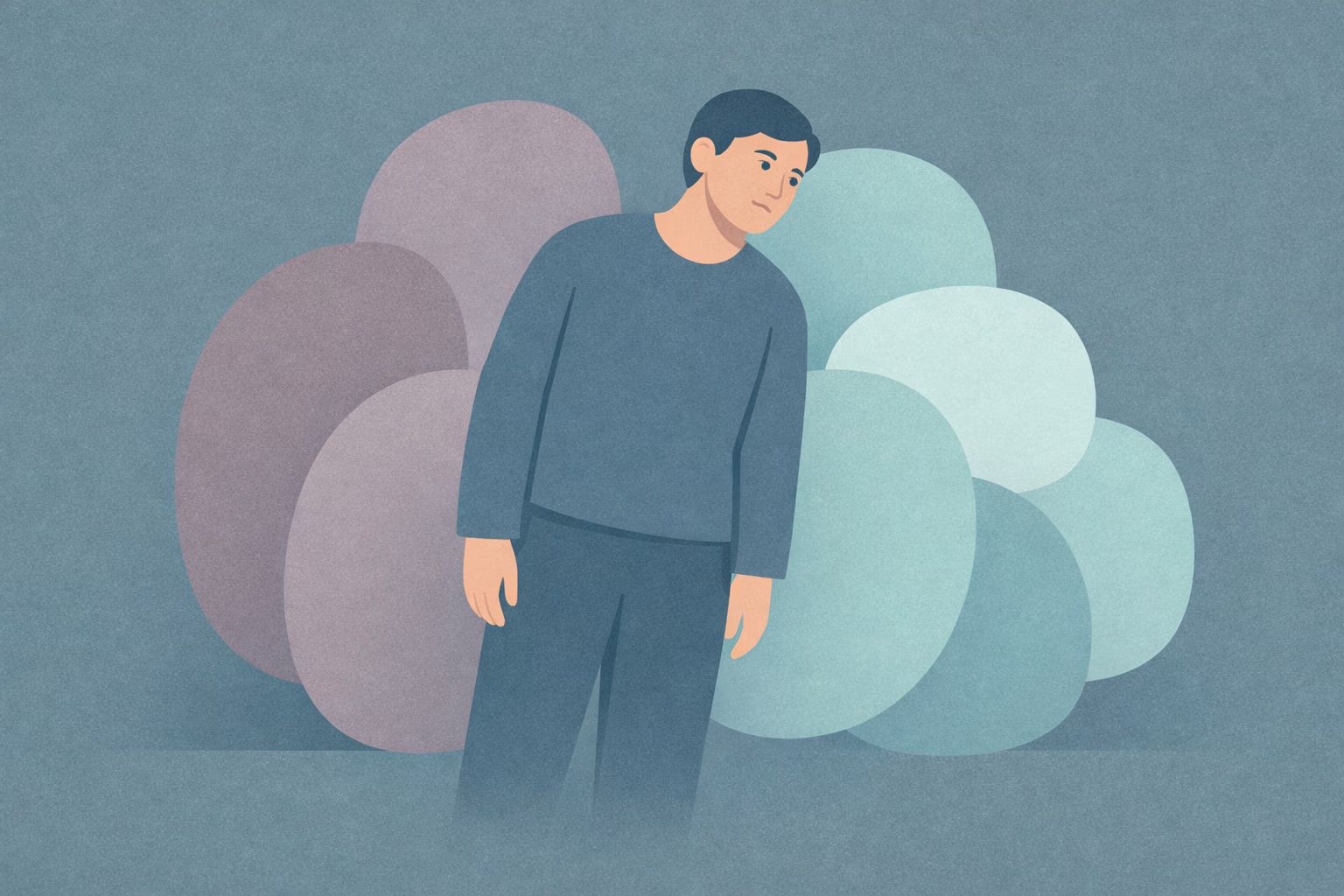
The Cost of Superficial Relationships: Emotional Drain
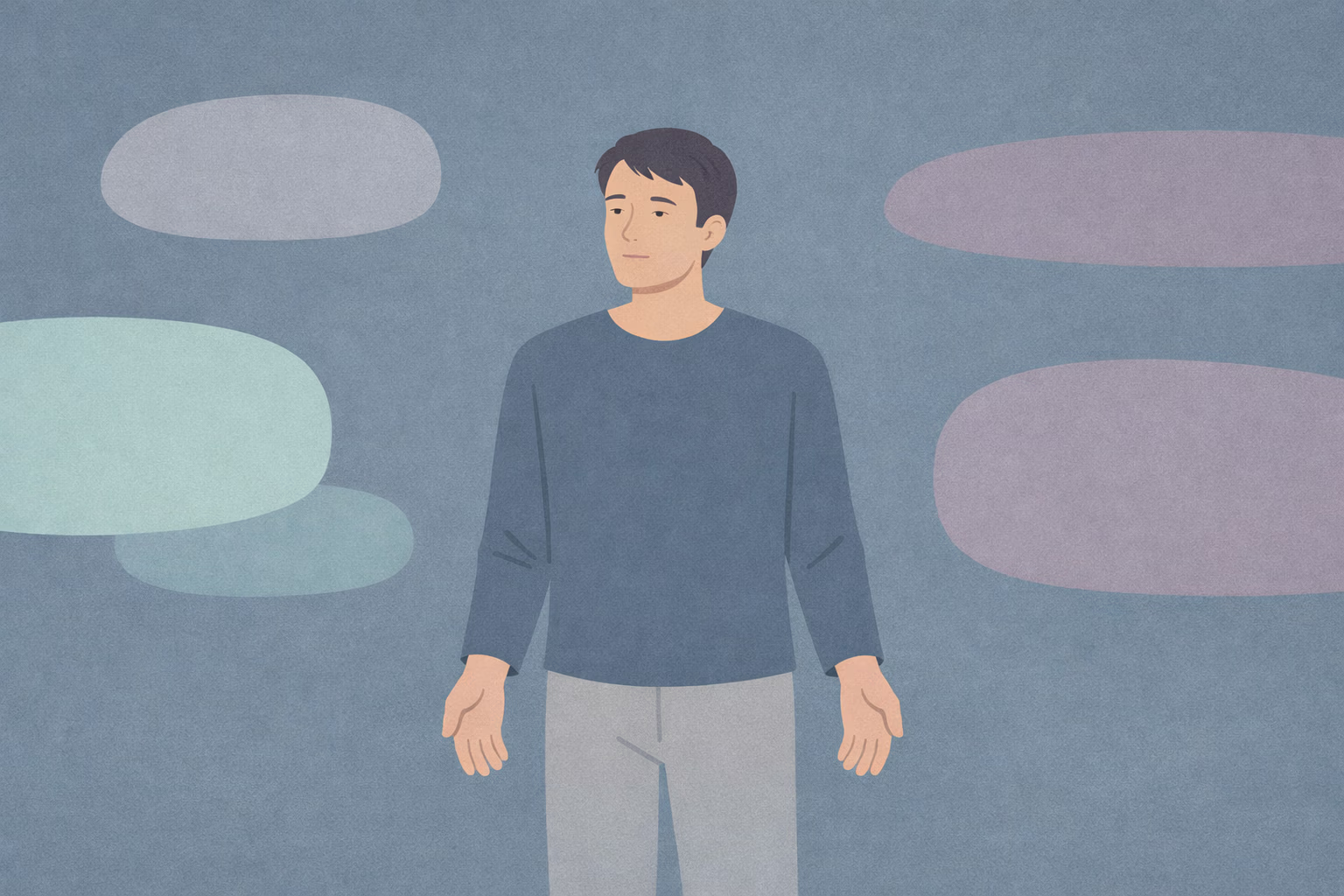
In short: Many people are more “connected” than ever—threads of messages, reactions, shared links, group chats, standing plans—yet still carry a quiet sense of being emotionally alone. It can feel confusing: the calendar is full, the phone is busy, and still something essential doesn’t land.
Many people are more “connected” than ever—threads of messages, reactions, shared links, group chats, standing plans—yet still carry a quiet sense of being emotionally alone. It can feel confusing: the calendar is full, the phone is busy, and still something essential doesn’t land.
How can you be socially surrounded and still feel unseen?
This isn’t a personal flaw or a sign you’re “bad at relationships.” It’s often what happens when contact increases but closeness doesn’t complete—when interactions stay active but the body never receives the signal that you’re safely held in someone’s attention, even for a moment.
There’s a particular kind of loneliness that shows up in crowds, workplaces, family events, and busy friend groups. You can be included, responded to, and invited—yet feel like no one is actually with you.
This experience often brings a subtle depletion: you leave interactions more tired than you arrived. Not because people were “wrong,” but because your system didn’t get what it was scanning for—recognition, steadiness, and a sense that your presence mattered beyond your role. Perceived isolation can weigh on health and well-being even when social contact is present. [Ref-1]
Sometimes it’s not the lack of people. It’s the lack of “arrival.”
From a biological standpoint, humans don’t regulate through interaction alone. We regulate through attunement: the experience of being noticed accurately, responded to at the right pace, and held with consistent tone. When that happens, stress physiology can downshift; when it doesn’t, the body may stay on standby even while you’re talking. [Ref-2]
Surface-level contact can be pleasant and still fail to create a safety signal. A conversation can be “nice,” but if it’s rushed, distracted, performative, or constantly interrupted, the system may not receive enough coherence to settle.
In human development and evolution, closeness wasn’t primarily a personality preference. It was a survival cue. Warmth, proximity, familiar voice, and responsive presence helped coordinate nervous systems and reduce threat responses. Attachment bonds are built through repeated cycles of reaching, receiving, and settling. [Ref-3]
Importantly, what counts as “close” is often less about content and more about physiology: timing, tone, and reliability. A few minutes of steady presence can be more regulating than an hour of chatter that never quite meets.
Surface contact isn’t pointless. It often offers real benefits: convenience, low friction, social belonging signals, and reduced emotional risk. It can also create quick bursts of reassurance—someone reacted, someone replied, someone remembered.
In the body, light contact can even shift state temporarily through social cues and neurochemicals associated with affiliation and bonding. [Ref-4] But when the interaction doesn’t include enough steadiness or mutual presence, the effect may be brief—more like a flicker than a full settling.
What if the issue isn’t “lack of effort,” but lack of completion?
Modern life can keep people in near-continuous contact: notifications, shared media, quick check-ins, endless commentary. Yet the nervous system doesn’t interpret “many touches” as “secure closeness.” It looks for a coherent pattern: sustained attention, predictable responsiveness, and enough time for the interaction to land.
When those elements are missing, contact can paradoxically highlight what isn’t there. You’re reminded of relationships all day long, but the body doesn’t get the nourishment of being met. Research distinguishes social quantity from social quality in how loneliness and well-being shift. [Ref-5]
When closeness feels inconsistent or costly, many people adapt by staying in a middle zone: connected enough to avoid rupture, distant enough to avoid load. This can become an Avoidance Loop—not as a personality trait, but as a regulation strategy under conditions that don’t reliably offer safety.
The loop often looks like this: there’s interaction, but it’s structured to bypass depth. Jokes replace specificity. Updates replace presence. Plans stay tentative. Conversations end right before anything settles. The result is a relationship that stays active while attachment remains incomplete. [Ref-6]
Relational fatigue is a common clue. It can show up as a flat feeling after social time, irritability with texts, or a sense that you need to “recover” from being with people. This isn’t proof that you’re antisocial. It may be a sign your nervous system stayed mobilized—tracking cues, managing impressions, or bracing for misattunement.
Another clue is craving depth while avoiding the conditions that would allow it to form. You may want real presence but find yourself choosing interactions that are safer, faster, or easier to exit. This pattern often coexists with tenderness toward connection and self-protective calibration around it. [Ref-7]
Loneliness isn’t just a thought like “no one likes me.” Over time, it can become a physiological condition: heightened vigilance, reduced trust in cues, and a persistent sense of inner emptiness that isn’t solved by more activity. Chronic loneliness and social isolation are associated with broad impacts on mental and physical health. [Ref-8]
What’s painful here is the mismatch: you may be doing everything that “should” equal connection—showing up, replying, being agreeable—yet the body doesn’t receive the signal of being held in a shared field of attention. Without that, the system keeps searching.
It’s common to describe shallow connection as “fear of vulnerability,” but many patterns don’t start with a conscious fear. They start with bodily prediction. If previous closeness came with unpredictable responses—delays, jokes at your expense, sudden distance, topic changes—the system learns that depth doesn’t reliably resolve. It stays unfinished.
When the body anticipates incomplete closure, it tends to conserve: shorter disclosures, quicker exits, safer topics, more monitoring. This is less about psychology and more about interoceptive and embodied regulation—how the body tracks internal load and external cues while deciding what is sustainable. [Ref-9]
Shallow can be the shape a relationship takes when completion hasn’t been dependable.
When relational safety is missing or inconsistent, the system often builds substitutes that keep life moving. These can look like independence, humor, helpfulness, constant busyness, or staying “low-need.” They aren’t identities. They’re coherence strategies—ways to reduce uncertainty and keep the social field manageable.
From a nervous-system lens, this is what makes the pattern sticky: it works in the short term. It reduces activation spikes, limits exposure to unpredictable feedback, and keeps interactions within a tolerable bandwidth. The body prioritizes safety cues and threat reduction before it can allow deeper social settling. [Ref-10]
If your system chose manageability, what was it trying to protect?
Closeness isn’t created by intensity. It’s created by reliable micro-signals that the nervous system can trust. Eye contact that isn’t intrusive, pacing that matches, pauses that aren’t punished, and attention that stays with the moment—these cues do more than “feel nice.” They help the body register social buffering, lowering stress responses when another person is truly present. [Ref-11]
Presence is also rhythmic. When conversation has space—when someone tracks what you said, returns to it, and stays oriented—the interaction can finally complete. In that completion, the system gets the stand-down signal it’s been waiting for.
When closeness is real, it’s often quiet. You may notice less scanning, less urgency to entertain, and fewer internal “tabs” open during interaction. Afterward, there’s a different residue: not a spike of stimulation, but a sense of completion—like the social system received a full sentence instead of fragments.
Over time, this kind of completion can increase capacity: more flexibility in how you respond, less rigid guarding, and a steadier sense of self in relationship. Values-based behavior becomes more available when the system isn’t spending so much energy on threat management. [Ref-12]
It’s not that life becomes perfect. It’s that your signals can return.
Many people reach a turning point where “more social” stops helping. The system begins to prefer fewer interactions that actually resolve. This shift isn’t withdrawal; it’s discrimination—choosing conditions that allow closeness to complete and meaning to consolidate.
Quality of connection tends to shape well-being more reliably than quantity alone. [Ref-15] And as relationships become more coherent, identity can feel less fragmented: you don’t have to be a different version of yourself in every room. Over time, shared experiences that complete can become part of narrative identity—what you can count on, and who you are with others.
When relationships feel surface-level, it’s easy to assume you need to be more interesting, more available, more positive, more impressive. But closeness isn’t earned through social performance; it’s formed through experiences that settle into mutual recognition.
A non-shaming frame can matter here: if your patterns are regulatory responses to load and incomplete closure, self-criticism adds more pressure to a system that is already working hard. Self-compassion is associated with healthier ways of relating to distress, especially when things feel hard to change. [Ref-14]
Sometimes the most important reframe is simple: you’re not “too much” for wanting depth. Wanting to be met is a human signal.
Surface-level connection can keep life socially busy, but closeness is what lets the nervous system rest. The difference is not how many people you can reach—it’s whether, in a moment, you are actually received.
When relationships offer that kind of completion, meaning doesn’t have to be forced. It arrives as coherence: a lived sense that your presence makes contact, and that contact is real. Social quality, more than social quantity, is often where that stability grows. [Ref-15]
From theory to practice — meaning forms when insight meets action.
Because contact isn't the same as attunement. Humans don't regulate through interaction alone — we regulate through being noticed accurately, responded to at the right pace, and held with consistent tone. A conversation can be "nice" and still fail to deliver a safety signal if it's rushed, distracted, or constantly interrupted. The nervous system reads attention that stays fragmented as not-yet-safe, so it keeps scanning. The calendar is full, the phone is busy, and still the body doesn't get the nourishment of being met. It's not the lack of people; it's the lack of arrival.
Not inherently — light contact offers convenience and real social belonging signals. The strain shows up when surface interaction becomes the main shape relationships take, because attachment systems evolved for repeated cycles of reaching, receiving, and settling. When those cycles never complete, you can be highly active socially while attachment stays unfinished. Loneliness then becomes a body state, not just a thought: heightened vigilance, reduced trust in cues, persistent inner emptiness that more activity doesn't solve. The issue isn't whether you have people. It's whether your nervous system is registering closure with them.
Because your system stayed mobilized — tracking cues, managing impressions, bracing for misattunement. That's relational fatigue, and it's a sign the interaction asked for performance more than presence. Many people also describe craving depth while choosing interactions that are safer, faster, or easier to exit. This isn't proof you're antisocial. It's an Avoidance Loop forming around closeness: contact stays active so rupture is avoided, but stays shallow enough that the load is bearable. The cost is that real intimacy keeps not landing, so the system keeps searching for what it's not receiving.
Reliable micro-signals the nervous system can trust. Eye contact that isn't intrusive, pacing that matches, pauses that aren't punished, attention that stays with the moment, repair after small misattunements. These cues do more than feel nice — they help the body register social buffering and allow stress responses to lower. Closeness isn't created by intensity; it's created by completion. When conversation has space to land and someone tracks what you said, the system finally gets the stand-down signal it's been waiting for. That's why quality, not quantity, is what builds felt closeness over time.
From Science to Art.
Understanding explains what is happening. Art allows you to feel it—without fixing, judging, or naming. Pause here. Let the images work quietly. Sometimes meaning settles before words do.
One Quiet Window, one insight, one reflection — every Sunday