Connection Without Closeness: Why Modern Relationships Feel Surface-Level
In short: It’s possible to have a full calendar, active group chats, and friendly conversations—and still feel oddly depleted afterward. Not because you’re “too sensitive,” and not because you’re doing relationships wrong.
It’s possible to have a full calendar, active group chats, and friendly conversations—and still feel oddly depleted afterward. Not because you’re “too sensitive,” and not because you’re doing relationships wrong. Often, it’s because the contact your life contains doesn’t complete into the kind of connection your social system can stand down inside.
Superficial relationships can look like connection from the outside: messages exchanged, jokes shared, likes and quick check-ins. But if safety, reciprocity, and being known don’t reliably arrive, the body may treat the interaction as ongoing social work—monitoring, adjusting, staying ready—rather than as a place to rest.
What if the drain isn’t from being “bad at people,” but from never getting a real “done” signal from contact?
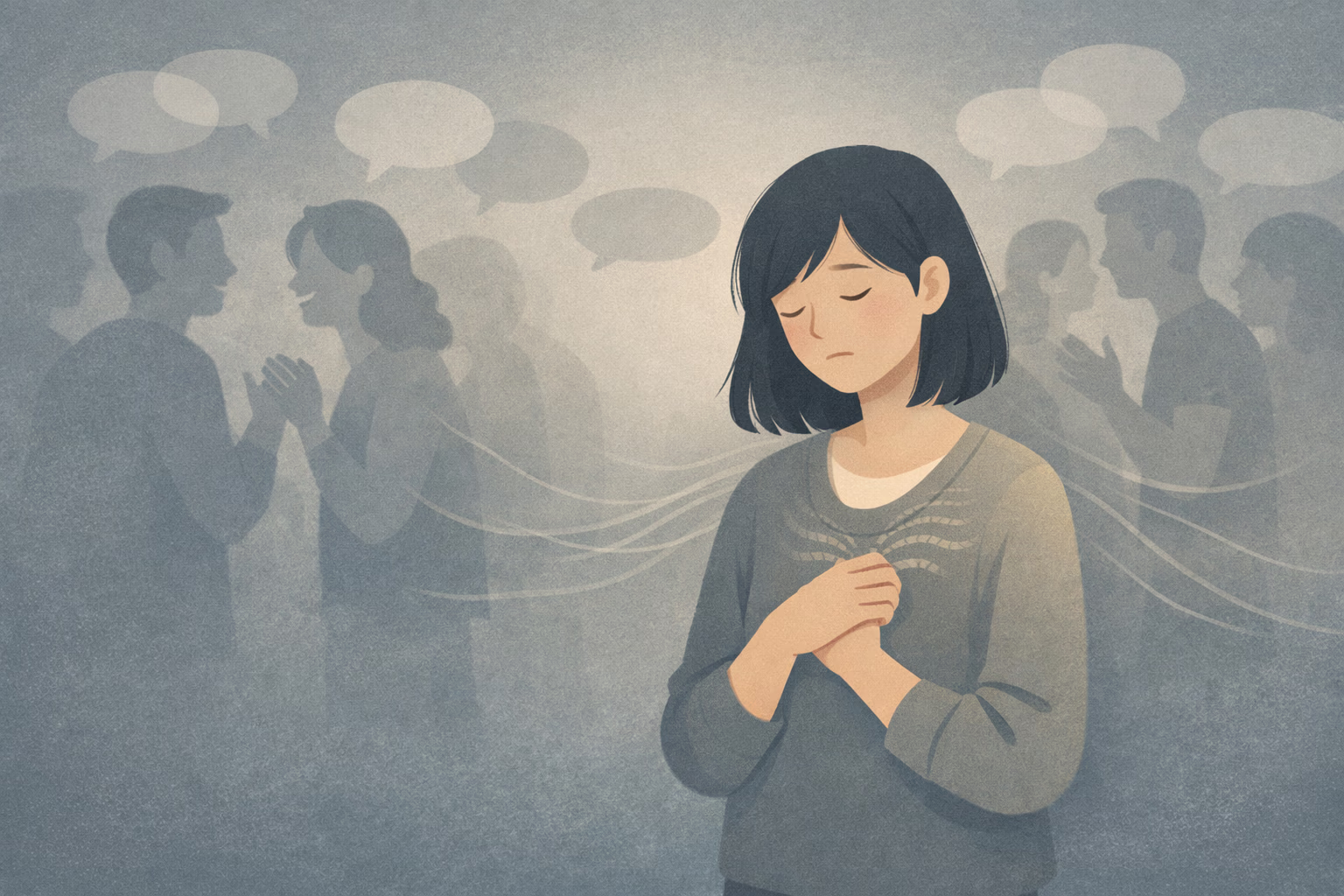
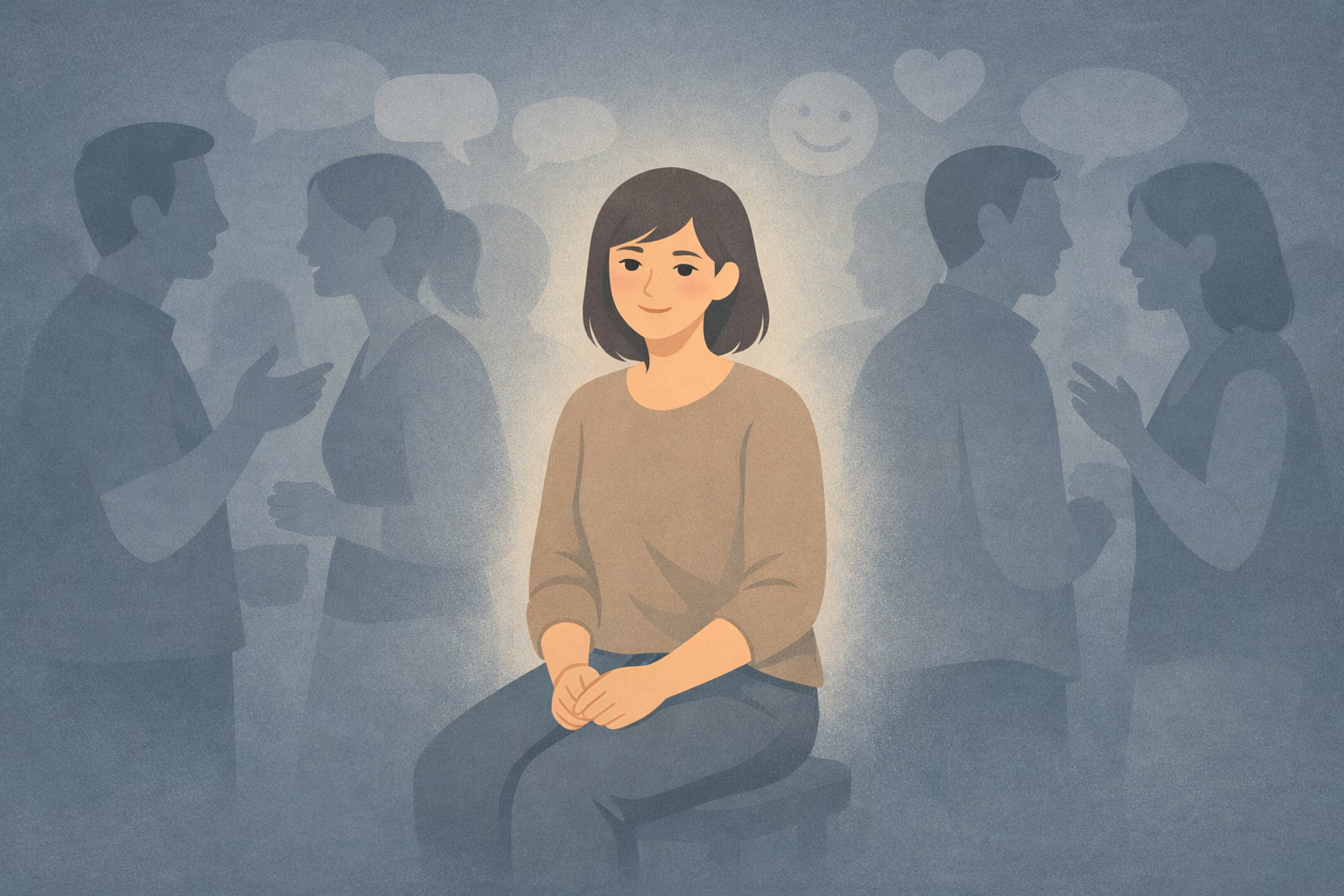
One of the most confusing forms of loneliness is the kind that happens in company. You might be surrounded by people, included in plans, even liked—and still feel emotionally unseen. The nervous system registers: there are people here, but it doesn’t register: I’m held here.
This is why “being busy socially” can coexist with an internal sense of unsupportedness. The interaction is real, but it doesn’t land as anchoring. The result can feel like a quiet gap: you’re connected enough to keep showing up, but not known enough to exhale. Research on loneliness highlights how superficial connection and limited self-disclosure can relate to persistent loneliness even with social contact present. [Ref-1]
Being around people can reduce isolation. Being known reduces vigilance.
At a biological level, human social life is not only about interaction—it’s about regulation. Close, trusted connection is one of the conditions that lets the stress response settle. Without that felt safety, social engagement can remain a performance: scanning for cues, staying appropriate, staying likable, staying calibrated.
Surface contact often requires more self-monitoring than we notice. You track timing, tone, impression, and status. That vigilance costs energy, especially if the relationship doesn’t provide reliable signals of care and support. Over time, this can resemble the strain described in research on perceived social isolation—where the body stays activated because it doesn’t experience stable relational buffering. [Ref-2]
What if “social fatigue” is your system doing extra work to stay socially safe?
Human attachment systems evolved in environments where a small number of bonds carried the most weight: people who recognized you, tracked your state, and stayed in contact across time. Depth wasn’t a luxury—it was how safety and cooperation were maintained.
Modern life can replace depth with volume: more contacts, more exchanges, more weak ties. That can be useful and even enjoyable, but it can also stretch the attachment system into a constant “many-but-thin” mode. Relational support and secure bonds are consistently linked with thriving and stress buffering; when support is diffuse or unreliable, the system doesn’t get the same settling effect. [Ref-3]
Superficial relationships aren’t pointless. They often serve a real purpose: social access without the exposure that comes with depth. They let you participate, belong loosely, and avoid the messy uncertainty of being fully known.
In that sense, surface connection can feel safer in the short term. It reduces the chance of awkwardness, misattunement, or rejection. It can also keep life moving when capacity is low—when you don’t have the bandwidth for deeper reciprocity. Many resources on loneliness note how limited depth can maintain distance while still meeting basic social contact needs, at least temporarily. [Ref-4]
But low-risk connection can come with a hidden cost: it can prevent the closure your nervous system looks for in relationships—the sense that you are met, understood, and not alone in your experience.
Loneliness isn’t only about how many people you see. It’s about whether contact becomes reliable support—whether interaction integrates into a sense of belonging. When relationships stay surface-level, they can intensify loneliness because they highlight what isn’t happening: being recognized, included meaningfully, and cared for in a way that persists.
This is the “illusion of coverage”: lots of social input can look like protection against loneliness, yet the body still feels alone because the attachment need is still unmet. Research on relationship quantity and quality repeatedly finds that quality matters strongly for loneliness and well-being, even when the number of connections is high. [Ref-5]
In the Meaning Density Model™ frame, avoidance isn’t a personality flaw. It’s often what happens when a system learns that deeper contact comes with too much load—too much uncertainty, too much monitoring, too many unrepaired moments. So the person stays in the zone where things are manageable: pleasant, functional, non-demanding.
The loop forms because superficial connection provides short-term relief (less exposure, fewer consequences), but it doesn’t complete the belonging cycle. The nervous system keeps seeking the “done” signal of being held, and when it doesn’t arrive, it keeps searching—or it withdraws to reduce cost. Over time, this can resemble what research links to loneliness and identity gaps: contact continues, but coherence doesn’t. [Ref-6]
Relief can keep you moving. Closure lets you stop bracing.
The drain has a recognizable texture. It’s not just tiredness from being around people; it’s the fatigue of incomplete connection—social energy spent without the return of safety and support.
Studies on loneliness and self-disclosure patterns note that limited depth can leave core belonging needs unmet even when social interaction is frequent. [Ref-7]
When relationships don’t offer reliable reciprocity, the body learns not to count on them. This isn’t cynicism—it’s an updating process. If bids for support rarely get met, or if closeness feels inconsistent, the nervous system conserves by staying guarded and self-contained.
Over time, this can erode social resilience: it becomes harder to assume goodwill, harder to feel soothed by contact, harder to let conversation land. Research on perceived social isolation emphasizes that when social ties don’t function as support, the physiological stress burden can accumulate. [Ref-8]
And because shallow connection often lacks repair—those small moments of “we’re okay, even after that”—the system may carry more unfinished social loops than it knows what to do with.
It’s common to describe this pattern as “fear of vulnerability,” but that can make it sound like an inner flaw. Structurally, something simpler can be happening: deeper connection increases exposure, and exposure increases consequence. If your environment (past or present) hasn’t reliably provided repair, closeness can register as high-cost.
So surface interaction becomes a strategy: it keeps social access while reducing the number of moments that could go badly, get misunderstood, or linger unfinished. Meanwhile, unmet attachment needs still generate pressure for connection—creating a push-pull rhythm of engaging and retreating. Attachment research and popular summaries alike note that relational safety shapes mental health and connection patterns over time. [Ref-9]
When closeness has a history of not resolving, staying “light” can be a form of self-protection that makes sense.
There is a distinct shift that happens when emotional safety is restored: the body stops treating connection as a task. Not because you’ve “understood yourself better,” and not because you’ve found the perfect explanation—but because the relational environment provides enough consistency that your system can stand down.
In that state, conversation can move from management to mutuality. There’s less tracking of how you’re coming across and more room for shared reality—where your experience can exist without being edited into acceptability. Relational support is associated with thriving partly because it creates conditions where attachment circuits can stabilize rather than stay vigilant. [Ref-10]
Safety isn’t excitement. It’s the absence of bracing.
Relationships feel less draining when they include depth, reciprocity, and presence—when you don’t have to earn your place moment by moment. In nourishing connection, there’s an implicit steadiness: you can be complicated, you can have a bad day, you can be quiet, and the bond still holds.
This isn’t about constant intensity or “sharing everything.” It’s about reliability: the relationship can carry real life. Research distinguishes emotional loneliness (lack of close bond) from social loneliness (lack of group belonging), and shows that depth and satisfaction are strongly tied to well-being. [Ref-11]
When the need for performance reduces, energy returns. Social time starts to feel like resource rather than expense.
One quiet marker of whether a relationship is nourishing is what happens afterward. Not the immediate stimulation, but the return: do you feel steadier, more oriented, more capable of your life? Or do you feel scattered, keyed up, or strangely alone?
When attachment needs are met, the body often receives a completion signal: someone has me in mind; I don’t have to hold everything alone. That completion can reduce background load, which makes socializing less costly. Research on daily interaction quality suggests that the quality of contact can be more associated with loneliness than sheer frequency. [Ref-12]
In other words, nourishing connection doesn’t just change mood. It changes the nervous system’s workload.
When belonging is restored, people often become more selective—not out of avoidance, but out of coherence. You don’t need to keep proving your social existence through volume. You can invest in the relationships that actually integrate into your identity: the ones where you are consistently recognizable to someone else, and where you can recognize yourself.
This is how agency returns: not through forcing more connection, but through feeling the difference between contact and bond. Research on loneliness and social relationships repeatedly highlights that both quantity and quality matter, with quality playing a central role in reducing loneliness. [Ref-13]
The shift is subtle but powerful: fewer interactions feel like more life, because they create less fragmentation and more continuity.
If superficial relationships leave you emotionally tired, that’s not evidence that you’re broken or “too much.” It’s often evidence that your system is calibrated for something real: connection that offers safety cues, reciprocity, and closure.
In a fast, evaluated, high-contact world, it makes sense that many people live with social exposure but low relational settling. The fatigue is information: it points toward the human requirement for support that actually buffers stress, not just social noise. Research on perceived social isolation underscores how the body is affected when support is missing, even in the presence of others. [Ref-14]
When you name the pattern without shame, you’re already restoring meaning: you’re recognizing that your needs are coherent, and that your exhaustion is not random.
Modern life makes it easy to accumulate contact and still miss belonging. But your nervous system keeps the simplest score: not how many people know your name, but whether anyone reliably knows your life.
Depth is not a moral achievement. It’s a condition under which humans stabilize. And when that condition is present, connection stops draining you and starts giving you back to yourself—quietly, consistently, and with less effort than you were led to believe. [Ref-15]
From theory to practice — meaning forms when insight meets action.
Because surface contact often requires more self-monitoring than we register. You track timing, tone, impression, status — each tiny adjustment is energy. If the relationship doesn't reliably deliver care or being known, your nervous system stays in social work mode rather than treating the interaction as a place to rest. The Attachment & Belonging System reads contact but doesn't get the deeper signal of being held. So you end the conversation with a calendar full of completion but a body still bracing. Social fatigue here isn't being too sensitive — it's the cost of staying socially safe without ever getting closure.
Yes — and this is one of the most confusing forms of loneliness. The body registers there are people here but doesn't register I'm held here. Lots of social input can look like protection against loneliness, yet the attachment need stays unmet. The article calls this the illusion of coverage: contact is real, but it doesn't land as anchoring. Quality matters more than quantity for whether contact functions as buffering. Being around people can reduce isolation; being known reduces vigilance. Without that deeper signal, the system stays activated even in friendly company, because it never receives the Done Signal of mutual recognition.
Often yes — but structural, not cowardly. Deeper connection increases exposure, and exposure increases consequence. If your environment hasn't reliably provided repair, closeness can register as high-cost. So surface interaction becomes a strategy that keeps social access while reducing moments that could go badly or stay unfinished. That's the Avoidance Loop: short-term relief from less exposure, but no completion of the belonging cycle. The nervous system keeps seeking the held signal, and when it doesn't arrive, it either keeps searching or withdraws. Calling this fear of vulnerability misses the structure — it's a learned trade-off, often a wise one.
By the return — what happens after the contact, not just during it. Nourishing connection leaves you steadier, more oriented, more capable of your life. Surface drain leaves you scattered, keyed up, or strangely alone. When attachment needs are met, the body receives a completion signal: someone has me in mind; I don't have to hold everything alone. That reduces background load, which makes future socializing less costly. Depth here doesn't mean intensity or sharing everything — it means reliability. The relationship can carry real life. Fewer, deeper bonds restore agency through coherence, not through forcing more contact.
From Science to Art.
Understanding explains what is happening. Art allows you to feel it—without fixing, judging, or naming. Pause here. Let the images work quietly. Sometimes meaning settles before words do.
One Quiet Window, one insight, one reflection — every Sunday