Connection Without Closeness: Why Modern Relationships Feel Surface-Level
In short: For many people, a phone isn’t just convenient—it becomes a kind of portable steadying system. Not because anyone is “addicted to comfort,” but because modern days often come with high pressure, fractured attention, and very few true stopping points.
For many people, a phone isn’t just convenient—it becomes a kind of portable steadying system. Not because anyone is “addicted to comfort,” but because modern days often come with high pressure, fractured attention, and very few true stopping points. In that landscape, a device can start functioning less like a tool and more like emotional infrastructure.
What if the pull toward your screen is less about willpower—and more about your nervous system looking for closure?
Digital dependence, in this sense, is not a character flaw. It’s what can happen when relief is consistently delivered through a device faster than life can deliver resolution. The result is a pattern that makes sense: reach for what reliably lowers load, even if it doesn’t fully complete what the body was trying to settle.
Digital dependence often shows up in small, ordinary moments: a reflexive check during a hard email, a scroll while waiting for a reply, the urge to keep the phone within reach even at home. The device starts to function like a quick tether—something that can interrupt strain before it spreads.
Disconnection can then feel surprisingly intense. Not necessarily as “fear,” but as a spike in uncertainty: fewer cues, fewer options, fewer immediate exits from discomfort. In that moment, the nervous system treats access as safety and lack of access as added load. Smartphones are widely used for everyday emotion regulation in exactly these micro-gaps of daily life. [Ref-1]
Human nervous systems learn through consequences, not through lectures. When a behavior reliably drops arousal—even briefly—it becomes easier to repeat. Screens can offer rapid relief through novelty, social contact, distraction, and a sense of control. The body registers the downshift and tags the device as a dependable regulator.
Over time, this can become a conditioned loop: distress rises, the phone appears, distress drops. That sequence builds a strong association even when the original stressor remains incomplete in the background. Research reviews link problematic smartphone use with emotion dysregulation patterns, suggesting that phones can become a common route for state-changing relief. [Ref-2]
Relief can be real even when it’s not resolving.
Humans are built for relational regulation. In many environments, safety is not only an internal state—it’s something reinforced by voice, touch, eye contact, shared routines, and being “held in mind” by others. When those cues are inconsistent or scarce, the nervous system still seeks steadiness wherever it can find it.
A phone can mimic pieces of connection: messages, notifications, parasocial closeness, the feeling that someone might be reachable. It’s not that people confuse a device with a person. It’s that the attachment system can treat access, responsiveness, and predictability as regulating signals—regardless of the source. Research on smartphone dependence describes links with physical and mental health strain, consistent with the idea that reliance can become more than simple preference. [Ref-3]
In a low-support moment, what counts as “support” to the body?
The calming effect of a phone is not imaginary. It can provide instant orientation: time, navigation, information, music, social proof, reassurance. It also offers a quick escape hatch from uncertainty. The nervous system often settles when it believes it has options.
This is why the device can feel like a safety object. Constant access reduces the intensity of waiting, ambiguity, and social friction by replacing them with something trackable and responsive. Studies on smartphone dependency and emotional regulation describe associations between dependency patterns and regulation difficulties, reflecting how quickly phones can become part of a person’s calming routine. [Ref-4]
But calming is not the same as completion. A downshift can happen without a “done signal.” The body can feel soothed while the original loop—loneliness, overwhelm, unresolved conflict, unclear belonging—remains unfinished.
Genuine emotional support tends to have an endpoint. A conversation lands. A misunderstanding clarifies. A shared activity finishes. The nervous system gets closure signals—rhythm, reciprocity, and a sense that something has been metabolized into the relationship and into identity.
Digital comfort often delivers something different: an endlessly renewable stream of partial relief. The feed refreshes. The thread continues. The next clip arrives. It can feel supportive in the moment while never providing the “completion” cues the body relies on to stand down. Writing on phone dependency and mental processes notes impacts on attention and cognition that fit with this ongoing, unresolved stimulation pattern. [Ref-5]
In a high-load life, the nervous system looks for routes that reduce friction fast. A screen is a low-resistance pathway: it asks little, provides immediate state change, and doesn’t require negotiation with another person or the environment.
This is why digital dependence can function like an avoidance loop without needing a story about “not wanting to feel.” Structurally, it’s a bypass: the device offers a quick exit from unfinished tension, muted consequence, or unclear next steps. Research on smartphone overdependence highlights associations with impulsivity and emotional dysregulation, consistent with a loop that prioritizes rapid downshifts under strain. [Ref-6]
When the day provides no clean ending, the nervous system looks for a door.
Once the phone has become the default regulator, the body starts to expect it. When it’s not available—battery dead, forgotten at home, no signal—people can experience a sharp surge of activation. Not because they are broken, but because the system has learned that access equals relief.
Problematic smartphone use is often tied to regulation motives: using the device to shift state, reduce distress, or manage internal pressure. [Ref-7]
These patterns can be especially strong when the social system is taxed—when belonging cues are inconsistent, when feedback feels constant, or when support is mostly asynchronous.
When relief is repeatedly outsourced, internal regulation skills don’t disappear—but they get fewer chances to return to baseline on their own. The system becomes practiced at interruption rather than completion. That can raise baseline tension because the body is frequently activated, frequently shifted, and less frequently brought to a clean “done.”
Relationships can also thin out. Not from lack of care, but from reduced shared presence: fewer uninterrupted conversations, fewer moments where discomfort is jointly held long enough to resolve into clarity. Research links smartphone addiction and negative emotions with mental health outcomes, reflecting how these patterns can travel with increased distress load. [Ref-8]
What if the phone isn’t “stealing your peace,” but replacing the conditions that let peace arrive?
Every time the phone reliably lowers pressure, it earns trust. The nervous system doesn’t need a philosophy—it needs evidence. So the device becomes a stable reference point: predictable, quick, and always offering another cue of “something is happening,” which can temporarily reduce uncertainty.
Over time, this can shift attachment dynamics. If belonging and responsiveness are experienced more consistently through a device than through embodied relationships, the system may begin to lean toward the device for regulation. Research connecting attachment variables with problematic smartphone use supports this pathway: when attachment needs are strained, phone reliance can intensify. [Ref-9]
The key structural issue is not that the person is “choosing wrong.” It’s that the loop provides immediate closure-like signals (a reply, a refresh, a new input) while real life often withholds closure for long stretches.
There is a difference between interrupting discomfort and completing a moment. A screen can interrupt quickly. Completion is slower, more embodied, and usually involves some kind of landing—an internal or relational sense of “that’s handled enough for now.”
So one gentle reframe is to see the reach for the device as information: a sign that the system is seeking an endpoint. Sometimes that endpoint is clarity. Sometimes it’s reassurance. Sometimes it’s a cue of belonging. Research on perceived attachment and problematic smartphone use suggests that when attachment signals feel uncertain, reliance on the phone can grow. [Ref-10]
The goal isn’t to fight the urge. It’s to understand what kind of “done” your system was trying to reach.
Digital contact can be meaningful, but it often lacks the full set of regulating cues: tone, pacing, shared environment, mutual rhythm, and repair in real time. In-person connection (or deeply attuned synchronous contact) tends to offer richer signals of safety and completion.
When relationships function well enough, they provide co-regulation: a natural settling that happens through shared presence. This matters because the social nervous system is designed to borrow steadiness from trusted others—not as dependency, but as biology. Research on attachment and family functioning in problematic smartphone use aligns with the idea that relational context shapes how strongly a device is used for regulation. [Ref-11]
When a system is accustomed to rapid external soothing, any reduction in that pathway can temporarily increase activation. This isn’t proof that something is wrong; it’s often the nervous system recalibrating to fewer instant downshifts.
As load decreases and more moments reach clean endpoints, many people notice something quieter but important: clearer internal signaling. Less urgency. More accurate hunger for rest, contact, movement, or boundaries. Research on emotion regulation difficulties and problematic smartphone use suggests that regulation challenges can precede or reinforce problematic use, fitting a cycle where easing the loop can gradually restore clarity. [Ref-12]
At first, it can feel like “more discomfort.” Later, it can feel like “more accuracy.”
The deepest shift isn’t simply using the phone less. It’s relocating emotional support from a constant external drip-feed to something that can settle into identity: “I can return to myself,” and “I have people and places where I land.” That kind of support is slower, but it’s sturdier.
When tech becomes the primary regulator, it can create a vicious circle: more screen use, more fragmentation, more baseline tension, and then more need for relief. Broader research discussions (including in youth) describe these bidirectional loops between screen use and emotional problems. [Ref-13]
Coherence tends to feel like fewer emergency signals. Not perfect calm, but a steadier ability to let moments finish—so the nervous system doesn’t have to keep restarting the same loop.
In a world that rarely pauses, it makes sense that people build portable ways to cope. Phones are brilliant tools—and they can also become stand-ins for needs that are fundamentally human: shared presence, predictable care, and a life with endings that actually end.
When emotional support is mostly mediated by a device, regulation can become more fragmented across generations too—screen patterns in caregivers shape the emotional environment children grow inside. [Ref-14] This isn’t blame; it’s context. Systems pass on what they practice.
Agency here isn’t about forcing yourself into a different behavior. It’s about recognizing what your nervous system has been using the phone for, and honoring the underlying need as legitimate—worthy of a more complete form of closure over time.
There is nothing embarrassing about seeking comfort. The question is whether the comfort you reach for can also bring completion—whether it helps your system settle into a durable sense of “I’m okay, and this moment is done.”
Digital technologies can support emotion regulation in certain contexts, but they work best when they’re part of a wider ecology of support rather than the whole structure. [Ref-15] When life becomes more coherent—when belonging has real cues, and moments have real endings—the phone can return to its rightful place: helpful, powerful, and no longer your stand-in for steadiness.
From theory to practice — meaning forms when insight meets action.
A phone often functions less like a tool and more like emotional infrastructure — portable steadying for a day full of pressure, fractured attention, and few true stopping points. Disconnection then feels surprisingly intense, not as fear but as a spike in uncertainty: fewer cues, fewer immediate exits from discomfort. The Threat & Safety System treats access as safety and lack of access as added load. This isn't addiction to comfort — it's what happens when relief is consistently delivered through a device faster than life can deliver resolution. Reaching for what reliably lowers load is sensible biology, even if it doesn't fully complete what the body was trying to settle.
Genuine support has an endpoint. A conversation lands, a misunderstanding clarifies, a shared activity finishes — the nervous system gets closure signals through rhythm, reciprocity, and a sense that something has been metabolized. Digital comfort delivers an endlessly renewable stream of partial relief: the feed refreshes, the thread continues, the next clip arrives. It can feel supportive in the moment while never providing the Done Signal the body relies on to stand down. Comfort with a stopping point settles the system; comfort without a stopping point keeps the system orbiting. Relief can be real even when it's not resolving.
Humans are built for relational regulation — safety reinforced by voice, touch, eye contact, shared routines, being held in mind. When those cues are inconsistent, the Attachment & Belonging System still seeks steadiness wherever it can find it. A phone mimics pieces of connection: messages, parasocial closeness, the feeling someone might be reachable. People don't confuse a device with a person; the attachment system simply treats access, responsiveness, and predictability as regulating signals regardless of source. When attachment needs are strained and co-regulation is scarce, phone reliance can intensify — not as a moral failing, but as the system finding the most available substitute.
Initially, activation often increases — that's not proof something is wrong, it's the nervous system recalibrating to fewer instant downshifts. As load decreases and more moments reach clean endpoints, something quieter appears: clearer internal signalling. Less urgency. More accurate hunger for rest, contact, movement, or boundaries. At first it can feel like more discomfort; later it feels like more accuracy. The deeper shift isn't using the phone less — it's relocating emotional support from a constant external drip-feed to something that can settle into identity: I can return to myself, I have people and places where I land. Slower, but sturdier.
From Science to Art.
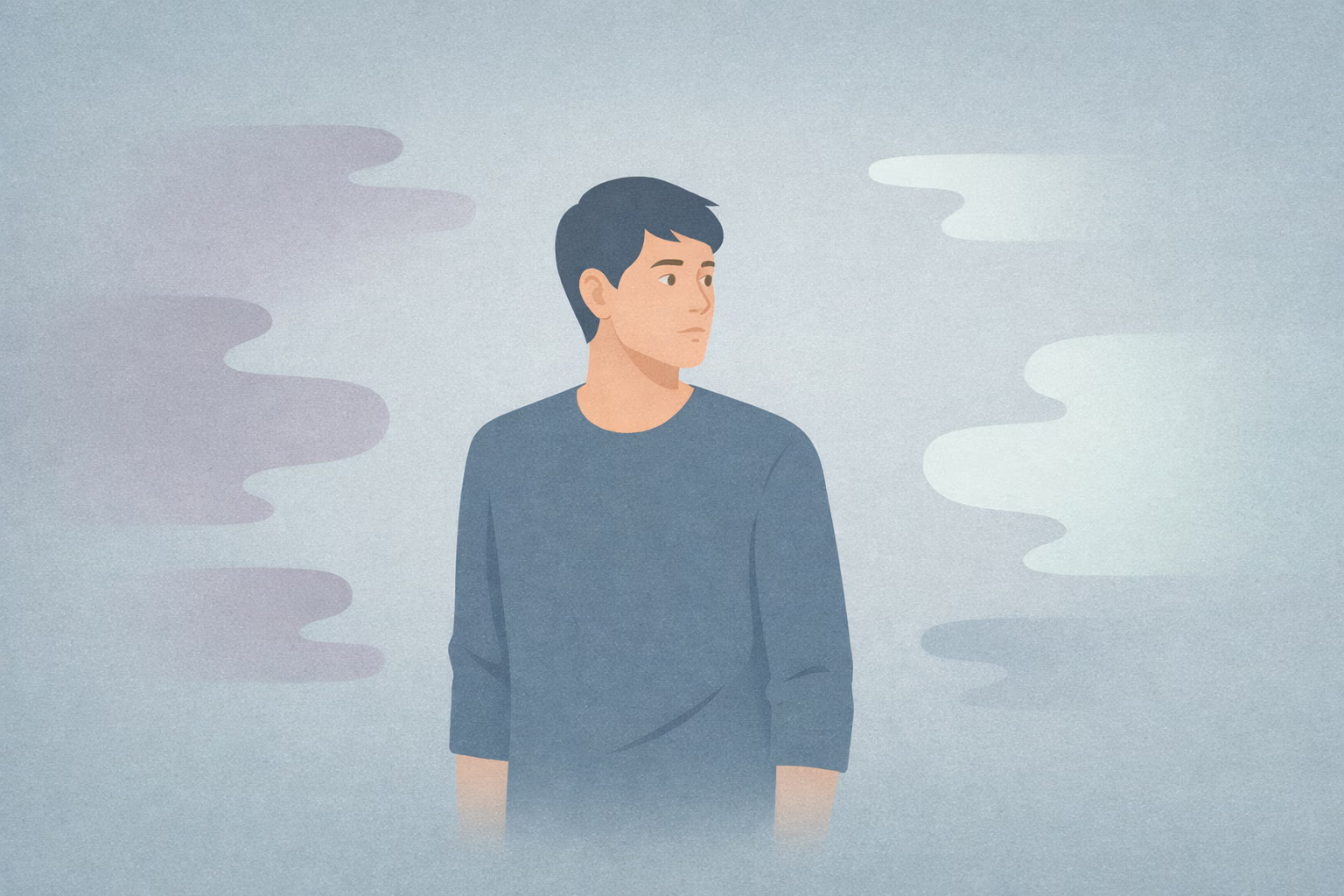
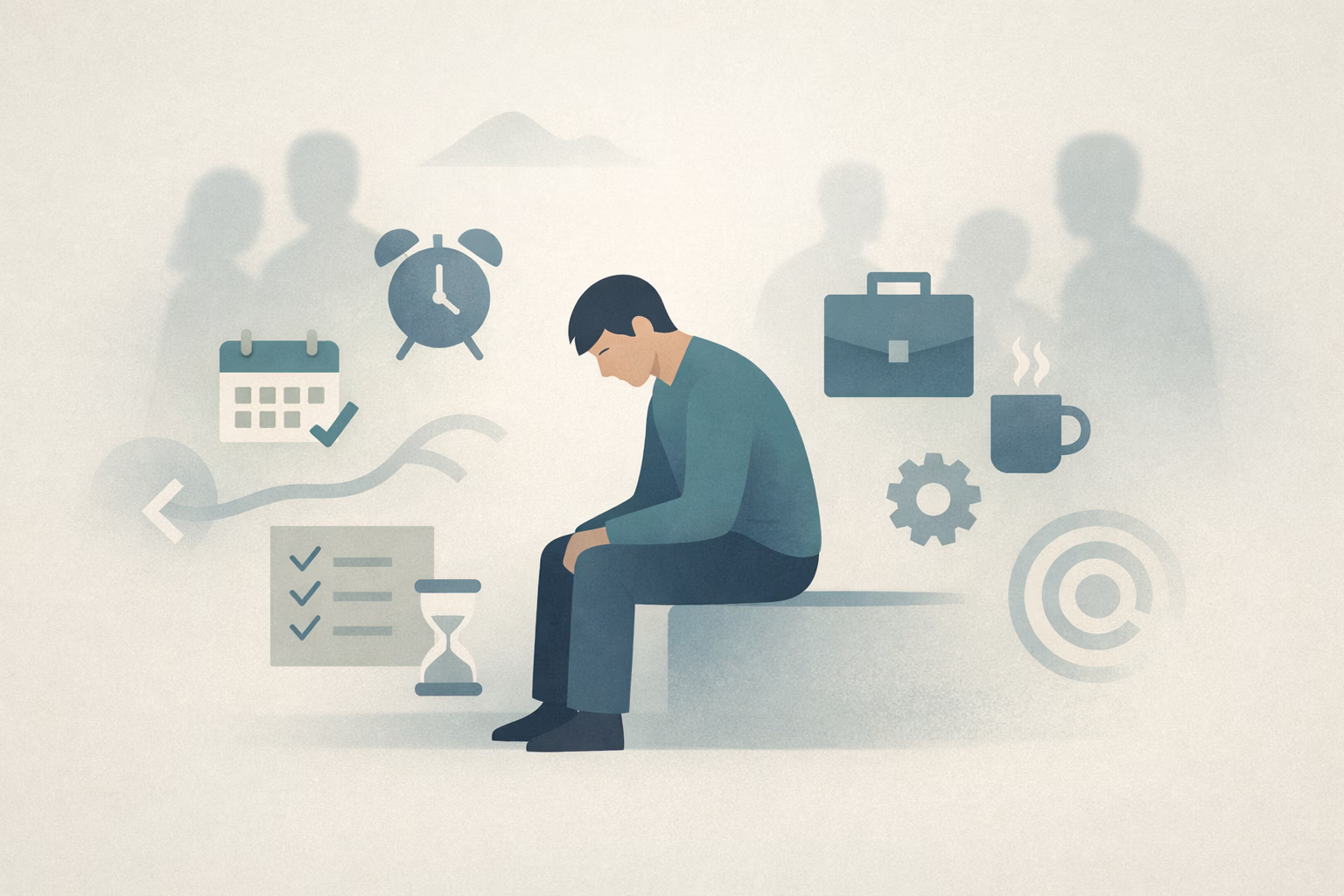
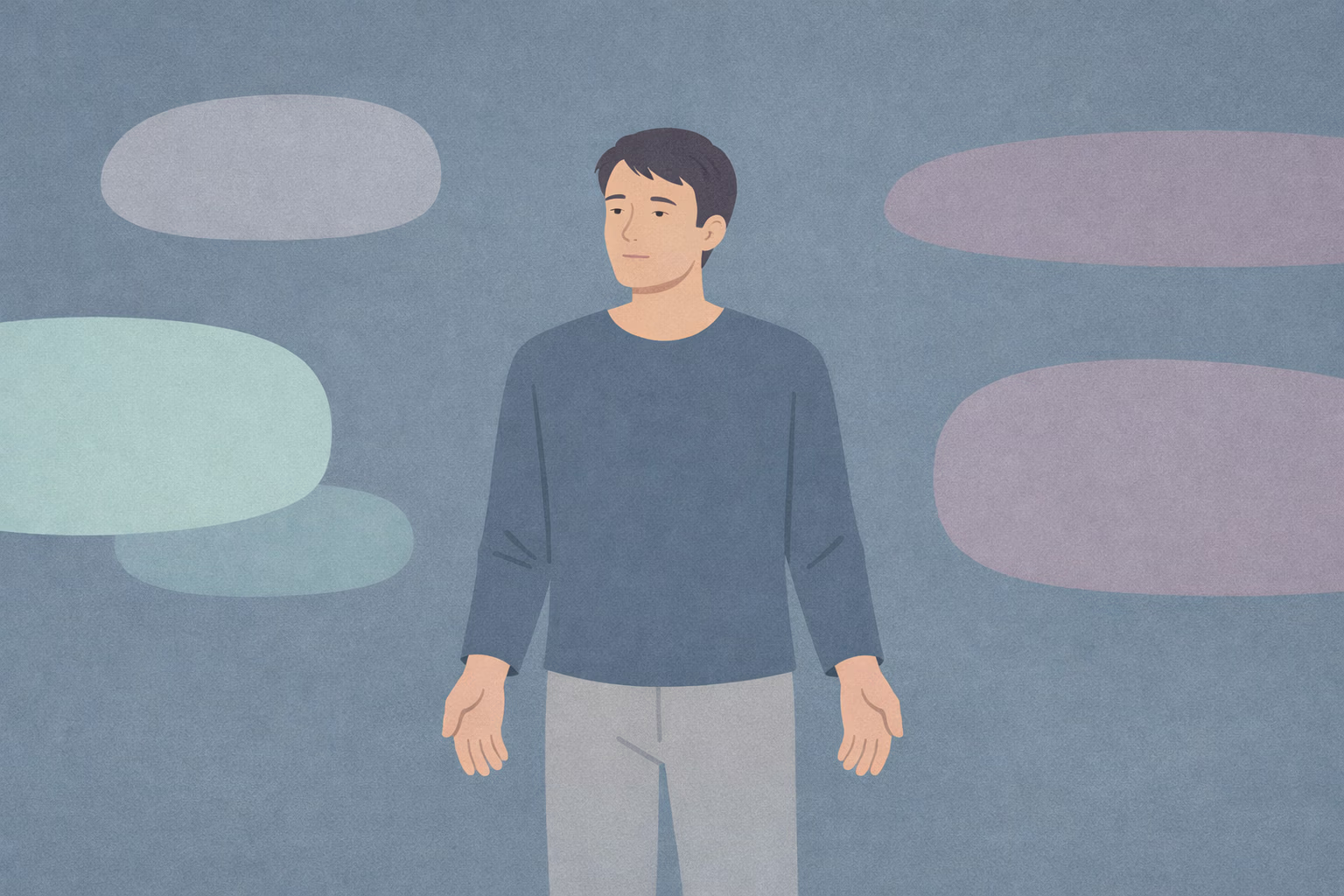
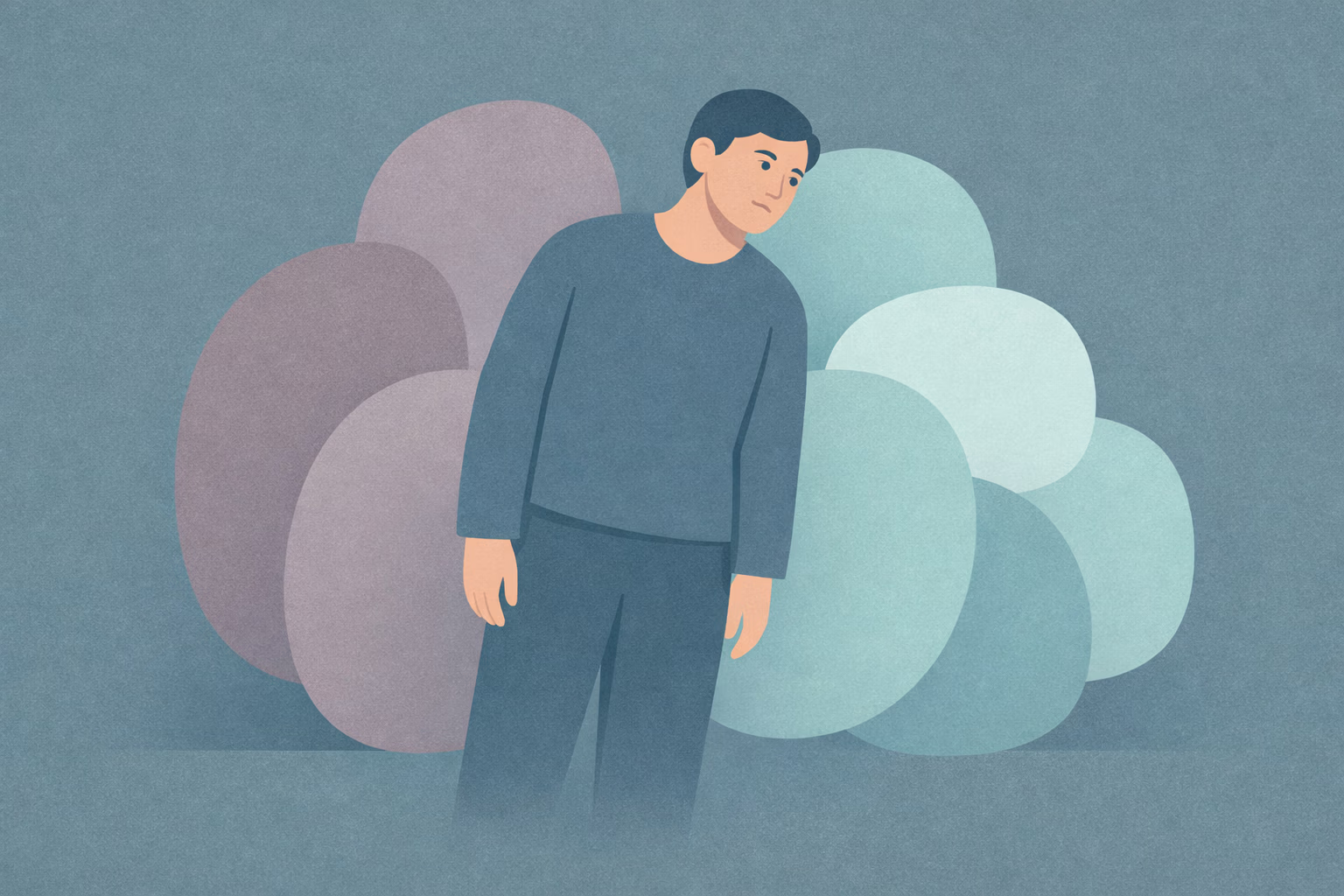
Understanding explains what is happening. Art allows you to feel it—without fixing, judging, or naming. Pause here. Let the images work quietly. Sometimes meaning settles before words do.
One Quiet Window, one insight, one reflection — every Sunday