

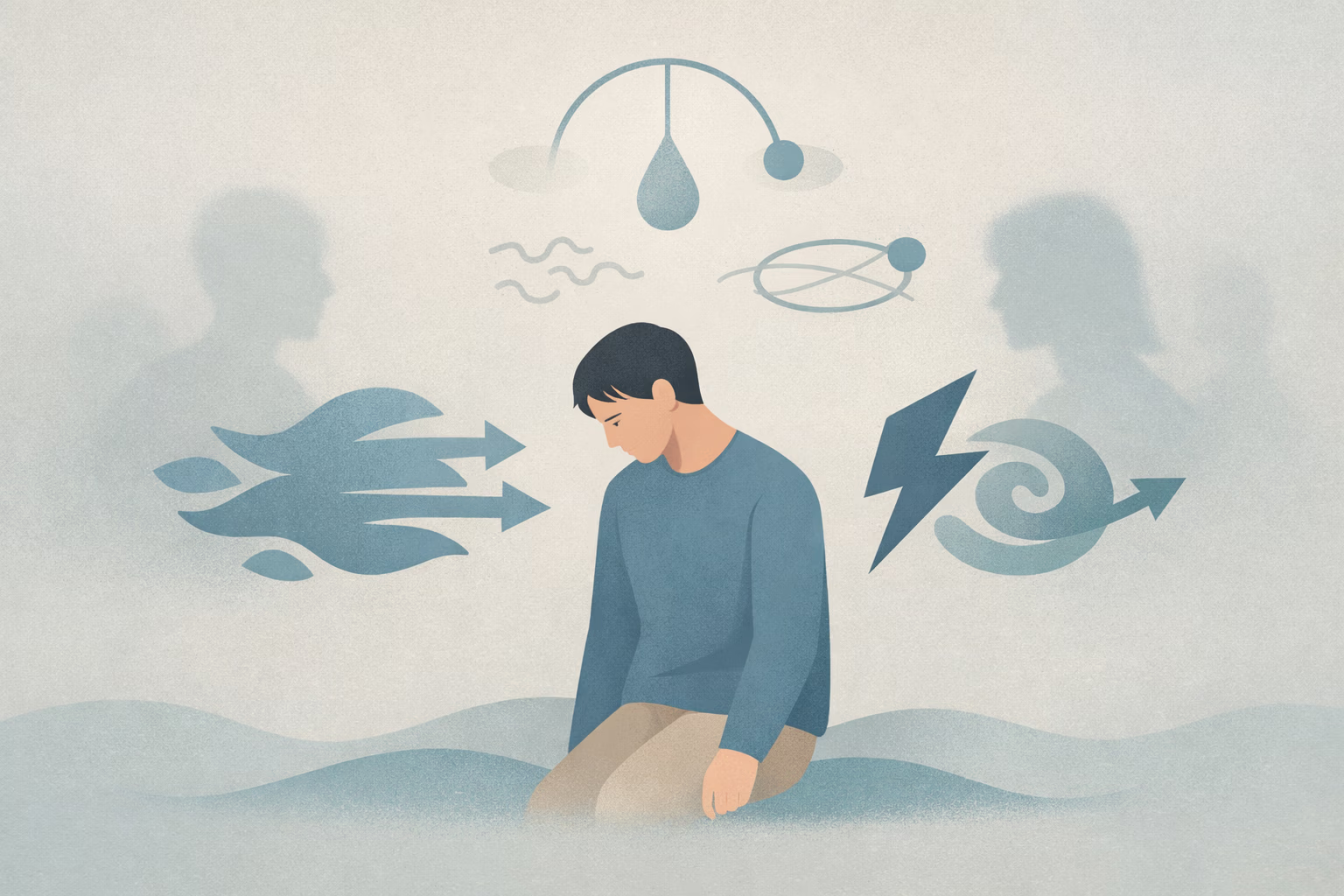
Inner Friction: The Internal Push-Pull
Explore why inner friction appears during transitions.
In context: That “pull“ is the Threat & Safety system maintaining its “vigilance loop.“ Even if the current environment is safe, the system may be “clearing the backlog“ of past incomplete threats. In the Meaning Density Model™, self-protection is a foundational biological drive that overrides all other systems.

Protection moves closer when connection approaches.
The shield is not raised in anger, only held nearby.
This pull is not defensive in intention—it is preservative.
You are keeping yourself intact while remaining aware of others.
Self-protection here is not opposition; it is care.
Name self-protection with DojoWell.
Explore DojowellArticles exploring the psychology behind these patterns.
Explore why inner friction appears during transitions.

Learn why treating people like “profiles” destroys love.

Learn why you overfunction in relationships and how to rebalance emotional labor.
That "pull" is the Threat & Safety system maintaining its "vigilance loop." Even if the current environment is safe, the system may be "clearing the backlog" of past incomplete threats. In the Meaning Density Model™, self-protection is a foundational biological drive that overrides all other systems. Naming this pull helps you realize it isn't a "personal flaw" or "paranoia." It is your system doing its primary job: ensuring you survive long enough to integrate your experiences later.
You validate the "protective impulse" without necessarily acting on it in a destructive way. Naming it "the pull toward self-protection" allows the Narrative system to witness the impulse without being consumed by it. You can say, "I feel the pull to withdraw," while remaining physically present. This creates a "dual-awareness" that allows you to remain "oriented" to your current safety while acknowledging the "echoes" of past threats, eventually allowing the vigilance loop to close.
One Quiet Window, one insight, one reflection — every Sunday