


Hyper-Optimization of Partners
Learn why treating people like “profiles” destroys love.
In context: Distance is a “low-stimulus environment“ where your integration capacity isn't being challenged by external demands. In the Meaning Density Model™, distance is the “safety baseline“ because it removes the “threat of engagement.“ When you are distant, you have total control over your internal loops.

Distance offers predictability.
Nearness introduces uncertainty.
You notice how space can feel stabilizing, even protective.
This is not rejection of others; it is an internal logic choosing safety over exposure.
Distance here is not absence—it is structure.
Understand safety logic with DojoWell.
Explore DojowellArticles exploring the psychology behind these patterns.
Learn why treating people like “profiles” destroys love.
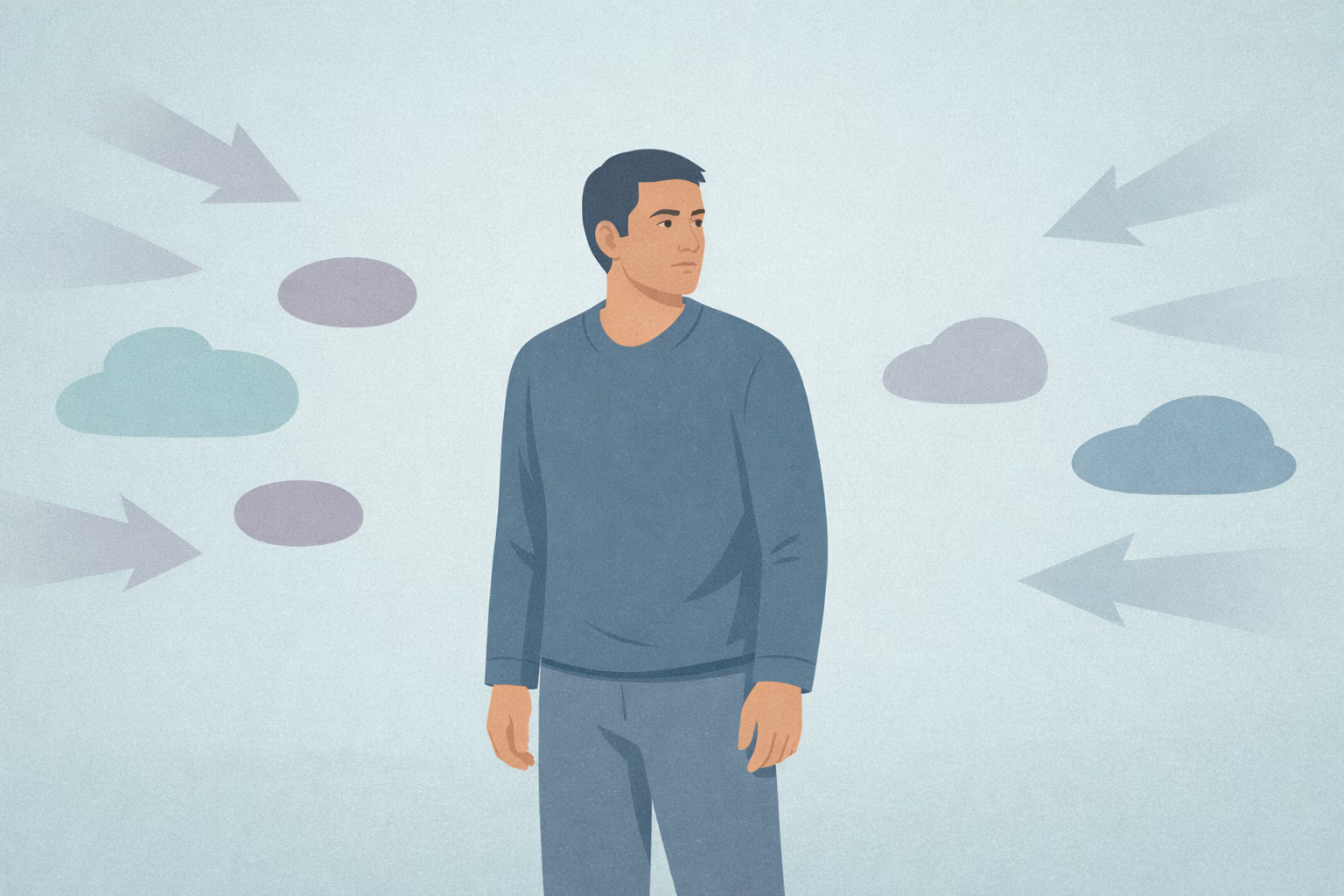
Understand nervous system stress caused by missing tribe cues.

Understand why inner conflict appears during identity change and how to navigate it.
Distance is a "low-stimulus environment" where your integration capacity isn't being challenged by external demands. In the Meaning Density Model™, distance is the "safety baseline" because it removes the "threat of engagement." When you are distant, you have total control over your internal loops. Recognizing that distance is a functional safety strategy—rather than a "failure to love"—allows you to use it as a tool for recovery rather than a source of guilt.
Yes, but only by respecting the safety of the distance first. Closeness is "high-density" and "high-load." You can only move toward it when your "integrator" has enough surplus energy. By acknowledging that distance is your current "safe harbor," you stop the pursuit loop of trying to force closeness. This rest allows your system to settle and recalibrate, eventually creating the surplus capacity required to handle the complexity of being near someone again.
One Quiet Window, one insight, one reflection — every Sunday