Connection Without Closeness: Why Modern Relationships Feel Surface-Level
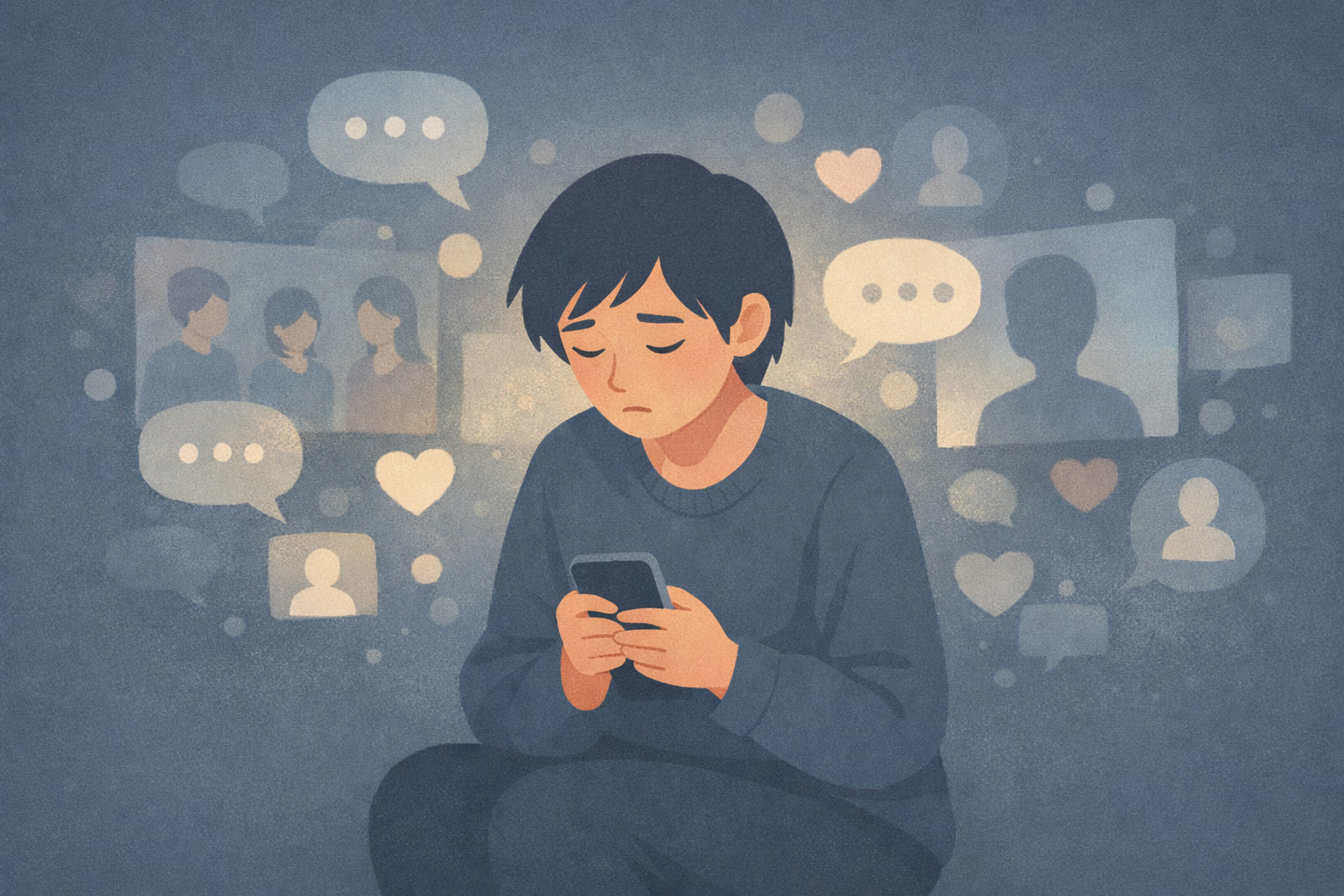
In short: For many people, “being social” now includes being potentially observed: seen in group chats, searchable in comment threads, measurable in likes, and quietly compared in ways no one ever confirms out loud. If connection feels tense in this landscape, it may not be because you’re doing something wrong.
For many people, “being social” now includes being potentially observed: seen in group chats, searchable in comment threads, measurable in likes, and quietly compared in ways no one ever confirms out loud. If connection feels tense in this landscape, it may not be because you’re doing something wrong. It may be because your belonging system is working under a new kind of load.
What if the discomfort isn’t your personality—but your nervous system responding to constant evaluation?
Social anxiety in the digital era often looks like overthinking, hesitation, or a strong urge to disappear right before you engage. These are regulatory responses that help the body reduce exposure when social stakes feel high. The shift is that the “stakes” now arrive through screens, metrics, and imagined audiences, so the system rarely gets a clean “done” signal.
Social anxiety is often described as tension, self-consciousness, and anticipatory dread before or during interaction. In digital spaces, that experience can intensify because visibility feels unavoidable: a message can be reread, a post can be shared, a pause can be interpreted, and silence can look like a statement.
When the nervous system senses exposure without clear safety cues, it tends to increase monitoring. You may notice scanning for the “right” wording, rechecking tone, or rehearsing outcomes. This isn’t vanity or fragility; it’s a protection response under conditions where social consequences feel both amplified and hard to predict. [Ref-1]
In face-to-face life, the audience is usually known and bounded. Online, the audience can be indefinite. Algorithms distribute content beyond your intention, and platforms attach numbers to social reception—views, likes, replies, follower counts—turning connection into a kind of public signal.
That combination can activate threat and status circuits: vigilance increases, self-monitoring intensifies, and neutral cues start to feel weighted. Even when no one is actively judging, the system may behave as if judgment is likely, because visibility is high and outcomes are uncertain. [Ref-2]
When the audience is unclear, the nervous system often prepares for the widest audience it can imagine.
Humans evolved to depend on belonging. In small groups, social signals were immediate and contextual: facial expressions, tone, repair after conflict, and routines that re-established safety. Rejection carried real costs, so the nervous system learned to treat social threat as consequential.
Digital life stretches that ancient wiring into something larger and less coherent. Instead of a familiar circle, there can be hundreds or thousands of potential observers, many of them unknown. The body may respond as if it’s navigating constant social risk—because in a very real way, it is navigating constant social uncertainty. [Ref-3]
When exposure feels risky, the system looks for ways to reduce it. Pulling back—staying silent, delaying replies, avoiding posting, leaving events early, or curating everything tightly—can create an immediate drop in nervous-system activation.
That relief makes sense structurally: fewer inputs, fewer chances of visible missteps, fewer ambiguous social cues to process. But the tradeoff is that less exposure also means fewer moments of clean closure: fewer interactions that resolve, repair, or settle into “we’re okay.” Over time, the system can start to treat withdrawal as the only dependable safety cue. [Ref-4]
Hyper-monitoring and avoidance can feel like they prevent embarrassment or rejection. But they often keep social experiences in a suspended state—never fully initiated, never fully completed, never allowed to land. The body stays ready, because it never receives enough evidence that interaction can finish safely.
In this way, the strategy that reduces discomfort in the short term can increase isolation in the long term. Not because someone is “choosing loneliness,” but because the environment rewards disappearance with immediate relief while quietly removing the conditions that help social systems settle. [Ref-5]
What happens when the only reliable calm comes from not being seen?
Digital social anxiety often forms a “power” dynamic inside the body: perceived evaluation determines whether you feel safe to be present. When attention and approval seem scarce—or when you can see other people receiving them—status threat becomes easier to trigger.
The system may respond by tightening: performing, perfecting, checking, or withdrawing. The loop reinforces itself because platforms make evaluation continuous, and because comparison is always available. In that state, it can feel like connection requires winning a silent contest, even when you never agreed to compete. [Ref-6]
Many digital-era social anxiety patterns make more sense when viewed as attempts to manage exposure and uncertainty. They are ways the nervous system reduces load when there is no clear endpoint to social evaluation.
These patterns aren’t identities. They are protective movements in a context that makes belonging feel measurable and precarious.
When social contact repeatedly arrives through vigilance, the experience of relationship can narrow. Instead of “being with people,” it becomes “managing impressions,” “minimizing risk,” or “waiting to see how I land.” Over time, this can erode confidence—not as a belief problem, but as a capacity problem.
Belonging depends on repeated, completed loops: contact, response, repair, and settled familiarity. When interactions remain ambiguous or performance-based, the system can struggle to encode them as safe. That’s one reason social anxiety and loneliness often travel together in online-heavy social lives. [Ref-8]
Avoidance works quickly because it removes the triggering inputs. The nervous system gets a break from uncertainty, and activation drops. But the same move can also teach the system that interaction itself is the hazard—because the only time relief arrives is when interaction stops.
Over time, digital communication can start to feel “safer” than in-person contact, not because it is inherently safer, but because it offers more control, more distance, and more opportunities to delay. The downside is that distance can reduce the kinds of real-time cues that help the body settle: warmth in tone, quick repair, shared context, and visible acceptance. [Ref-9]
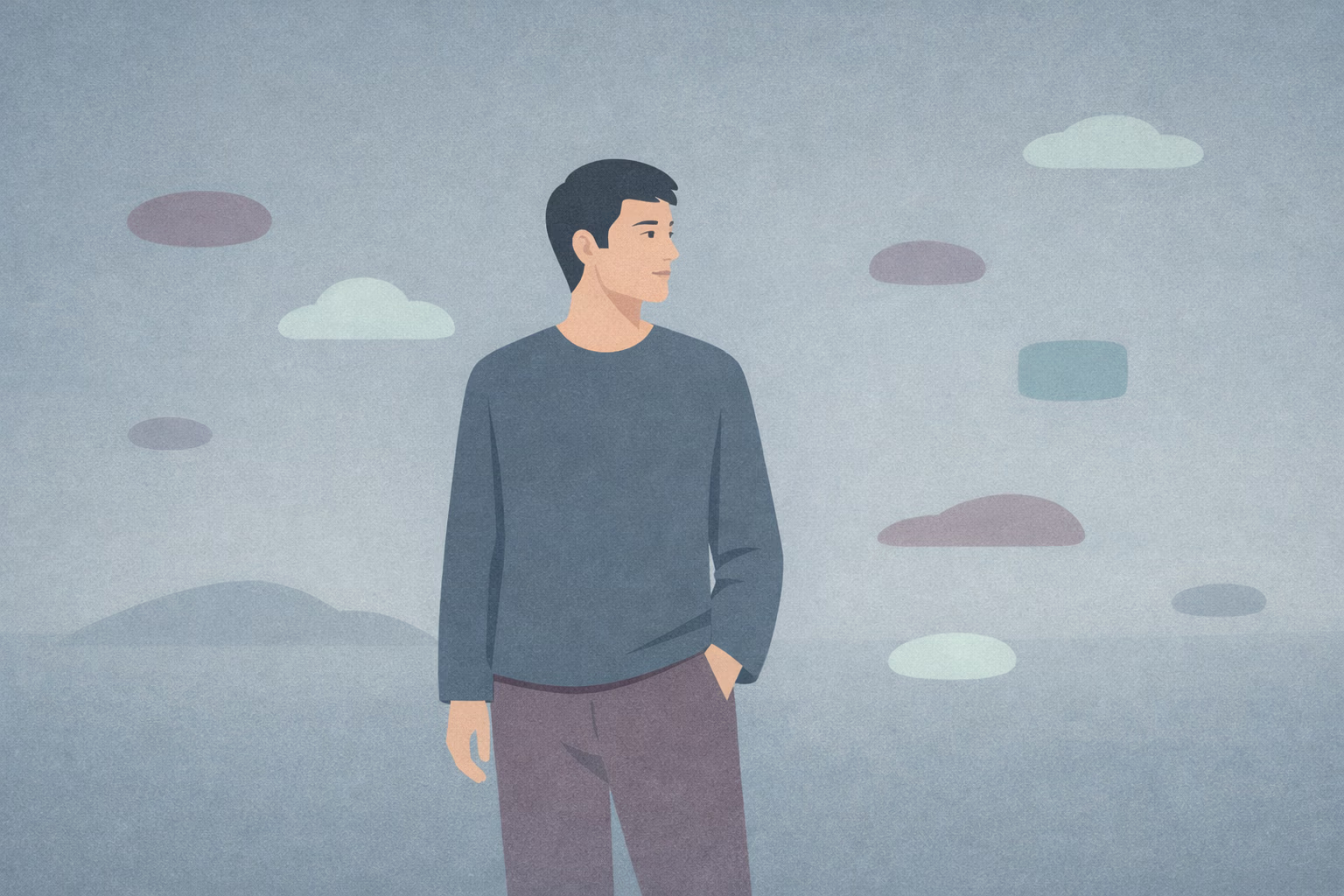
There is a distinct kind of internal settling that can happen when social worth is no longer tethered to being watched, measured, or evaluated. It’s not a pep talk, and it’s not a new interpretation layered on top of the same pressure. It’s a deeper shift where the body stops treating visibility as the main determinant of safety.
When worth is less connected to audience reaction, social presence becomes less like performance and more like participation. The nervous system has less reason to stay on high alert, because the imagined audience loses authority. Research on audience perception and social anxiety reflects how strongly perceived observation shapes internal threat responses. [Ref-10]
When the audience shrinks back to human scale, the body often follows.
Performance asks you to be acceptable at all times. Boundaries create a different structure: they clarify what you will share, where you will show up, and what kinds of contact are genuinely reciprocal. When interaction is grounded this way, it becomes less about continuous approval and more about mutual fit.
This is one reason some relationships feel calmer than others: not because they are perfect, but because they have clearer rules of engagement. In digital spaces, where cues are thinner and evaluation feels constant, boundaries can restore a sense of choice and reduce the sense of being “on stage.” [Ref-11]
What changes when you don’t have to earn your right to be included?
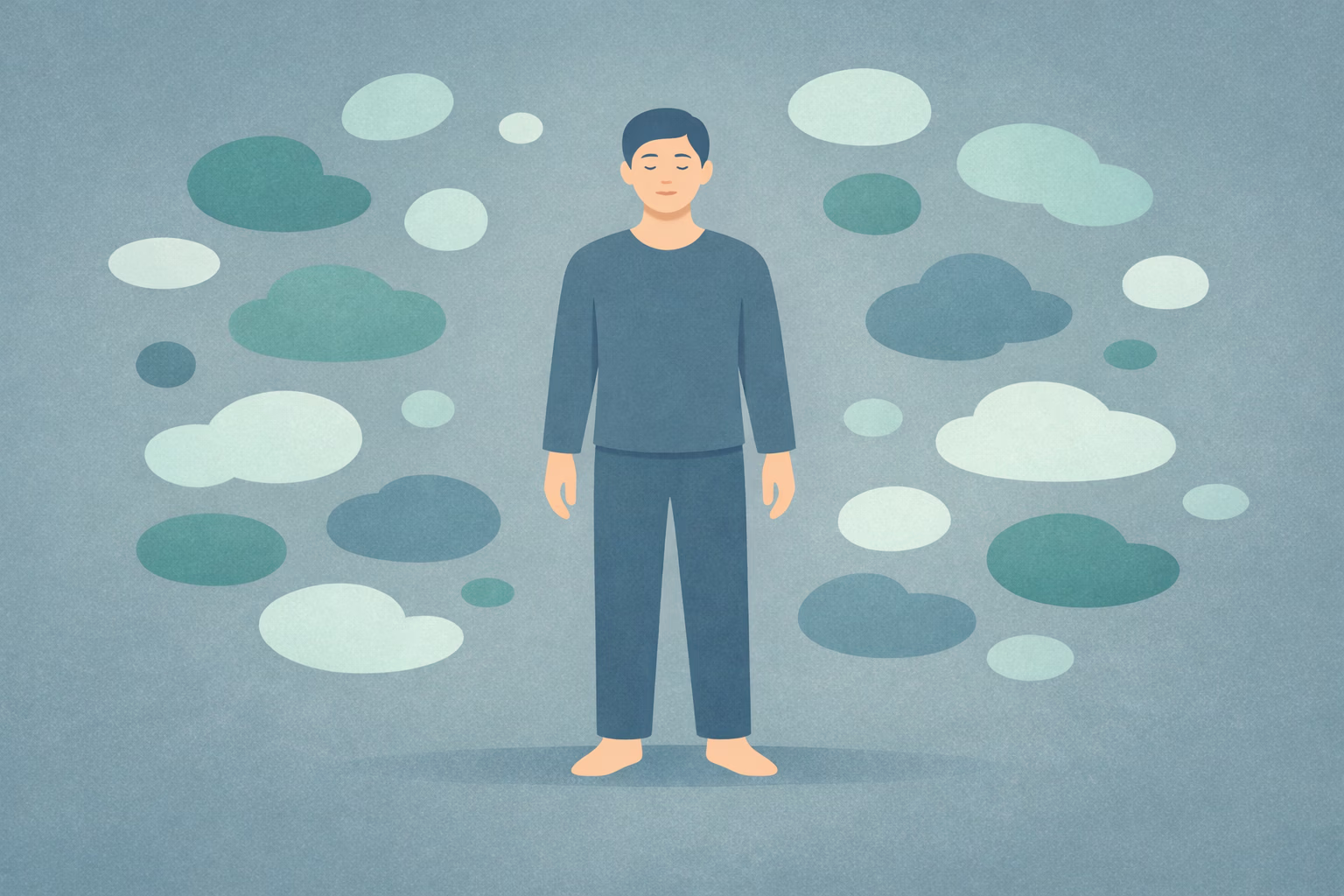
As threat load decreases, people often notice a return of social capacity: more room for curiosity, more tolerance for small awkward moments, and less urgency to control outcomes. This isn’t about becoming fearless; it’s about the nervous system regaining bandwidth.
In that state, interactions can start to complete. Messages get answered without endless checking. Conversations end without lingering replay. Imperfections register as normal instead of catastrophic. This is how regulation looks from the inside: not constant confidence, but a quicker return to baseline after normal social variability. [Ref-12]
When regulation is restored, social life tends to reorganize around meaning. Instead of orienting to metrics and imagined evaluation, the system can orient to values: mutual respect, shared humor, learning, care, honesty, creativity, community. Connection becomes something you participate in, not something you survive.
This is where identity-level coherence grows: your social choices start to “match” who you know yourself to be, and the body experiences that match as steadier. Research links social media use, social anxiety, and loneliness—highlighting how evaluation-heavy contexts can thin the felt sense of connection. [Ref-13]
Coherence doesn’t mean everyone will like you. It means your belonging system isn’t forced to treat every interaction as a referendum on your worth.
Social anxiety in the digital era can be understood as a signal: the belonging system is overloaded by constant visibility, comparison, and unclear endpoints. That signal is not an accusation. It’s information about what your nervous system has been asked to carry. [Ref-14]
When connection is brought back toward human scale—clearer contexts, more reliable cues, less measurement—the system often responds with more steadiness. Agency returns not through pushing harder, but through restoring conditions where social experiences can actually complete.
Feeling anxious about connection is not proof that you’re broken. It’s often what happens when ancient belonging circuitry is placed inside modern environments that rarely allow social experiences to settle.
As comparisons and evaluations lose their grip, many people find that connection becomes simpler: less like being assessed, more like being with. And when social life is guided by meaning—by what matters to you and who you are becoming—stability tends to follow in a way willpower can’t replicate. [Ref-15]
From theory to practice — meaning forms when insight meets action.
Because visibility feels unavoidable: a message can be reread, a post can be shared, a pause can be interpreted, silence can look like a statement. When the nervous system senses exposure without clear safety cues, it increases monitoring. You scan for the right wording, recheck tone, rehearse outcomes. That's not vanity or fragility; it's a protection response under conditions where social consequences feel both amplified and hard to predict. Algorithms distribute content beyond your intention, and platforms attach numbers to reception. When the audience is unclear, the nervous system often prepares for the widest audience it can imagine, which keeps Threat & Safety running.
Because pulling back removes the triggering inputs: fewer ambiguous social cues, fewer chances of visible missteps, fewer interactions to process. The nervous system gets a break from uncertainty, and activation drops quickly. That relief makes sense structurally. But the trade-off is that less exposure also means fewer moments of clean closure — fewer interactions that resolve, repair, or settle into we're okay. Over time, the system can start treating withdrawal as the only dependable safety cue. The strategy reduces discomfort short-term while quietly increasing isolation long-term, because it removes the conditions that help social systems settle through completion.
Through continuous evaluation. Perceived evaluation determines whether you feel safe to be present. When attention and approval seem scarce — or when you can see other people receiving them — status threat triggers easily. The system tightens: performing, perfecting, checking, or withdrawing. The Power Loop reinforces itself because platforms make evaluation continuous and comparison always available. In that state, connection can feel like winning a silent contest you never agreed to enter. Hesitating to post, deleting content shortly after sharing, tracking engagement as a proxy for acceptance — these aren't identities. They're protective movements when belonging feels measurable and precarious.
The body stops treating being watched as the main determinant of safety. Social presence becomes less like performance and more like participation. The nervous system has less reason to stay on high alert because the imagined audience loses authority. When the audience shrinks back to human scale, the body often follows. Boundaries replace performance — clarifying what you'll share, where you'll show up, what kinds of contact are genuinely reciprocal. Interaction becomes about mutual fit rather than continuous approval. Within Loop Sovereignty, social life reorganizes around values: respect, humor, care, creativity. Connection becomes something you participate in, not something you survive.
From Science to Art.
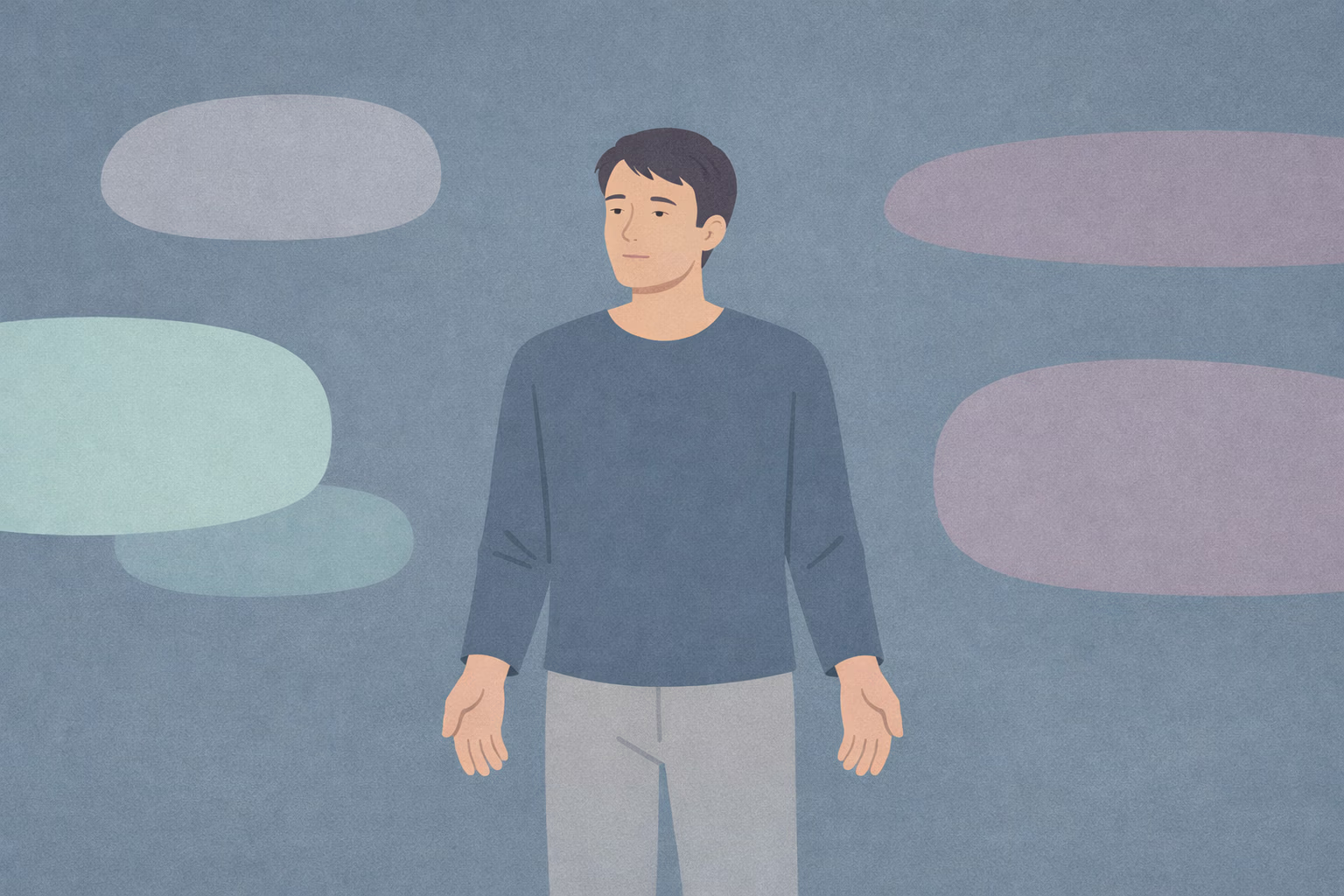
Understanding explains what is happening. Art allows you to feel it—without fixing, judging, or naming. Pause here. Let the images work quietly. Sometimes meaning settles before words do.
One Quiet Window, one insight, one reflection — every Sunday