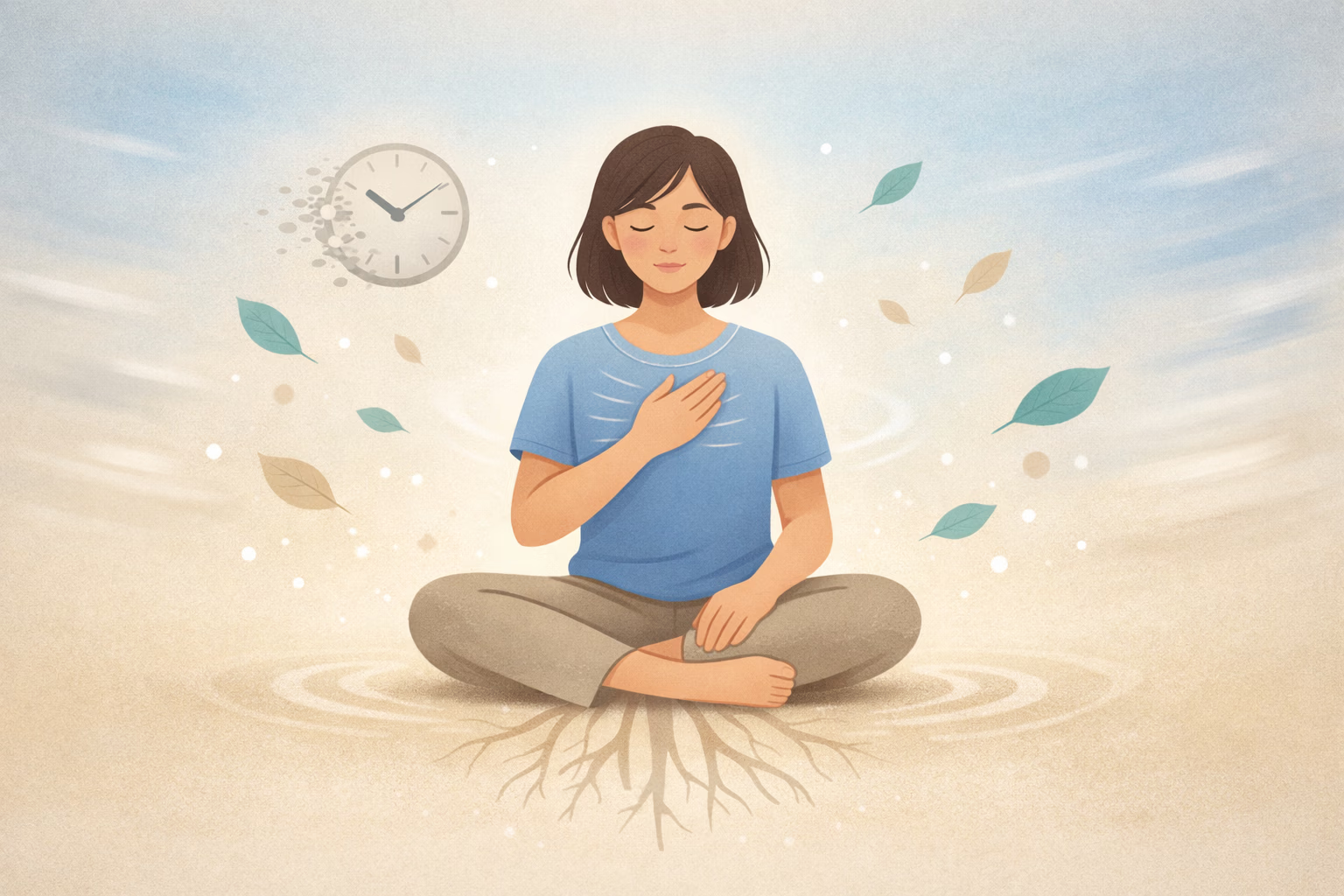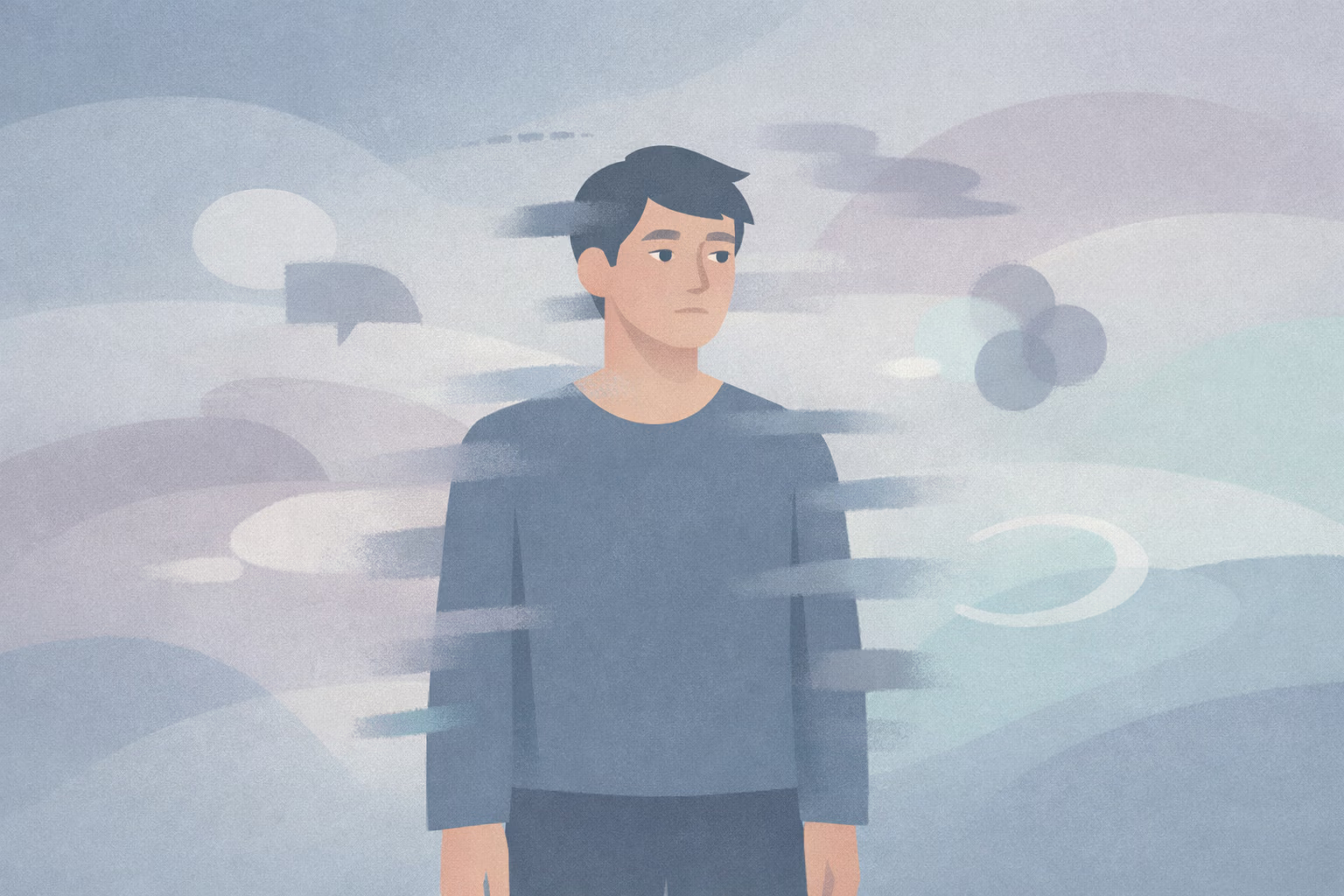
The Modern Attention Crisis: Why You Can't Stay Present
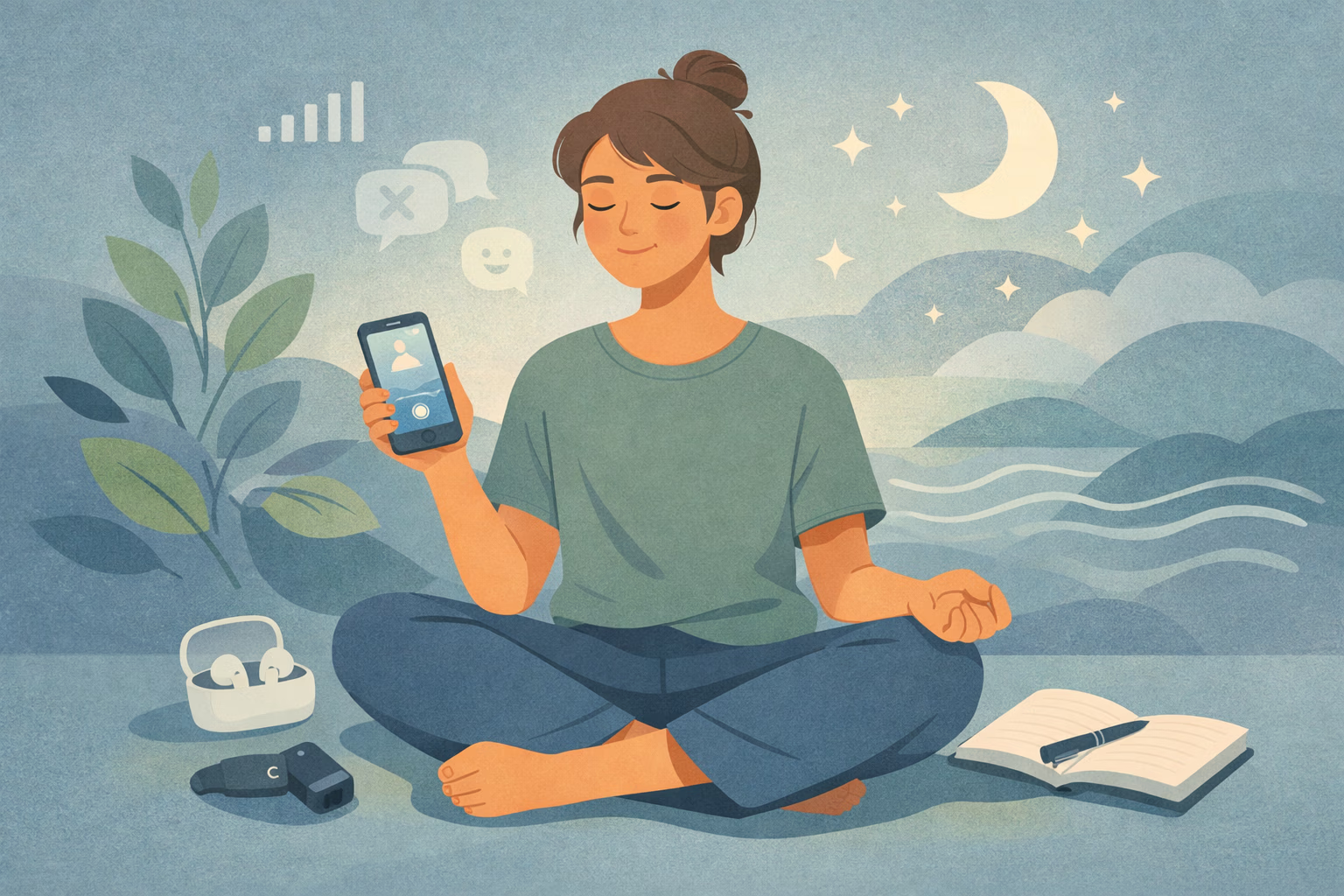
In short: Mindfulness has often been pictured as quiet, solitary, and detached—something you do to calm down, get control, or stop reacting. But many Gen Z adults are engaging mindfulness in a different register: not as an escape from life, but as a way to live inside it with more steadiness and self-recognition.
Mindfulness has often been pictured as quiet, solitary, and detached—something you do to calm down, get control, or stop reacting. But many Gen Z adults are engaging mindfulness in a different register: not as an escape from life, but as a way to live inside it with more steadiness and self-recognition.
What if “mindfulness” is less about becoming blank—and more about becoming coherent?
When modern life is loud, fast, and highly evaluated, the nervous system doesn’t just need relaxation. It needs closure. It needs a sense that experience is landing somewhere: in a story, a value, a community, a “this is who I am and what I’m doing here.” That’s where a lot of Gen Z’s mindfulness style makes sense.
For many people, classic mindfulness cues (silence, stillness, “observe without judgment”) can feel oddly performative when daily life is already saturated with watching, being watched, and self-monitoring. If a person’s environment is constantly scoring their appearance, choices, and tone, then “just sit and notice” may land as yet another arena for evaluation.
Gen Z didn’t invent this tension—but they’re often more explicit about it: a practice that feels like it asks them to become less themselves can read as mismatched, even if the intention is calming. So mindfulness gets reinterpreted as something that should reflect real life, real language, and real identity, rather than an idealized version of serenity. [Ref-1]
Sometimes the problem isn’t that you can’t be still. It’s that stillness gets treated like a test.
Mindfulness works best when it helps the brain and body update what’s happening now—and where it belongs. When experiences don’t “complete,” they can stay semi-active: not dramatic, just unresolved enough to keep background tension running. Coherence is one way the nervous system gets a done-signal.
Practices tied to identity and expression—naming what matters, telling the truth in your own words, connecting sensations to a storyline you recognize—can support regulation because they reduce internal contradiction. This is not about “insight” as a fix. It’s about experiences actually finding a place to land, so the system can stop bracing and start returning capacity.
In this frame, mindfulness isn’t a mood. It’s an organizing process: experience moves from scattered to placed, from raw to located. That shift can feel steadier than trying to force calm. [Ref-2]
Gen Z grew up with high-speed context switching: feeds, group chats, short-form video, public identities that can change overnight, and constant cultural commentary. In a fragmented environment, attention is repeatedly pulled away before experiences finish. The body doesn’t always get the closure cues it needs.
At the same time, social visibility is unusually high. Many ordinary developmental tasks—trying on styles, beliefs, communities—happen with an audience. Under that kind of pressure, meaning and self-definition become more than philosophical interests. They can function as stabilizers: “This is what I’m about” becomes a safety cue that reduces drift and overload. [Ref-3]
In some Gen Z spaces, mindfulness is braided with validation and belonging: “I’m not the only one,” “This makes sense,” “My experience has a name.” That can create immediate relief—not because it solves everything, but because it reduces the strain of carrying an experience alone and undefined.
Relief is not the same as integration. Relief is a state shift; it lowers activation. Integration is what happens when the experience completes and settles into identity-level coherence over time. Still, validation can be a bridge: it softens the system enough for completion to become possible, rather than forcing a person to process life from a clenched place. [Ref-4]
When does “being seen” change your physiology?
Often when it reduces the need to prove, explain, or brace—freeing energy for the nervous system to return to baseline.
There’s a lingering illusion that mindfulness must look calm from the outside: slow breathing, closed eyes, a soft voice. But regulation can also occur through expression, dialogue, movement, and values alignment—especially when the core problem is fragmentation rather than a lack of discipline.
Gen Z tends to treat mindfulness as something portable and culturally fluent: it can live in an app, a playlist, a meme that names a shared reality, or a conversation that finally “clicks.” The point isn’t aesthetics. The point is whether the practice reduces internal splitting and returns the system toward closure. [Ref-5]
Quiet isn’t the only form of settled.
One way to understand this shift is that mindfulness becomes less about controlling the mind and more about restoring orientation. When a person can connect sensations, choices, and relationships to a coherent sense of self, they don’t need as much effort to hold it together.
In that sense, the “practice” is often a loop:
This isn’t a superiority claim. It’s an adaptation to conditions: when the world is fast and ambiguous, meaning can function as a stabilizing structure. [Ref-6]
Because the goal is often coherence, Gen Z mindfulness frequently shows up as everyday practices that create completion—especially practices that connect inner experience to language, community, or values.
These can be regulating not because they are always pleasant, but because they reduce fragmentation and provide “this belongs here” signals. [Ref-7]
From the outside, identity-based mindfulness can be misread as attention-seeking, trend-driven, or unserious—especially when it lives on platforms that also host entertainment and advertising. But dismissal often creates a generational disconnect: it treats the format as the point, rather than asking what nervous system need the format is serving.
When support figures mock or minimize these practices, the result is not just hurt feelings. It can increase fragmentation: a young person learns that their primary pathway to coherence is “cringe,” so they hide it, split it off, or keep it half-formed. That incomplete loop can keep pressure running in the background. [Ref-8]
What gets lost when a regulating practice is ridiculed?
Often: safety cues, belonging cues, and the permission to complete experience in a way that fits the person’s world.
A practice that feels irrelevant rarely gets repeated long enough for completion to occur. Gen Z often sticks with mindfulness when it feels connected to real stressors: identity development, social comparison, climate anxiety, economic uncertainty, relationship complexity, and public selfhood.
When mindfulness is framed as “how you become a better performer,” it can add pressure. When it’s framed as “how you stay connected to what you care about while life is loud,” it becomes more sustaining. Relevance lowers friction; lower friction increases continuity; continuity gives the nervous system repeated chances to find closure. [Ref-9]
In high-pressure environments, many people end up living from constant self-monitoring: checking how they come across, whether they’re falling behind, whether they’re “doing it right.” That stance is understandable—it’s a response to conditions where consequences feel ambiguous and visibility is high.
Mindfulness aligned with personal narrative can create a different internal posture: less scanning for the correct performance, more recognition of what is true and consistent. Self-trust here isn’t confidence-as-attitude; it’s a physiological settling that can emerge when choices, values, and identity stop contradicting each other as often.
Importantly, this is not a matter of reframing or positive thinking. It’s what can happen when repeated experiences complete: “I did what matches me,” “That mattered,” “That chapter has an ending.” Over time, that kind of completion reduces the need for constant internal checking. [Ref-10]
Older mindfulness narratives often emphasize individual practice. Gen Z frequently includes collective forms: mutual aid, group conversations, community grief rituals, coordinated action, and shared language that makes stress legible. This isn’t avoidance of solitude; it’s recognition that humans are social regulators.
Shared meaning can lower nervous system load because it distributes it. When a community names reality together, people spend less energy translating themselves. And when a group moves toward a value (justice, care, protection), it can provide a clear “direction signal,” which is inherently stabilizing. [Ref-11]
Sometimes the calm comes from knowing you’re not carrying it alone.
When mindfulness supports identity rather than flattening it, the shift isn’t necessarily “more feelings.” More often, it’s more return: attention returns more easily, sleep becomes less negotiated, conversations require fewer scripts, and decisions carry less internal argument.
In a media environment that continually pulls the self into comparison and performance, coherence can be quietly radical: the body spends less time preparing for evaluation. This doesn’t remove social media’s impact, but it can change the internal cost of living with it—less whiplash between who you are online and who you are in your own life. [Ref-12]
As experiences complete into identity, choices can become less forceful. Not because life gets easy, but because the internal map gets clearer. Values start acting like guardrails—reducing the number of decisions that require heavy effort or constant renegotiation.
This is one reason Gen Z mindfulness often includes identity expression and digital narrative. When the story of “who I am” is coherent, behavior has a place to land; when it’s fragmented, behavior chases short-term relief. Online identity can complicate this, but it can also be a tool for continuity—an archive of evolving selfhood that helps certain chapters feel real and concluded. [Ref-13]
What changes when a choice matches your values?
Often: the nervous system stops treating it as a debate and starts treating it as a direction.
Gen Z mindfulness is often portrayed as a trend, but it can also be understood as a response to a specific kind of modern strain: high fragmentation, high visibility, and fewer natural endings. In that context, mindfulness that includes language, identity, and belonging isn’t a dilution of “real practice.” It’s an attempt to restore the conditions under which humans regulate in the first place.
When mindfulness becomes a way to build coherence—between nervous system signals, relationships, values, and lived identity—it stops being a performance of calm and starts being a form of orientation. And orientation is one of the most stabilizing things a person can have. [Ref-14]
Every generation inherits different pressures, different tools, and different forms of fragmentation. So mindfulness changes shape. What stays consistent is its deeper function: helping experience complete—so life can feel more unified, more inhabitable, and more aligned with who someone is becoming.
When we view these patterns as regulation responses rather than character traits, there’s less shame in how people seek steadiness—and more respect for the intelligence of the nervous system under modern load. [Ref-15]
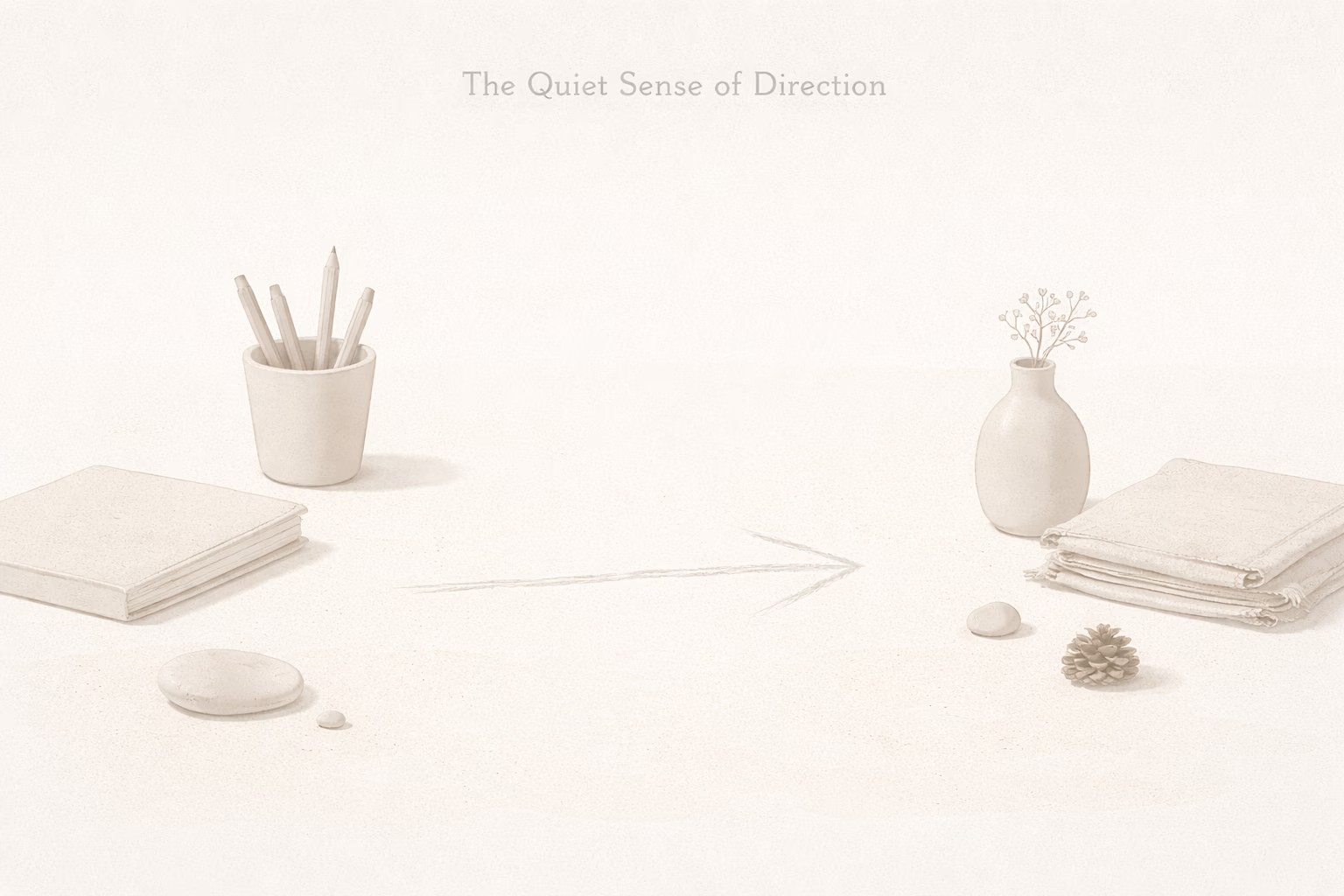
From theory to practice — meaning forms when insight meets action.
Because in a high-visibility world, classic cues — silence, stillness, observe-without-judgment — can feel performative. If daily life already saturates someone with watching, being watched, and self-monitoring, then 'just sit and notice' lands as another arena for evaluation. The problem isn't an inability to be still; it's that stillness gets treated like a test. Gen Z reinterprets mindfulness in their own register because a practice that asks them to become less themselves reads as mismatched, even when calming. Mindfulness gets reshaped to reflect real life, real language, and real identity — not idealized serenity.
It's less about controlling the mind and more about restoring orientation. The loop runs: life creates pressure and scattered signals, a meaning-making channel — words, art, community, cause — gives the experience shape, that shape reinforces identity and direction, and direction reduces drift, which lowers nervous-system load. This isn't about insight as a fix; it's experiences finding a place to land so the system can stop bracing. Coherence is how the body gets a Done Signal in a fragmented world. Mindfulness becomes an organizing process: experience moves from scattered to placed, from raw to located.
Because humans are social regulators, not solo ones. 'I'm not the only one,' 'this makes sense,' 'my experience has a name' creates immediate relief by reducing the strain of carrying experience alone and undefined. Co-regulation functions through the Attachment & Belonging System — when reality gets named together, less energy goes to translating yourself, and the body gets safety cues from being seen. Validation isn't a shortcut; it's a bridge that softens the system enough for completion to become possible, rather than forcing processing from a clenched place. Sometimes calm comes from knowing you're not carrying it alone.
Often portable and culturally fluent, lived through everyday channels that create completion: journaling that turns diffuse days into a narrative with edges, creative expression that gives sensation form, community dialogue that normalizes experience, digital storytelling that organizes identity over time, activism that converts helplessness into directional agency. These regulate not because they're always pleasant but because they reduce fragmentation and provide 'this belongs here' signals. Quiet isn't the only form of settled. When dismissed as shallow, the format gets attacked while the underlying nervous-system function — completion, belonging, coherence — gets missed entirely.
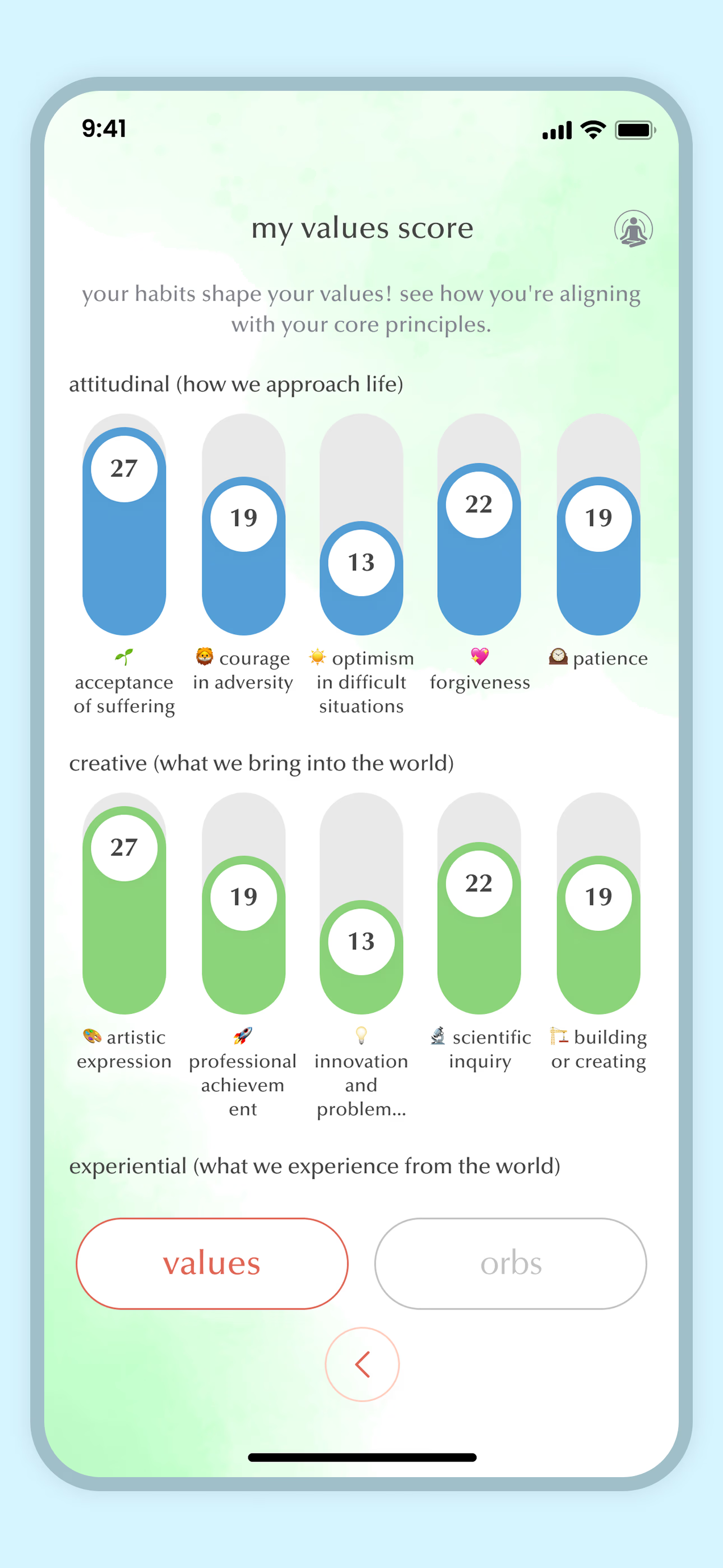
From Science to Art.
Understanding explains what is happening. Art allows you to feel it—without fixing, judging, or naming. Pause here. Let the images work quietly. Sometimes meaning settles before words do.
One Quiet Window, one insight, one reflection — every Sunday