

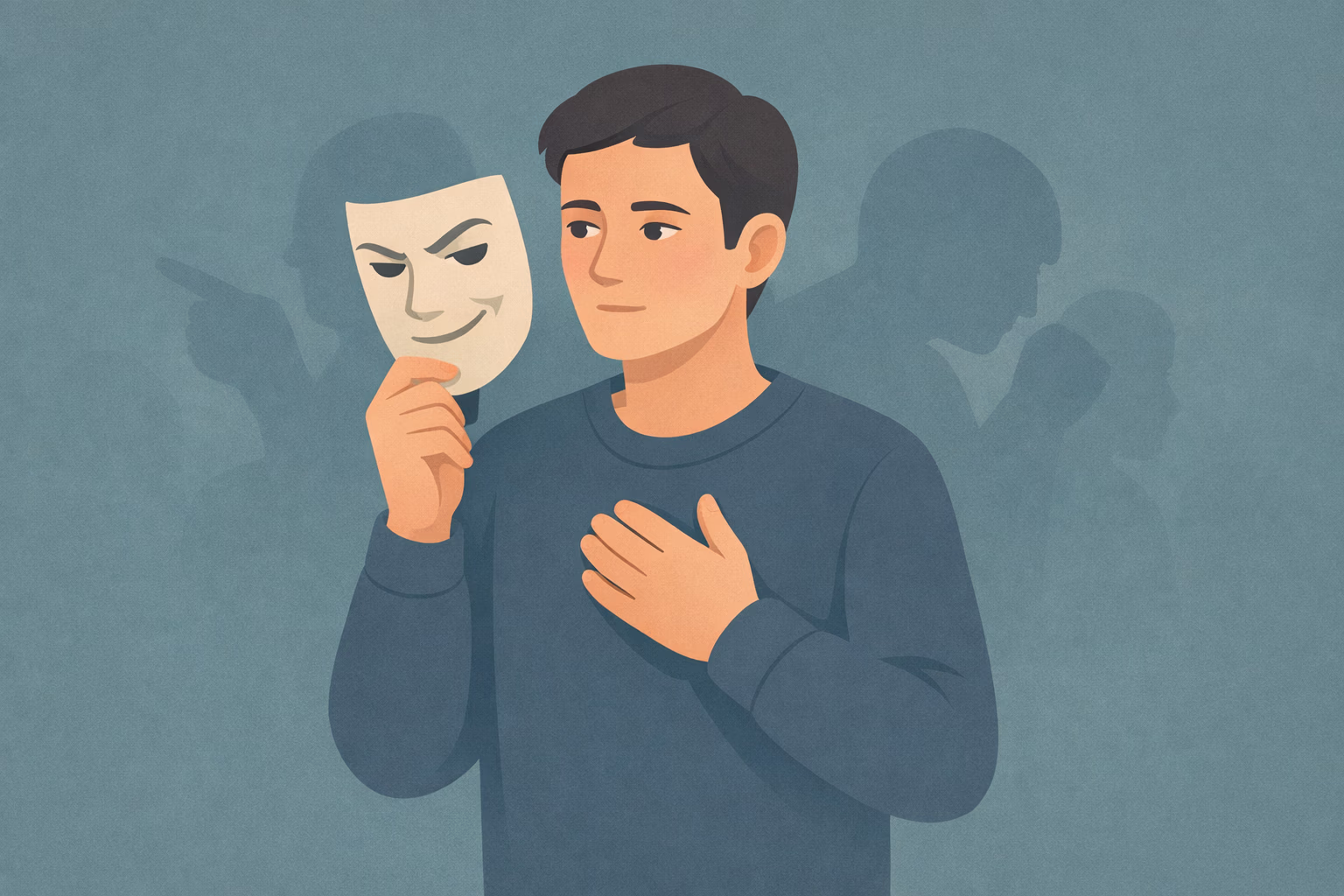
Self-Righteousness and Hidden Insecurity
Understand why self-righteousness often hides insecurity and emotional fear.
In context: This is the experience of “Conditional Approval.“ In this state, your Status & Control system has tethered your safety to your output. Approval is no longer inherent; it must be “earned“ daily.

When approval feels conditional, it hovers just out of reach.
Something always needs to be checked, improved, or proven first.
The body learns to wait for permission that never fully arrives.
Notice how effort increases while relief stays distant.
This is not a flaw in you, but a rule that was learned quietly.
Seeing the condition loosens its grip.
Explore conditional self-worth with DojoWell.
Explore DojowellArticles exploring the psychology behind these patterns.
Understand why self-righteousness often hides insecurity and emotional fear.

Learn how guilt and shame influence decisions and why they evolved as social survival tools.

Discover how to reduce internal noise and reclaim clarity.
This is the experience of "Conditional Approval." In this state, your Status & Control system has tethered your safety to your output. Approval is no longer inherent; it must be "earned" daily. Identifying this pattern helps you realize that the pressure isn't coming from your values, but from a structural glitch that treats your worth as a fluctuating stock price rather than a biological constant.
By practicing "Unproductive Presence." Intentionally spend time doing things that have zero "status value." This proves to your Threat & Safety system that the world doesn't end when you aren't performing. As the system realizes you are still safe even without "achievements," the grip of conditional approval begins to loosen, allowing your identity to settle.
One Quiet Window, one insight, one reflection — every Sunday