


FOMO in a Hyperconnected World
Learn why FOMO exists and how digital overstimulation intensifies it.
In context: This is “call-and-response pressure.“ Your Threat & Safety and Status systems have been conditioned to view every “ping“ as a demand that requires an immediate answer. This creates a state of chronic urgency. Lowering this pressure involves creating “non-response windows“ where you intentionally ignore the call.
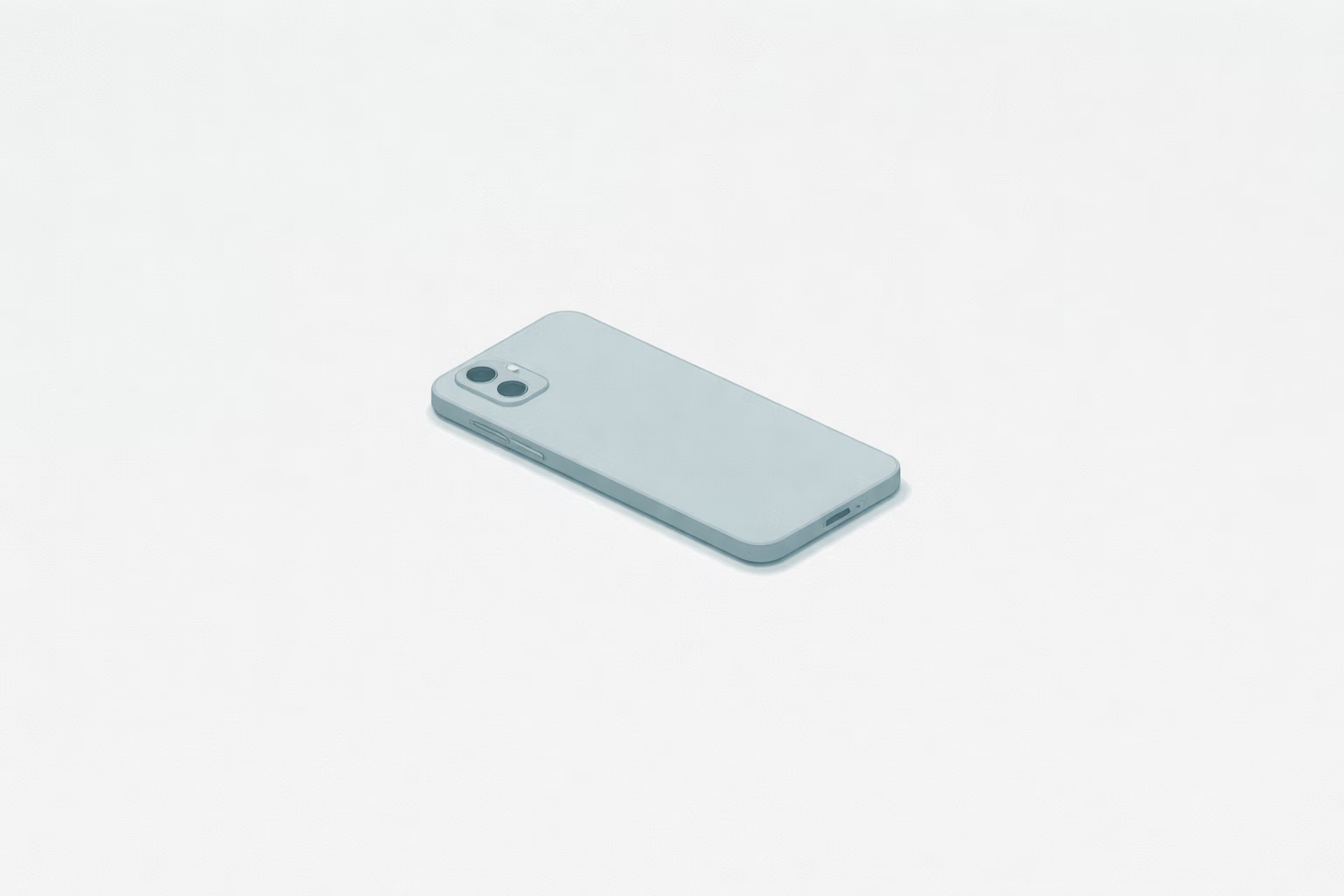
Nothing is calling you right now.
The phone rests quietly, unanswered and intact.
The reflex to respond softens.
Attention remains with the body instead of the signal.
Let the face-down silence be safe.
Reduce response pressure with DojoWell.
Explore DojowellArticles exploring the psychology behind these patterns.
Learn why FOMO exists and how digital overstimulation intensifies it.

Learn why your brain can’t stop doomscrolling.

Learn how notification anticipation creates micro-stress and drains your attention.
This is "call-and-response pressure." Your Threat & Safety and Status systems have been conditioned to view every "ping" as a demand that requires an immediate answer. This creates a state of chronic urgency. Lowering this pressure involves creating "non-response windows" where you intentionally ignore the call. This teaches your nervous system that "not responding" is not a survival threat, eventually easing the compulsive urge to check.
Breaking the cycle requires "loop interruption." By creating physical distance from your devices or setting specific times for checking, you reduce the frequency of the "call." When the call is less frequent, the response reflex begins to weaken. This structural change allows your Reward system to de-activate, moving you from a state of "compulsive reactivity" back into a state of "deliberate agency" over your own time and attention.
One Quiet Window, one insight, one reflection — every Sunday