Identity-Based Wellness: A New Category Is Emerging
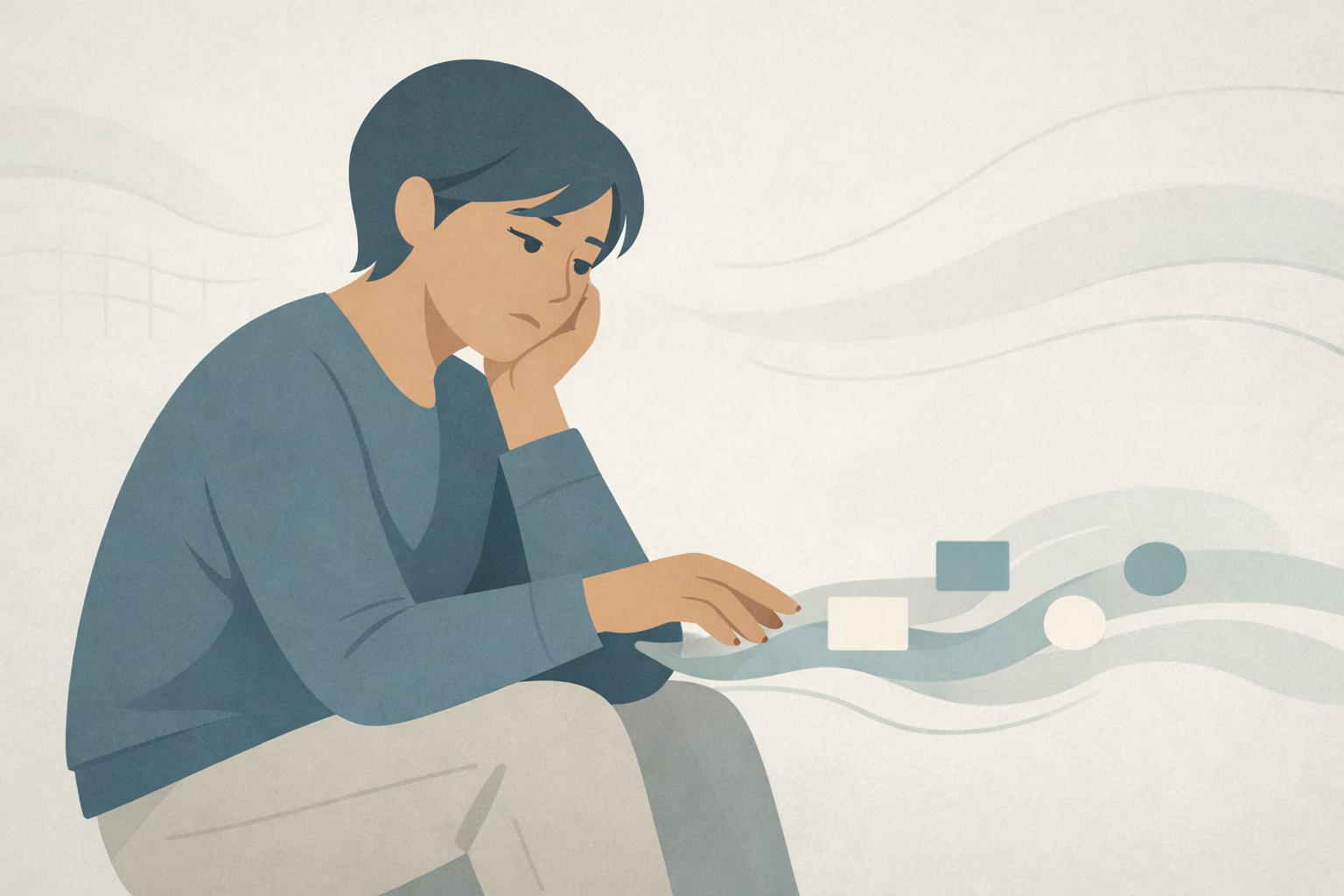
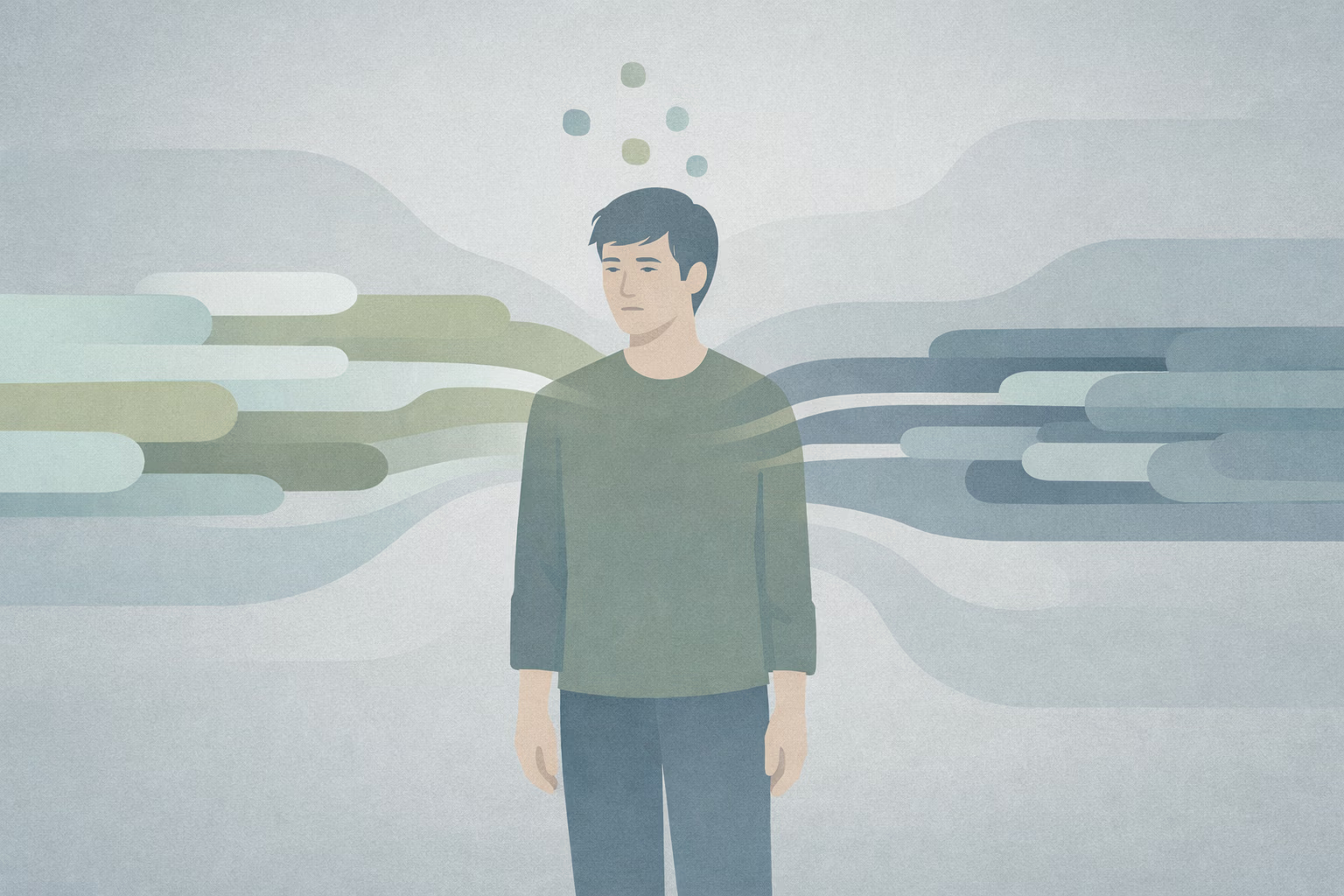
In short: Many people describe a specific kind of unease online: a feeling that their interests, opinions, even their “vibe” are being tugged in a direction that doesn’t fully feel self-chosen. Not in a dramatic way—more like a slow drift.
Many people describe a specific kind of unease online: a feeling that their interests, opinions, even their “vibe” are being tugged in a direction that doesn’t fully feel self-chosen. Not in a dramatic way—more like a slow drift. One day you notice your language has changed, your curiosity has narrowed, and your attention keeps returning to the same few themes.
What if the problem isn’t your self-control, but the environment your nervous system is trying to adapt to?
Algorithmic identity shaping is the process by which recommendation systems influence what you see repeatedly, and therefore what becomes familiar, salient, and easy to return to. Over time, repeated exposure doesn’t just affect behavior; it can start to affect self-concept—what feels “like you,” what feels important, and what feels worth caring about.
Algorithmic influence often announces itself as a bodily sense before it becomes a thought: a tug toward certain topics, aesthetics, conflicts, or identities—followed by a faint sense of “Wait, when did this become my thing?” [Ref-1]
This isn’t a personal flaw or a lack of character. It’s what happens when an external system supplies a steady stream of cues about what to attend to, what to care about, and what to return to next. The nervous system tends to treat repeated cues as meaningful, because in human history repetition often meant relevance: food sources, threats, social norms, belonging.
It can feel like you’re choosing—right up until you notice how predictable the choices have become.
Recommendation systems don’t have to “convince” you of anything to shape you. They work by reinforcing signals: what you pause on, what you replay, what you click, what you comment on. These are treated as identity-relevant data points and fed back as more of the same. [Ref-2]
From a regulation standpoint, this matters because the brain is designed to conserve decision energy. When something is repeatedly presented as relevant, it becomes easier to select again—less effort, less uncertainty, more predictability. Over time, the loop can begin to feel like preference, even when it started as momentary attention.
Importantly, this is not “understanding” changing you. It’s exposure and reinforcement changing what feels normal—and what your system anticipates next.
We are social learners. For most of human evolution, copying the surrounding group increased survival: shared norms reduced conflict, shared practices improved coordination, shared beliefs helped people move together. Digital environments simulate “the room,” but the room is curated. [Ref-3]
When the feed repeatedly shows certain stances, styles, or identities, your system can interpret that repetition as cultural reality: “This is what’s happening,” “This is what people like me do,” “This is what matters.” That doesn’t require deep agreement. It requires ongoing contact.
When a platform is the room, who decides what the room looks like?
There’s a reason personalized feeds can feel relieving. They reduce uncertainty. They offer familiarity. They supply quick “fit” signals: language you recognize, jokes you understand, causes you can name, aesthetics you can adopt. That can create a sense of belonging with very low entry cost. [Ref-4]
For a nervous system carrying high load—stress, isolation, ambiguity—familiarity itself can function like a safety cue. Not because it is objectively safe, but because predictability lowers the amount of scanning required.
The issue isn’t that this is “fake.” The issue is that relief through familiarity can be mistaken for identity stability—before life has actually provided completion and settled coherence.
A common story is: “My feed is showing me what I like.” But over time, what you “like” is partially shaped by what you’ve been repeatedly shown. The system is responsive, yes—but it’s also directional. It selects, amplifies, and repeats. [Ref-5]
This can blur an important boundary: preference versus conditioning. Preference tends to feel spacious and varied; conditioning tends to feel narrow and sticky. When selection is constantly pre-made for you, the nervous system gets fewer chances to generate internal “done” signals—the quiet closure that comes from choosing, finishing, and moving on.
In that context, identity can become less like an inner orientation and more like a trail of reinforced clicks.
This is where “power” becomes relevant—not as conspiracy, but as structure. When an external system continuously shapes what you encounter, it can slowly steer what feels thinkable, desirable, or socially rewarded. That’s a power loop because it operates through environment design rather than direct force. [Ref-6]
In a power loop, the individual is not “weak.” The individual is embedded. The system offers micro-rewards (attention, belonging, certainty) and gradually reduces exposure to competing inputs. The result can be a narrowing of self-definition that feels like self-expression—because it uses your own engagement as the steering wheel.
When the environment is always answering “who are you,” you may not notice how rarely you’re asked from the inside.
Identity shaping is often easiest to spot in small, ordinary shifts. Not because they’re dramatic, but because they repeat—and repetition is how narrowing happens. Filter-bubble dynamics can make the world feel smaller while still feeling intense. [Ref-7]
These are not moral failures. They’re signs that the environment is supplying constant partial loops—never quite completing, always cueing the next hit of relevance.
With prolonged exposure, a person can begin to lose confidence in their own authorship: “Do I actually care about this, or did I learn to care about this?” That uncertainty is not just cognitive; it’s regulatory. It reflects a system that has been repeatedly guided by external cues, with fewer opportunities to experience internal completion. [Ref-8]
Autonomy isn’t merely the ability to choose. It’s the felt sense that choices arise from a stable inner orientation. When inputs are heavily shaped and continuously reinforced, identity flexibility can shrink—less room for contradiction, nuance, or seasonal change. The self becomes a narrower container because the environment rewards consistency and predictability.
In that state, even “taking a break” can feel strangely empty—not because something is wrong with you, but because the nervous system has gotten used to externally supplied direction.
Algorithms learn from engagement, and engagement is often driven by arousal—surprise, outrage, admiration, worry, fascination. The system doesn’t need to understand your deepest values; it only needs to detect what keeps your attention returning. Over time, that creates a feedback loop: you see more of what activates you, and the activation increases the likelihood of further engagement. [Ref-9]
This is one reason identity convergence can happen without conscious intent. The loop is mechanical: repeated exposure increases familiarity; familiarity increases selection; selection trains the system; the system increases exposure. Each cycle subtly reduces contact with disconfirming experiences that might have helped your system reach closure and settle.
If your nervous system is always being activated, when does it get a “done” signal?
There is a difference between “realizing you’re influenced” and regaining authorship. Awareness can be useful, but it isn’t the same as integration. Integration looks more like a physiological settling: fewer internal arguments, less urgency, more capacity for silence without collapse.
When the pace of input slows enough, life can offer something platforms rarely provide: completion. In completion, preferences have time to unfold and end. Interests can ripen, peak, and fade without being constantly re-triggered. That is where intrinsic orientation becomes easier to sense—not as a motivational pep talk, but as a quieter, steadier signal of “this fits.” [Ref-10]
Authorship doesn’t feel like effort. It feels like less interference.
Offline relationships tend to be less compressible than online identity. A feed can reduce you to a profile. A real relationship confronts you with complexity—tone, timing, shared history, repair, and context. That complexity is not just emotional; it’s orienting. It gives the nervous system richer data about who you are across situations.
When a person is socially isolated, algorithmic environments can become a primary source of mirroring—and that increases their shaping power. Research on isolation consistently shows that reduced connection increases vulnerability and load. [Ref-11]
Diverse, embodied relationships also provide natural boundaries and endings: conversations conclude, activities finish, people change topics. Those endings are small closures that help identity remain flexible instead of perpetually activated.
When autonomy returns, it often shows up as a change in texture. Less compulsion. More variety. A wider range of “possible selves” that can coexist without immediate sorting into teams or brands. This isn’t about becoming perfectly independent; it’s about regaining internal authorship as a stable reference point. [Ref-12]
These shifts suggest reduced load and more completion in the system. Not a constant high of freedom—more a steady capacity to return to yourself.
Algorithmic systems tend to reinforce what is legible: what can be categorized, predicted, and re-served. But human identity is larger than what is legible to a recommendation engine. Over time, a values-based identity becomes a kind of internal compass—less dependent on constant external confirmation. [Ref-13]
Values-based self-definition doesn’t mean having perfect clarity. It means your sense of “who I am” is anchored in what you stand for and what you complete in real life—commitments, relationships, craft, care, responsibility—things that create actual endings and therefore actual stability.
When identity is oriented this way, the feed becomes information, not a mirror. It may still influence your attention, but it stops being the primary author of your meaning.
It makes sense to be shaped by what you repeatedly live inside. Algorithmic environments are designed to be immersive, predictive, and hard to exit—not because you’re failing, but because the system is built to keep loops open. That’s not a character issue; it’s an environmental reality. [Ref-14]
When the question shifts from “What’s wrong with me?” to “What has my system been repeatedly trained to rehearse?” shame tends to loosen. And when shame loosens, meaning can re-enter: not as a concept, but as a lived orientation toward what feels coherent, complete, and truly yours.
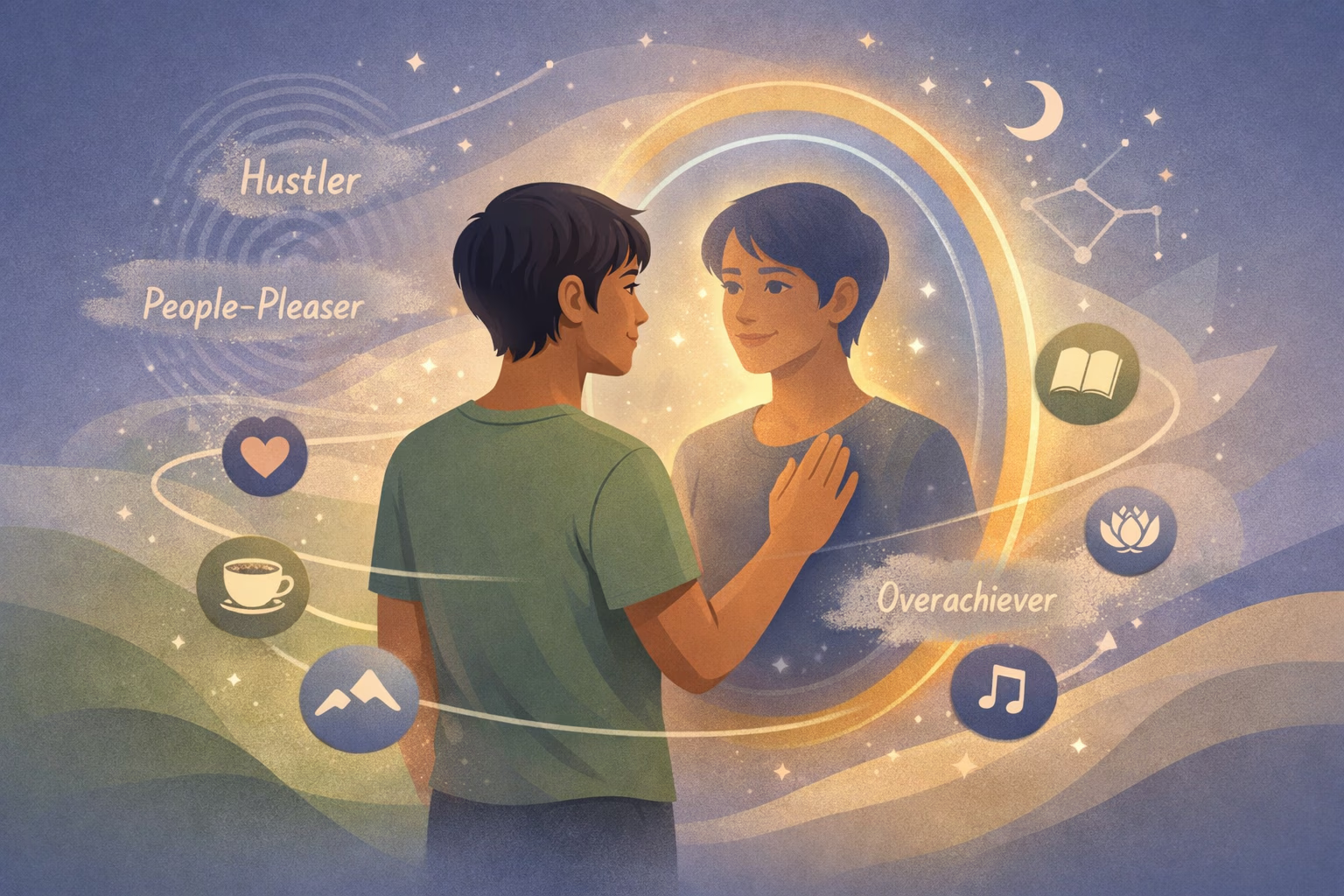
Platforms can be loud mirrors, but they are not your origin. Your nervous system is allowed to want closure, steadiness, and belonging. And your identity is allowed to be more complex than what performs well on a screen.
Over time, stability returns when the self is no longer primarily organized around reinforced signals, but around lived values and completed experiences—when “who you are” becomes something you inhabit, not something you keep proving. Even noticing the shaping can change how strongly you accept it as “you.” [Ref-15]
From theory to practice — meaning forms when insight meets action.
They don't argue or persuade — they repeat. Recommendation systems treat what you pause on, replay, click, or comment on as identity-relevant data, then feed back more of the same. Because the brain conserves decision energy, repeated exposure becomes familiarity, familiarity becomes preference, and preference starts to feel like self. Over time, a Power Loop forms through environment design: the feed selects, amplifies, and repeats until your sense of 'who I am' is partially trained by what you've been shown. It's not weakness; it's a nervous system doing what it evolved to do — copy the room — inside a curated room.
Personalized feeds reduce uncertainty and supply quick fit signals — familiar language, recognizable aesthetics, low-cost belonging. For a system carrying high load, predictability functions like a safety cue to the Threat & Safety System. The trouble is that relief through familiarity gets mistaken for identity stability before life has provided real closure. Algorithmic cues keep the loop partially open, never quite delivering a Done Signal. So the soothing is real, but it's the soothing of constant low-grade activation, not the settled coherence that comes from completed experiences in the world.
Look for narrowing rather than drama. Interests become more specific but less alive — categories instead of curiosities. Language starts sounding templated, as if borrowing a script. Opinions feel urgent, less flexible, more reactive to prompts. Content outside the feed's themes feels irrelevant or oddly irritating. There's less idle attention, more compulsion to stay inside the stream. These aren't moral failures — they're signs the environment is supplying constant partial loops without completion. Meaning Density drops because the system rewards consistency and predictability, leaving less room for contradiction, nuance, or seasonal change in who you are.
Authorship returns through completion, not willpower. When the pace of input slows, preferences get time to unfold and end — interests can ripen, peak, and fade without being constantly re-triggered. Offline relationships help because they're less compressible: tone, timing, repair, and shared history give the nervous system richer data than a profile can. Values-based self-definition becomes the anchor — what you stand for and what you actually complete in real life. The feed becomes information again, not a mirror. Authorship doesn't feel like effort; it feels like less interference, and a steadier capacity to return to yourself.
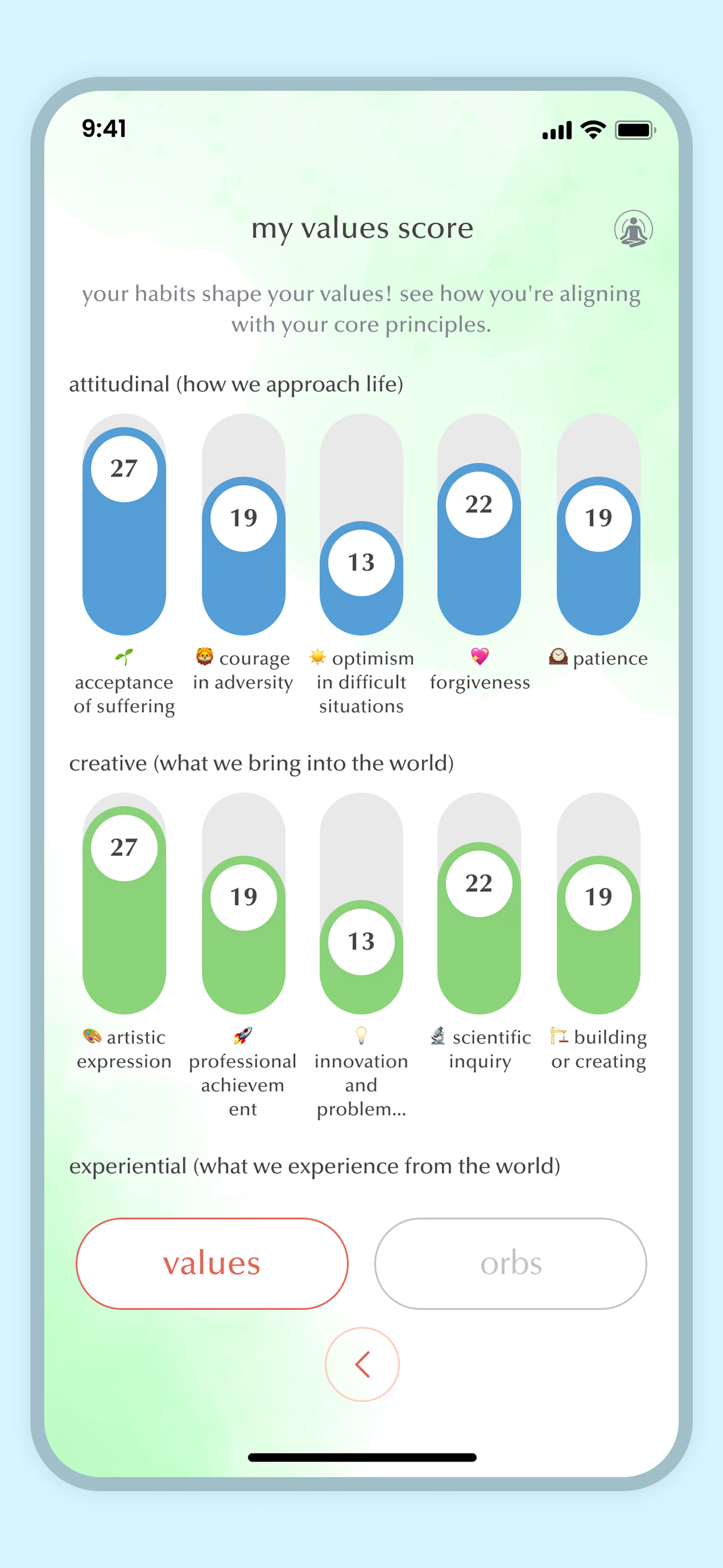
From Science to Art.
Understanding explains what is happening. Art allows you to feel it—without fixing, judging, or naming. Pause here. Let the images work quietly. Sometimes meaning settles before words do.
One Quiet Window, one insight, one reflection — every Sunday