The Economics of Distraction: Why Focus Is Under Attack
In short: Attention extraction is the systematic design of digital environments to capture, retain, and monetize human focus. In plain terms: your attention isn’t just being “engaged”—it’s being measured, packaged, and sold, often by shaping what you see next and when you feel pulled to return.
Attention extraction is the systematic design of digital environments to capture, retain, and monetize human focus. In plain terms: your attention isn’t just being “engaged”—it’s being measured, packaged, and sold, often by shaping what you see next and when you feel pulled to return.
Have you noticed how your mind can feel busy and tired, even when you didn’t do anything “hard”?
This isn’t a moral story about discipline. It’s a biological story about nervous systems that seek closure and safety cues—and about modern systems that interrupt completion, keep loops open, and reward ongoing activation.
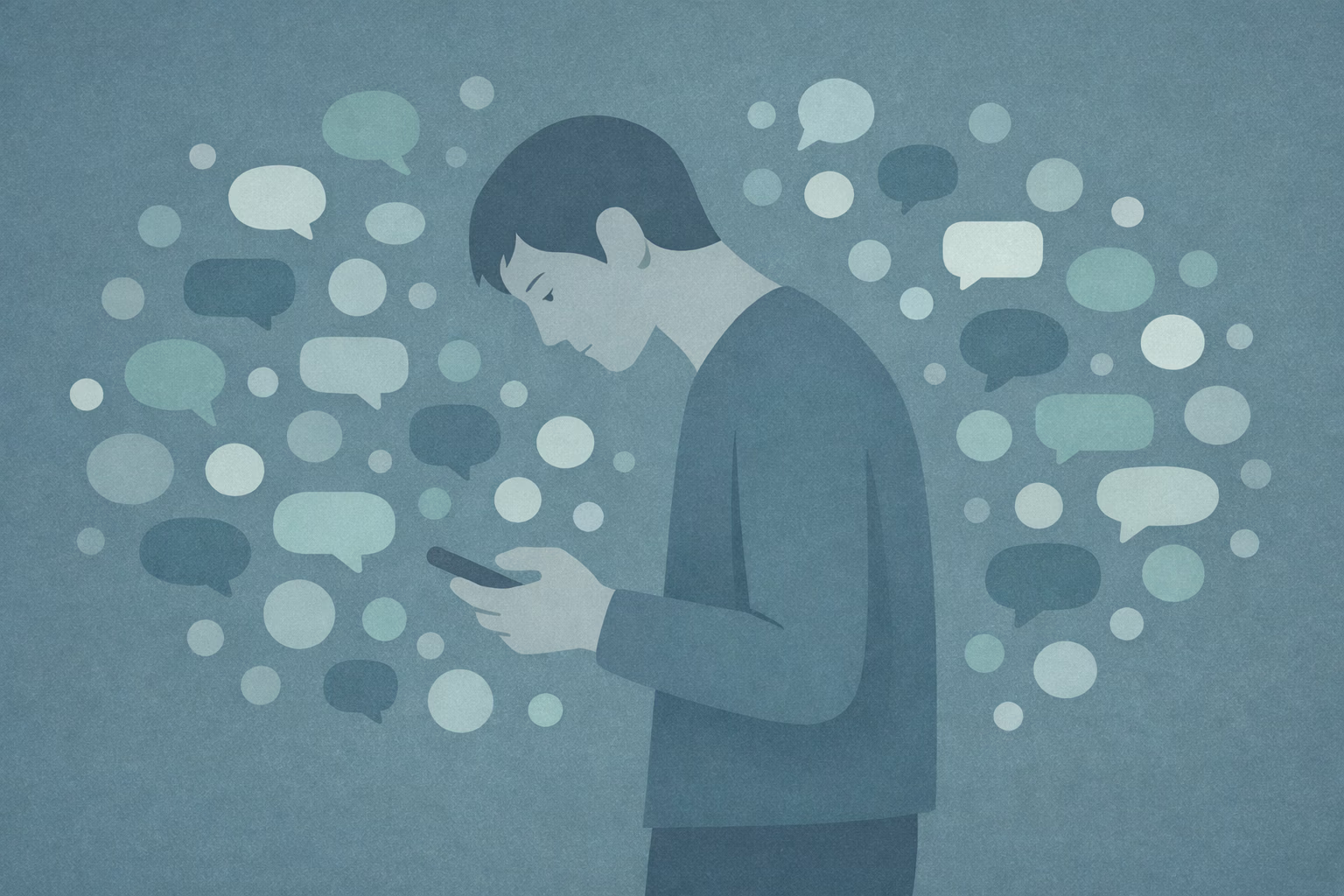
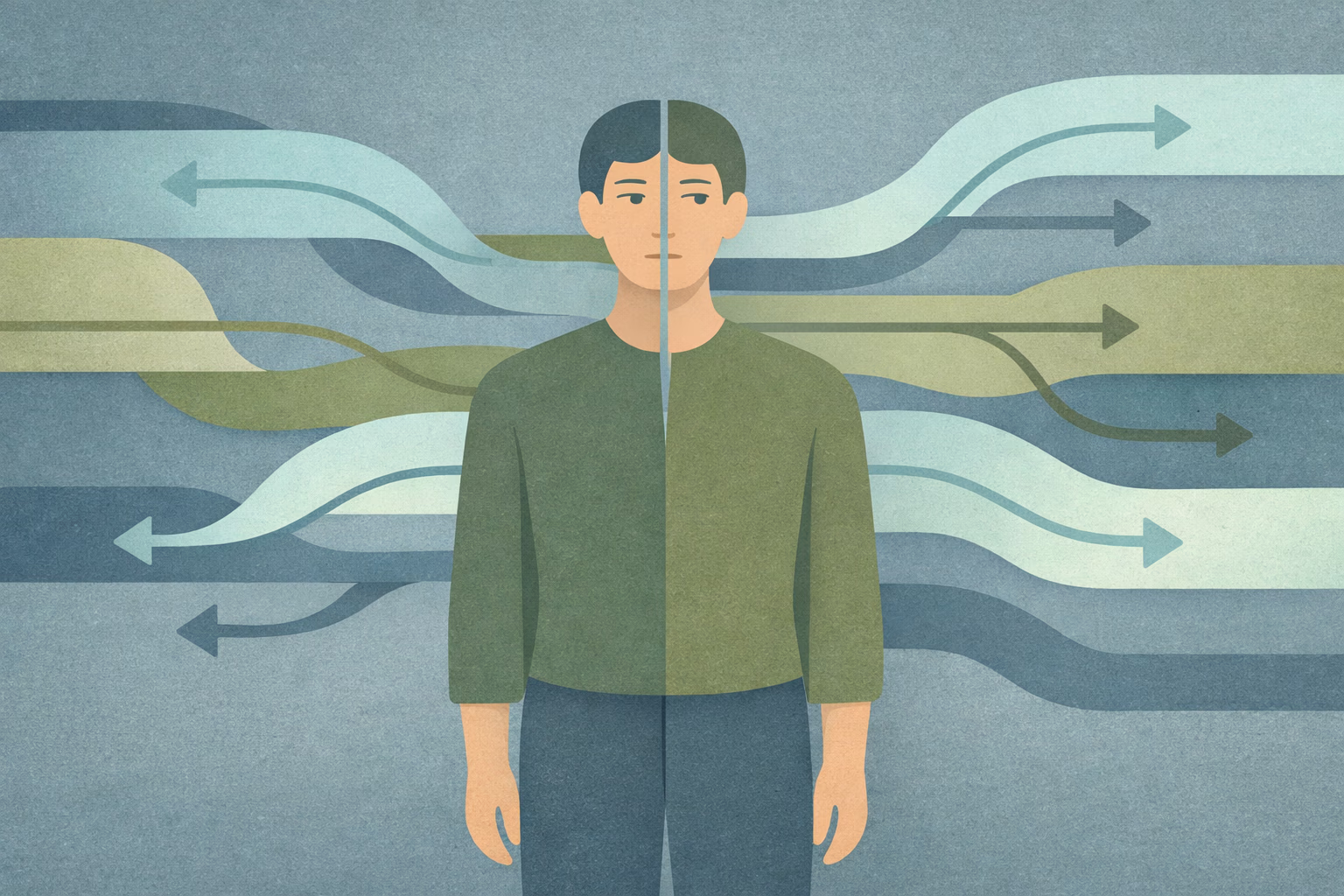
Fragmented attention often feels like a subtle internal scattering: you sit down to do something, and within minutes there’s an urge to check, switch, refresh, or scan. The result isn’t only lost time—it’s a specific kind of mental fatigue that comes from repeatedly re-orienting.
Attention is not just a “spotlight” you control. It’s also a regulatory function: it helps the nervous system decide what matters, what is safe, and what needs to be completed. When attention is constantly redirected, the body can stay in a low-grade readiness state, because nothing fully resolves. [Ref-1]
It can feel like you’re always starting, rarely finishing—and your mind never gets the “done” signal.
Most large platforms are built around engagement: clicks, watch time, comments, shares, opens, returns. Algorithms learn which cues reliably keep people interacting, and they adjust the feed to maximize those signals—not to maximize your clarity, rest, or meaning. [Ref-2]
To the nervous system, many of these cues look like high-priority information: novelty, social feedback, uncertainty, and intermittent rewards. Variable reinforcement (sometimes there’s something interesting, sometimes not) is especially sticky because it keeps the orienting system online, scanning for the next hit of relevance.
This can create the feeling of being “pulled” even without conscious intention. Not because you’re weak—because the environment is engineered to keep the loop open.
Humans evolved to track status, belonging, and changes in the environment because those signals affected survival. Novelty helped us learn. Social information helped us stay included. Uncertainty kept us vigilant. Those tendencies aren’t defects—they’re features of a social species.
Digital platforms amplify these systems by delivering rapid, continuous micro-signals: updates, reactions, trending topics, new posts, new threats, new jokes, new comparisons. The pace matters. When inputs arrive faster than the system can complete and integrate them, attention becomes a perpetual triage operation rather than a path to closure. [Ref-3]
In that state, “more information” can paradoxically produce less orientation, because the nervous system never gets to settle what anything means for your life.
It’s important to name what works about it. Platforms can offer stimulation, novelty, and a sense of connection. They can provide small moments of relief from monotony, isolation, or uncertainty—sometimes with genuine community and real care. [Ref-4]
In the moment, this can feel like regulation: a quick shift in state, a brief sense of being “in the know,” a little social warmth, a tiny completion (a message answered, a post liked). Those are not imaginary benefits.
And because the nervous system learns from what changes state quickly, it’s unsurprising that the pull strengthens over time—especially when other sources of closure and belonging are scarce or interrupted.
One of the hardest parts is that busy attention can resemble a meaningful life. A full feed can mimic a full day. Many small interactions can mimic connection. Constant updates can mimic competence and control.
But meaning tends to require completion: experiences that land, cohere, and become part of lived identity. When attention is repeatedly split, experiences remain partially processed—half-read, half-felt, half-finished—so the nervous system doesn’t get the settling that usually follows real completion.
Over time, this can look like depleted focus and reduced cognitive depth: it’s harder to stay with a thought long enough for it to become yours, rather than something you briefly reacted to. The environment becomes an “architecture of control” in the sense that it shapes what gets finished and what stays unfinished. [Ref-5]
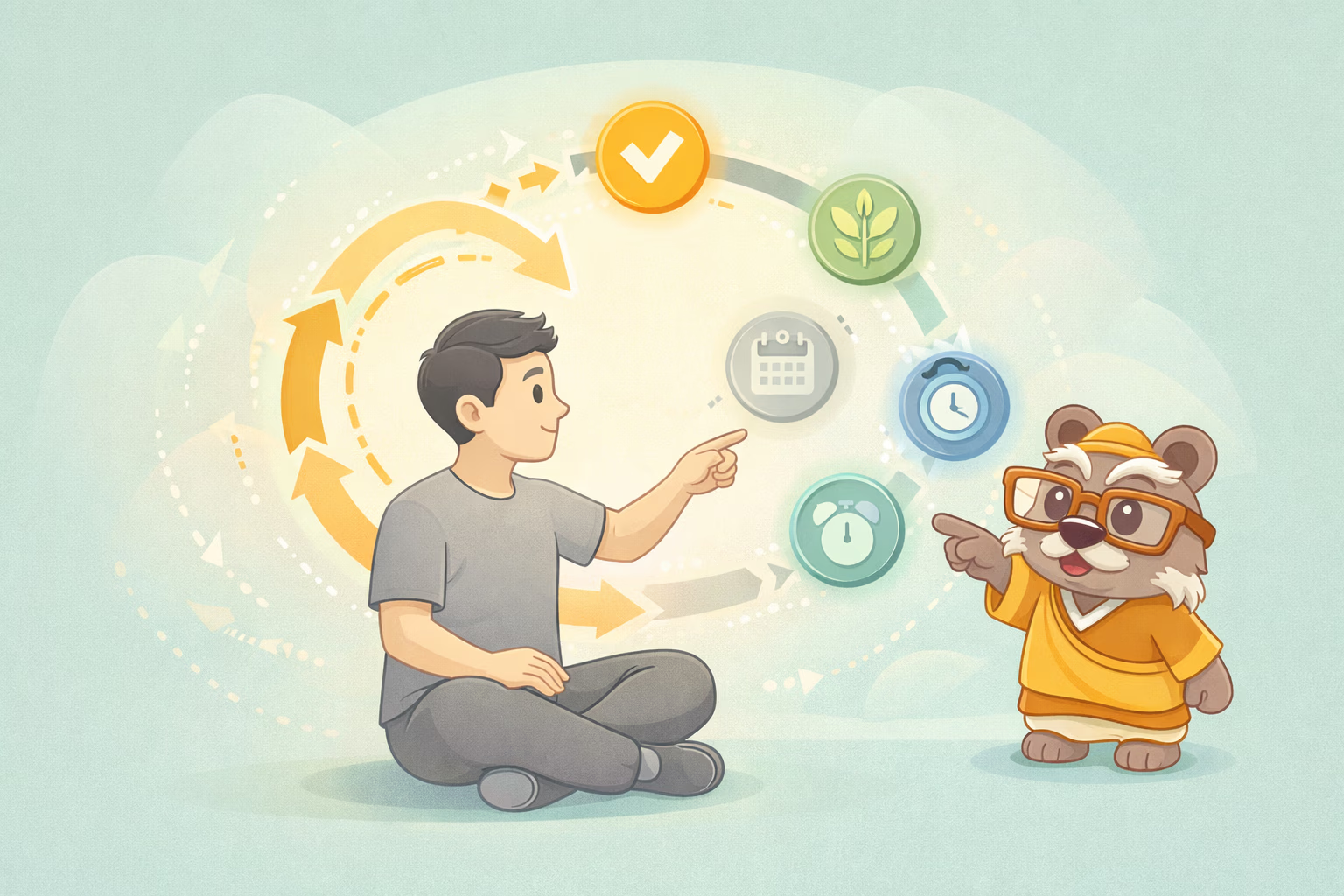
Attention extraction often runs on a predictable loop: novelty appears, the nervous system orients, a reward signal spikes, and engagement continues. The reward isn’t only pleasure; it can also be relief, reassurance, or a temporary sense of control.
But the loop is structured to continue, not to complete. The feed doesn’t end. The next video queues. Notifications create new starts. When the system doesn’t reach a natural stopping point, the body has fewer chances to downshift into a stand-down state.
Over time, the loop can trade stability for stimulation: the nervous system becomes practiced at seeking the next cue, and less practiced at staying with one thread long enough for closure. [Ref-6]
People often describe the same cluster of experiences: not dramatic, but persistent. These aren’t identities. They’re regulatory responses in a high-cue environment that keeps offering incomplete loops.
Social validation cues can intensify the loop by attaching attention to belonging and status signals—likes, replies, views, streaks. That doesn’t mean you’re vain; it means your social nervous system is being recruited as fuel. [Ref-7]
When attention is repeatedly recruited by external cues, the system can adapt in a way that makes internal direction harder to access. Not because insight is missing, but because the signal-to-noise ratio changes: the loudest cues win, and quieter cues (values, priorities, bodily limits) return more faintly.
Research models of social media engagement describe learning dynamics that reinforce checking and staying behaviors through reward prediction and feedback, which can strengthen habitual engagement patterns over time. [Ref-8]
The lived experience can be a reduced capacity for sustained thought or reflection—not as a character issue, but as an attentional ecology issue. The mind becomes very good at orienting, very practiced at responding, and less resourced for integration-level settling.
On the platform side, engagement metrics are business metrics. If a design change increases time-on-platform or return frequency, it tends to be reinforced. This creates a selection pressure toward features that generate more checking, more scrolling, more urgency, and more emotional reactivity.
That pressure doesn’t require malicious intent to have real effects. It’s a system dynamic: what is rewarded is repeated. And what is repeated becomes normalized—until constant partial attention starts to feel like the baseline.
When algorithms amplify the most attention-grabbing material, the environment can become increasingly optimized for capture rather than comprehension. [Ref-9]
There’s a common trap in modern wellness talk: the idea that if you “notice” a pattern, you’ve already resolved it. Noticing can create a gap, but it doesn’t automatically create closure. Integration is what happens when the nervous system actually stands down—when an experience completes enough to stop recruiting attention.
Still, it matters to name what’s occurring: an attentional pull is often a state signal, not a preference. It can be the body reaching for relief, stimulation, or social safety cues in a context of load. In that frame, reclaiming choice is less about willpower and more about restoring conditions where choice can be felt as real. [Ref-10]
What if the problem isn’t that you “can’t focus,” but that your focus is being continuously auctioned?
Algorithmic environments are rich in cues but often thin in completion. By contrast, many real-world interactions offer endings: a conversation that resolves, a shared meal that concludes, a task that has a visible finish, a walk that returns you home.
This matters physiologically. Completion provides a safety cue to the nervous system: the loop ran, landed, and ended. That stand-down signal supports coherence, because the brain can file the experience as “done” rather than “still pending.”
Meaningful interaction—being with someone, making something, tending to a space—often carries more closure than endless engagement because it leaves a trace in identity: not just “I consumed,” but “I participated.” Even discussions of the attention economy acknowledge how focus is monetized in ways that can crowd out this kind of presence. [Ref-11]
Over time, chronic extraction can shrink the felt sense of agency: not because agency disappears, but because attention is repeatedly assigned before you choose. The default becomes reaction. The day becomes a series of externally prompted orientations.
A different structure is possible in principle: attention that follows values, not only cues. This is not a motivational upgrade; it’s an ecological change in what gets to initiate your next moment. When attention becomes self-directed, it tends to produce fewer open loops, because it’s anchored in what matters and can reach completion.
In economic terms, platforms benefit when attention stays captured; in human terms, identity benefits when attention can return to what you recognize as yours. [Ref-12]
When attention is treated like a commodity, it gets managed for extraction: more impressions, more time, more returns. When attention is treated like a personal resource, it gets respected as the pathway through which a life becomes coherent.
Coherence doesn’t mean a perfectly quiet mind. It means your experiences have enough completion that you can feel where you are, what you’re doing, and why it belongs to you. That’s the opposite of being endlessly recruited into someone else’s priorities.
In that sense, “recovery” is not a dramatic transformation. It’s a gradual restoration of capacity: the ability to stay with fewer things, long enough for them to resolve—and to let your nervous system receive the signal that it can stand down. [Ref-13]
Attention is the doorway through which your days become your story. When it’s fragmented, life can feel oddly unfinished—even if you were busy the whole time. When it’s protected by conditions that allow completion, the same life can feel more inhabitable.
In a world designed to monetize focus, it can be grounding to remember that attention naturally wants to organize around meaning: what you care about, what you’re responsible for, what you belong to. That orientation isn’t a performance. It’s a nervous-system need for coherence and closure. [Ref-14]
Your attention is not just what you look at. It’s what you’re building a life out of.
When attention is continuously extracted, many people assume the problem is inside them. A more humane understanding is that your system is responding to relentless cues, open loops, and missing endings.
As coherence returns, it often feels less like “trying harder” and more like regaining the ability to finish a thought, stay with a moment, and let it settle into identity as something completed. In that settling, autonomy becomes less of an idea and more of a lived condition: your focus returns to you. [Ref-15]
From theory to practice — meaning forms when insight meets action.
Because attention isn't just a spotlight you control — it's a regulatory function that helps the nervous system decide what matters and what needs closure. When feeds keep pulling you to switch, refresh, and re-orient, nothing fully resolves. The body stays in a low-grade readiness state because every loop is left open. That's a specific kind of fatigue: not from effort, but from continuous re-orienting without completion. The exhaustion you feel is the cost of an environment engineered to keep the Pleasure Loop running, denying your system the Done Signal it's actually looking for.
Algorithms don't understand you — they optimize for engagement signals like clicks, watch time, and returns. To your nervous system, the cues they amplify look like high-priority information: novelty, social feedback, uncertainty, intermittent rewards. Variable reinforcement is especially sticky because sometimes there's something interesting and sometimes not, which keeps the orienting system online and scanning. The pull you feel isn't weakness; it's the predictable result of ancient survival systems (status, belonging, novelty) being amplified by modern speed and packaged as a continuous feed with no natural endings.
More often, it's a regulatory response to the environment, not a deficit in you. Compulsive checking, reflexive app-switching, reaching for the phone during micro-pauses, and restlessness when nothing is happening are common signs of attention extraction — not personal symptoms. Social validation cues recruit the social nervous system as fuel, which is why streaks, likes, and replies feel urgent. The article frames this clearly: your focus is being continuously auctioned. That doesn't mean you can't focus; it means you're operating in a context optimized for capture rather than comprehension.
Meaningful engagement completes; algorithmic engagement continues. A conversation resolves, a meal concludes, a walk returns you home — these provide a stand-down signal to the nervous system: the loop ran, landed, ended. Feeds are structured to never end. The next video queues, notifications create new starts, and experiences stay half-processed. Over time, this trades stability for stimulation. Reclaiming attention isn't about willpower or intensity; it's about coherence — staying with fewer things long enough for them to settle into identity as something you participated in, rather than something you briefly reacted to.
From Science to Art.
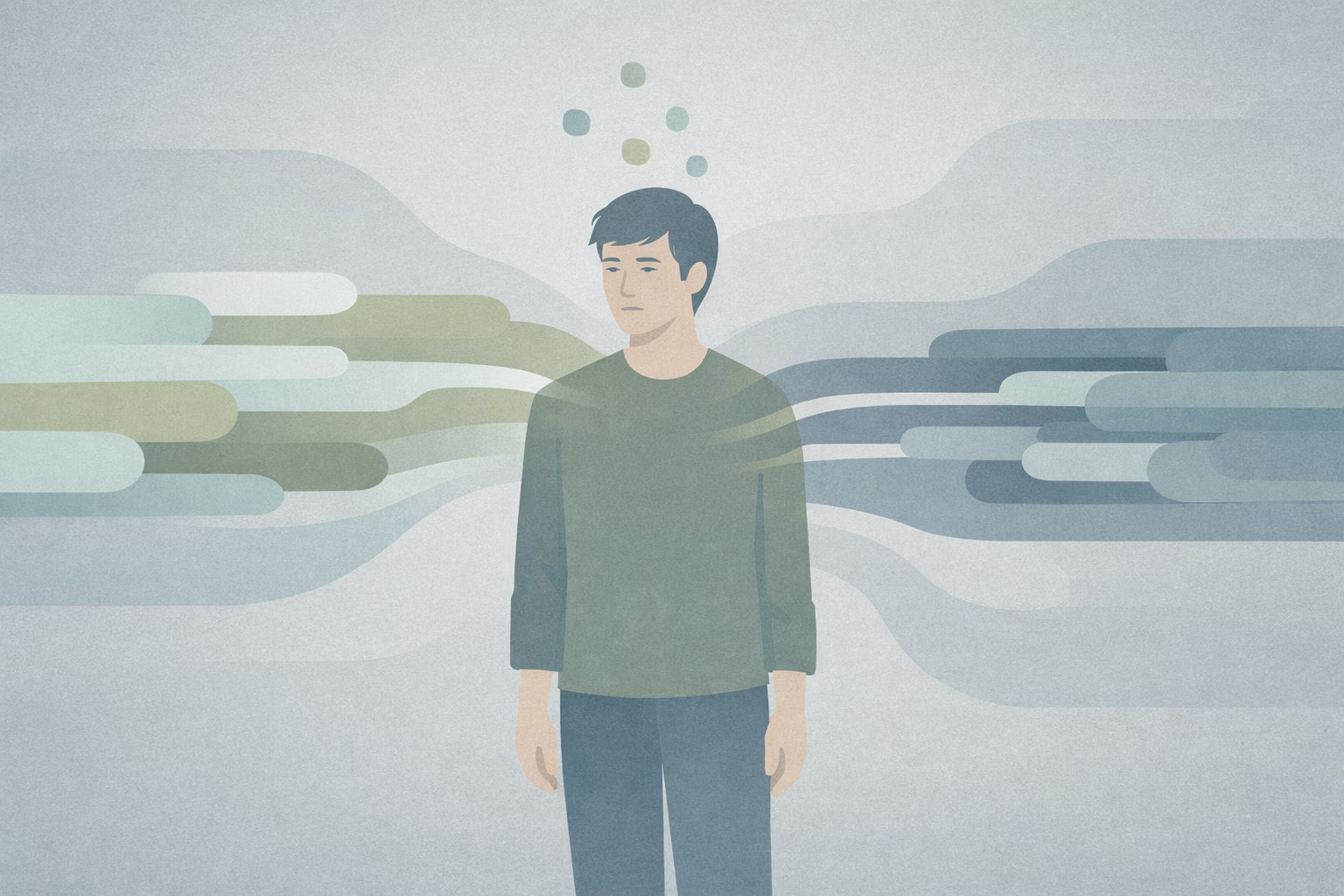
Understanding explains what is happening. Art allows you to feel it—without fixing, judging, or naming. Pause here. Let the images work quietly. Sometimes meaning settles before words do.
One Quiet Window, one insight, one reflection — every Sunday