The Modern Attention Crisis: Why You Can't Stay Present
In short: Many people describe the same strange modern feeling: you sit down to think, read, work, or rest—and your attention behaves like it belongs to someone else. Not because you’re “undisciplined,” but because you’re living inside an economy that treats attention as a resource to capture, extend, and sell.
Many people describe the same strange modern feeling: you sit down to think, read, work, or rest—and your attention behaves like it belongs to someone else. Not because you’re “undisciplined,” but because you’re living inside an economy that treats attention as a resource to capture, extend, and sell.
In that environment, focus stops being a private inner capacity and starts functioning like a contested space. Your nervous system is continuously asked to reorient, evaluate, respond, and stay available—often without closure.
What if your difficulty focusing is less about willpower, and more about being repeatedly pulled out of completion?
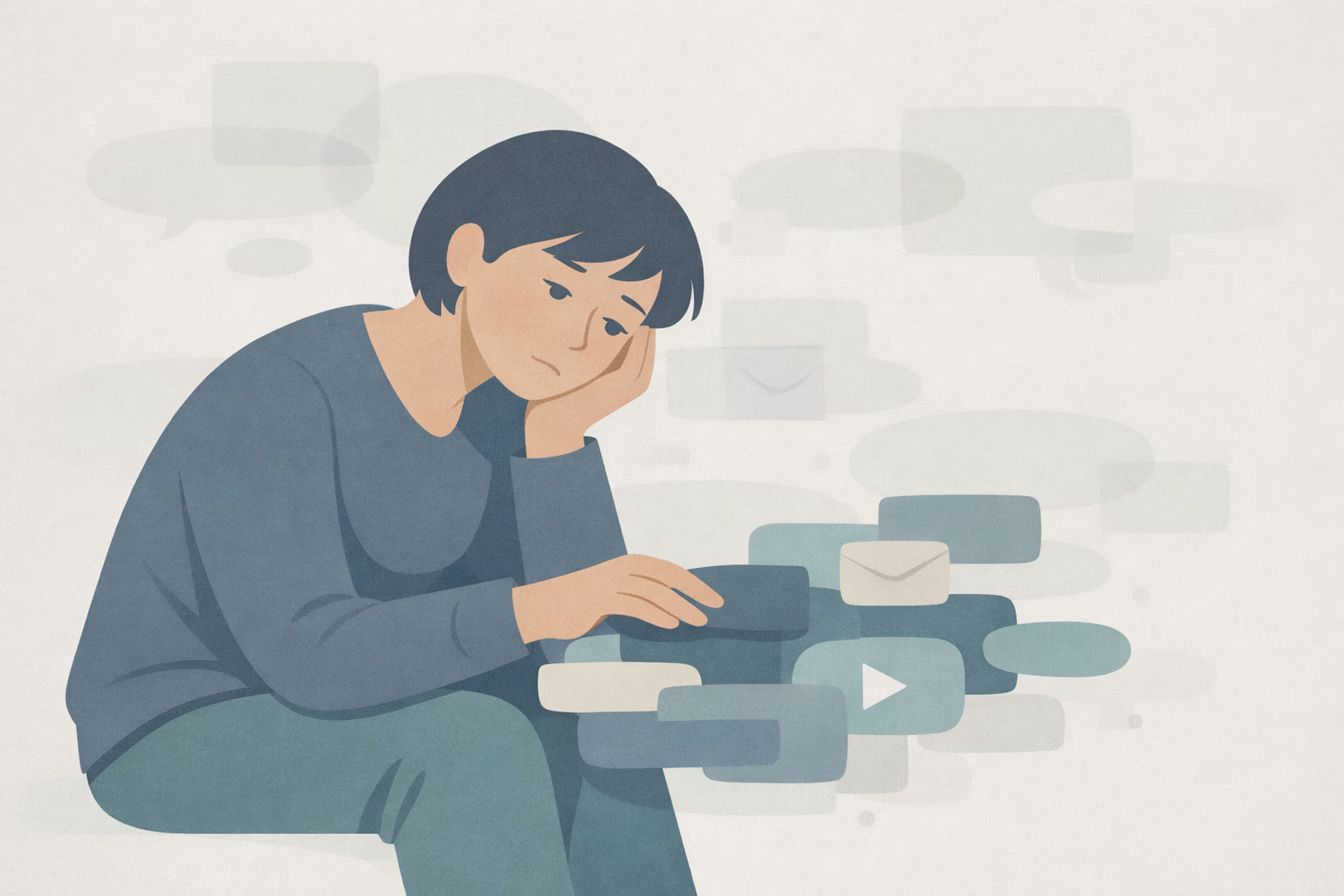
Fragmented attention often shows up as a very specific kind of fatigue: not just “tired,” but mentally scattered—like your mind keeps resetting before anything can land. You may notice irritation at small interruptions, trouble tracking what you were doing, or a vague sense of being behind even when you’ve been busy all day. [Ref-1]
This isn’t a character statement. It’s a load problem. Each interruption asks your brain to switch context, rebuild the thread, and re-establish what matters. When that happens repeatedly, the system spends more energy on reorientation than on completion.
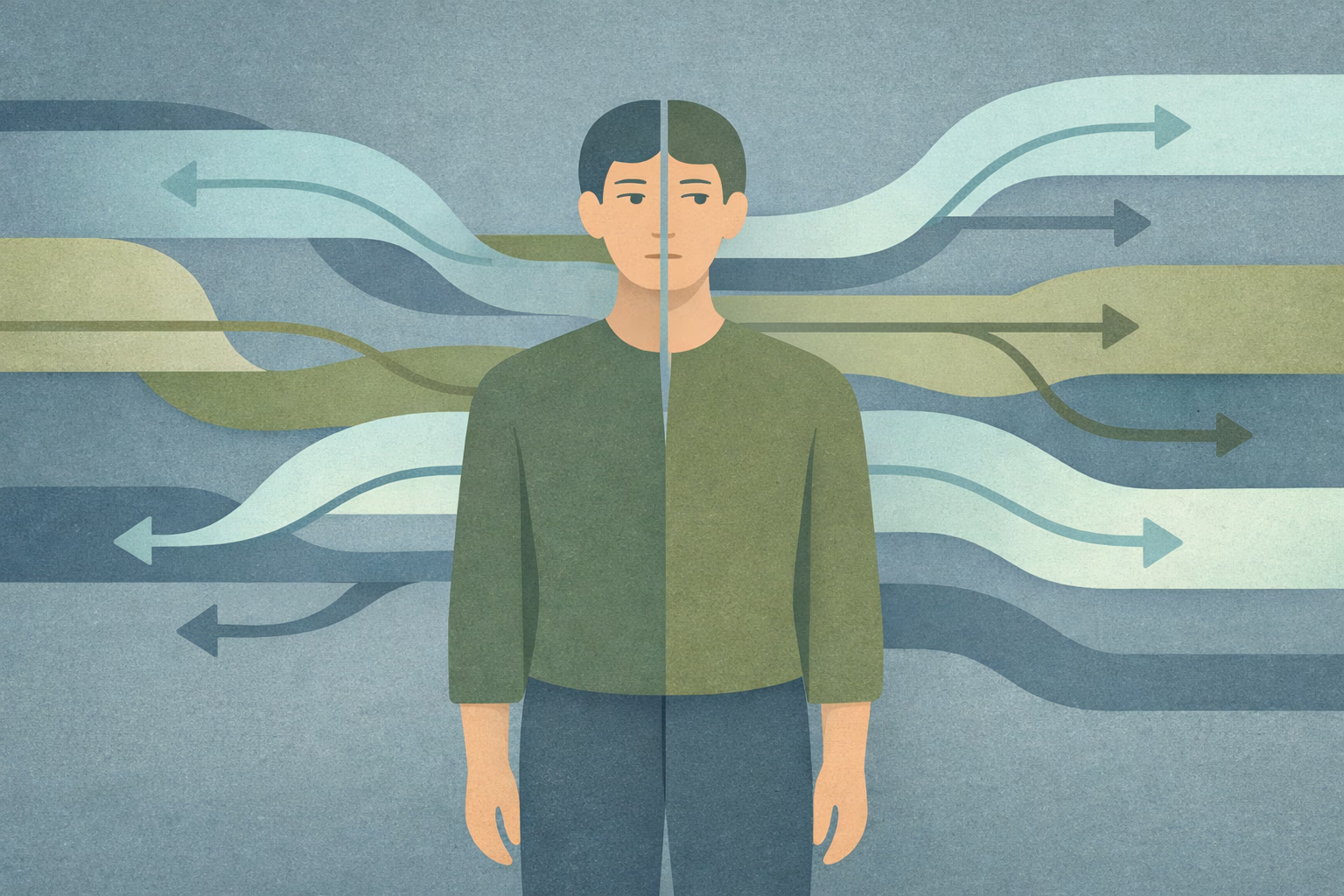
Over time, the felt experience can resemble being “pulled apart”: many starts, few finishes, and not enough internal “done” signals for the nervous system to stand down.
Digital platforms are often designed around what reliably captures attention: novelty, social information, and variable reward—content that changes frequently and unpredictably enough to keep the brain checking. This isn’t only about “dopamine” as a buzzword; it’s about reinforcement patterns that keep attention returning because the next refresh might deliver something relevant, rewarding, or socially significant. [Ref-2]
When rewards are variable, attention becomes a repeating loop: check, scan, evaluate, repeat. The loop doesn’t need to be intense to be effective—it just needs to be frequent enough to prevent cognitive settling.
In practice, this means your mind gets trained toward short cycles of orientation rather than long cycles of completion. Depth requires continuity; variable reward repeatedly interrupts continuity.
Humans evolved to track changes in the environment, notice social cues, and update status and safety information quickly. Attention isn’t just for “getting things done”—it’s part of how we stay connected, included, and informed about what might affect us. [Ref-3]
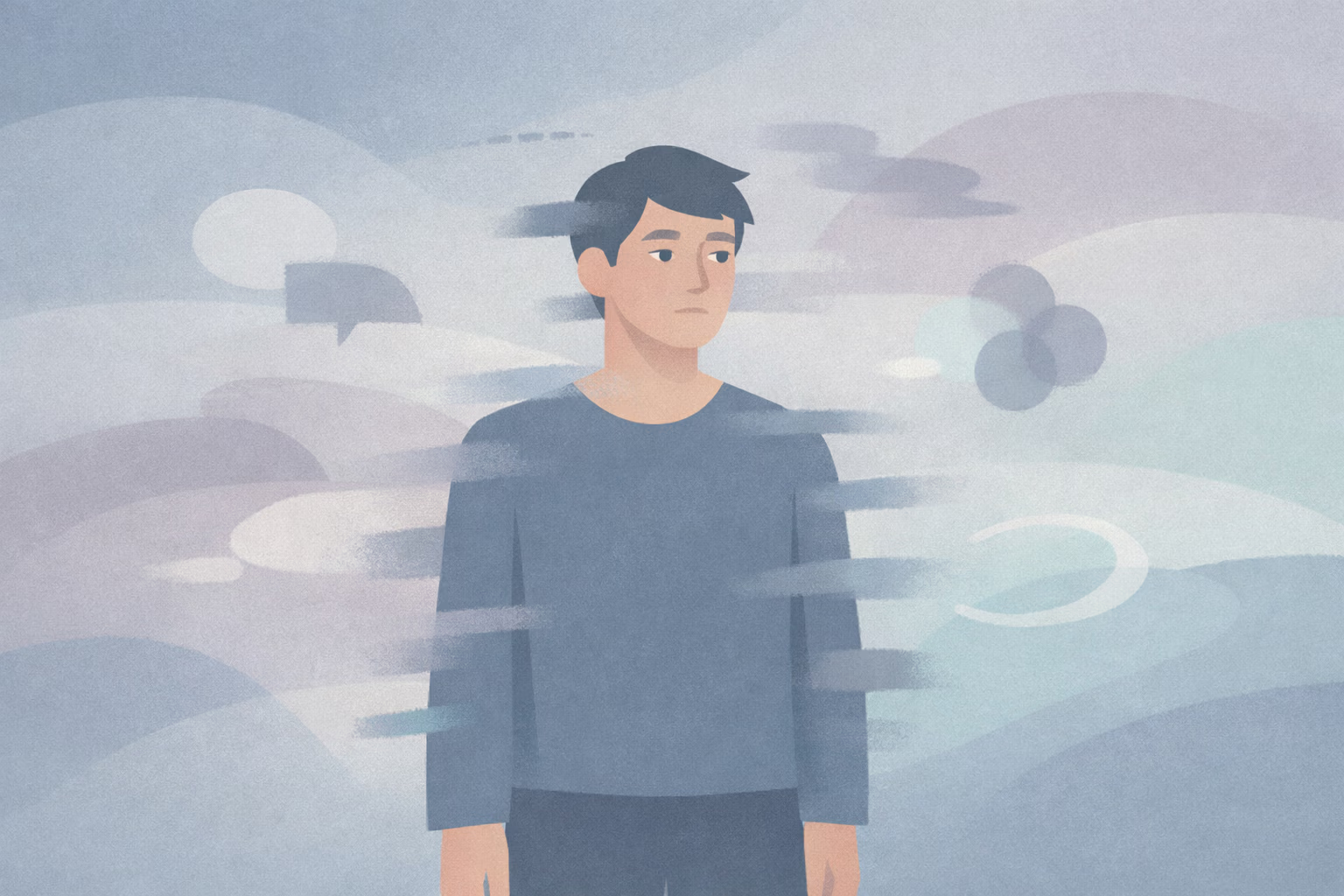
In older environments, novelty and social signaling arrived at human pace. The nervous system could respond, make meaning, and then return to baseline. In modern digital environments, those cues arrive continuously and at scale, keeping attentional systems in a near-constant state of readiness.
So when you feel pulled toward updates, reactions, messages, headlines, and trends, it’s not that you “lack focus.” It’s that a survival-grade system is being fed industrial-grade stimulation.
There’s a reason distraction can feel soothing in the moment. A new input can provide immediate state change: it replaces uncertainty with something to track, replaces waiting with something to do, replaces emptiness with signal. That shift can register as relief—even when it doesn’t resolve anything. [Ref-4]
Relief, however, isn’t the same as completion. Completion is when an experience reaches a natural endpoint and the body receives a “stand down” cue. Many digital interactions deliver stimulation without an endpoint: there is always more to see, respond to, or optimize.
In that structure, the nervous system learns a pattern: discomfort → input → temporary settling → renewed pull. The loop continues, not because you’re broken, but because closure never arrives.
Distraction often masquerades as competence. You can be consuming information, answering messages, scanning updates, learning “a little about a lot”—and it can feel like you’re staying on top of life.
But being informed isn’t the same as being oriented. Orientation is when your attention organizes around what matters and can stay there long enough for meaning to consolidate. In high-churn information environments, you may gain volume while losing clarity. [Ref-5]
The cost isn’t moral; it’s cognitive. When attention is repeatedly sold as “engagement,” the user experience can quietly convert your day into many micro-sessions that never add up to a finished internal narrative.
A pleasure loop isn’t “seeking joy.” It’s a pattern where small bursts of stimulation substitute for the slower process of fulfillment. Fulfillment tends to require continuity—time with a task, a person, a question, a place. Stimulation is fast, portable, and endlessly available. [Ref-6]
In the distraction economy, attention is kept in circulation. The system does well when you keep moving: from post to post, tab to tab, thought to thought—never long enough to fully digest or complete.
What gets disrupted is not intelligence or potential, but closure. Without closure, the nervous system stays slightly activated, scanning for the next cue, the next update, the next “maybe this will do it.”
When nothing gets to finish, even rest can feel unfinished.
The outcomes of sustained fragmentation are often remarkably consistent across people. Not because everyone is the same, but because the conditions shape the same regulatory responses. [Ref-7]
These aren’t identities. They’re what nervous systems do when they’re trained to expect constant input and reduced closure.
Sustained focus is not only about performance. It’s how experiences stitch together into understanding—how information becomes knowledge, and knowledge becomes personal orientation. When attention is repeatedly interrupted, the brain gets fewer long, unbroken windows to encode context and integrate what it’s taking in. [Ref-8]
That can show up as:
Coherence depends on continuity. Without continuity, your inner world can start to feel like a feed: lots of content, little consolidation.
In a high-stimulation environment, the absence of input can register as a problem to solve. Not because you’re afraid of quiet, but because your system has been conditioned to expect frequent cues—and to treat cue-seeking as the default state.
When you try to do something that requires sustained effort—reading a long piece, writing, having an unhurried conversation—the initial phase can feel surprisingly gritty. That discomfort often isn’t a sign you’re doing the wrong thing. It can be the nervous system recalibrating to a slower rhythm while the pull of unfinished loops remains active. [Ref-9]
As discomfort rises, stimulation becomes more tempting, which reinforces the cycle. The economy of distraction thrives on this predictable escalation: increased friction → increased checking → decreased continuity → increased friction.
One of the most underappreciated capacities in modern life is the ability to remain present through the “in-between”: boredom, waiting, effort, and silence. Not as a virtue, but as a sign that the nervous system has enough spare capacity to stay with a single thread without immediately needing a new input.
When attentional regulation begins to restore, people often notice a subtle shift: less urgency to check, more tolerance for unfinished moments, and a greater ability to let a task develop without constant reorientation. In economic terms, attention becomes less easily extracted when it isn’t constantly recruited by micro-rewards. [Ref-10]
This is not about having better thoughts or stronger resolve. It’s about reduced load and more opportunities for experiences to reach completion—so the body receives clearer “done” signals and can settle into continuity again.
Attention is shaped by what it synchronizes with. Algorithmic environments are optimized for capture: fast switching, high novelty, frequent evaluation. Human environments—especially in shared presence—often move differently: pauses, turn-taking, sustained eye contact, gradual context. That rhythm can act as a stabilizing cue for attention.
Uninterrupted interaction tends to create natural closure points: a conversation arc, a shared experience, a moment that ends. These endings matter physiologically because they reduce the need for continued scanning. In a world of content abundance, human depth can become a counterweight to endless input. [Ref-11]
What changes when your attention is being held by a person, not harvested by a system?
When attention is no longer constantly interrupted, many people describe a specific kind of relief: not excitement, but continuity. Thoughts connect. Time feels less chopped up. You can begin something and remain inside it long enough for it to develop a shape.
This is where “integration” becomes visible—not as insight, but as a settling. Experiences start to complete. The nervous system gets clearer endpoints. And because fewer loops remain half-open, the mind has less need to keep rechecking, reorienting, and re-evaluating. [Ref-12]
It’s not that life gets easy. It’s that it starts to add up.
In that state, focus can feel less like a strained grip and more like a natural alignment: attention staying where it’s placed because it isn’t being constantly pulled into side-channels.
Stabilized attention changes what becomes possible. Not by making you more “productive,” but by restoring the ability to choose a direction and remain in it long enough for meaning to form. Meaning tends to emerge when actions, values, and identity line up—and when an experience can reach completion rather than being endlessly interrupted.
Incentive-driven environments constantly offer substitute goals: clicks, likes, streaks, updates, urgency. When those cues dominate, attention serves external reward schedules more than internal values. As distraction decreases, the balance can shift: attention becomes a resource you can allocate toward what you actually recognize as important. [Ref-13]
That shift is often felt as agency: not forcing yourself to focus, but noticing that your focus can now remain in relationship with your life—your commitments, your questions, your people.
The economics of distraction are straightforward: if attention can be captured and sold, systems will compete to capture more of it. When you struggle to focus in that landscape, it doesn’t automatically mean something is wrong with you. It may mean you’re responding normally to an environment designed to keep attention in motion. [Ref-14]
From a meaning perspective, the deepest cost of distraction isn’t scattered minutes—it’s scattered continuity. When your days can’t complete, your sense of self can start to feel thin, because identity stabilizes through finished experiences that become part of you.
Reclaiming attention, then, is not a self-improvement project. It’s a dignity issue: treating your awareness as a meaningful resource that belongs to your life, not merely to profit-driven incentives.
Focus is not a trait you either have or don’t have. It’s a capacity that depends on conditions: load, interruption rate, and whether your experiences are allowed to reach completion.
When life supports closure and continuity, attention tends to organize itself. Not perfectly, not constantly—but enough for you to feel oriented again. And when attention serves what you value, it stops being a battleground and becomes a home base: a place where your time, identity, and meaning can finally come back into the same story. [Ref-15]
From theory to practice — meaning forms when insight meets action.
Probably not. The article reframes focus loss not as personal failure but as a market outcome — you're living inside an economy that treats attention as a resource to capture, extend, and sell. Each interruption asks the brain to switch context, rebuild the thread, re-establish what matters. When that happens repeatedly, the system spends more energy on reorientation than on completion. The felt experience resembles being pulled apart: many starts, few finishes, not enough internal Done Signals for the nervous system to stand down. That's not a character statement; it's a load problem produced by survival-grade attention being fed industrial-grade stimulation.
Because variable reward trains the brain toward short cycles of orientation rather than long cycles of completion. Digital platforms design for novelty, social information, and unpredictable refresh — content frequent enough to keep the brain checking, varied enough to prevent cognitive settling. The article frames this as reinforcement structure: check, scan, evaluate, repeat. The loop doesn't need to be intense to be effective; it just needs to be frequent enough to interrupt continuity. Depth requires uninterrupted time for context to encode and meaning to form. When attention is repeatedly recruited by micro-rewards, the system trains away from the long arcs that produce understanding.
Because relief and completion are different states. A new input replaces uncertainty with something to track, replaces waiting with something to do, replaces emptiness with signal — and that shift registers as relief even though nothing got resolved. Completion is when an experience reaches a natural endpoint and the body receives a stand-down cue. The article frames the structural problem clearly: many digital interactions deliver stimulation without an endpoint. There's always more to see, respond to, optimize. The nervous system learns: discomfort, input, temporary settling, renewed pull. The loop continues because closure never arrives — when nothing gets to finish, even rest can feel unfinished.
Through tolerance for the in-between. The article frames the most underappreciated capacity in modern life as the ability to remain present through boredom, waiting, effort, and silence — not as a virtue but as a sign the nervous system has spare capacity to stay with one thread without immediately needing new input. When attentional regulation restores, the shift is subtle: less urgency to check, more tolerance for unfinished moments, ability to let a task develop. Thoughts connect, time feels less chopped up. Focus stops feeling like a strained grip and becomes natural alignment — attention staying where placed because it isn't being constantly pulled into side-channels.
From Science to Art.
Understanding explains what is happening. Art allows you to feel it—without fixing, judging, or naming. Pause here. Let the images work quietly. Sometimes meaning settles before words do.
One Quiet Window, one insight, one reflection — every Sunday