Why Most Wellness Apps Get Behavior Change Wrong
In short: Wellness apps can feel like a modern miracle and a modern mess at the same time. One week a breathing app takes the edge off; the next week a tracker starts to feel like another place to perform.
Wellness apps can feel like a modern miracle and a modern mess at the same time. One week a breathing app takes the edge off; the next week a tracker starts to feel like another place to perform. Many people end up cycling through downloads, subscriptions, and streaks—still searching for the same thing: a steadier internal “done” signal.
What if the real difference isn’t which app is “best,” but what system it’s trying to regulate?
This overview compares wellness apps by their underlying behavioral model: do they offer short-term relief, provide structure and control, help you orient to values, or quietly increase the likelihood of completion and closure? Popularity and branding matter less than whether a tool reduces nervous system load and supports a life that feels more coherent.
When people say, “I’ve tried everything and nothing sticks,” it usually isn’t a character flaw. It often means the tools they tried changed state without creating completion. A soothing session can lower arousal for a moment, but if the day keeps producing unfinished loops—unresolved tasks, unclear expectations, social comparison, constant input—the system quickly reactivates.
Apps can also multiply decision points: which program, which track, which metric, which goal. That extra cognitive load can feel like wellness on the surface while quietly adding another layer of evaluation underneath. Research reviews tend to find small-to-moderate average benefits, alongside uneven quality and real-world drop-off—an outcome that fits the experience many people report when an app helps briefly but doesn’t become stabilizing. [Ref-1]
When support becomes another thing to manage, the nervous system doesn’t read it as support.
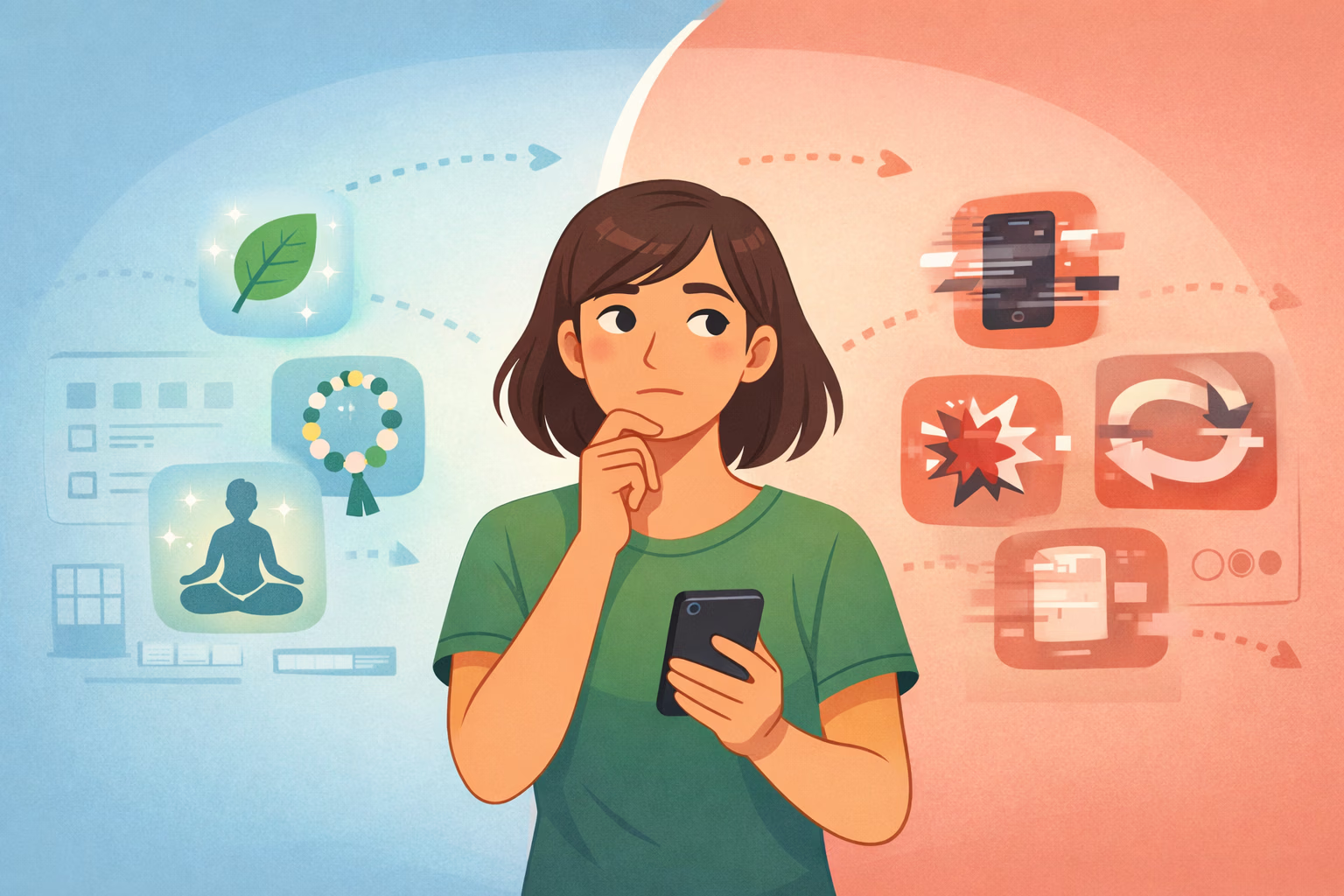
Not all wellness apps are trying to do the same job. Some aim for immediate relief (downshifting arousal). Some aim for control (structure, optimization, measurement). Some operate as avoidance (attention capture that blunts consequence). And some aim for orientation—helping a person clarify what matters so decisions become less conflictual over time.
Evidence-based mental health apps—often influenced by structured approaches like CBT—can be helpful for specific outcomes, but effects vary widely by design, fit, and context. [Ref-2] The key point for users isn’t “Does this app work in general?” but “What is this app training my system to rely on: relief, control, distraction, or coherence?”
In many societies, people used to inherit more built-in structure: shared rituals, predictable seasons, community roles, and stories that explained what “counts” as a good day. Those systems didn’t eliminate stress, but they offered frequent closure signals—beginnings, endings, and shared completion.
Wellness apps often step into that missing space. They offer micro-rituals (a morning check-in), identity cues (“you’re the kind of person who meditates”), and a sense of being guided. But research also notes a gap between what apps can show in controlled settings and what tends to happen in everyday life, where attention, stress load, and competing demands are very different. [Ref-3]
When a tool becomes your main source of guidance, what happens when it’s off your phone?
Many apps genuinely help in the short term. A guided meditation can lower arousal; a sleep soundscape can reduce nighttime activation; a structured prompt can create a moment of order. Mindfulness-based apps, for example, often show measurable benefits on stress and well-being for some users, even if the average effect is modest. [Ref-5] Specific mindfulness app trials also show improvements on certain outcomes.
That matters. Relief is not fake. But relief is a state shift, not necessarily an identity-level settling. If the day that follows is still filled with unfinished obligations, ambiguous standards, and constant comparison, the nervous system returns to activation because the environment keeps generating “not done yet” signals.
In other words: an app can be soothing and still not be stabilizing.
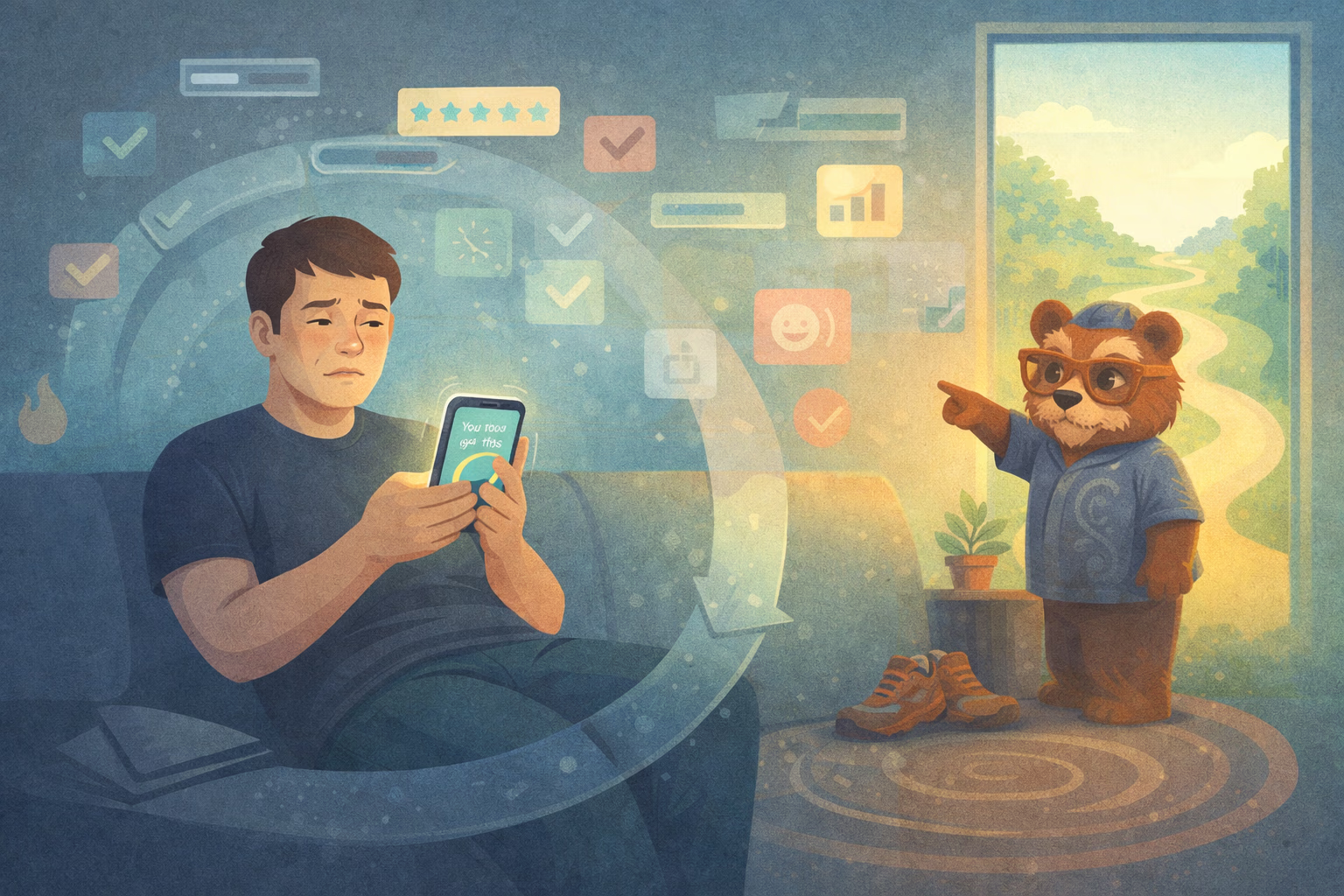
Wellness tech often treats engagement as the main indicator of success: daily use, streaks, time-in-app. But engagement is not the same thing as integration, and it’s not the same thing as a life becoming more coherent. A person can be highly engaged while staying internally conflicted—because the tool is feeding effort, measurement, and self-surveillance rather than completion.
Mindfulness apps may show benefits, yet outcomes still depend on fit and context—how the practice lands inside someone’s life, relationships, and identity. [Ref-5] If the app’s model implies that stability comes from more tracking, more sessions, more optimization, then “using it well” can accidentally intensify the very pressure the person is trying to escape.
Sometimes the app isn’t failing. It’s succeeding at the wrong job.
One helpful way to sort wellness apps is by the loop they reinforce—what they repeatedly train the nervous system to do when life feels unsettled. This isn’t a moral ranking; it’s a structural description. Many apps blend categories, and the same app can land differently depending on the person.
Clinical and research discussions of mobile mental health apps repeatedly highlight this mixed landscape: accessibility and promise alongside quality variation, privacy concerns, and engagement problems. [Ref-6]
The most reliable signals aren’t dramatic transformations. They’re quieter shifts in dependence, self-trust, and coherence. In research, greater engagement with digital interventions is sometimes associated with better outcomes, but the relationship is modest and inconsistent—suggesting that how and why someone engages matters. [Ref-7]
Here are signs a tool is functioning as support rather than capture:
Apps tend to fail when they increase fragmentation: more tabs open in the mind, more self-evaluation, more half-finished programs. The user may start switching tools not because they are “in denial,” but because each tool creates a partial shift without closing the loops that keep activation running.
Common failure patterns look like:
Large overviews of digital mental health tools describe persistent real-world engagement challenges and design issues that can undermine sustained benefit. [Ref-8]
App-store economics quietly shape what gets built. The business model often depends on retention, daily use, and recurring subscriptions. That means the system is rewarded for keeping you coming back—not necessarily for helping you finish something and move on.
In digital mental health research, engagement and attrition are recurring challenges, and consensus discussions highlight how difficult it is to keep people involved over time in real-life conditions. [Ref-9] The marketplace solution to that problem is frequently novelty: new programs, new badges, new tracks. Novelty can be useful, but it can also keep the nervous system in “seeking mode,” where closure is deferred.
If a tool needs you to stay slightly unsatisfied to stay profitable, what kind of regulation will it tend to create?
Many wellness products implicitly assume that stability comes from more effort: more consistency, more willpower, more intensity. But nervous systems often stabilize in the opposite direction—through reduced load, clearer signals, and more frequent completion.
The most supportive tools tend to lower internal conflict. They make it easier to come to a settled “yes” or “no,” to finish a cycle, to step out of constant self-monitoring. In research on apps used alongside psychotherapy, digital tools can support the work, but dependence and fragmentation are real risks when an app becomes a substitute for completion rather than a scaffold toward it. [Ref-10]
A good tool doesn’t make you try harder. It makes your next step less internally contested.
Even excellent apps are still solo tools. They can cue regulation, offer structure, and provide psychoeducation. But humans also stabilize through resonance: being understood, being mirrored, and having our story make sense in a shared space. That kind of calibration is hard to replicate through prompts alone.
Research on digital mental health trials notes that engagement is crucial and often under-analyzed—partly because “engagement” isn’t just logging in; it’s whether the intervention fits a person’s life and feels worth returning to. [Ref-11] For many people, coherence strengthens when experiences are metabolized in conversation, community, or therapeutic relationship—places where completion can happen socially, not just privately.
One paradox of effective support is that it tends to become less dramatic. When a tool matches what a person needs, it often feels simple, steady, and not overly central. It may function like training wheels that don’t demand admiration—useful, then gradually less necessary as capacity returns.
In broad guides, app categories include mindfulness, CBT-based tools, tracking, journaling, and crisis support. [Ref-12] Any of these can be helpful, but the “feel” of a good fit is often recognizable: fewer urgent swings, fewer resets, and less need to constantly search for the next fix. The person’s attention starts returning to their life, rather than orbiting the tool.
Not “I need this to be okay,” but “This supports what I’m already becoming.”
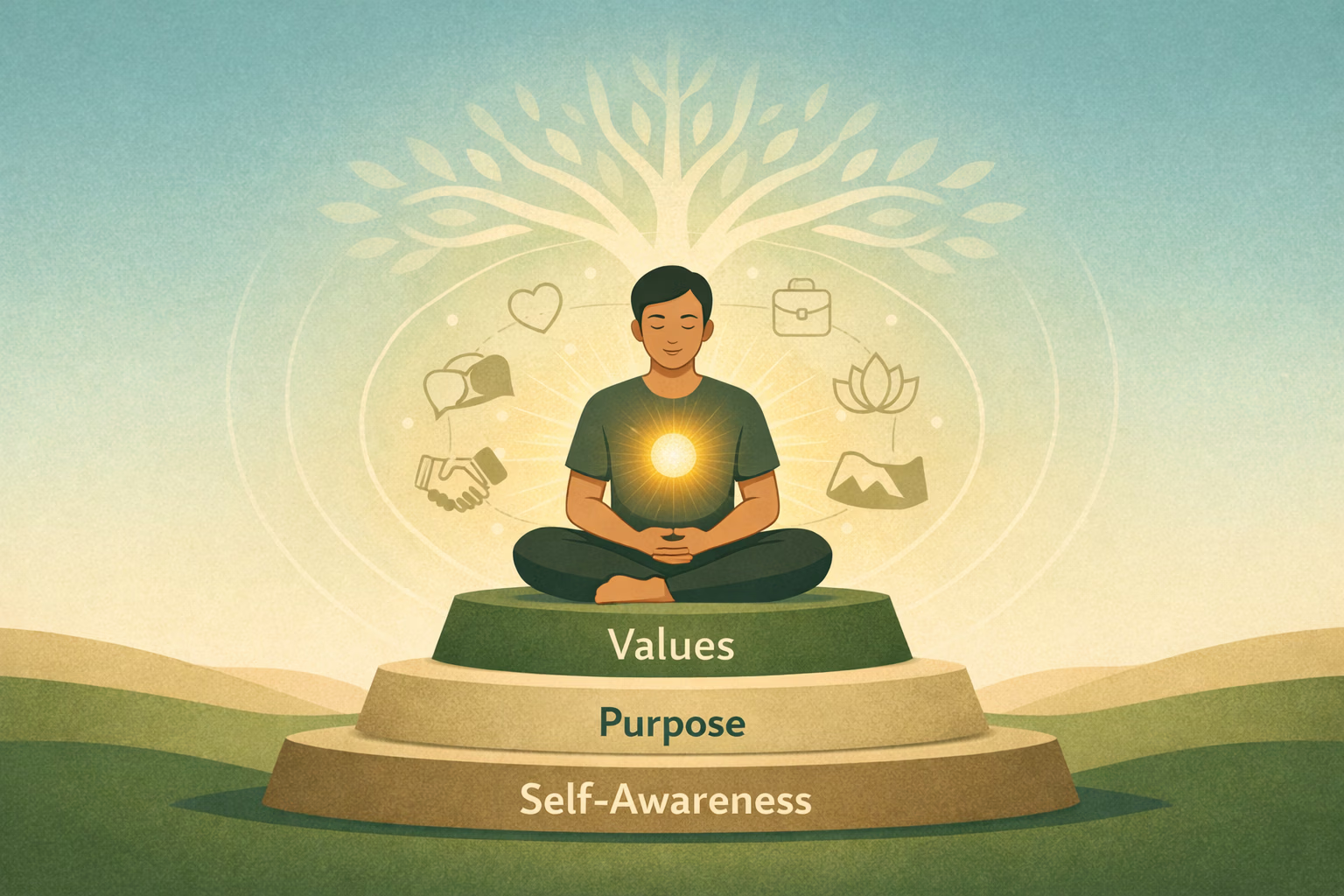
A wellness app is at its best when it increases orientation—when it helps you trust your own signals and make choices that line up with what matters, without requiring constant supervision. In that sense, the app is a bridge, not a home.
Meta-reviews note that many mental health apps are not formally studied, and app-store dynamics often favor novelty and speed over careful evaluation. [Ref-13] So the most meaningful question becomes less “Which app is top-rated?” and more “Does this tool return authority to me, or does it recruit me into an endless loop of tracking and restarting?”
Support that works tends to disappear into the background, because your life comes back into the foreground.
It’s easy to confuse effectiveness with intensity: daily streaks, perfect adherence, constant engagement. But many credible overviews of mental health apps emphasize variety in types and mechanisms—suggesting that usefulness is contextual, not universal. [Ref-14]
A quieter definition of “works” is this: less reliance, more orientation. Less bargaining with yourself, more settled direction. Less frantic fixing, more completion. In that frame, an app is not a verdict on your discipline; it’s one environmental input among many, and its value is measured by the coherence it helps restore.
In a marketplace full of soothing, tracking, coaching, and content, it’s understandable to feel unsure what actually helps. Many tools can offer real relief, and some are thoughtfully built. But the deepest form of support usually has a specific signature: it leaves you more yourself than before—less managed, less fragmented, more able to stand down.
When a wellness app is truly aligned, it doesn’t become your identity. It strengthens your capacity to recognize what matters and to complete the loops that keep your system on alert. And over time, it should make your life bigger than your phone, not the other way around. [Ref-15]
From theory to practice — meaning forms when insight meets action.
Because they often change state without creating completion. A soothing session lowers arousal for a moment, but if the day keeps producing unfinished loops — unresolved tasks, unclear expectations, social comparison — the system reactivates. Apps can also multiply decision points: which program, which track, which metric. That extra cognitive load can feel like wellness on the surface while quietly adding evaluation underneath. Research finds small-to-moderate average benefits alongside real-world drop-off. When support becomes another thing to manage, the nervous system doesn't read it as support. The question worth asking: is this app holding information so I can live, or holding my life so I can manage information?
What loop it reinforces. Some apps target relief (quick state-change), some target control (monitoring, streaks, optimization), some operate as distraction (attention capture without completion), and some support orientation (clarifying values so decisions become less conflictual). It's not a moral ranking — many apps blend categories. The key isn't 'does this work in general' but 'what is this training my system to rely on: relief, control, distraction, or coherence?' A good fit tends to become less central over time, not more. Self-trust grows. Missing a day doesn't trigger guilt. Small loops close. Sometimes the app isn't failing — it's succeeding at the wrong job.
Because engagement and integration are different. Streaks, daily use, and time-in-app are easy metrics, but a person can be highly engaged while staying internally conflicted. The tool may be feeding effort, measurement, and self-surveillance rather than completion. App-store economics quietly shape this — business models often depend on retention and recurring subscriptions, so the system is rewarded for keeping you coming back, not for helping you finish something and move on. Novelty becomes the marketplace solution to attrition: new programs, new badges. Useful in moderation, but it can keep the nervous system in seeking mode where closure is deferred indefinitely.
It tends to get quieter over time. When a tool matches what someone needs, it feels simple, steady, and not overly central — like training wheels that don't demand admiration, useful then gradually less necessary as capacity returns. Markers include reduced dependence (the app becomes less central), increased self-trust (decisions feel settled rather than debated), clearer values signal (it's easier to tell what matters today), and less pressure around use (missing a day doesn't spiral). A good tool doesn't make you try harder. It makes your next step less internally contested. Support that works tends to disappear into the background, because your life comes back into the foreground.
From Science to Art.
Understanding explains what is happening. Art allows you to feel it—without fixing, judging, or naming. Pause here. Let the images work quietly. Sometimes meaning settles before words do.
One Quiet Window, one insight, one reflection — every Sunday