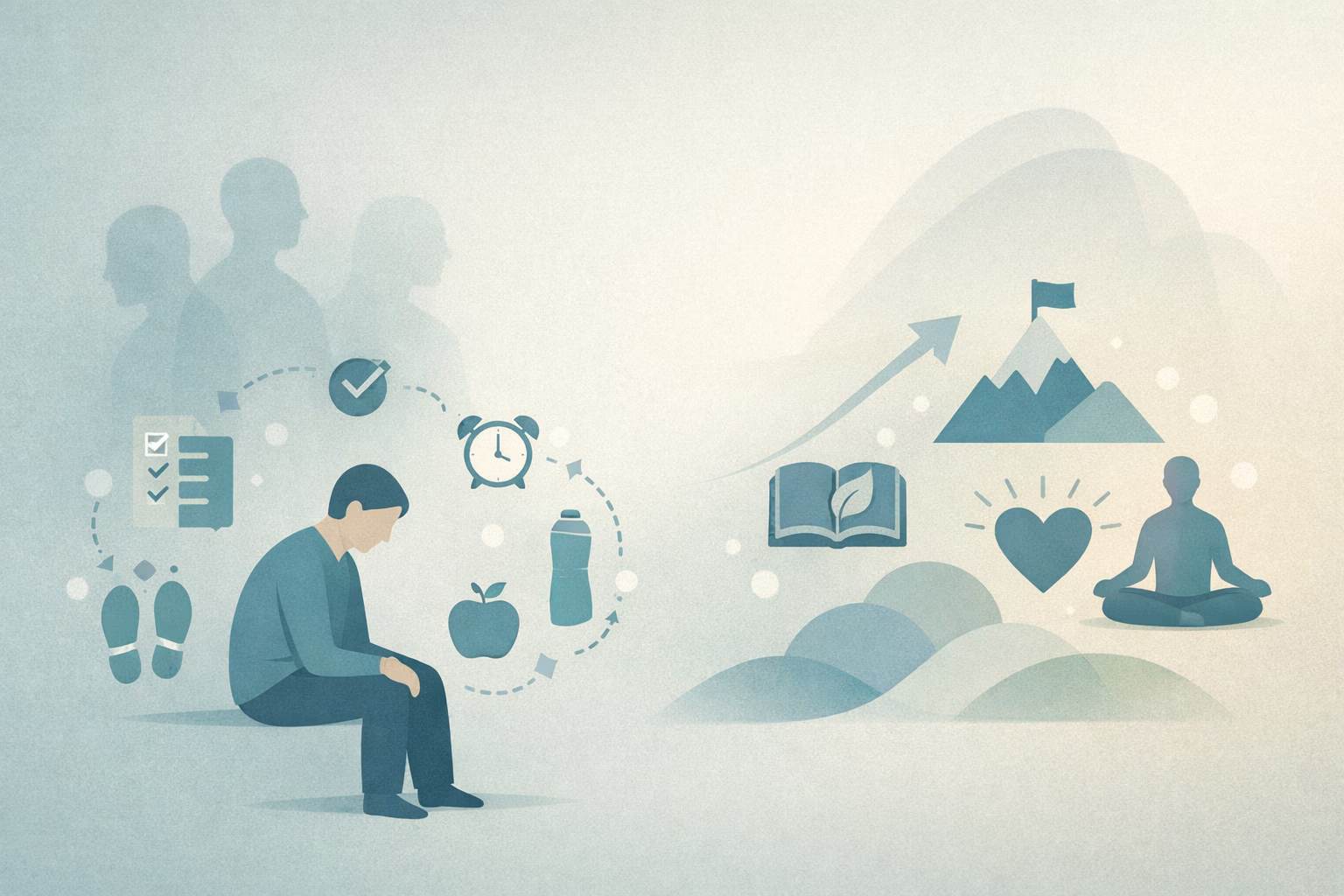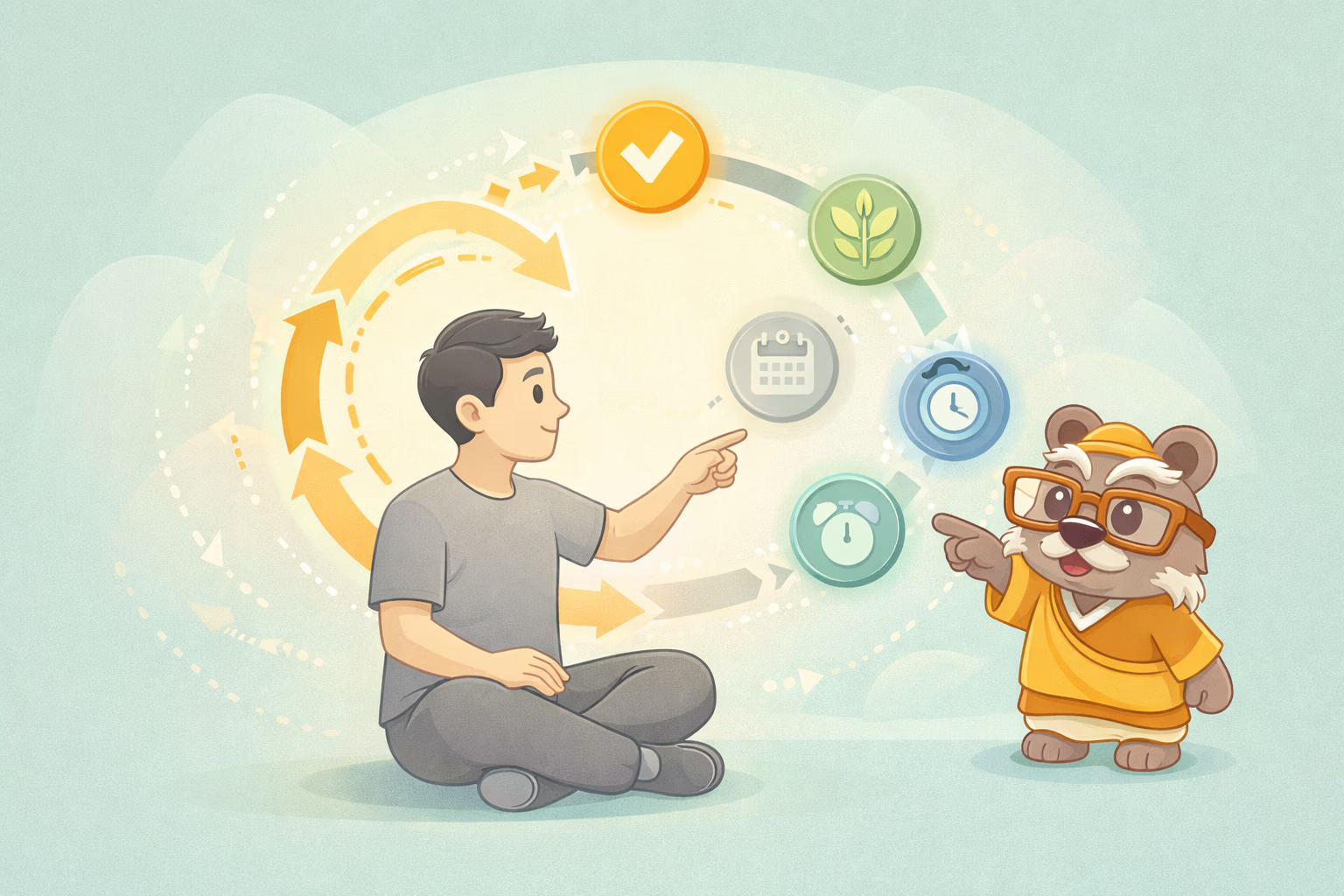
Avoidance Loops: Why You Delay What You Care About
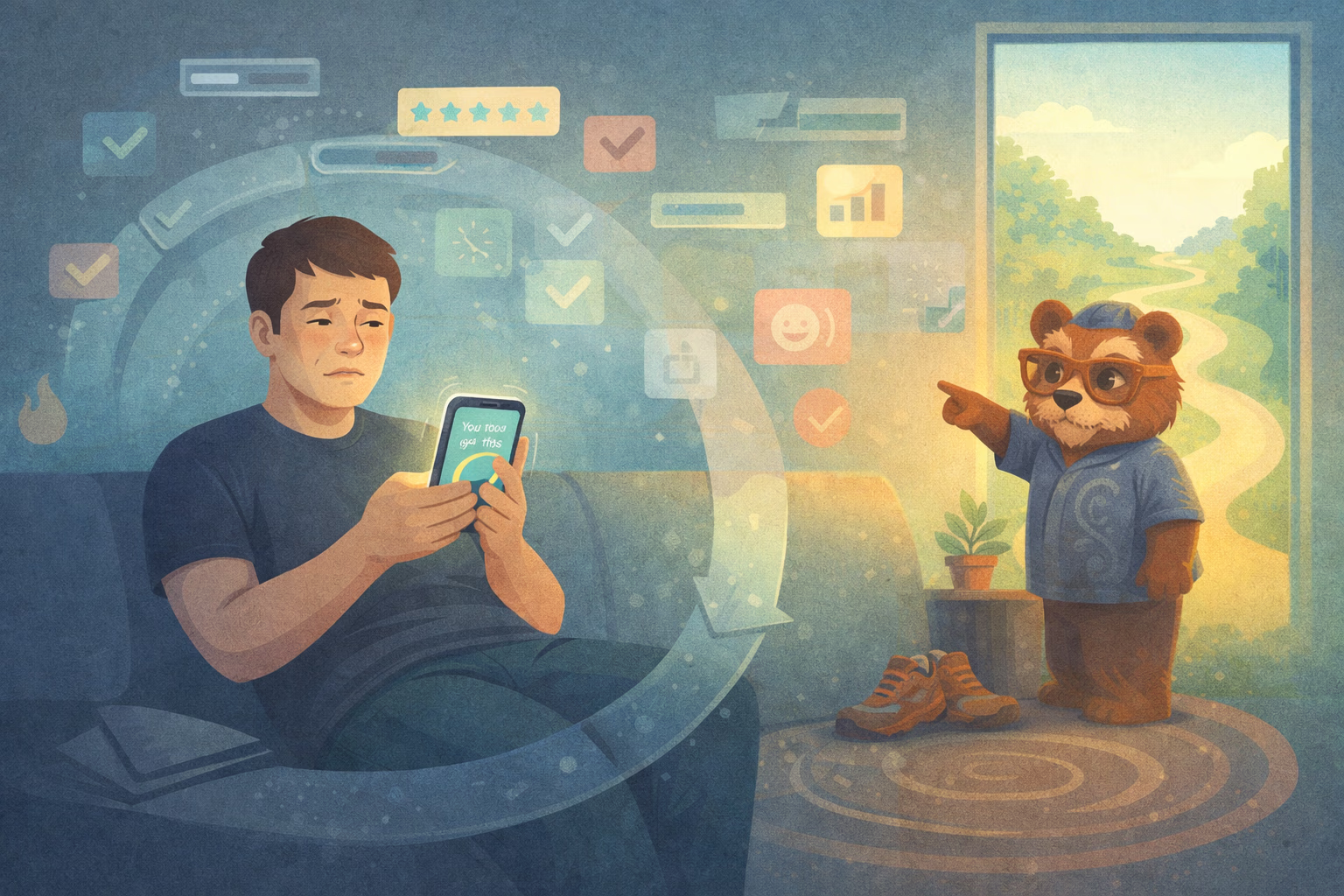
In short: Wellness apps often look like they should work: clear goals, smart reminders, satisfying checkmarks, streaks, graphs. And for a while, they can. Many people get an early burst of energy, a few “good weeks,” and the felt sense that life is finally getting organized.
Wellness apps often look like they should work: clear goals, smart reminders, satisfying checkmarks, streaks, graphs. And for a while, they can. Many people get an early burst of energy, a few “good weeks,” and the felt sense that life is finally getting organized.
Then the pattern turns: the streak breaks, the reminders start to feel loud, and the app becomes one more place where life is “behind.” What’s painful is not just the drop-off—it’s the story that drop-off seems to prove: that you can’t follow through.
What if the problem isn’t you—but the kind of change most apps are built to produce?
A common experience with wellness apps is a loop that starts with hope and ends with quiet abandonment. In the beginning, the app offers a clean runway: a plan, a prompt, and a simple “today” to complete. That can reduce uncertainty, which is genuinely regulating for the nervous system.
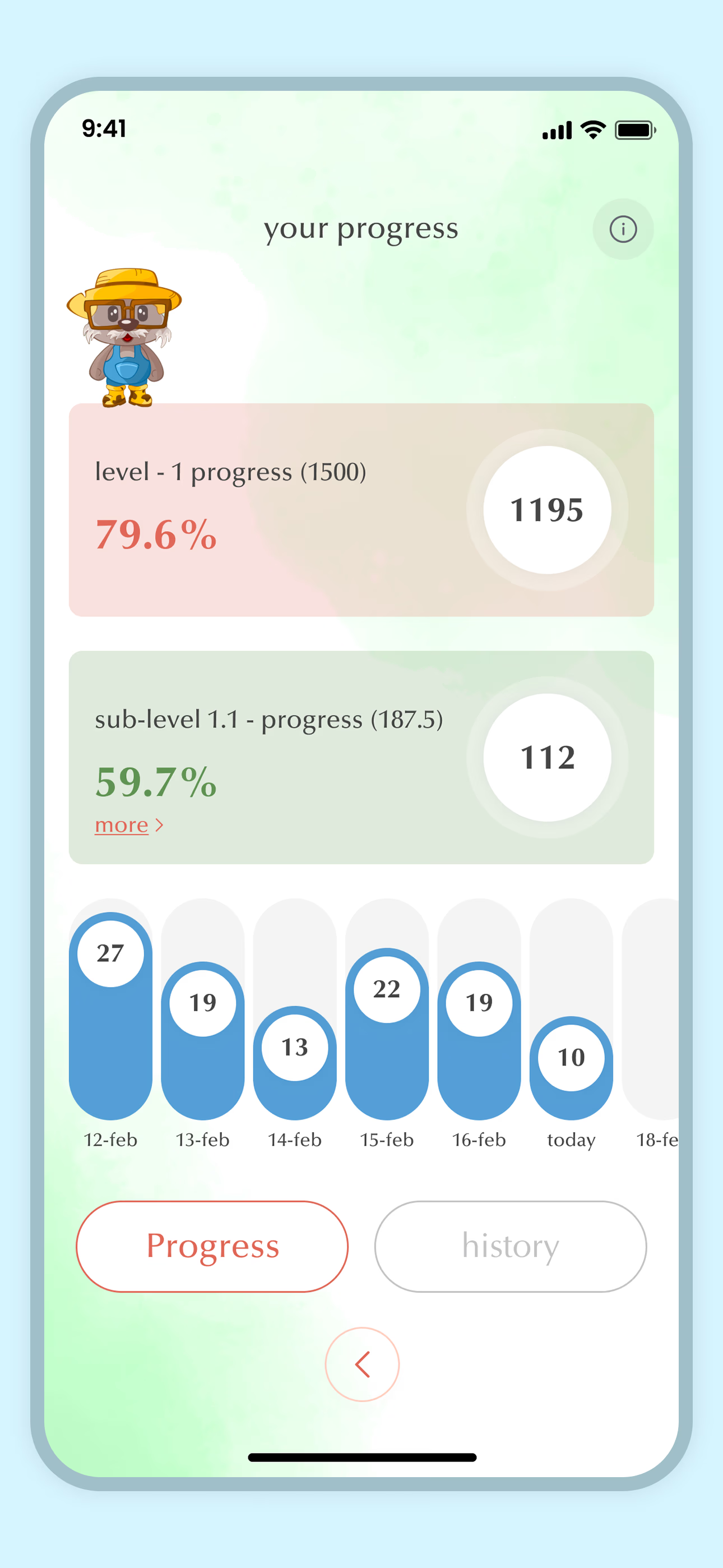
But when life gets messy—as life does—the system that relied on perfect continuity starts to wobble. A missed day turns into an unclosed loop. The app keeps counting, the charts keep displaying, and the gap becomes visible. Instead of closure, there’s a lingering “not done” signal that can feel like pressure.
Many apps for health and well-being struggle to support lasting change at scale, often lacking deep personalization and effective mechanisms for sustained follow-through. [Ref-1]
Early motivation isn’t fake. It’s a predictable nervous-system response to novelty, clarity, and the relief of having a map. When something promises order, the body often mobilizes: energy rises, attention narrows, and action feels easier—for a time.
The trouble is that novelty wears off, and external structure has limits. When an app is the main source of momentum, motivation has to be repeatedly re-generated, like restarting a car every few miles. Over months, many users report declining engagement and intention even when the app remains available, suggesting that motivation alone doesn’t anchor behavior. [Ref-2]
When that drop happens, people often interpret it as personal unreliability. Structurally, it can be understood as a system that never received what it needed to settle: completion, internal ownership, and a stable reason that feels like “me,” not “a program.”
Humans are not only creatures of reinforcement; we are creatures of narrative. We keep track of who we are by noticing what we do, what we return to, and what we can complete. Behavior becomes more durable when it fits into an identity-level storyline: not in a motivational way, but in a coherence way.
When a behavior doesn’t belong to a lived sense of self, it stays provisional—something you perform when conditions are ideal. When a behavior belongs, it tends to persist through variability because it’s no longer a “task.” It’s part of how life is organized.
Digital behavior-change tools repeatedly show adherence as a central challenge; engagement often fades even when users understand what the app is asking for. [Ref-3] That gap points to a difference between knowing and integrating—between information and a system that has actually settled into “this is how I live.”
Most wellness apps do offer something valuable in the beginning: they reduce decision load. A notification tells you what matters. A daily plan turns uncertainty into steps. A streak gives quick closure: “done.”
That initial experience can mimic transformation because it changes state. It can feel like momentum, identity, and life-alignment—but often it’s closer to temporary scaffolding. Reviews of digital self-care strategies note that reminders and motivational features can support engagement in the short term, yet have limits when deeper support isn’t present. [Ref-4]
Sometimes the app isn’t changing your life—it’s temporarily holding your life together.
Many apps assume that if you remember, you’ll do; and if you do, you’ll become. But reminders are not the same as closure. A reminder increases activation: it re-opens the loop. A streak increases visibility: it raises the cost of interruption. Neither automatically produces the “done” signal that lets a nervous system stand down.
When support is removed, behavior often returns to baseline—not because people “didn’t care,” but because the behavior never became self-sustaining inside their life context. Research on adherence-related apps shows that knowledge or tracking improvements don’t reliably translate into maintained behavior once the external container weakens. [Ref-5]
This is the mismatch: apps can increase cues and metrics, but they can’t by themselves resolve the conditions that prevent completion—overload, fragmented attention, and goals that don’t yet belong to the person.
A motivation-first app usually offers direction without grounding: it points you toward outcomes, then attempts to keep you moving with prompts, rewards, and pressure-light incentives. That can create motion, but motion isn’t the same as integration.
When behavior is sustained mainly by external triggers, it stays externally owned. The user becomes a manager of compliance rather than the author of a life pattern. Over time, this can increase strain: the app becomes another relationship where you are “performing” rather than living.
In health behavior change more broadly, nonadherence is rarely solved by reminders alone; lasting follow-through tends to require approaches that account for context, meaning, and the lived realities that interrupt routines. [Ref-6]
When an app is trying to drive change through external structure, people often develop predictable coping patterns. These are not character flaws; they are regulatory responses to a system that can’t close the loop on its own.
From a self-determination perspective, behavior lasts longer when it becomes internally endorsed rather than pressured or externally controlled. [Ref-7]
Each abandoned streak leaves residue. Not only because “the plan failed,” but because the nervous system registers unfinishedness: another open loop, another item that didn’t reach completion. Over time, this can narrow capacity. Starting begins to feel heavier, not because you’re incapable, but because your system has learned that starting may lead to more unclosed endings.
This is one way self-trust erodes: not through laziness, but through repeated experiences of activation without resolution. When autonomy and competence are supported, people tend to maintain behavior more consistently; when they feel pressured or evaluated, persistence often declines. [Ref-8]
In that state, switching to a new app can feel like relief—because novelty temporarily quiets the backlog of “not done.” But the underlying loop remains incomplete, so the cycle can restart.
Many wellness products are built around engagement metrics: daily active use, retention, reactivation campaigns. That business logic doesn’t automatically align with human stabilization. A person who becomes quietly self-directed may need the app less—and that is a different outcome than “high engagement.”
So the ecosystem often rewards designs that keep the loop open: more prompts, more streak mechanics, more “you’re behind” cues. Those features can create frequent return, but frequent return is not the same as a life that has reorganized around meaning.
Modern work and digital life can already press identity into performance and constant evaluation; adding another evaluation layer can intensify that strain rather than resolve it. [Ref-9]
Lasting change tends to appear when a behavior shifts categories—from something you do because a system asks you to, into something that expresses what you value and who you are becoming. Not as a slogan, but as a lived fit: the behavior reduces friction in your life rather than adding more.
This is less about “trying harder” and more about internalization: when the reason for the behavior is coherent enough that it doesn’t require constant external reinforcement. In self-determination research, maintenance is more reliable when actions are experienced as autonomous and aligned with personal values, rather than driven by pressure or contingencies. [Ref-10]
When does a routine stop feeling like compliance and start feeling like self-direction?
External support isn’t the problem. The type of support matters. A prompt that evaluates you can increase load. A context that helps you make sense of your life can reduce load—because it strengthens coherence.
Supportive narratives (the words you use to describe what you’re doing), reflective spaces (where experience can come to completion), and community (where behavior is witnessed without being graded) can reinforce identity-level ownership. From an SDT perspective, environments that support autonomy, competence, and relatedness are more likely to foster sustained motivation than environments that rely on pressure. [Ref-11]
Notice the difference: this kind of support doesn’t merely keep you activated. It helps experiences land, resolve, and become part of “how my life works.”
People sometimes assume that consistency should feel like constant effort. But when a behavior matches the shape of a person’s life—values, constraints, relationships, and real capacity—the effort can feel more direct. Not effortless, not perfect, just less internally divided.
In that state, reminders become optional rather than necessary. The nervous system isn’t being repeatedly yanked back into a task it doesn’t fully own. It’s moving along a track that feels plausible and settled.
Frameworks that summarize self-determination research highlight a simple pattern: when basic psychological needs are supported, motivation tends to be more intrinsic and steady; when needs are thwarted, behavior becomes more brittle and externally driven. [Ref-12]
At a deeper level, “wellness” isn’t a set of tracked behaviors. It’s the ongoing capacity to return to a chosen orientation after disruption. That capacity grows when life offers closure: when efforts can complete, lessons can land, and identity can update without constant self-surveillance.
When wellness becomes self-authored, tools can still be helpful—but they become supports, not engines. They serve a life that already has direction, rather than trying to manufacture direction through pressure and prompts.
Self-Determination Theory describes wellness as connected to autonomy, competence, and relatedness—conditions that help people act in ways that feel like their own. [Ref-13]
Not “How do I make myself do it?” but “What kind of person is this for me to be?”
If you’ve cycled through apps, streaks, and restarts, that history doesn’t have to mean you’re inconsistent. It can simply mean you’ve been using tools designed for short-term activation to solve a problem that requires deeper closure and internal ownership.
Many habit trackers emphasize streaks, reminders, charts, and other extrinsic prompts—features that can be engaging without necessarily creating lasting self-direction. [Ref-14]
When behavior change is framed as a personal deficiency, shame increases load and makes completion harder. When it’s framed as a design mismatch, the story becomes more accurate—and people often regain orientation.
Accountability features and social layers can be motivating, especially at the beginning, because they add visibility and structure. [Ref-15] But visibility is not the same as integration, and structure is not the same as a life that has settled around what matters.
When change is anchored in meaning—when it fits identity, values, and real capacity—it tends to require less chasing. It becomes less about keeping a streak alive, and more about living in a way that can actually feel finished at the end of the day.
From theory to practice — meaning forms when insight meets action.
It's a familiar cycle: spark, streak, strain, silence. The app starts with a clean runway — a plan, a prompt, a 'today' to complete — and that reduces uncertainty, which is genuinely regulating. But when life gets messy, a missed day becomes an unclosed loop. The app keeps counting, the gap becomes visible, and instead of closure there's a lingering 'not done' signal that feels like pressure. Many users interpret this as personal unreliability, but structurally it's a system that never received what it needed to settle: completion, internal ownership, and a stable reason that feels like 'me' rather than 'a program.'
Early motivation isn't fake — it's a predictable nervous-system response to novelty, clarity, and the relief of having a map. When something promises order, the body mobilizes for a time. The trouble is that novelty wears off and external structure has limits. When an app is the main source of momentum, motivation has to be repeatedly re-generated — like restarting a car every few miles. Reminders aren't the same as closure; a reminder increases activation by re-opening the loop. A streak raises the cost of interruption. Neither produces the Done Signal that lets a nervous system stand down. Knowledge improvements don't reliably translate into maintained behavior.
Not inherently — but they latch onto survival-based learning (avoid loss, maintain status, don't break the chain) without necessarily delivering deeper integration. Many wellness products are built around engagement metrics; that business logic doesn't automatically align with human stabilization. A person who becomes quietly self-directed may need the app less, which is a different outcome than 'high engagement.' The ecosystem often rewards designs that keep the loop open: more prompts, more streak mechanics, more 'you're behind' cues. Frequent return isn't the same as a life that has reorganized around meaning. Sometimes the app isn't changing your life — it's temporarily holding your life together.
Behavior becomes stable when it shifts categories — from something you do because a system asks, into something that expresses what you value and who you're becoming. Not as a slogan, but as a lived fit: the behavior reduces friction in your life rather than adding more. Maintenance is more reliable when actions feel autonomous and aligned with personal values rather than driven by pressure. Supportive narratives, reflective spaces, and community where behavior is witnessed without being graded reinforce identity-level ownership. The real question shifts from 'how do I make myself do it?' to 'what kind of person is this for me to be?' Lasting change follows meaning — not reminders.
From Science to Art.
Understanding explains what is happening. Art allows you to feel it—without fixing, judging, or naming. Pause here. Let the images work quietly. Sometimes meaning settles before words do.
One Quiet Window, one insight, one reflection — every Sunday