Meaning vs Motivation: What Actually Drives Transformation
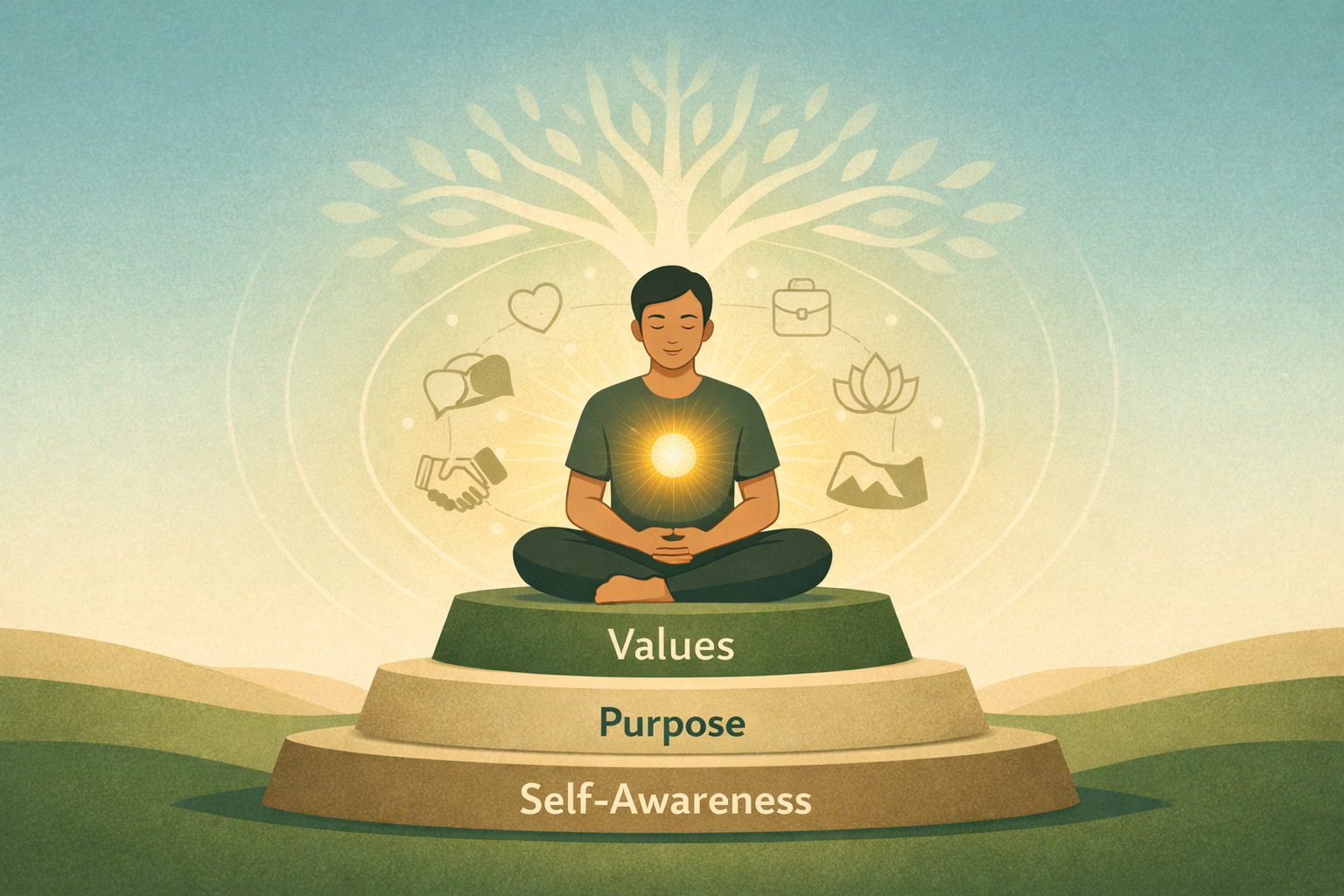
In short: Many wellness platforms are built like engines: track the inputs, optimize the outputs, repeat. And for some people, that works—until it doesn’t. The moment life gets loud, the habits that looked “solid” can suddenly feel flimsy, effortful, or oddly irrelevant.
Many wellness platforms are built like engines: track the inputs, optimize the outputs, repeat. And for some people, that works—until it doesn’t. The moment life gets loud, the habits that looked “solid” can suddenly feel flimsy, effortful, or oddly irrelevant.
That fragility is not a character issue. It often reflects a missing layer: meaning. Not as a slogan, not as “motivation,” but as the kind of inner orientation that helps experiences complete, values stay available under stress, and identity feel coherent enough to guide behavior.
What if the most important feature of wellness isn’t discipline—but a sense of lived direction?
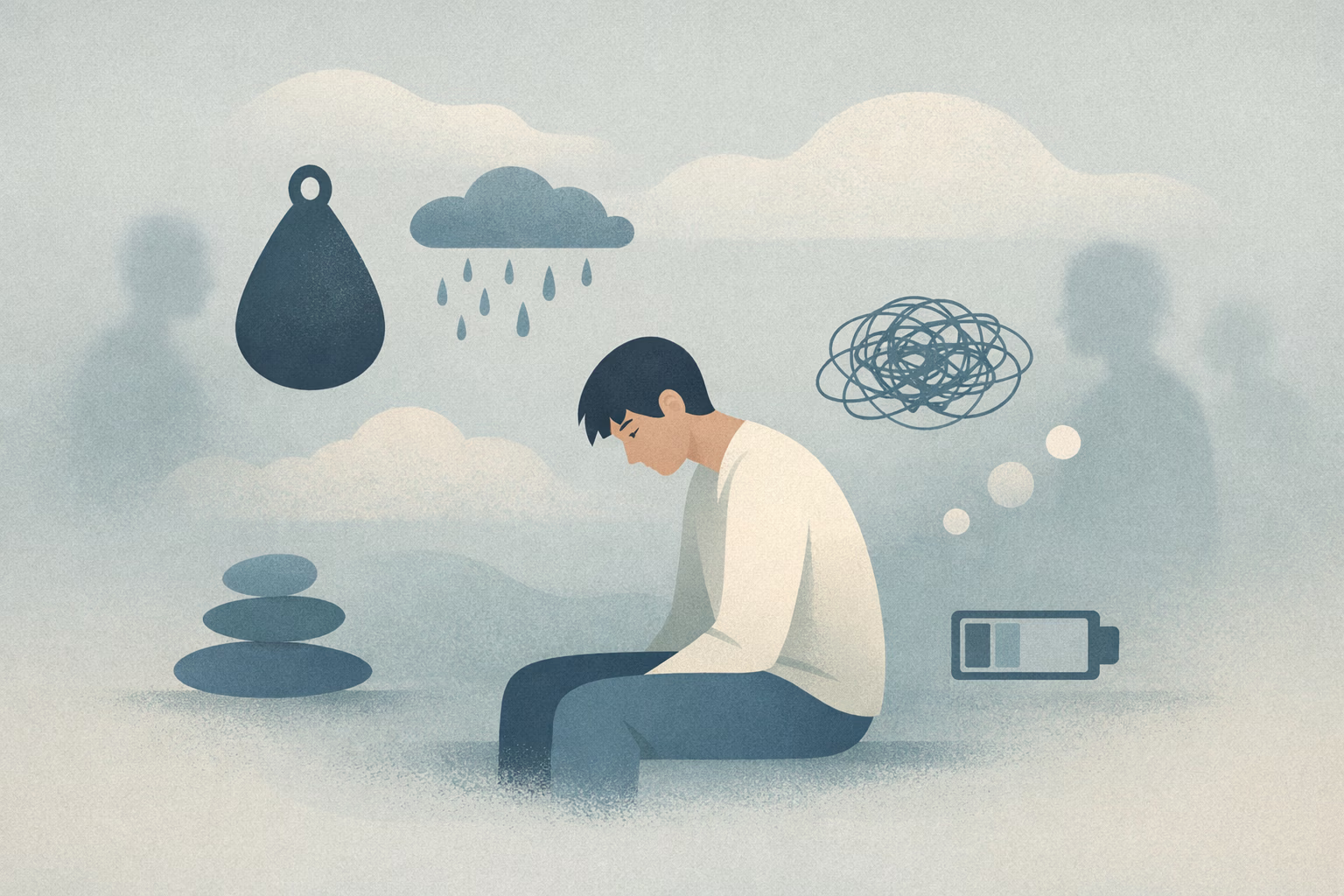
A person can follow a plan and still feel off. The routine is “correct,” the metrics improve, and yet something stays unsettled—like the system is running without a reason it recognizes. This is a common frustration in modern wellness: change that is technically successful but biologically hard to keep.
Often, what’s missing isn’t another technique. It’s closure—an internal “done” signal that tells the nervous system this effort belongs to something real and finished enough to become part of who you are, not just something you’re performing.
When meaning is thin, habits tend to rely on external scaffolding: streaks, prompts, pressure, or novelty. That can hold for a while, but it rarely creates the kind of settling that lasts. [Ref-1]
Meaning does not simply inspire behavior; it organizes it. When an action has personal significance, the brain tends to allocate attention differently, and the body tolerates effort with less internal conflict. In practical terms, “why” can change how costly an action feels—even when the action itself stays the same.
Without that organizing function, the reward system is left to chase short-term signals: immediate relief, stimulation, or the quick certainty of “I did something.” Under higher load, this can amplify repetitive loops—rumination, checking, scrolling, snacking, overplanning—because those loops offer fast state-change without needing completion.
Research links meaning in life with resilience and reduced distress responses under stress, suggesting it acts as a buffer when environments are demanding. [Ref-2]
Humans are uniquely narrative: we don’t only track what happened; we track what it meant, what it says about us, and where it places us in the world. This isn’t abstract philosophy—it’s a functional system. Identity and purpose help coordinate decisions across time, especially when conditions are uncertain.
When a person has a coherent sense of what they’re in service of, stressors don’t disappear, but they become more legible. Experiences are more likely to “land” as part of a continuous self, rather than remaining as floating fragments that keep reactivating.
Longitudinal findings during prolonged stressors show that meaning in life predicts resilience and better well-being outcomes over time. [Ref-3]
When life has a direction you recognize, effort can feel like movement—not like self-correction.
Pressure can produce movement, but it often recruits the body’s threat and monitoring systems. That creates a particular kind of friction: you’re doing the thing, yet some part of you is braced, bargaining, or counting the cost. The behavior becomes a negotiation rather than an expression of self.
Meaning reduces friction differently. It doesn’t force compliance; it makes the action less “foreign” to the system. When effort is aligned with personal significance, it tends to require fewer compensations—less self-talk, less coercion, less rebound.
Studies have found that meaning-enhancing approaches can increase resilience over time, suggesting meaning can change how sustainably people carry strain. [Ref-4]
Habit frameworks are often presented as the backbone of wellbeing: cue, routine, reward. But habits are not the same as continuity. A habit can run while a person feels disconnected from it, like a script being executed.
When meaning is not involved, the system commonly depends on:
These can initiate behavior, but they don’t reliably create the deep “this is mine” quality that keeps behavior stable through grief, busyness, social disruption, or fatigue. Meaningful living is consistently associated with higher resilience and better psychological health, which points to longevity beyond mechanics. [Ref-5]
When meaning is present, it forms a loop: values inform choices, choices accumulate into identity, identity makes values feel real, and the system receives closure. This loop doesn’t require constant excitement, because it provides a quieter reinforcement—the sense that life is coherent enough to stand on.
When meaning is absent, two substitute loops tend to dominate. One is pleasure-chasing: rapid rewards to change state. The other is control-fixation: tightening the system to reduce uncertainty. Both are understandable regulatory responses under fragmentation, because they offer immediate signals without needing deeper completion.
Meaning and social support have been shown to mediate distress in ways that suggest orientation matters—not just mood or willpower. [Ref-6]
What if some “bad habits” are really the nervous system asking for orientation?
When wellness is built without meaning, the failures often look personal. But the patterns are strikingly consistent across people, ages, and platforms—because the conditions are consistent. The system is being asked to sustain effort without sufficient closure.
Common outcomes include:
Meaning is repeatedly associated with resilience factors in younger populations as well, suggesting these patterns are not about maturity or grit—they’re about coherence under load. [Ref-7]
In a high-speed digital environment, many wellness systems quietly become evaluation systems: track yourself, grade yourself, improve yourself. Even when the tone is gentle, the structure can keep a person in perpetual “not yet.” That blocks the internal completion signal the nervous system relies on to stand down.
Over time, the body may respond with burnout-like dynamics: reduced capacity, irritability, low follow-through, and a growing sense that everything is effort. Not because someone is unwilling, but because the system is over-recruited—constantly monitoring and correcting without arriving.
Frameworks like Self-Determination Theory emphasize that wellbeing depends on internalization—values becoming part of identity, not just externally managed behavior. When platforms miss that layer, they can inadvertently deepen self-blame and dependence on constant prompting. [Ref-8]
Optimization is loud. Integration is quiet.
Novelty is a strong starter. It lights up attention and creates a temporary sense of possibility. But novelty fades by design; the nervous system habituates. If a platform depends on novelty to keep behavior going, it has to keep accelerating—more challenges, more badges, more “new.”
Purpose works differently. It creates intrinsic reinforcement: not a spike, but a steady signal that an action belongs to a larger whole. In SDT terms, behavior is more sustainable when it’s aligned with intrinsic motives and personal values rather than controlled by external pressures. [Ref-9]
This is one reason meaning-centered wellness tends to feel less like “keeping up” and more like living from a center—even when life remains demanding.
Clarity of “why” is not a pep talk. It functions more like a safety cue: a signal that effort is not random, not performative, and not endless. When the nervous system can locate a behavior inside a coherent story, it often reduces background alarm and internal debate.
This isn’t the same as insight or reframing. Understanding a reason can be cognitively true while the body still feels unconvinced. What changes stability is when actions repeatedly complete in a way that the system recognizes as belonging—when the “why” is not just stated, but lived long enough to settle into identity.
Meta-analytic work on SDT-informed interventions suggests that more integrated forms of regulation (identified/integrated) are associated with better outcomes than controlled forms of motivation. [Ref-10]
Meaning is not only individual; it is relational. Shared values reduce social ambiguity—less guessing, less performing, less constant recalibration. When people feel oriented together, the nervous system reads more cues of safety: predictability, respect, and understandable expectations.
This is where wellness platforms quietly matter. A platform can feel like a judge, a marketplace, or a community. If its culture reinforces comparison and constant improvement, users often tighten or withdraw. If it reinforces shared purpose and dignity, people tend to conserve energy and relate more cleanly.
Group-based meaning-centered interventions have shown improvements in meaning and reductions in depressive symptoms, highlighting that purpose and belonging can be mutually reinforcing. [Ref-11]
In meaning-centered wellness, progress tends to feel different. Not necessarily faster, but more coherent. Actions start to carry their own weight: they feel attached to a life, not to a scoreboard. The system can register completion—“this mattered, this is part of me”—which reduces the need for constant external reinforcement.
Setbacks also change texture. They still cost something, but they are less likely to collapse identity. Instead of “I’m back at zero,” there is often a quieter recognition: conditions shifted, capacity shifted, something needs to be recalibrated. That stance preserves continuity, which is one of the main ingredients of agency.
Meaning-centered psychotherapy research highlights how orienting to meaning can reduce distress and improve quality of life, suggesting that coherence changes what adversity does inside a person. [Ref-12]
Not “How do I fix myself?” but “What is this trying to restore?”
When meaning becomes central, wellness stops being a set of tasks meant to earn safety or worth. It becomes a compass—an orienting system that helps people decide what to do with limited time, limited energy, and changing seasons of life.
A checklist implies that the goal is completion of items. A compass implies something more humane: direction, recalibration, and return. In that model, the point is not constant self-management; it’s a life that increasingly fits from the inside.
Meaning-centered approaches, including logotherapy-informed work, show measurable benefits across anxiety, depression, and existential distress, supporting the idea that meaning is not decorative—it is foundational. [Ref-13]
When wellness has a compass, you don’t have to carry your whole life in your teeth.
If a wellness platform is only a habit engine, it will mostly produce compliance cycles: starts and stops, streaks and shame, bursts and burnout. If it functions as meaning infrastructure, it supports something sturdier—orientation, identity coherence, and the physiological capacity to complete what matters.
That kind of platform doesn’t need to intensify pressure to keep users engaged. It needs to reduce fragmentation and help experiences land as lived continuity: values made real, boundaries made intelligible, and effort that reaches a “done” signal often enough for the nervous system to stand down.
Meaning-centered frameworks describe wellbeing as something that grows when life becomes more coherent, not merely more controlled. [Ref-14]
People don’t fail because they lack motivation. Often, they’re operating in environments that ask for constant output without offering enough closure, belonging, or significance. In those conditions, it’s natural for regulation to drift toward urgency, avoidance, craving, or overcontrol—because those loops are fast, available, and immediately legible.
Meaning is slower, but it is sturdier. Not as an idea, but as a settled coherence that arrives when life is lived in a way the system can finally recognize as complete and self-consistent. When wellness platforms place meaning at the core, they stop treating people as projects—and start supporting the conditions where a life can integrate. [Ref-15]
From theory to practice — meaning forms when insight meets action.
Because habits and continuity aren't the same thing. A habit can run while a person feels disconnected from it — like a script being executed. Without meaning, behavior leans on external scaffolding: streaks, prompts, novelty, comparison. Those can hold for a while, but when life gets loud, the scaffolding shows. What's missing is closure — an internal Done Signal that tells the nervous system this effort belongs to something real and finished enough to become part of who you are. Optimization is loud; integration is quiet. Streaks measure compliance, not coherence, and the body knows the difference.
It organizes behavior, not just inspires it. When an action carries personal significance, the brain allocates attention differently and the body tolerates effort with less internal conflict. The why changes how costly an action feels even when the action stays the same. Without meaning, the reward system is left chasing short-term signals: immediate relief, stimulation, the quick certainty of I did something. Under load, this amplifies repetitive loops — rumination, scrolling, snacking, overplanning — because they offer fast state-change without needing completion. Research links meaning in life with resilience under stress. It's not decorative — it's load-management infrastructure.
Because in a high-speed digital environment, wellness systems quietly become evaluation systems: track yourself, grade yourself, improve yourself. Even when the tone is gentle, the structure keeps a person in perpetual not yet, blocking the completion signal the nervous system relies on to stand down. Over time the body responds with burnout dynamics: reduced capacity, irritability, low follow-through. Self-Determination Theory points to internalization — values becoming part of identity rather than externally managed behavior. Platforms that miss that layer can deepen self-blame and dependence on constant prompting. The Power Loop runs even when the language sounds kind.
Orientation, identity coherence, and the physiological capacity to complete what matters. Not constant excitement — a quieter reinforcement: the sense that life is coherent enough to stand on. The Meaning Loop runs as values inform choices, choices accumulate into identity, identity makes values feel real, and the system receives closure. Setbacks change texture: they cost something but don't collapse identity. Wellness becomes a compass instead of a checklist. A checklist implies the goal is item completion; a compass implies direction, recalibration, and return. People aren't projects to optimize. They're systems that integrate when life can finally be recognized as complete.
From Science to Art.
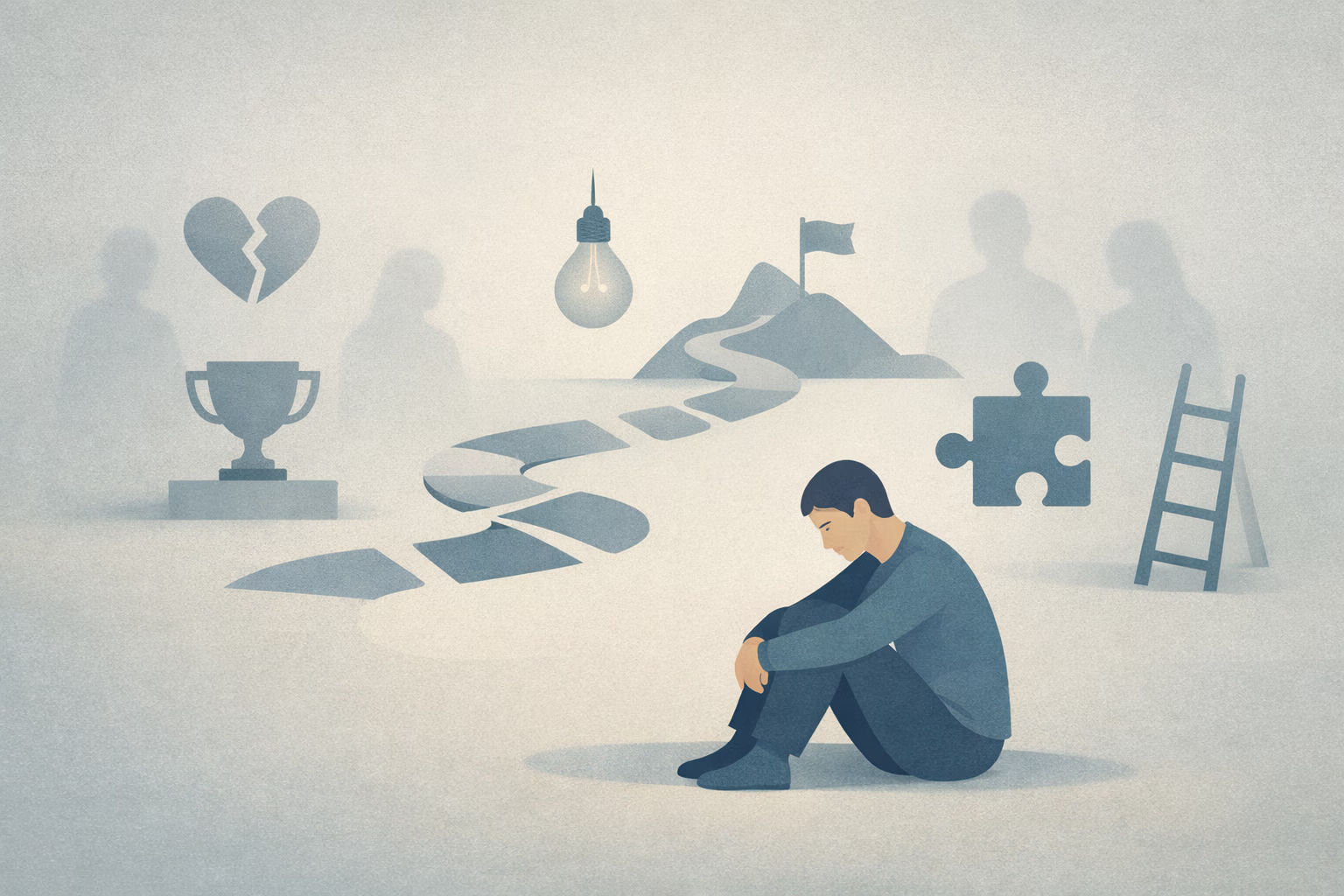
Understanding explains what is happening. Art allows you to feel it—without fixing, judging, or naming. Pause here. Let the images work quietly. Sometimes meaning settles before words do.
One Quiet Window, one insight, one reflection — every Sunday