

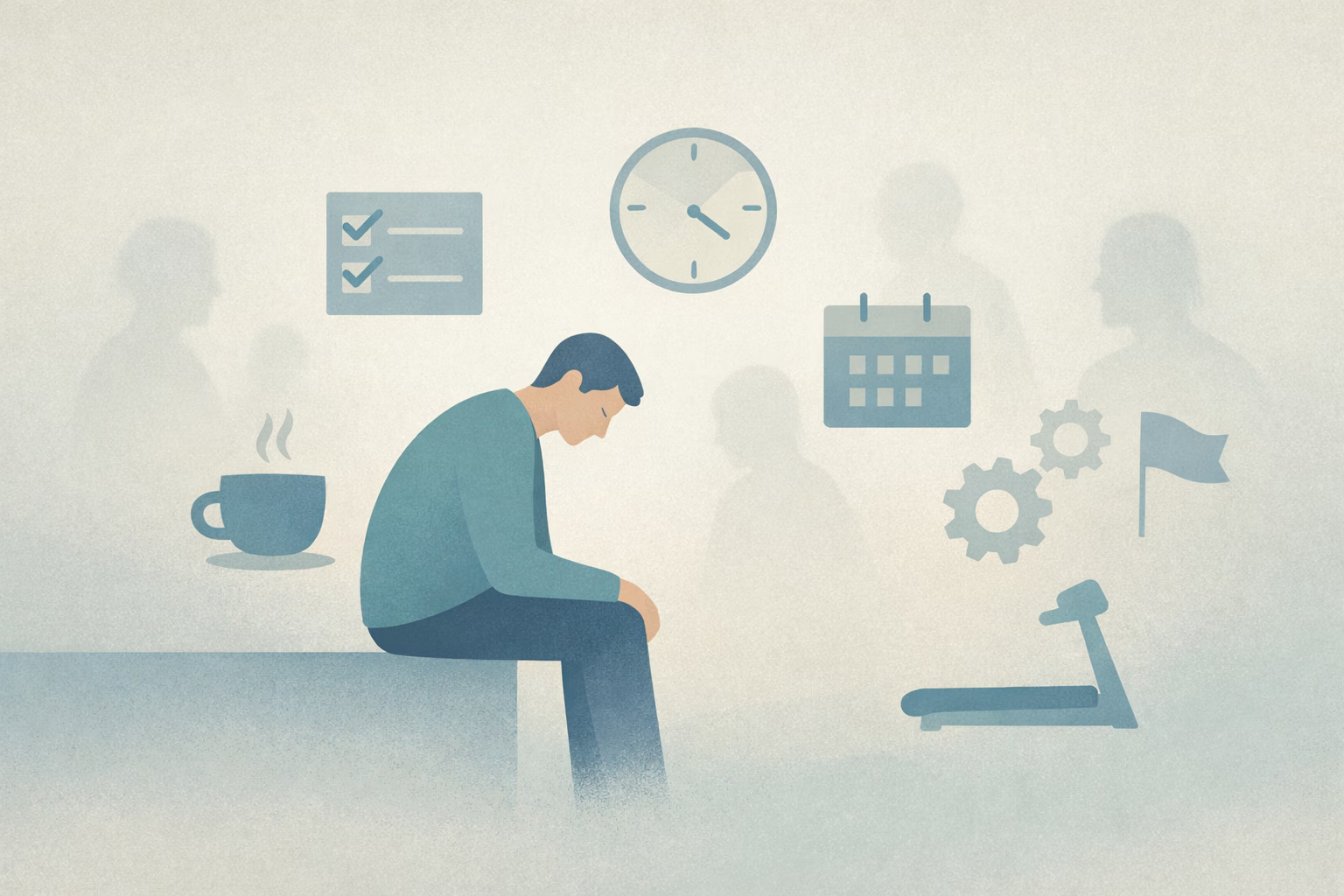
Meaning Deficit: When Life Feels Functional but Empty
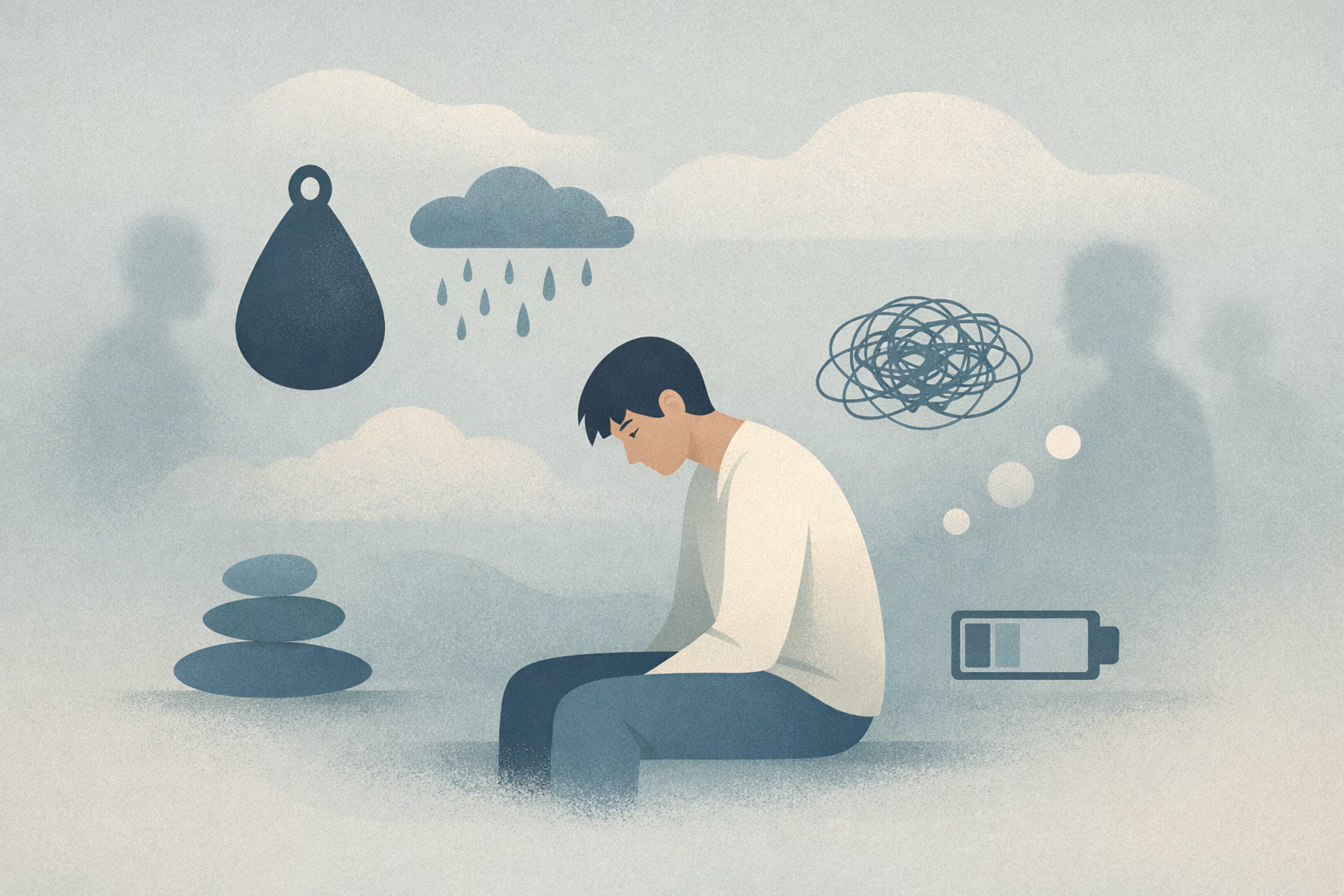
In short: When life feels meaningless, it rarely means you are broken. More often, it means your system is carrying a specific kind of strain: your days are filled with activity, input, and demands, but the experiences aren’t completing into a felt sense of “this is me” or “this matters.” Meaning isn’t something you force.
When life feels meaningless, it rarely means you are broken. More often, it means your system is carrying a specific kind of strain: your days are filled with activity, input, and demands, but the experiences aren’t completing into a felt sense of “this is me” or “this matters.” Meaning isn’t something you force. It tends to emerge when what you do matches what you stand for—and when the nervous system can register closure.
Value disconnection is what it sounds like: a widening gap between your core principles and your actual patterns—how you spend time, what you tolerate, what you prioritize, what you keep postponing. The result can be a quiet emptiness, a restless urgency, or a numb, “so what?” feeling that doesn’t respond to pep talks.
What if meaninglessness is not a verdict, but a signal that something in your life isn’t reaching completion?
Emptiness and dissatisfaction often show up when the nervous system can’t locate a clear “yes” signal in daily life. Not because you aren’t grateful, but because your actions aren’t reliably resolving into coherence—into a stable sense of direction, contribution, or self-respect.
When activities repeatedly fail to reflect personal principles, the system may conserve energy by flattening response. This can look like numbness, cynicism, low interest, or a constant sense that you’re just getting through things. It’s less a moral problem than a biological one: if the day doesn’t complete into meaning, the body doesn’t get a clean stand-down. [Ref-1]
Sometimes “I don’t care” is the nervous system’s way of saying, “I can’t keep paying for this mismatch.”
When values and behavior diverge, the mind has to do extra work to manage the gap: justify, minimize, compartmentalize, keep going anyway. That ongoing discrepancy creates cognitive load—an internal friction that can drain attention and reduce follow-through, even on things you genuinely want. [Ref-2]
This is why value disconnection can feel like “I can’t focus” or “I’ve lost motivation,” even when nothing obvious is wrong. Your system is juggling incompatible signals: one set about what matters, another set about what you’re actually reinforcing each day. Over time, the cost shows up as irritability, fatigue, decision fog, or a low-grade sense of self-betrayal—without needing dramatic emotions to be present.
What if your low drive isn’t laziness, but the predictable outcome of sustained internal mismatch?
Humans don’t just survive through calories and shelter; we also stabilize through meaning. We orient by story: who am I, what do I stand for, where is this going, what role do I have in my group and world. When actions consistently fit that story, identity feels more settled and decisions become simpler.
Across cultures and contexts, values-linked purpose (sometimes described as calling or vocation) tends to support resilience because it creates a coherent throughline that organizes effort and tradeoffs. [Ref-3] Not as motivation hype, but as an internal map: when the map matches the territory, the nervous system spends less energy on conflict and more on steady engagement.
Conforming to external expectations can temporarily reduce social friction and uncertainty. When you do what is rewarded—what looks acceptable, impressive, or “responsible”—you often get immediate safety cues: approval, predictability, fewer questions, less conflict. That can be regulating in the moment.
The problem is that the short-term reduction in tension can come with a longer-term cost: you may be living someone else’s value system while your own principles remain unexpressed and unfinished. Over time, that can undermine well-being—not because independence is inherently better, but because ongoing incongruence keeps the system working overtime. [Ref-4]
Modern culture often treats achievement as a substitute for meaning: if you just do more, earn more, build more, optimize more, you’ll feel better. But busyness can be a form of noise—movement without completion. You may accumulate outputs while the deeper question remains unanswered: “Does this reflect what I’m here for?”
Even reflective practices like writing about goals can increase well-being when they help clarify what matters and make life feel more organized. [Ref-5] The key is not productivity; it’s coherence. If goals are inherited, performative, or purely defensive (chosen to avoid discomfort or judgment), they can intensify pressure without creating the “done” signal meaning requires.
Value disconnection often functions like a loop. When life feels flat, the system naturally reaches for state change: distraction, novelty, validation, control, or urgency. These can offer short relief—especially in high-demand environments—but they don’t necessarily produce integration, the identity-level settling that comes when something truly completes.
In this loop, external validation can act like a quick stabilizer: likes, praise, status, “keeping up,” or being needed. Distraction can act like a painkiller: it reduces contact with the mismatch for a while. But when the day ends, the underlying question hasn’t resolved, so the system spins again. Value congruence is repeatedly associated with better well-being, likely because it reduces that chronic mismatch load. [Ref-6]
Value disconnection doesn’t always look dramatic. Often it shows up as subtle shifts in how you relate to life: less participation, more reactivity, fewer choices that feel like yours. Over time, meaning can thin out—not because you lack depth, but because your principles aren’t getting translated into lived evidence. Value orientation is strongly linked with meaning in life, suggesting that what we prioritize shapes how meaningful life feels. [Ref-7]
Some common patterns include:
Notice these as regulatory responses under strain—ways a system tries to manage unresolved loops—rather than as fixed traits.
When the mismatch persists, it can gradually erode resilience. Not because you become “weaker,” but because your baseline load stays elevated. A nervous system that doesn’t receive closure has less capacity for surprise, conflict, or change—because it’s already spending resources holding things together.
Research consistently links alignment between personal values and life domains with higher life satisfaction. [Ref-8] When that alignment is missing, identity can feel less stable: you may have roles and responsibilities, but fewer internal anchors. Days can feel interchangeable, and choices can feel arbitrary. This is one pathway to meaninglessness: the life is full, but the self isn’t arriving in it.
Meaning collapse is rarely caused by one bad day. It’s often maintained by feedback loops: you adapt to what’s rewarded, you suppress friction by moving faster, and the environment confirms the pattern. Over time, your life becomes optimized for external legibility—what makes sense to others—while internal legibility declines.
In work and social contexts, meaning often depends on factors like autonomy, recognition, fairness, and the sense that effort contributes to something real. When these are missing, people can feel detached or interchangeable. [Ref-9] Add digital velocity and constant evaluation, and it becomes harder to complete experiences into identity. The gap stays open, so the system keeps seeking substitutes: more proof, more stimulation, more control.
When the environment keeps asking for outputs, the self can start to feel like a byproduct instead of an author.
Reconnecting with values is often described as mapping, reflection, or realignment. Those words can sound purely cognitive, but the deeper shift is structural: values start to show up as lived patterns, and the nervous system can finally register completion—“this matches,” “this counts,” “this is consistent.” Approaches that focus on meaning and purpose in high-burnout contexts emphasize this coherence as stabilizing, not as a motivational trick. [Ref-10]
It’s also important not to confuse understanding with integration. You can name your values clearly and still feel empty if your days don’t provide evidence that those values are being enacted and completed. When alignment is real, it tends to reduce background friction: decisions become less negotiable in the body, not just more convincing on paper.
What changes when your principles stop being ideals and start becoming a recognizable footprint in your week?
Humans calibrate in groups. When you are surrounded by people and systems that reward performance over integrity, incongruence becomes normal. When you are around peers or mentors who respond to the real you—your actual priorities and boundaries—alignment becomes easier to sustain, because it is safer to be coherent.
Incongruence carries a cost: maintaining a split between what is shown and what is true requires ongoing effort. [Ref-11] Supportive communities reduce that cost by providing steady safety cues: you don’t have to contort to belong. In that climate, choices that match values feel less risky, and the “done” signal becomes more available.
When actions and values start to align, people often report a quiet form of clarity: not constant happiness, but a reduced sense of inner argument. Decision-making can feel cleaner. Effort can feel less like self-coercion and more like directed energy. Over time, intrinsic motivation tends to reappear—not as hype, but as a byproduct of reduced mismatch load.
This can look like steadier confidence: not the confidence of being certain, but the confidence of being oriented. Values work is often described as reconnecting with “the real you,” because it provides a stable reference point when options multiply. [Ref-12] Importantly, coherence isn’t a permanent mood; it’s a more consistent ability to return to signal after stress, because the background noise is lower.
When life is misaligned, external validation can feel necessary—like proof that the effort is worth it. When life is aligned, validation becomes less central because meaning is generated inside the loop of action → completion → identity reinforcement. The system doesn’t need as many outside cues to know it’s on track.
Values clarification is often framed as identifying what matters and using that clarity to shape choices. [Ref-13] In lived terms, the deeper outcome is that aligned actions create a more stable internal reference. That stability can be energizing: not a rush, but a durable sense that your life is “adding up.”
When your choices match your principles, you don’t have to argue yourself into your own life.
If life feels meaningless, it may be your system signaling that too many experiences are staying unfinished—performed, endured, or optimized, but not completed into identity. That signal can be uncomfortable, yet it’s also informative: it points to a mismatch between what you value and what your life is currently rewarding.
Values clarification is sometimes described as a way to identify what matters and reduce confusion. [Ref-14] Within a nervous-system lens, the deeper relevance is this: clarity matters most when it becomes closure—when the shape of life begins to match the shape of what you stand for, and the system can finally stand down.
Value disconnection is not a character flaw. It’s often what happens when a human nervous system is asked to move fast, stay evaluated, and keep producing without enough completion. The longing for meaning is not neediness; it’s an orientation mechanism looking for a stable path.
When values become lived and recognizable, identity tends to settle. That settling can restore a sense of purpose that is quieter than motivation and sturdier than mood—because it’s built from completion, not pressure. Values clarification, treated as a reflective practice, is fundamentally about restoring coherence between inner principles and outer life. [Ref-15]
From theory to practice — meaning forms when insight meets action.
Because the nervous system can't locate a clear 'yes' signal in daily life. Not because you aren't grateful, but because actions aren't reliably resolving into coherence — into a stable sense of direction or self-respect. When activities repeatedly fail to reflect personal principles, the system conserves energy by flattening response. This shows up as numbness, cynicism, low interest, or a constant sense of just getting through things. It's less a moral problem than a biological one: if the day doesn't complete into meaning, the body doesn't get a clean stand-down. Sometimes 'I don't care' is the nervous system's way of saying, 'I can't keep paying for this mismatch.' Emptiness is often a regulation state, not a personality.
Because busyness can be a form of noise — movement without completion. You may accumulate outputs while the deeper question goes unanswered: 'Does this reflect what I'm here for?' The Meaning Loop functions like this: when life feels flat, the system reaches for state change — distraction, novelty, validation, control, urgency. These offer short relief but don't produce integration, the identity-level settling that comes when something truly completes. External validation acts like a quick stabilizer. Distraction acts like a painkiller. But when the day ends, the underlying question hasn't resolved, so the system spins again. Relief changes state. Closure allows stand-down. Coherence reduces the need to chase relief.
Cognitive load. When values and behavior diverge, the mind has to do extra work to manage the gap: justify, minimize, compartmentalize, keep going anyway. That ongoing discrepancy creates internal friction that drains attention and reduces follow-through, even on things you genuinely want. This is why value disconnection feels like 'I can't focus' or 'I've lost motivation' even when nothing obvious is wrong. The system is juggling incompatible signals — one set about what matters, another about what you're actually reinforcing each day. Over time, the cost shows up as irritability, fatigue, decision fog, or a low-grade sense of self-betrayal. Your low drive may not be laziness. It may be sustained internal mismatch.
Quiet clarity, not constant happiness. A reduced sense of inner argument. Decision-making feels cleaner. Effort feels less like self-coercion and more like directed energy. Intrinsic motivation reappears not as hype, but as a byproduct of reduced mismatch load. This is steadier confidence — not the confidence of being certain, but the confidence of being oriented. Aligned action also reduces dependence on external validation, because meaning is generated inside the loop of action, completion, identity reinforcement. The system doesn't need as many outside cues to know it's on track. When your choices match your principles, you don't have to argue yourself into your own life. Coherence is a form of relief that lasts.
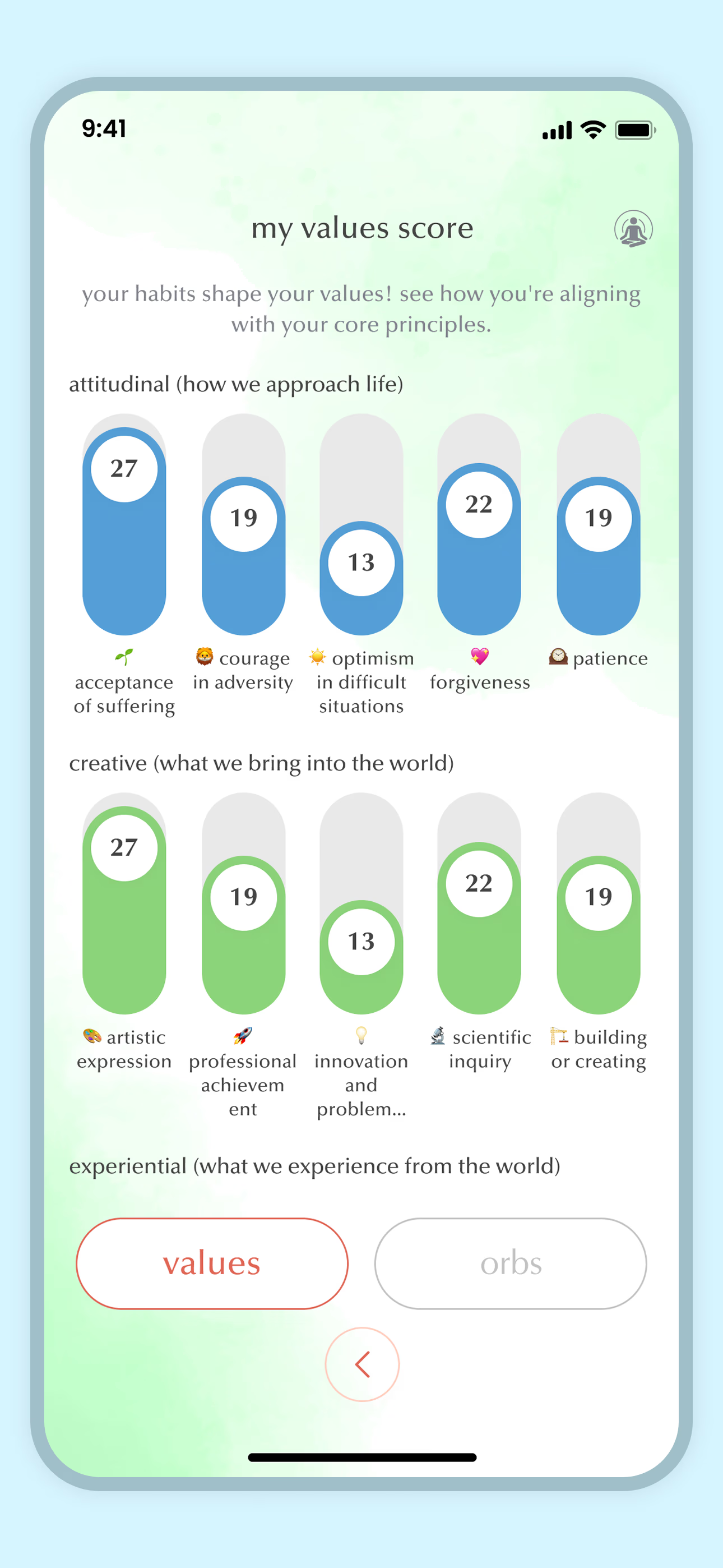
From Science to Art.
Understanding explains what is happening. Art allows you to feel it—without fixing, judging, or naming. Pause here. Let the images work quietly. Sometimes meaning settles before words do.
One Quiet Window, one insight, one reflection — every Sunday