Attention Extraction: How Platforms Monetize Your Focus
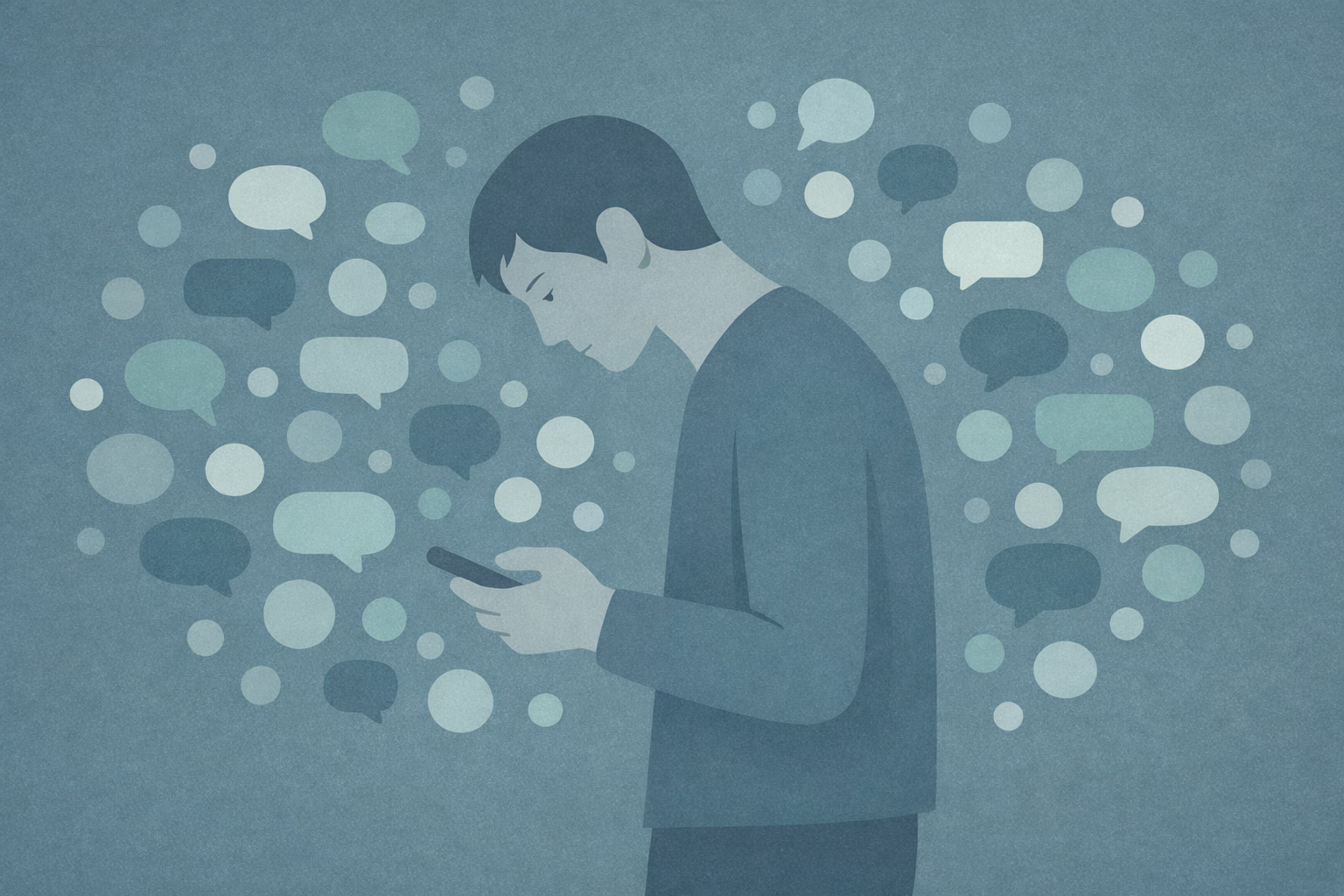
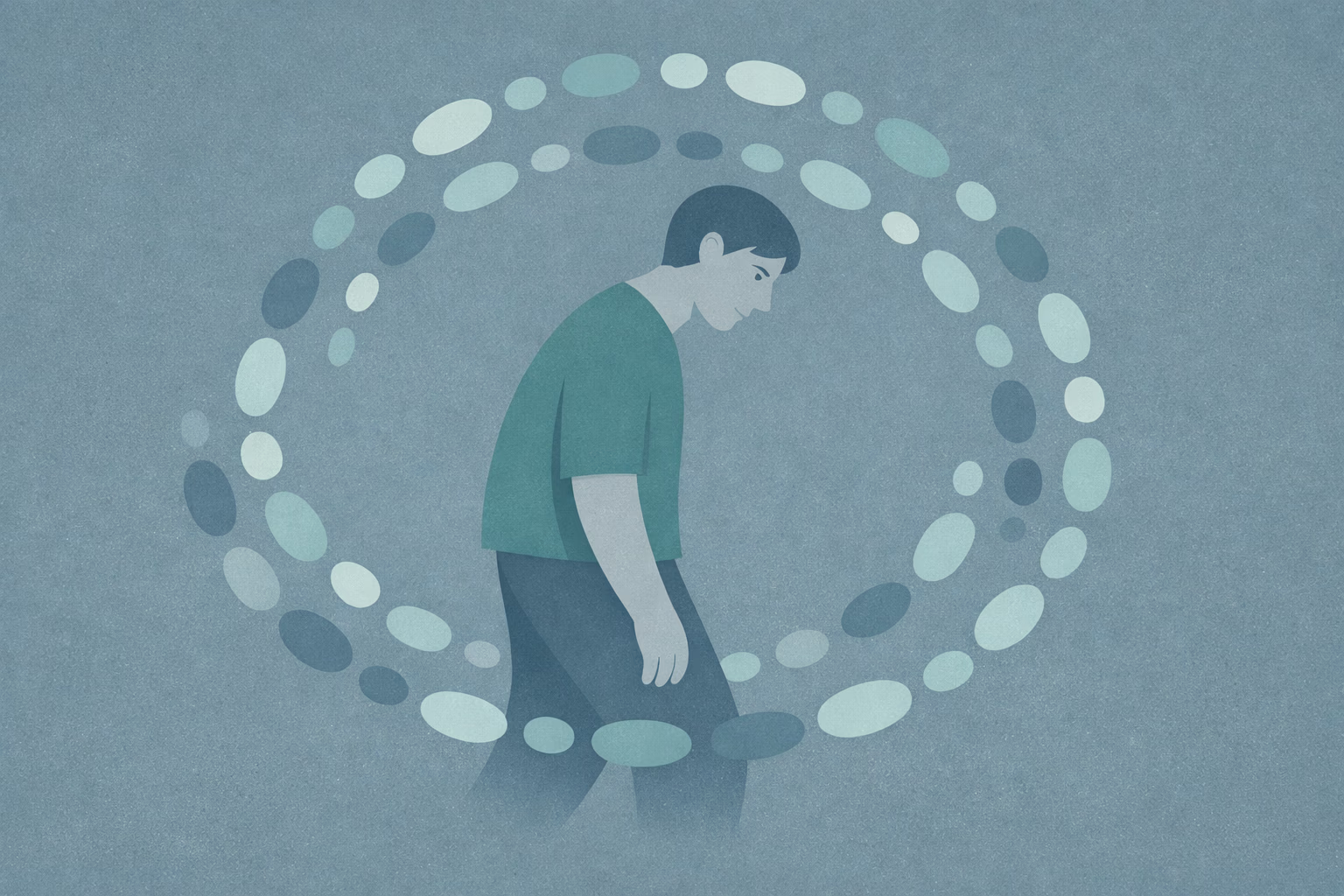
In short: For many people, “smartphone addiction” doesn’t feel like a dramatic loss of control. It feels smaller and more ordinary: a hand reaching for the device before you’ve fully decided, a quick scroll that turns into twenty minutes, a restless impulse to check even when nothing is happening.
For many people, “smartphone addiction” doesn’t feel like a dramatic loss of control. It feels smaller and more ordinary: a hand reaching for the device before you’ve fully decided, a quick scroll that turns into twenty minutes, a restless impulse to check even when nothing is happening.
In a Meaning Density frame, this isn’t a character flaw. It’s what tends to happen when a nervous system is asked to stay alert, connected, and evaluated—without enough closure. Phones are not just tools; they are environments built around rapid signals, partial completion, and rewards that arrive on unpredictable schedules.
What if the “pull” toward your phone is less about willpower—and more about your system trying to finish unfinished loops?
Problematic smartphone use often shows up as a specific felt experience: an urge that arrives before thought, a reflex to check during micro-pauses, a sense of friction when the phone isn’t available, and then guilt afterward. This combination can look like “I chose poorly,” but it’s frequently closer to “my system got recruited.” [Ref-1]
Many people recognize a familiar pattern: attention fragments, the day feels harder to hold, and the phone becomes the easiest place to locate quick orientation—updates, messages, novelty, proof that you’re not missing something. The discomfort isn’t mysterious; it’s what happens when your brain learns that tiny digital cues reliably shift state fast.
Dopamine is often described as the chemical of pleasure, but a more accurate everyday description is: dopamine helps mark what is worth paying attention to again. It spikes strongly when something is better than expected, uncertain, or newly informative—especially when the timing is unpredictable. [Ref-2]
This is why variable rewards are so sticky. When the brain can’t predict whether a check will deliver a message, a like, a new post, or nothing, it treats the uncertainty itself as meaningful. That uncertainty generates a kind of “keep looking” energy—an attentional capture that can feel like urgency even when nothing is urgent.
Why does a boring scroll sometimes feel impossible to stop?
Because the system isn’t only consuming content; it’s scanning for a reward prediction update—something that completes the question of “Did anything happen?” The phone becomes a portable uncertainty-resolver, and the brain learns the motion of checking as the fastest route to that resolution.
Smartphones work so well on humans because humans evolved to treat certain signals as high priority: novelty (new information), social feedback (acceptance, status, belonging), and ambiguity (not knowing what’s happening). These are not superficial cravings—they’re survival-relevant categories in a social species.
Modern apps intensify these signals into a continuous stream. The result is not “weakness.” It’s a mismatch: an ancient nervous system encountering a device that can generate endless novelty and social information with almost no friction. [Ref-3]
When the environment can produce unlimited “maybe something important,” the brain stays on duty.
Checking your phone can quickly change internal state: boredom softens, loneliness gets a brief counter-signal, uncertainty narrows, and discomfort becomes less specific. That’s not because you’re “avoiding feelings.” It’s because the device provides rapid, clean inputs that temporarily organize attention.
In other words, the phone offers relief and stimulation—two powerful regulators. Over time, a nervous system under load learns the most available regulator in the environment. That learning is adaptive in the short term, even if it becomes costly when it crowds out other forms of closure. [Ref-4]
Smartphones genuinely do useful things: they connect families, coordinate work, provide navigation, and offer communities that might not exist locally. The issue isn’t that phones are “bad.” It’s that the same device that helps you function also trains your attention through repeated micro-rewards and micro-interruptions.
Over time, the nervous system can start leaning on phone-mediated signals to maintain a sense of social orientation—who’s there, what’s happening, whether you’re included. Research has linked patterns of smartphone social app use with differences in dopamine-related measures, suggesting the reward system is meaningfully involved in how these behaviors stabilize. [Ref-5]
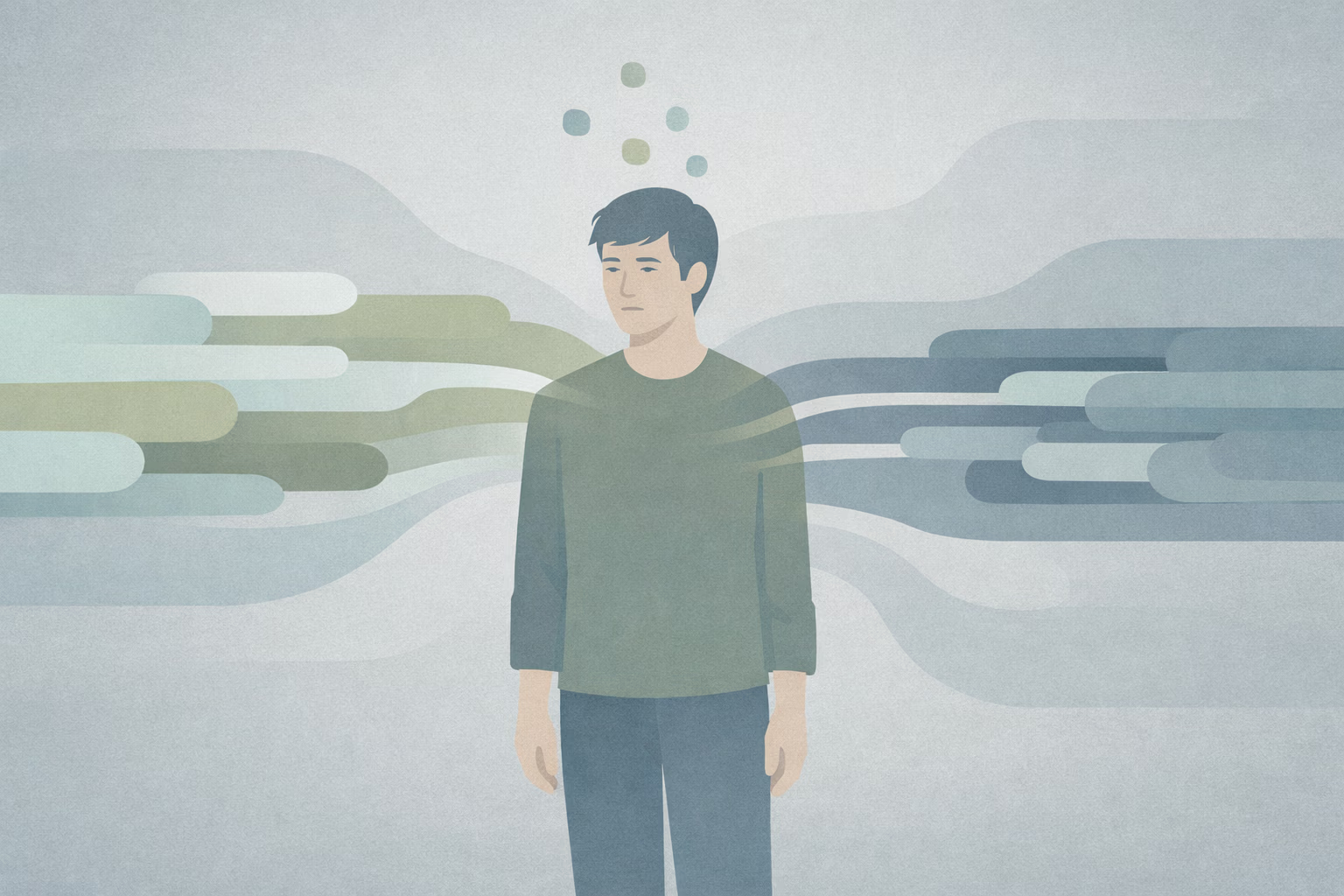
Fragmentation is the quiet cost: you can be “doing a lot” while your attention never gets the full, settled “done” signal that allows the system to stand down.
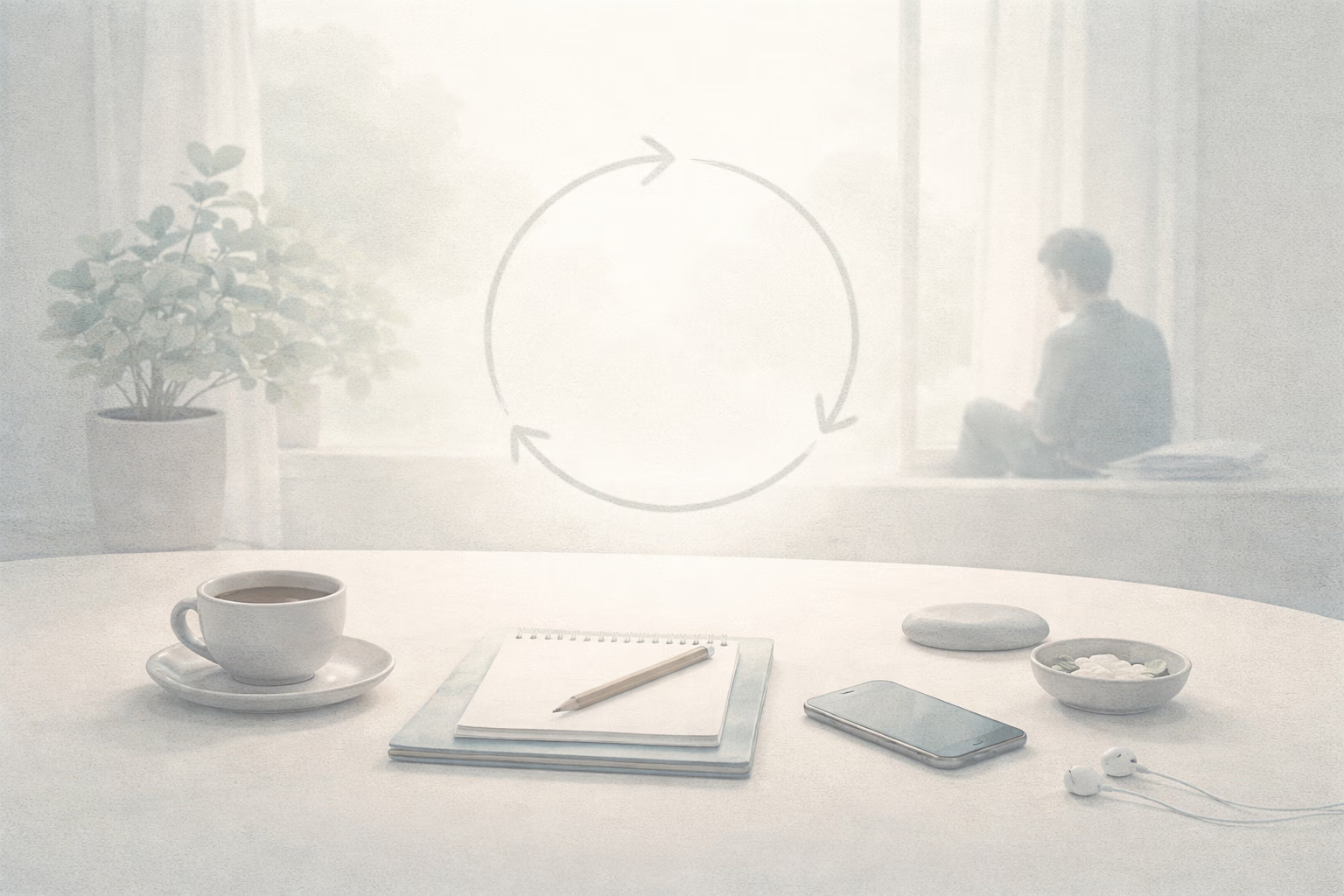
Many smartphone habits follow a simple loop. A cue appears (a notification, a pause in work, a flicker of uncertainty). Checking happens quickly. Sometimes there’s a reward (a message, novelty, social signal). Sometimes there isn’t—but the possibility keeps the loop alive.
Notifications are especially effective because they don’t just deliver information; they interrupt cognitive control. They insert a competing priority signal into your system and make “switching” feel necessary, even when you intended to stay with a task. [Ref-6]
Some signs of a stabilized loop are surprisingly physical: phantom vibrations, reflexive reaching, checking without remembering why, or feeling slightly unmoored when the phone isn’t nearby. These aren’t dramatic symptoms; they’re evidence that the brain has moved the behavior from decision into automation.
Distraction and problematic use are also associated with shifts in focus and mental health strain, particularly when the phone becomes the primary regulator during stress or uncertainty. [Ref-7]
Why can being without the phone feel strangely tense?
Because the device has become part of the nervous system’s orientation equipment. When it’s removed, the system briefly loses a familiar pathway for reducing uncertainty and reestablishing social/attentional bearings.
A common consequence of constant checking isn’t just “less time.” It’s less depth. When attention is repeatedly pulled into short bursts, the brain gets fewer chances to settle into sustained engagement—reading, conversation, creative work, even rest.
Over time, people often describe a dulled sense of satisfaction: content feels less satisfying, boredom becomes harder to tolerate, and quiet moments feel oddly irritating. In a coherence lens, this isn’t emotional failure; it’s a predictable outcome of high-frequency stimulation with low completion.
Research on addictive smartphone behavior highlights how reinforcement patterns and attentional capture can sustain repeated use, especially in young adults navigating high social and informational demand. [Ref-8]
When life is stressful, uncertain, or monotonous, the nervous system looks for quick regulation. The smartphone provides a rapid state shift: a brief relief from the edges of stress or the blankness of boredom. That relief is not a personality problem; it’s a functional outcome that teaches repetition.
This is how loops deepen: not through dramatic enjoyment, but through reliable micro-relief. Each time checking reduces tension or restores a sense of “something is happening,” the behavior is reinforced. Notifications and push cues amplify this by repeatedly re-opening incomplete attentional cycles and reducing task continuity. [Ref-9]
Relief can keep a loop going even when the experience isn’t truly satisfying.
It helps to separate two experiences that can look similar: state change and stability. Phones are excellent at state change—shifting you quickly out of one moment and into another. But stability usually comes from something else: reduced load and real closure, where the nervous system receives enough completion to stop scanning.
In problematic smartphone use, the system often stays partially activated—half-working, half-waiting. That “on standby” quality can be mistaken for motivation problems, when it’s more like incomplete settling. Reviews of problematic smartphone use emphasize how multiple factors—stress load, sleep disruption, mental health strain, and environmental reinforcement—interact to maintain the pattern. [Ref-10]
Restoration, in this frame, isn’t an insight or a reframe. It’s what becomes possible when the environment and the body finally allow the “not needed right now” signal to return.
Digital connection can be meaningful, but it often arrives as partial contact: short bursts of signal without the full-bodied cues that help humans settle. Face-to-face interaction, shared time, and reliable relationships provide richer safety information—tone, pace, reciprocity, and the feeling of being held in someone’s attention.
Social support has been shown to buffer stress and shape brain activity in ways that reduce threat load. [Ref-11] When stress load is lower, the pull toward rapid digital relief often softens—not because someone “tried harder,” but because the system has less need for a substitute regulator.
What if craving is sometimes a signal of missing nourishment, not excess desire?
When notification pressure and rapid reward sampling decrease, many people notice subtle changes: fewer compulsive checks, a longer “gap” between impulse and action, and a clearer sense of what they were doing before the urge arrived. That gap isn’t a technique; it’s often a sign of restored cognitive control capacity.
Studies on notifications and cognitive control suggest that interruptions can impair performance and increase switching costs, while reduced interruption load can support steadier focus. [Ref-12] In lived experience, steadier focus often comes with a quieter internal tempo—less “I should check” noise running in the background.
Importantly, this isn’t about becoming perfectly focused. It’s about the system regaining the ability to return—to tasks, to people, to rest—without needing constant external prompts.
Intentional technology use tends to emerge when the phone stops being the primary closure machine. When the nervous system is less fragmented, it becomes easier to let notifications exist without treating them as commands, and to choose engagement based on purpose rather than reflex.
This shift is not usually dramatic. It can feel like a gradual re-ordering: the phone becomes one resource among many, instead of the default regulator for every pause. Research on nomophobia and related patterns highlights how anxiety and dependence can cluster around device separation—underscoring that, for many, the phone has become intertwined with felt safety and orientation. [Ref-13]
Agency often returns quietly—when the day feels more complete, not when you force yourself to resist.
In modern digital environments, attention is constantly invited, measured, and re-sold back to us as urgency. It can start to feel like your mind “belongs” to whoever pings you next. But attention is not just a productivity asset—it’s how your life becomes yours: how experiences register, how relationships deepen, how values become real in time.
From a coherence perspective, the goal isn’t to win a battle against a device. It’s to restore conditions where your nervous system can complete cycles, stand down, and recognize what matters without constant prompting. Frameworks that examine problematic smartphone and social media use increasingly emphasize context, design, and reinforcement—not personal deficiency. [Ref-14]
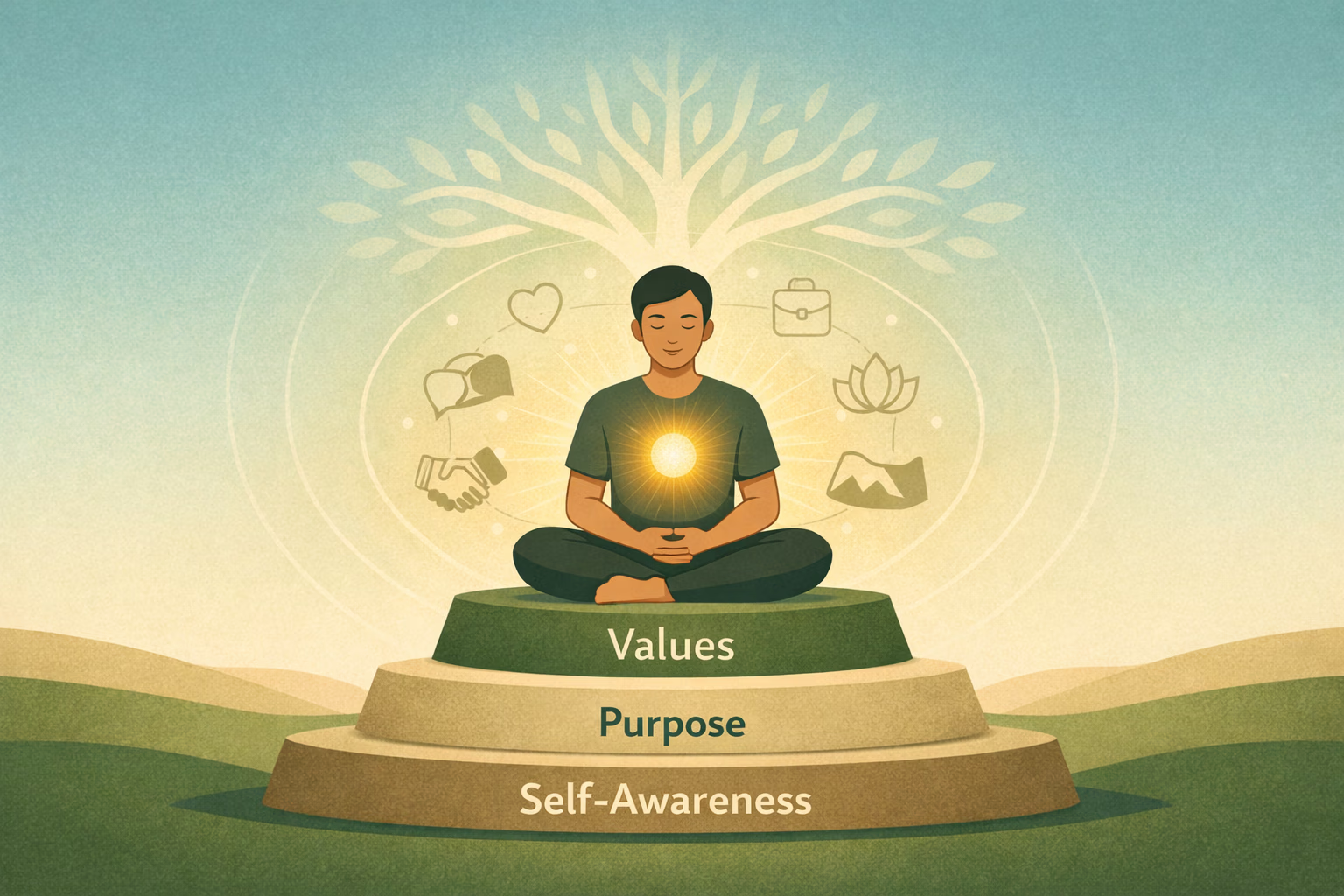
When attention aligns with what you actually care about, meaning density rises: fewer open loops, more completion, more “this is my life” continuity.
Many people living with heavy phone pull are not broken; they’re overstimulated, over-cued, and under-closed. The nervous system does what nervous systems do: it repeats what reduces uncertainty fast.
As the environment becomes less fragmenting and life offers more genuine completion, the pull often loses intensity. What returns isn’t a perfect mind—it’s a steadier capacity to inhabit your own moments. And that steadiness is closely tied to quality of life and mental health in the broader research conversation around smartphone use. [Ref-15]
Agency doesn’t always arrive as motivation. Sometimes it arrives as quiet: a day that finally feels more finished than pending.
From theory to practice — meaning forms when insight meets action.
Because the brain has moved the behavior from decision into automation. Phantom vibrations, reflexive reaching, checking without remembering why — these aren't dramatic symptoms; they're evidence the loop is installed. The phone has become part of the nervous system's orientation equipment. When it's removed, the system briefly loses a familiar pathway for reducing uncertainty and reestablishing social/attentional bearings. The 'pulled' feeling is a real bodily signal, not a moral verdict. Your system got recruited, not your character. The urge arrives before thought, the day fragments, and the phone becomes the easiest place to locate quick orientation — updates, messages, novelty, proof you're not missing something.
Because dopamine isn't pleasure juice — it's a teaching signal that marks what's worth paying attention to again. It spikes strongly when something is uncertain or newly informative, especially when timing is unpredictable. Variable rewards are sticky: when the brain can't predict whether checking delivers a message, like, new post, or nothing, it treats the uncertainty itself as meaningful. The system isn't only consuming content; it's scanning for a reward prediction update — something that completes the question of 'did anything happen?' The phone becomes a portable uncertainty-resolver, and the brain learns the motion of checking as the fastest route to that resolution. The Pleasure Loop runs even when nothing satisfying arrives.
Because checking quickly changes internal state: boredom softens, loneliness gets a brief counter-signal, uncertainty narrows, discomfort becomes less specific. That's not avoiding feelings — it's the device providing rapid clean inputs that temporarily organize attention. The phone offers relief and stimulation, two powerful regulators, with almost no friction. A nervous system under load learns the most available regulator in the environment. That learning is adaptive in the short term. The catch is that loops deepen through reliable micro-relief, not dramatic enjoyment. Each time checking reduces tension, the behavior is reinforced. Notifications amplify this by repeatedly reopening incomplete attentional cycles.
Phones are excellent at state change — shifting you quickly from one moment to another. Stability comes from something else: reduced load and real closure, where the nervous system receives enough completion to stop scanning. In problematic smartphone use, the system stays partially activated — half-working, half-waiting. That 'on standby' quality looks like motivation problems but is closer to incomplete settling. Restoration isn't insight or willpower; it's what becomes possible when the environment and body finally allow the 'not needed right now' signal to return. As real-life completion becomes more available, the pull softens — not because you tried harder, but because the system has less need for a substitute regulator.
From Science to Art.
Understanding explains what is happening. Art allows you to feel it—without fixing, judging, or naming. Pause here. Let the images work quietly. Sometimes meaning settles before words do.
One Quiet Window, one insight, one reflection — every Sunday