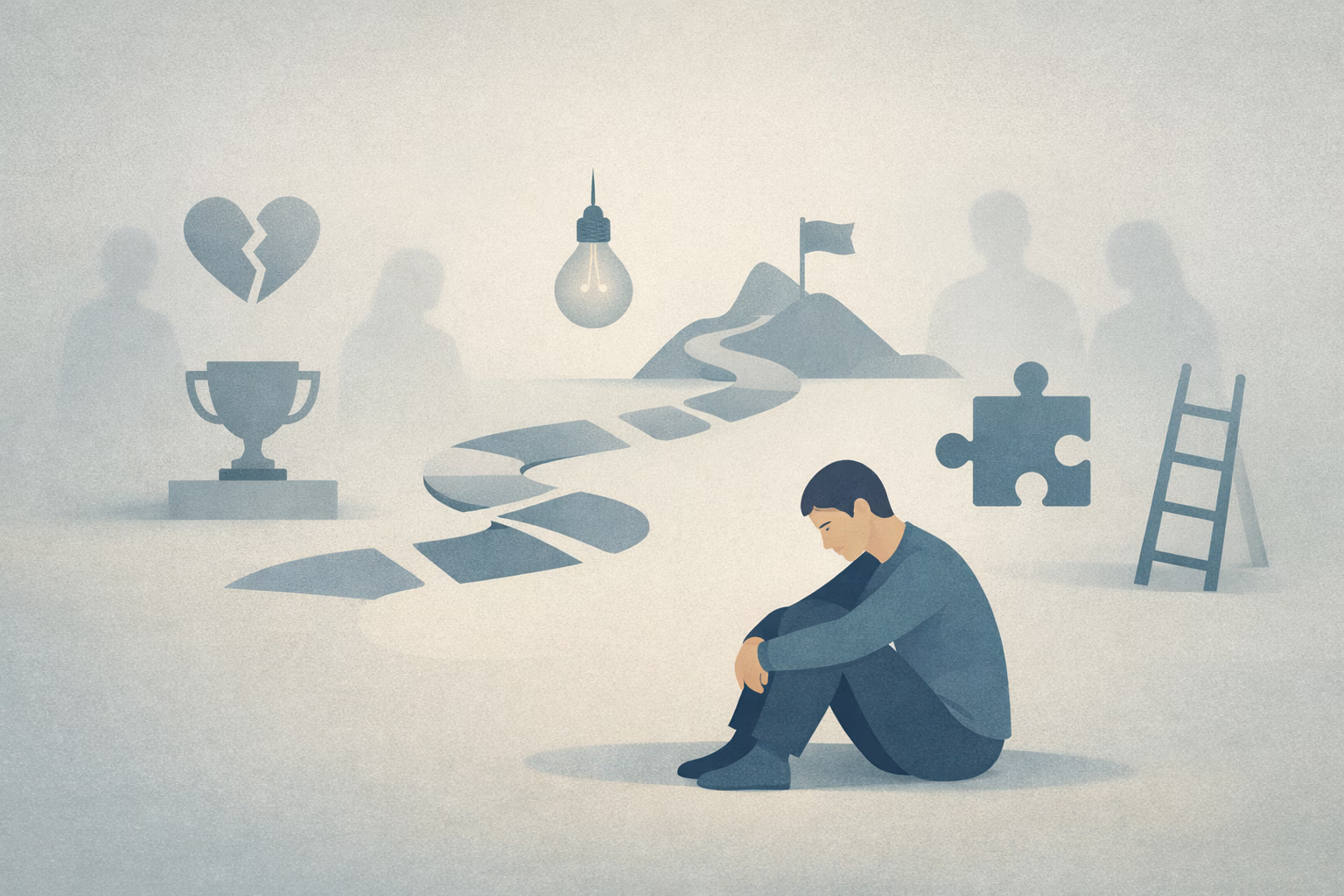

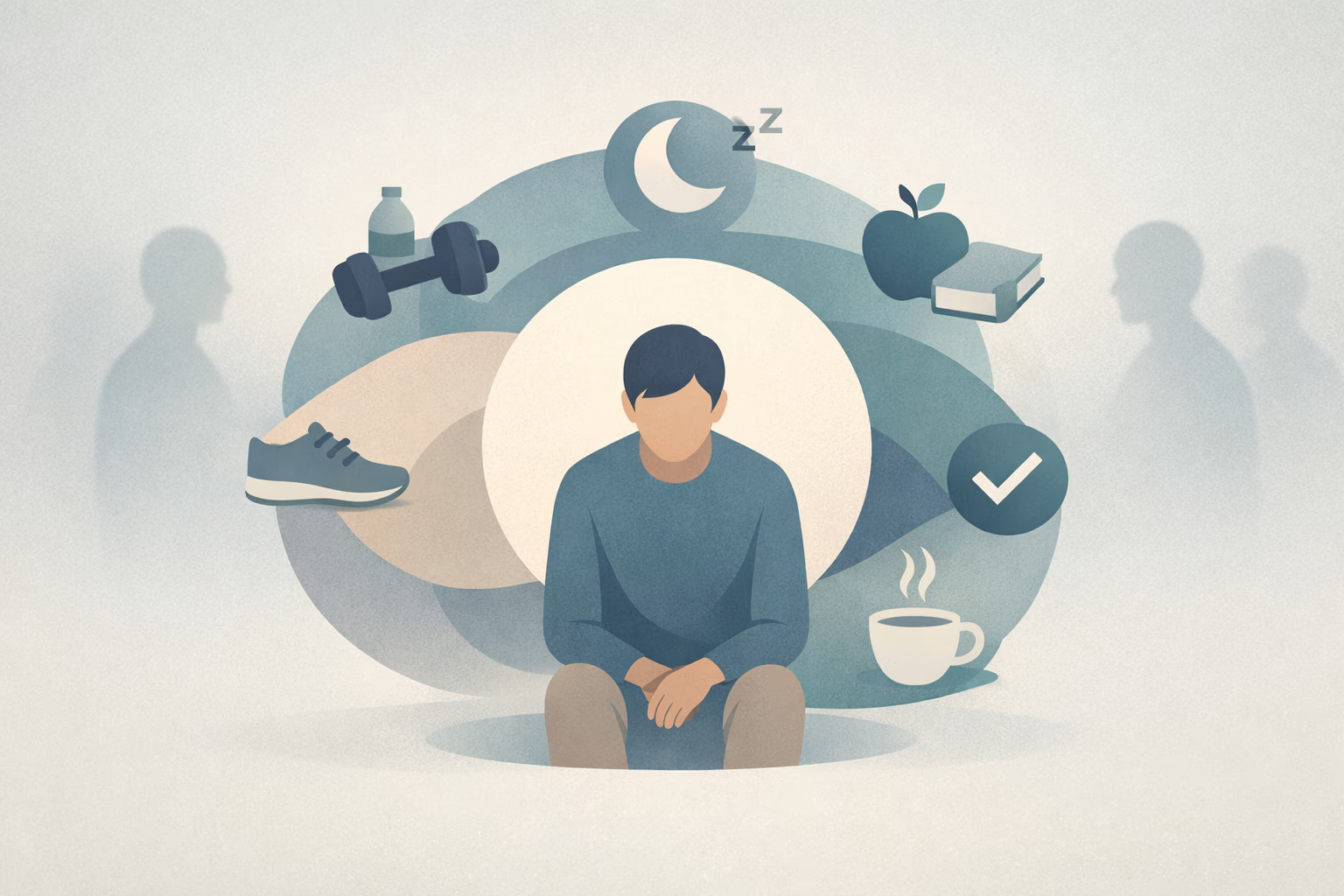
Identity Anchoring: The Secret to Habit Success
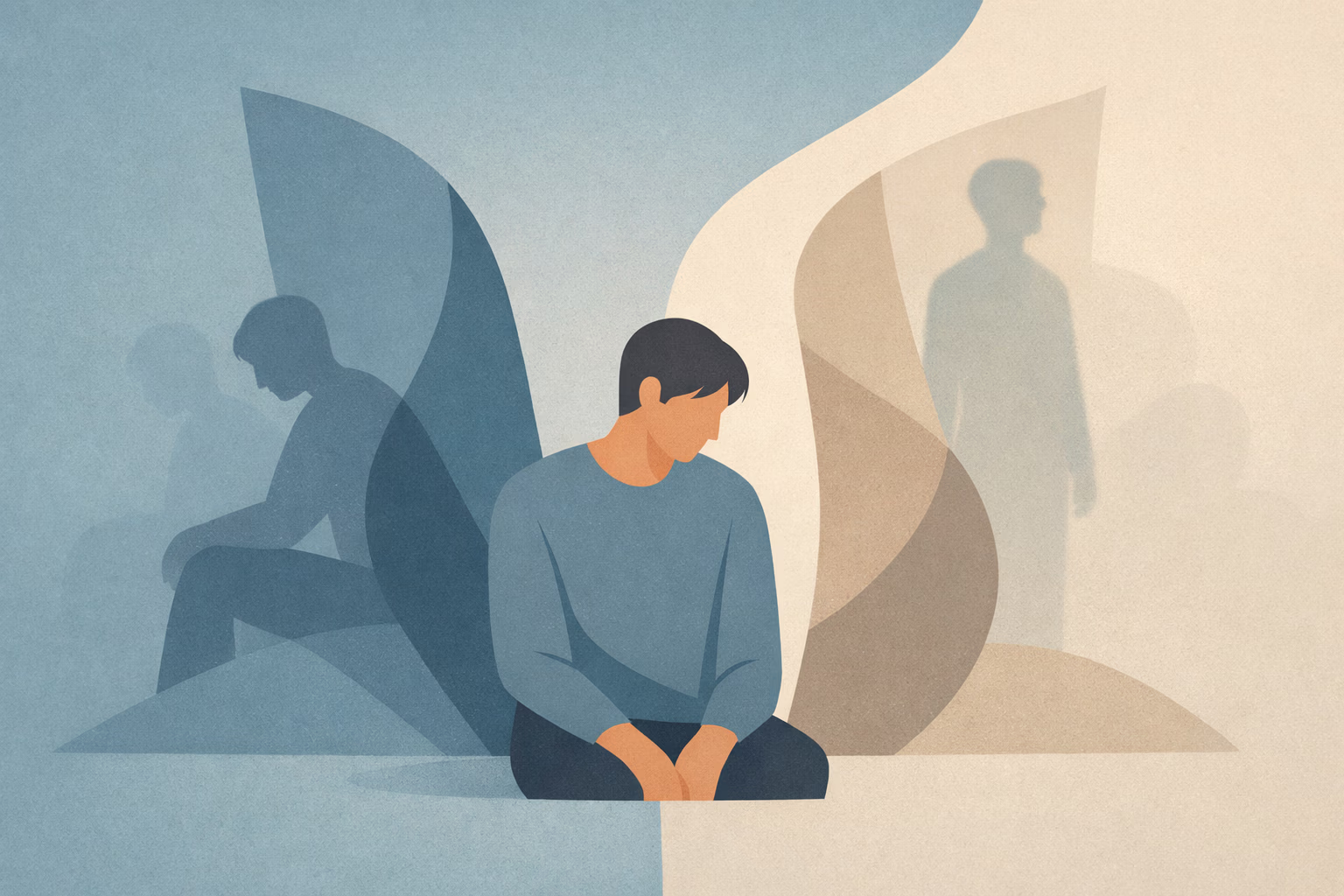
In short: Many people don’t struggle with habits because they “lack discipline.” They struggle because modern life asks the nervous system to self-regulate in isolation—while also absorbing constant noise, options, and evaluation. In that setting, even meaningful intentions can stay stuck in the “almost” stage: started, restarted, and never quite settled.
Many people don’t struggle with habits because they “lack discipline.” They struggle because modern life asks the nervous system to self-regulate in isolation—while also absorbing constant noise, options, and evaluation. In that setting, even meaningful intentions can stay stuck in the “almost” stage: started, restarted, and never quite settled.
Habit coaching and accountability can look, on the surface, like external enforcement. But for many nervous systems, it functions more like scaffolding: a predictable loop that reduces ambiguity, provides feedback, and creates a sense of completion. That completion is what allows a behavior to move from effortful to more stable—less a daily debate, more a lived pattern.
What if accountability works because it gives your system a reliable “done” signal—so the habit can actually land?
When you try to change a habit solo, you’re carrying every role at once: planner, coach, referee, witness, and evaluator. That can be manageable in a low-stress season. But under real-world load—work demands, family needs, sleep debt, uncertainty—self-directed change often becomes unstable, not because you’re inconsistent as a person, but because the system is overloaded.
Without an external mirror, a habit attempt can stay psychologically “open.” You may complete the behavior, but not receive a clear signal that it counted, mattered, or connected to anything larger. The result is a familiar pattern: bursts of momentum, followed by drift, followed by self-questioning—then another restart. Frustration is often the nervous system’s way of saying, “This loop isn’t closing.” [Ref-1]
When there’s no witness, it can feel like nothing is real enough to stick.
Accountability changes the meaning of a habit attempt. A commitment that is seen by another person becomes a social signal, not just a private wish. Social brains track reputation, reliability, and belonging cues automatically; that circuitry can stabilize follow-through in ways that raw willpower can’t reliably replicate.
This isn’t about being pushed. It’s about reinforcement and coherence: “This is something I said I would do, and someone will notice the outcome.” Over time, repeated commitment-signaling helps the behavior feel less like a temporary project and more like a stable identity-linked pattern. That’s one reason coaching programs show benefits for behavior change across health contexts: they create repeatable loops of intention → action → feedback → continued engagement. [Ref-2]
Why does being witnessed change your capacity to follow through?
For most of human history, survival depended on predictable cooperation. Our nervous systems developed in groups where behavior had consequences, meanings, and responses. In that context, “sticking with something” wasn’t primarily a personal trait—it was supported by shared rhythms, roles, and social reinforcement.
That’s also why narrative identity matters so much. People don’t just do behaviors; they organize life into stories about what kind of person they are, what they stand for, and what makes sense in their world. When a habit is connected to that narrative—especially through social reflection—it becomes easier for the system to treat it as coherent and worth maintaining. [Ref-3]
So when someone feels steadier with a coach, group, or partner, it isn’t evidence of weakness. It’s evidence of a nervous system using the kind of structure it was designed to rely on: relational orientation and shared meaning.
Coaching is often described as support, but one of its most practical effects is load reduction. When someone else helps hold the frame—what the plan is, what “counts,” what gets reviewed—the nervous system spends less energy on constant recalculation. That can free capacity for the behavior itself.
Another key piece is immediate feedback. A habit attempt without feedback can feel like shouting into a void; with feedback, the loop becomes measurable and complete. That completion matters physiologically: it’s easier for the system to stand down when it knows where it stands. Coaching can also temporarily soften self-doubt by replacing endless self-evaluation with a shared process and agreed-upon checkpoints. [Ref-4]
In modern culture, self-discipline is often treated as the main ingredient of change. But discipline is a limited resource when life is fragmented. If your days contain constant switching, alerts, performance pressure, and unpredictable demands, the nervous system can become biased toward short-term relief and quick resolution—not because you don’t care, but because the environment keeps load high.
Accountability works differently than discipline. It embeds the habit in an identity loop: repeated commitments, witnessed follow-through, and relational continuity make the behavior feel more “real” and less optional. Many digital and human coaching models aim to do exactly this—create consistent contact and structured follow-up that supports behavior stability over time. [Ref-5]
Discipline can start a habit. Coherence is what lets it stay started.
When accountability is absent, a habit attempt can become an open loop: the plan is made, the effort begins, the day gets disrupted, and then the loop ends without a clear completion signal. Not “failure,” just incompletion. Over time, incompletion teaches the system that the habit is unstable—something that starts and stops—so it becomes harder to invest in it fully.
This is one way avoidance patterns can form without needing a fear-based explanation. If skipping a habit creates immediate relief (less load, fewer decisions, less time pressure) and the consequences are muted or delayed, the nervous system learns that non-engagement is efficient. Then the old pattern reasserts itself—less because it’s “preferred,” more because it reliably closes the loop quickly.
Identity is also shaped by these repetitions. When the story becomes “I’m always restarting,” the narrative narrows. Research on narrative identity emphasizes how people reorganize their sense of self around patterns and meaning-making, especially during change. [Ref-6]
When structure is thin, people often interpret the resulting instability as a personal flaw. But many of the most common “habit problems” are simply what a nervous system does when the loop lacks feedback, closure, and social reinforcement.
These patterns can also interact with identity-based motivation: when a behavior doesn’t feel identity-congruent (or doesn’t get reinforced as identity-congruent), persistence tends to drop—especially under stress. [Ref-7]
Consistency is not just repetition—it’s repetition that lands. When people practice without support, the behavior may happen, but the identity reinforcement can be weak: there’s no shared acknowledgment, no external marker of progress, no relational “memory” that holds the thread through messy weeks.
Social support has been associated with long-term maintenance in health behaviors, in part because it keeps engagement from becoming purely private and therefore easier to abandon during stress spikes. [Ref-8] When support is absent, the habit competes against everything else for attention and meaning—often losing not because it’s unimportant, but because it’s not anchored.
Unwitnessed effort can start to feel optional, even when it matters to you.
A lapse is not inherently damaging. What tends to create discouragement is what happens after: silence, ambiguity, and no clear pathway back into the loop. Without feedback, the mind fills the gap with global conclusions (“This never lasts”), and the nervous system learns that engagement leads to extra load without reliable closure.
Over time, this can reduce self-efficacy—your felt sense that your actions reliably lead to outcomes. Social support has been linked to higher self-efficacy in behavior contexts, suggesting that being supported doesn’t just feel nicer; it changes the perceived reliability of effort. [Ref-9]
What changes when someone else helps you interpret a lapse as a moment in a process—not a verdict?
It can help to name what accountability really provides: continuity. A consistent check-in, a shared record, and a relational memory that says, “This is still the path we’re on.” That continuity reduces the fragmentation that often breaks habits—not by increasing intensity, but by preserving the thread.
Monitoring and reflection are often described as tools, but their deeper function is orientation. They create a stable storyline where actions connect to values and identity across time. When a habit lives inside that storyline, the nervous system gets fewer mixed signals. Social support has been shown to predict adherence in exercise contexts, which may partly reflect this stabilizing effect of being held in a shared frame. [Ref-10]
Accountability is less about being watched and more about not being alone with the ambiguity.
Accountability is not only a mechanism; it’s a relationship dynamic. A coach, partner, or group can serve as a steady reference point—someone who notices patterns, reflects progress, and keeps the habit from becoming a solitary struggle. That relational steadiness can function as a safety cue, which supports regulation and follow-through.
Social modeling also matters. Seeing someone treat consistency as normal—not heroic—changes what your system expects is possible. And when another person holds your stated values with respect, it’s easier for the behavior to feel identity-aligned rather than like an imposed rule. Popular accounts of accountability partnerships highlight how simply being answerable to another person can improve follow-through, likely by making the commitment more concrete and socially real. [Ref-11]
When accountability fits well, the noticeable change is often not dramatic motivation. It’s a quieter shift: fewer internal negotiations, less restart energy, and more predictable re-entry after disruption. The habit becomes something your week “includes,” not something you repeatedly have to convince yourself to do.
Over time, this can strengthen confidence—not as hype, but as a calmer expectation that your actions can be consistent because the system is supported. Many coaching frameworks describe accountability as a way to track commitments and follow-through in a structured, nonjudgmental way—making progress easier to see and therefore easier to sustain. [Ref-12]
One of the most underrated costs of inconsistent habits is not the missed behavior—it’s the ongoing management: the guilt loops, the mental bargaining, the repeated rebuilding of intention. When a habit becomes coherent with identity, that management load decreases. Energy that was spent on self-monitoring and self-correction can return to relationships, creativity, learning, and rest.
Research on identity-based motivation describes how identity congruence can make certain actions feel more “for me,” and therefore easier to maintain under pressure. [Ref-13] In lived terms, this can feel like stability: the habit is no longer a recurring crisis. It’s just part of the person you are becoming, reinforced through completion and continuity.
Less effort isn’t always less caring. Sometimes it’s what happens when a pattern finally clicks into place.
It’s understandable to feel wary of accountability—especially if you’ve experienced environments where being “held accountable” meant being shamed, monitored, or judged. But in a healthier frame, coaching is not about forcing behavior. It’s about creating conditions where behavior can complete: clear agreements, reliable follow-up, and respectful witnessing of progress over time.
When you view accountability as an identity-support system, the story changes. Instead of “I should be able to do this alone,” it becomes “My nervous system does better with continuity.” That is not a moral conclusion; it’s a design reality. And it’s why many accountability coaching models emphasize structure and follow-through as a way to make change sustainable, not punitive. [Ref-14]
Habit coaching can feel like “everything changes” because it shifts the problem from personal strain to structural support. The habit stops living only in your head and starts living in a shared reality with feedback, continuity, and closure. Over time, that’s what helps intention become durable—less a burst of effort, more a stable identity-linked pattern.
Whether support comes from a coach or an accountability partner, the deeper function is similar: helping your commitments become consistent enough to integrate into how you live. That’s not dependency; it’s how human change has often worked—together, with someone helping the loop close. [Ref-15]
From theory to practice — meaning forms when insight meets action.
Because accountability provides a Done Signal the system can register. The article reframes habit struggles structurally: when you change a habit solo, you're carrying every role at once — planner, coach, referee, witness, evaluator. Manageable in a low-stress season, unstable under real-world load. Without an external mirror, a habit attempt stays psychologically open. You complete the behavior but receive no clear signal that it counted, mattered, or connected to anything larger. A commitment seen by another person becomes a social signal rather than a private wish. Social brains track reputation and reliability automatically; that circuitry stabilizes follow-through in ways willpower can't reliably replicate.
No — the article challenges this framing directly. Discipline is a limited resource when life is fragmented. If your days contain switching, alerts, performance pressure, and unpredictable demand, the nervous system gets biased toward short-term relief. Accountability works differently than discipline: it embeds the habit in an identity loop — repeated commitments, witnessed follow-through, and relational continuity make the behavior feel real and less optional. Discipline can start a habit; coherence is what lets it stay started. Humans evolved to become consistent inside relationships, not in isolation. Needing structure isn't weakness — it's a nervous system using the kind of support it was designed to rely on.
Because the loop doesn't have closure. The article describes this as an open-loop pattern: the plan is made, effort begins, the day gets disrupted, the loop ends without a clear completion signal. Not failure — incompletion. Over time, incompletion teaches the system that the habit is unstable. Skipping creates immediate relief: less load, fewer decisions, less time pressure. The nervous system learns non-engagement is efficient because it reliably closes the loop fast. The story narrows to 'I'm always restarting.' This isn't a character problem; it's what happens when a system doesn't get feedback, closure, or social reinforcement to anchor the new behavior.
Quieter than motivation. The article describes the shift specifically: fewer internal negotiations, less restart energy, more predictable re-entry after disruption. The habit becomes something your week includes rather than something you repeatedly convince yourself to do. Pacing stabilizes across weeks, all-or-nothing meaning loosens around missed days, alignment between stated values and lived behavior strengthens. Coaching's deeper function is continuity — a consistent check-in, shared record, relational memory saying 'this is still the path we're on.' Accountability is less about being watched and more about not being alone with the ambiguity. Durable change is often a social achievement.
From Science to Art.
Understanding explains what is happening. Art allows you to feel it—without fixing, judging, or naming. Pause here. Let the images work quietly. Sometimes meaning settles before words do.
One Quiet Window, one insight, one reflection — every Sunday