


Connection Without Closeness
Learn why “connected” people feel emotionally starved.
In context: Yes. In the Meaning Density Model™, recognizing distance is a high-level act of regulation. It acknowledges the structural reality of the moment. Trying to “close“ the distance through force or demand often creates a “pressure loop“ that makes both people withdraw further. By simply recognizing the distance, you provide “relational room.
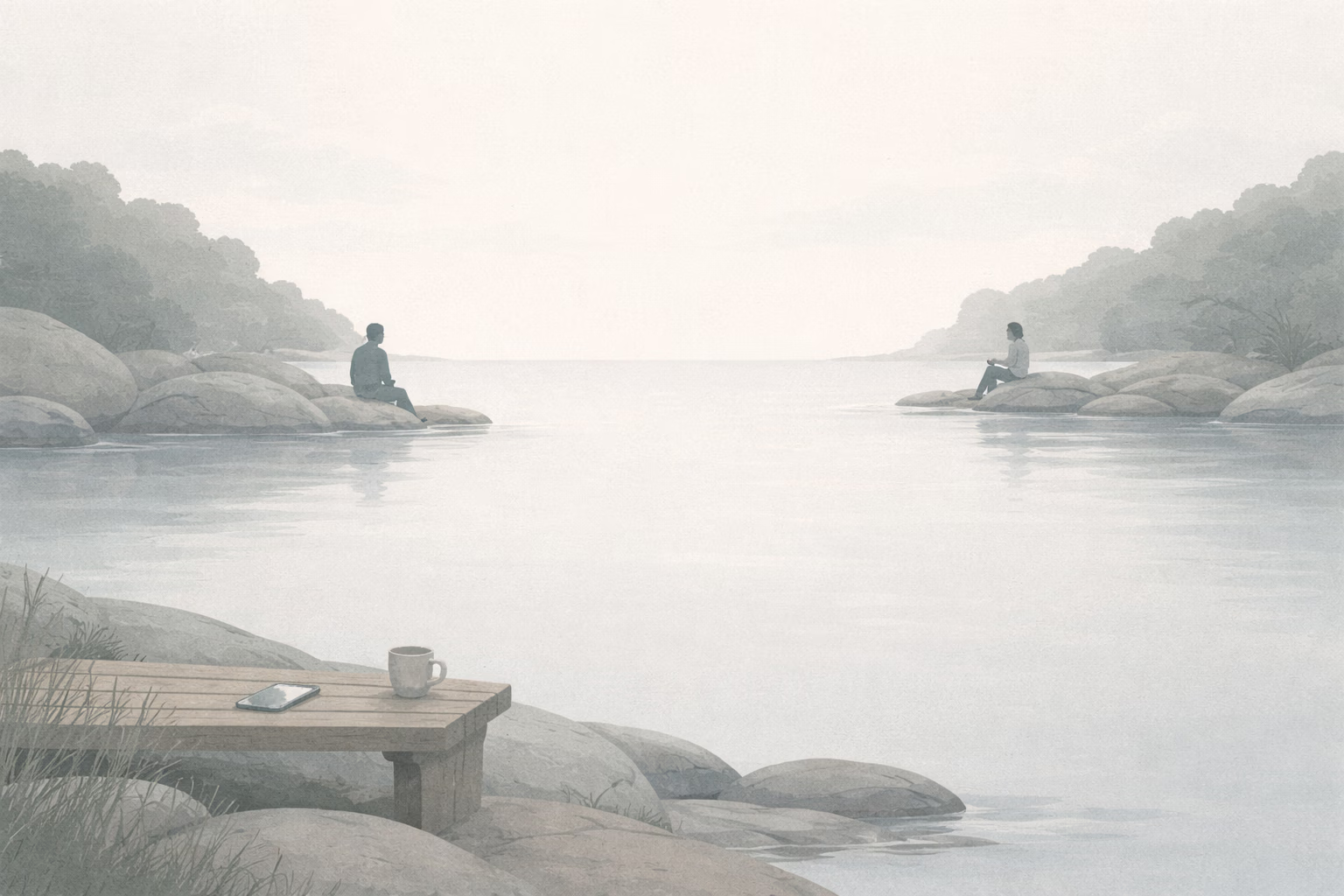
The distance is visible, steady, and left untouched.
You recognize it without leaning forward or pulling away.
Two shores remain in view, connected by awareness rather than movement.
This is the completion of recognition—seeing the gap without trying to erase it.
Complete recognition with DojoWell.
Explore DojowellArticles exploring the psychology behind these patterns.
Learn why “connected” people feel emotionally starved.
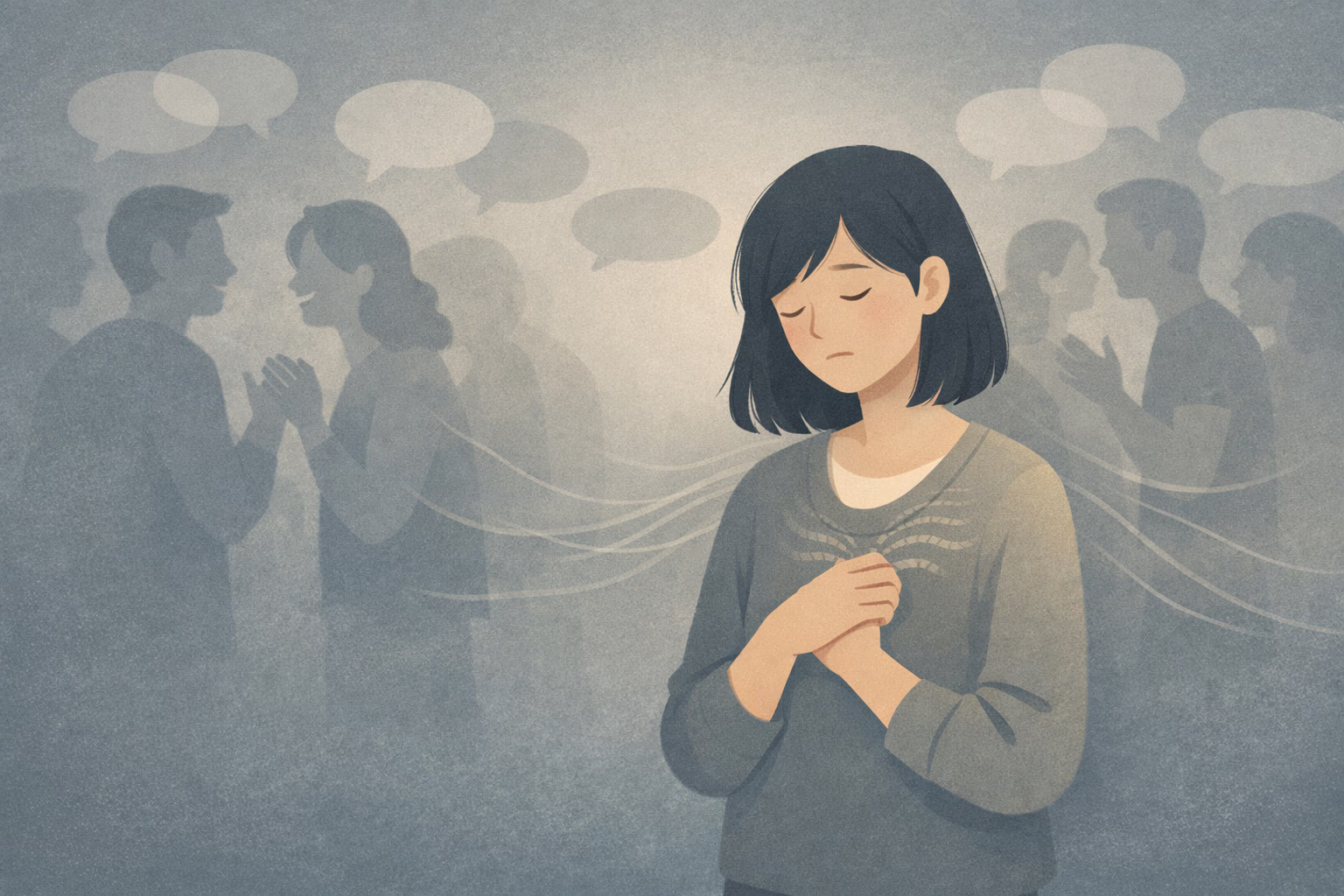
Understand why certain relationships drain you and how to protect your emotional energy.

Learn how to reconnect with yourself and rebuild inner trust.
Yes. In the Meaning Density Model™, recognizing distance is a high-level act of regulation. It acknowledges the structural reality of the moment. Trying to "close" the distance through force or demand often creates a "pressure loop" that makes both people withdraw further. By simply recognizing the distance, you provide "relational room." This cessation of pursuit allows the nervous system to settle. Often, the distance only begins to close naturally once the "pressure to close it" has been removed.
Then the distance becomes the "normalized orientation" of the relationship. Some relationships function best with a permanent, wide "buffer zone." By not trying to force a closeness that isn't there, you preserve the structural connection that is there. You avoid the "collapse" of the relationship by respecting its current limits. This allows for a "stable distance" that is far more meaningful and safe than a forced, high-friction closeness that constantly triggers the Threat system.
One Quiet Window, one insight, one reflection — every Sunday