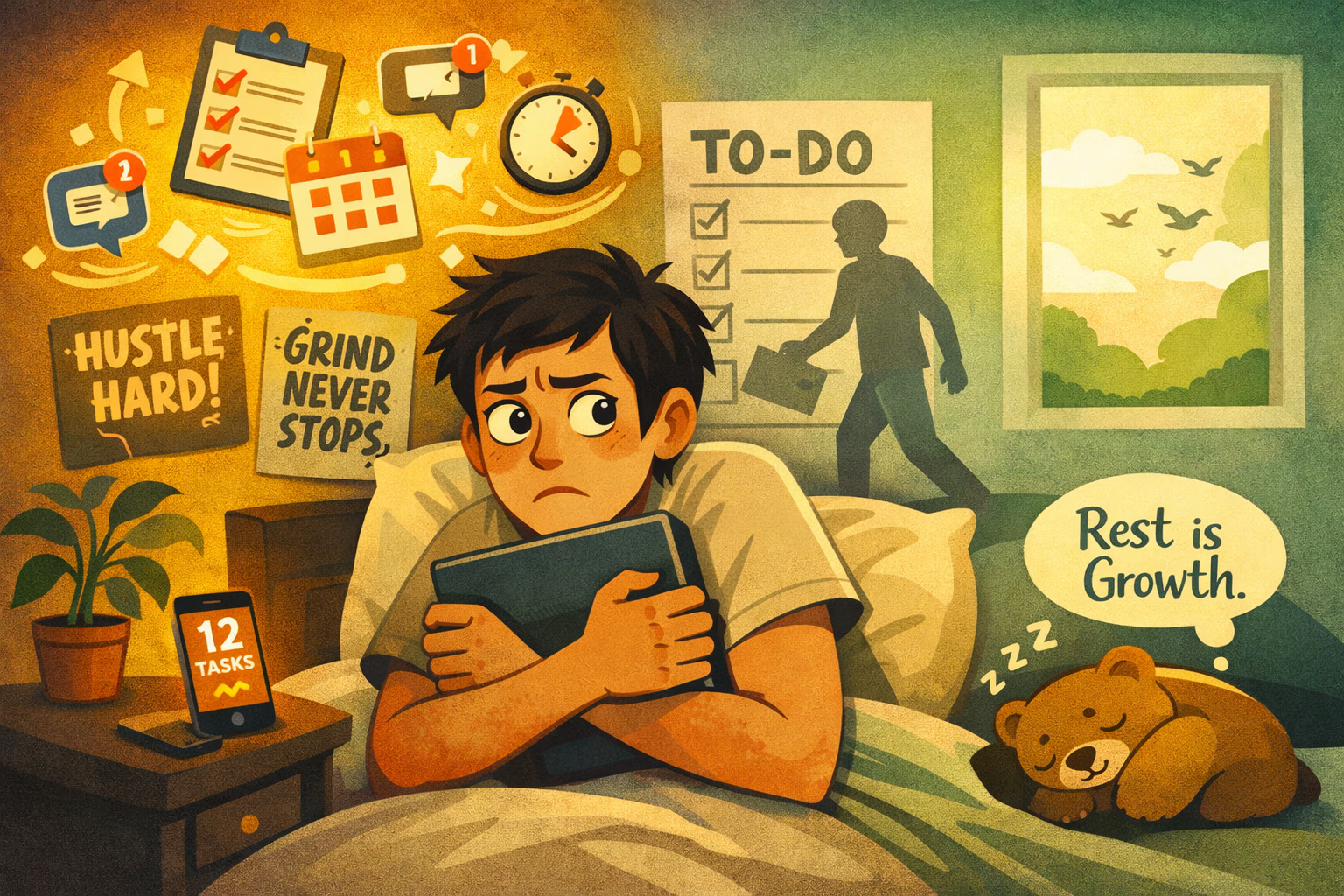
The Seduction of Power and Control
Understand why humans crave control and how it becomes emotionally addictive.
In context: No. In the Meaning Density Model™, control is Protection, Not Failure. We reframe control without moral judgment. Your need for control is a sophisticated structural response to a world that has felt unpredictable or overwhelming. It is a sign of your system's strength and its commitment to your survival.

Control is not failure here.
It is protection learned under pressure.
You notice how control shielded you, how it reduced harm and created predictability.
This moment reframes control as adaptive rather than defective, allowing dignity to return to the strategy that kept you safe.
Reframe control gently with DojoWell.
Explore DojowellArticles exploring the psychology behind these patterns.
No. In the Meaning Density Model™, control is Protection, Not Failure. We reframe control without moral judgment. Your need for control is a sophisticated structural response to a world that has felt unpredictable or overwhelming. It is a sign of your system's strength and its commitment to your survival. Recognizing this prevents the "shame loop" that often accompanies controlling behaviors, allowing you to view your control as a tool that can be adjusted as safety increases.
You change through structural maturation. When you stop shaming yourself for needing control, you free up the energy needed to build internal coherence. As your internal systems become more integrated and your baseline safety rises, the "need" for the external tool of control naturally diminishes. You don't "fix" the control; you "outgrow" it as you move into the Recovered Meaning Era.
One Quiet Window, one insight, one reflection — every Sunday