


Hyper-Independence as a Trauma Response
Learn why hyper-independence forms and how it limits emotional intimacy.
In context: In the Meaning Density Model™, attachment strain is often localized as “bracing“ in the body—tension in the jaw, shoulders, or gut. This is the body preparing for a “loop interruption“ or a “threat signal.“ We name these locations to help you ground your experience in physical reality.

The body braces quietly.
Shoulders shift.
Muscles prepare without being asked.
This is not tension created by thought—it is a posture shaped by experience.
The body remembers how closeness has felt before and adjusts in advance.
Nothing needs correcting here.
Observe somatic strain with DojoWell.
Explore DojowellArticles exploring the psychology behind these patterns.
Learn why hyper-independence forms and how it limits emotional intimacy.

Understand how fight/flight/freeze works and why freeze dominates today.
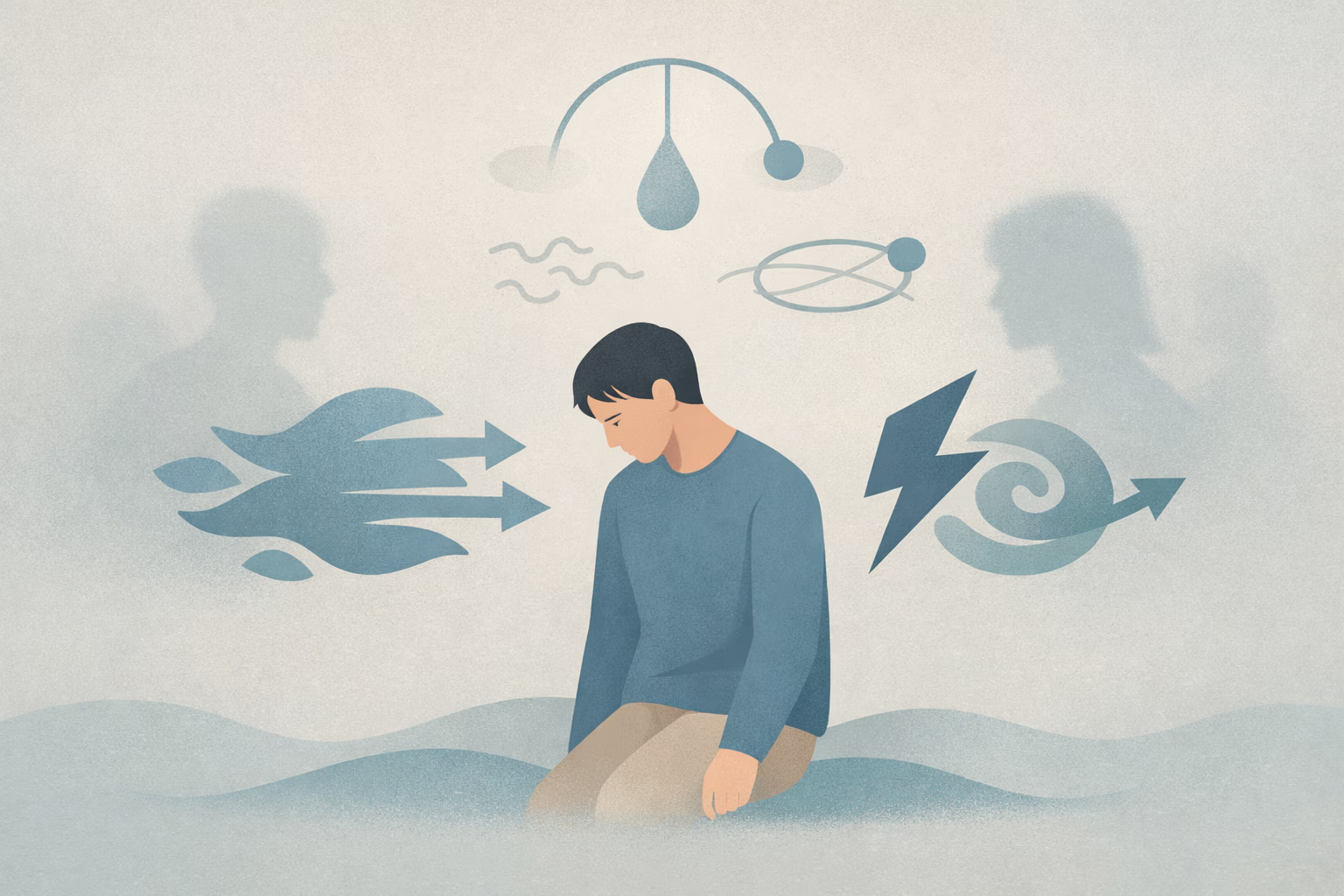
Explore why inner friction appears during transitions.
In the Meaning Density Model™, attachment strain is often localized as "bracing" in the body—tension in the jaw, shoulders, or gut. This is the body preparing for a "loop interruption" or a "threat signal." We name these locations to help you ground your experience in physical reality. By noticing where the "brace" is, you can identify which of the Four Systems is most active. Bracing is the physical manifestation of a system that hasn't yet reached a state of "done" or "safe."
Don't try to force relaxation; that just creates a new "pursuit loop." Instead, simply name the bracing when you feel it. "My shoulders are bracing." This acts as a "neutral witness" signal, which can actually help the Threat system stand down. By acknowledging the body's protective effort without judging it, you close the "evaluation loop." This "bottom-up" acceptance is often the only way the body feels safe enough to eventually soften its structural defenses on its own.
One Quiet Window, one insight, one reflection — every Sunday