

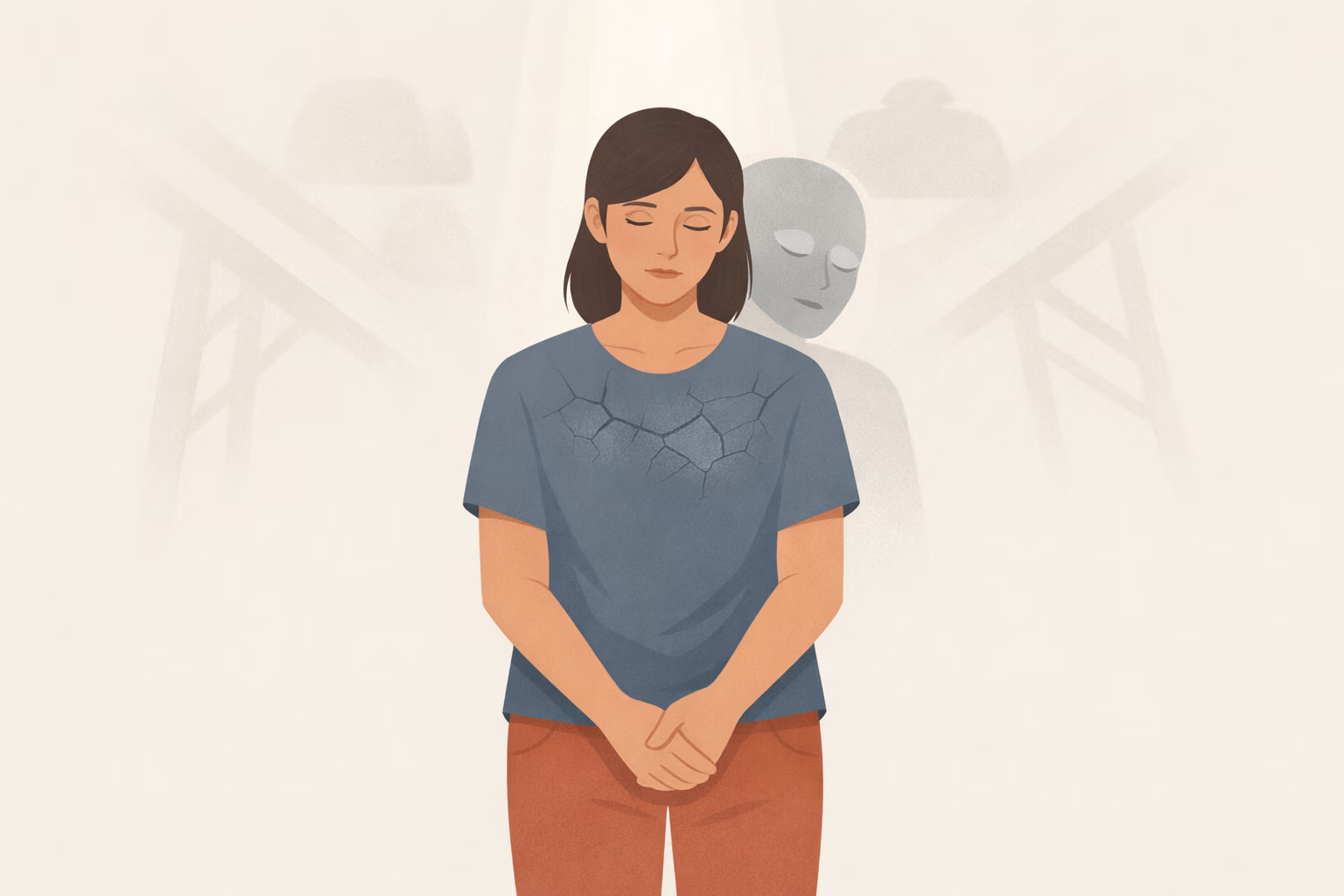
The Emotional Toll of Always Being Strong
Explore why being “strong” becomes emotional suppression rooted in survival.
In context: This occurs when communication remains in the “signal“ phase but never reaches the “landing“ phase. In this model, the gap is the space between two separate Narrative & Identity systems. If either system is overloaded, words fail to bridge the connection. Identifying this space helps you realize that more words won't solve a structural blockage.

Words move outward, shaped carefully, offered clearly.
Still, they stop before crossing.
The gap remains intact, untouched by effort or clarity.
You notice how language can travel far and yet never arrive.
This is not miscommunication.
It is a distance that words alone cannot span, a quiet pause where meaning halts without resistance.
Notice communicative gaps with DojoWell.
Explore DojowellArticles exploring the psychology behind these patterns.
Explore why being “strong” becomes emotional suppression rooted in survival.
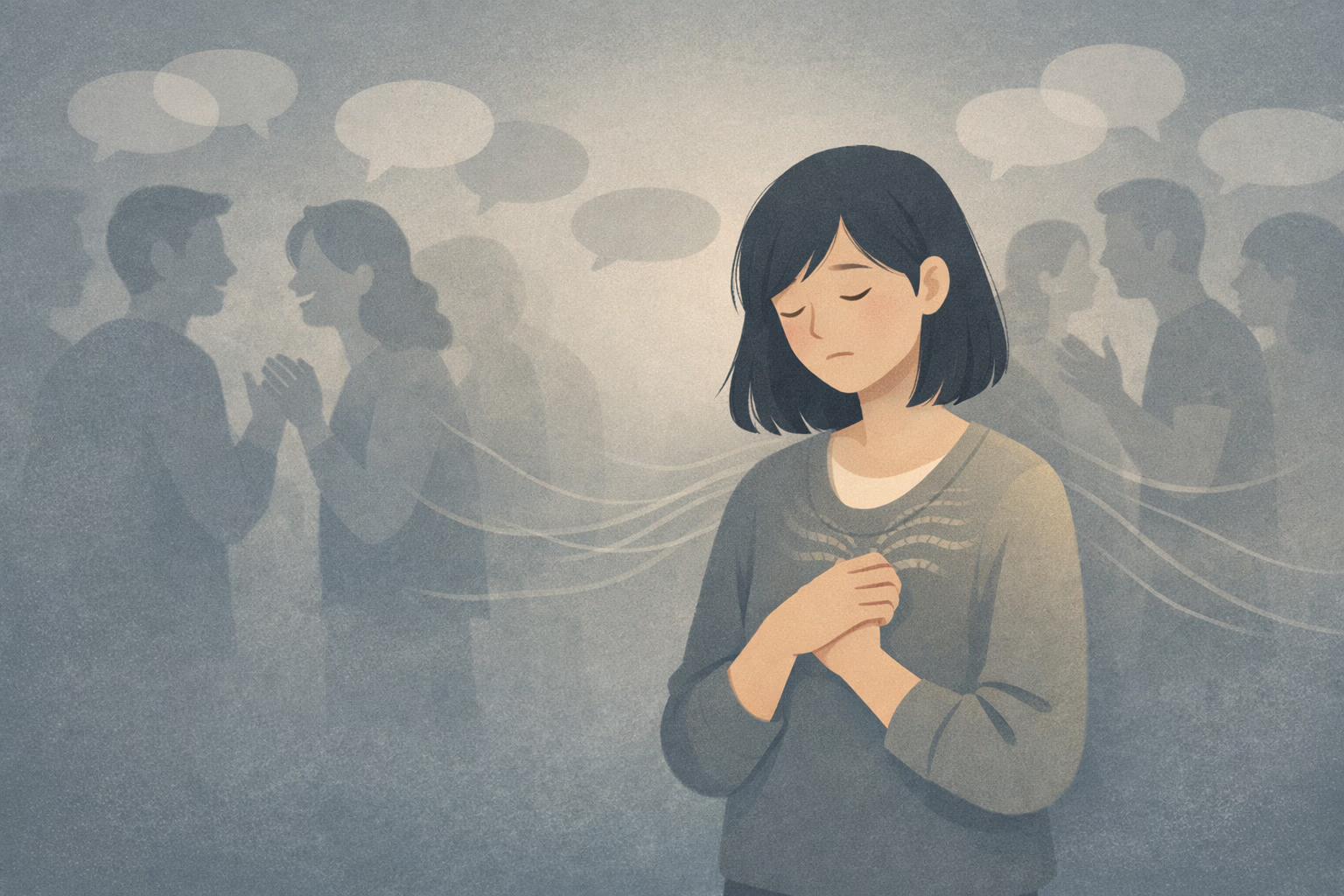
Understand why certain relationships drain you and how to protect your emotional energy.
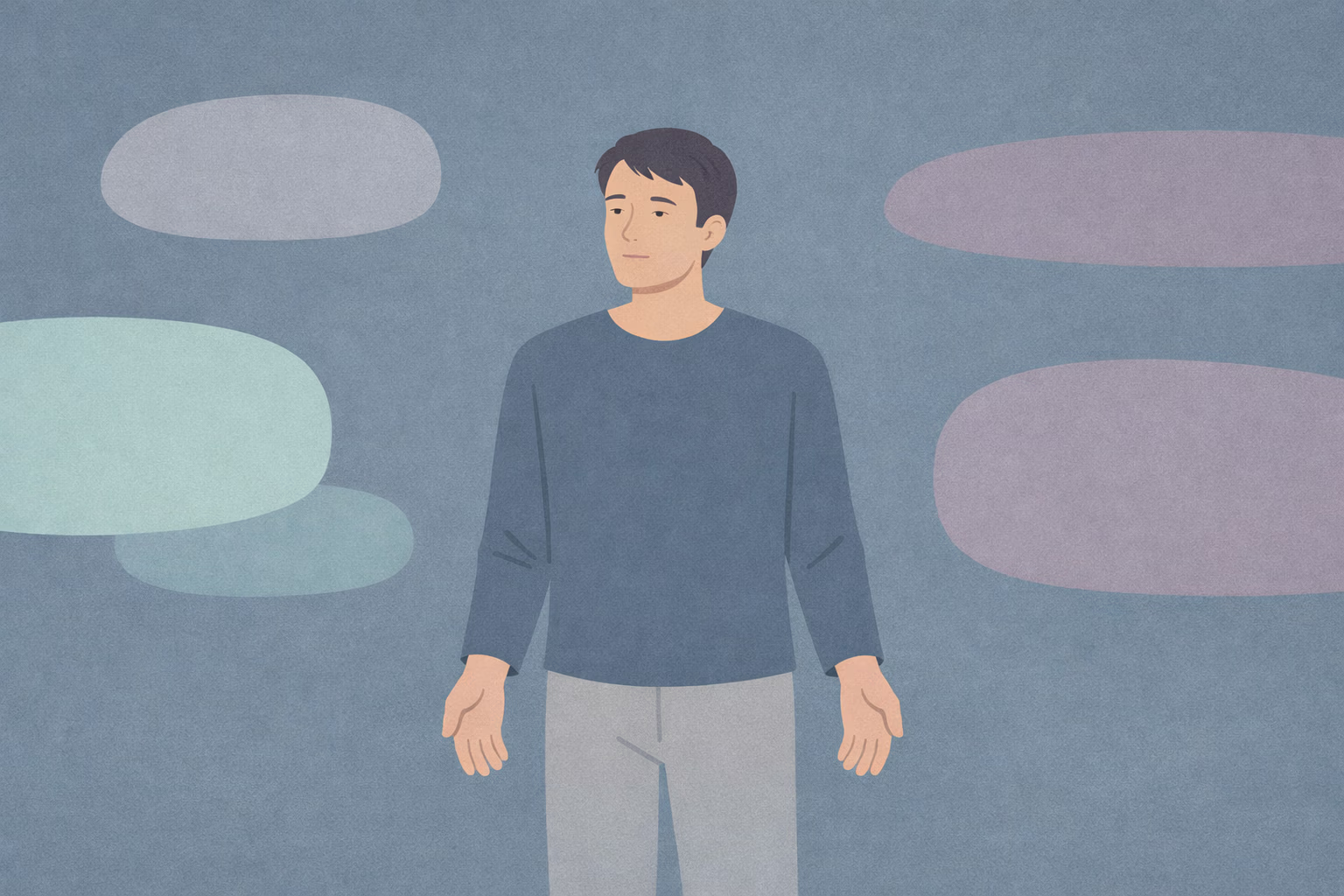
Learn why “connected” people feel emotionally starved.
This occurs when communication remains in the "signal" phase but never reaches the "landing" phase. In this model, the gap is the space between two separate Narrative & Identity systems. If either system is overloaded, words fail to bridge the connection. Identifying this space helps you realize that more words won't solve a structural blockage. It allows you to pause the "explanation loop" and focus on non-verbal cues or shared physical tasks to restore a sense of co-presence.
Stop the pursuit of verbal resolution. When words don't cross the gap, the Narrative system is usually over-stimulated. Switch to "bottom-up" connection: share a physical space, a meal, or a quiet activity. By removing the demand for verbal "landing," you lower the cognitive load on both people. This creates a "structural bridge" of simple shared reality, which is often more stable and restorative than a thousand words that fail to connect.
One Quiet Window, one insight, one reflection — every Sunday