

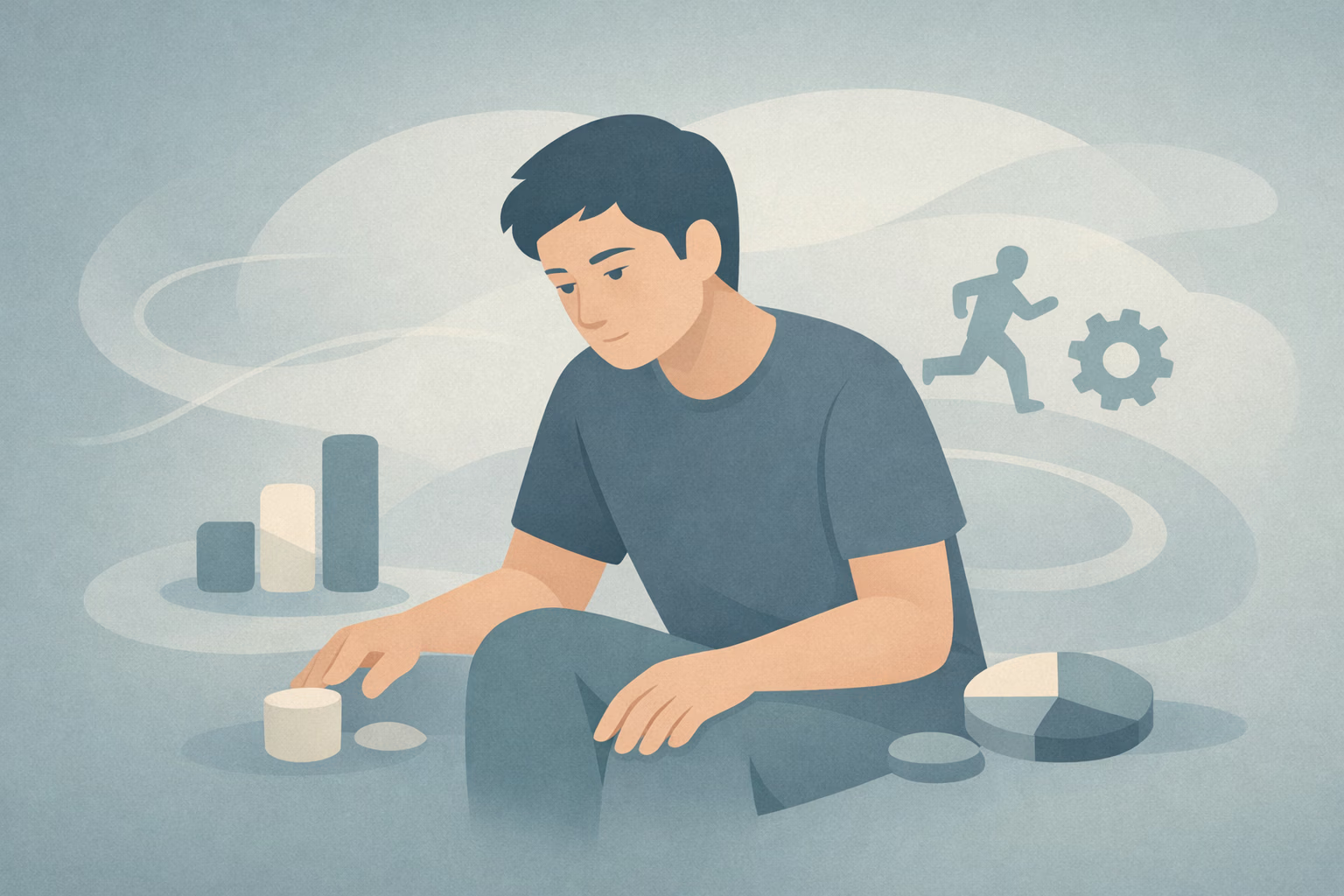
Self-Optimization as Existential Avoidance
Understand why optimizing everything hides deeper fear.
In context: Yes. In this model, Order is a Boundary. Chaos is the state of “infinite open loops“ and “unpredictable triggers.“ By creating order—in your schedule, your home, or your thoughts—you are building a “meaningful perimeter“ that chaos cannot cross. This is a vital act of Status & Control that protects your “integrator“ from being overwhelmed.

Order creates edges.
Inside those edges, chaos stays outside.
You sense how structure became a boundary, how arrangement keeps overwhelm at bay.
This window names order as containment, not rigidity.
Acknowledge protective order with DojoWell.
Explore DojowellArticles exploring the psychology behind these patterns.
Understand why optimizing everything hides deeper fear.

Learn why workaholism feels productive but hides emotional avoidance.
Discover why too much self-help creates emotional burnout and loss of meaning.
Yes. In this model, Order is a Boundary. Chaos is the state of "infinite open loops" and "unpredictable triggers." By creating order—in your schedule, your home, or your thoughts—you are building a "meaningful perimeter" that chaos cannot cross. This is a vital act of Status & Control that protects your "integrator" from being overwhelmed. Naming order as a "boundary" helps you see your organizational habits as a form of self-care and identity protection.
It becomes a problem when the "boundary" becomes a "prison." If you spend so much energy maintaining order that you have no energy left for "living" inside that order, you have hit "diminishing returns." The Meaning Density Model™ suggests "safe enough order." Build just enough order to feel safe, then "stop refining". This allows you to inhabit the "contained space" you’ve created, turning "order" from a constant task into a stable foundation for lived meaning.
One Quiet Window, one insight, one reflection — every Sunday