


Fear of Silence & Stillness Discomfort
Learn why silence feels threatening in an overstimulated world and how your nervous system relearns calm.
In context: No. The urge to fill the quiet is often a reflex of the Status & Control system, which views empty space as a “void“ that must be managed. In the model, quiet is not a vacuum; it is a safe container.
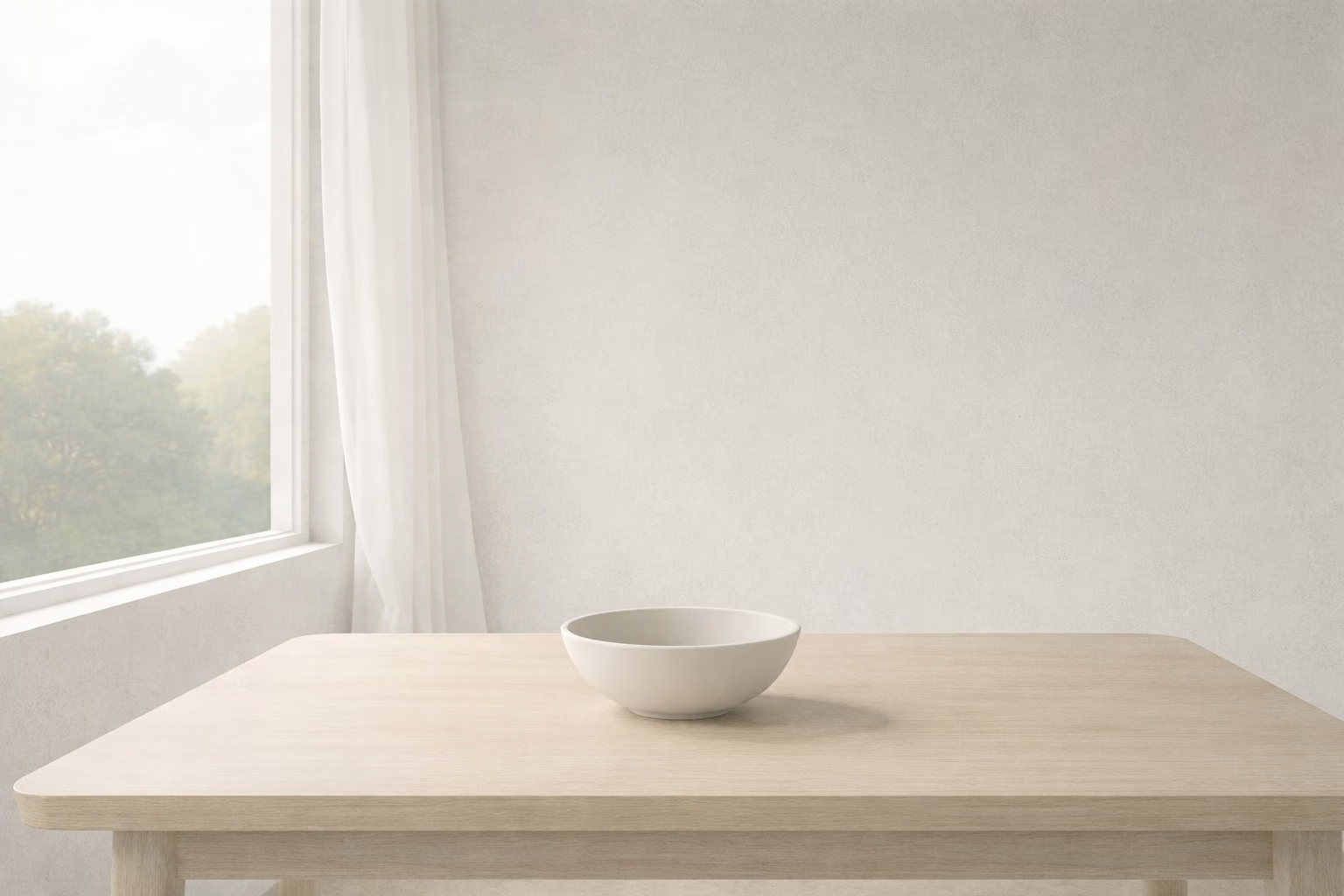
This quiet does not ask to be filled.
The bowl stays empty without complaint.
There is no lack here— only space.
The reflex to add something softens when emptiness proves stable.
Let the bowl remain as it is.
Counter the filling reflex with DojoWell.
Explore DojowellArticles exploring the psychology behind these patterns.
Learn why silence feels threatening in an overstimulated world and how your nervous system relearns calm.

Explore how to find inner stillness despite mental noise.

Learn why reflection is essential for meaning and emotional clarity.
No. The urge to fill the quiet is often a reflex of the Status & Control system, which views empty space as a "void" that must be managed. In the model, quiet is not a vacuum; it is a safe container. Letting the quiet stay "unfilled" signals to your brain that there is no immediate demand for action. This allows the system to reach a state of deep, structural safety where meaning can eventually form on its own.
Absolutely. Meaning is a byproduct of integration, and integration requires silence to finish. A moment where nothing "happens" is often the moment when the most important work is being done internally—the "landing" of previous experiences. By not filling the quiet, you are giving your Narrative system the necessary room to file away the day’s events. The meaning isn't in the activity; it’s in the settlement that follows the activity.
One Quiet Window, one insight, one reflection — every Sunday