


Social Anxiety in the Digital Era
Understand why social anxiety is rising and how online comparison intensifies ancient belonging fears.
In context: Adjacency is a spatial orientation—being “next to“ without the “pursuit“ of intimacy. It is a neutral, structural state. In the Meaning Density Model™, identifying adjacency helps you navigate social situations where high intimacy isn't possible or required.

You sense yourself beside others rather than with them.
Near enough to hear movement through the wall, far enough to remain separate.
Adjacency holds without invitation or rejection.
Reflect on adjacency with DojoWell.
Explore DojowellArticles exploring the psychology behind these patterns.
Understand why social anxiety is rising and how online comparison intensifies ancient belonging fears.

Explore why superficial relationships drain you and how depth fuels emotional safety.
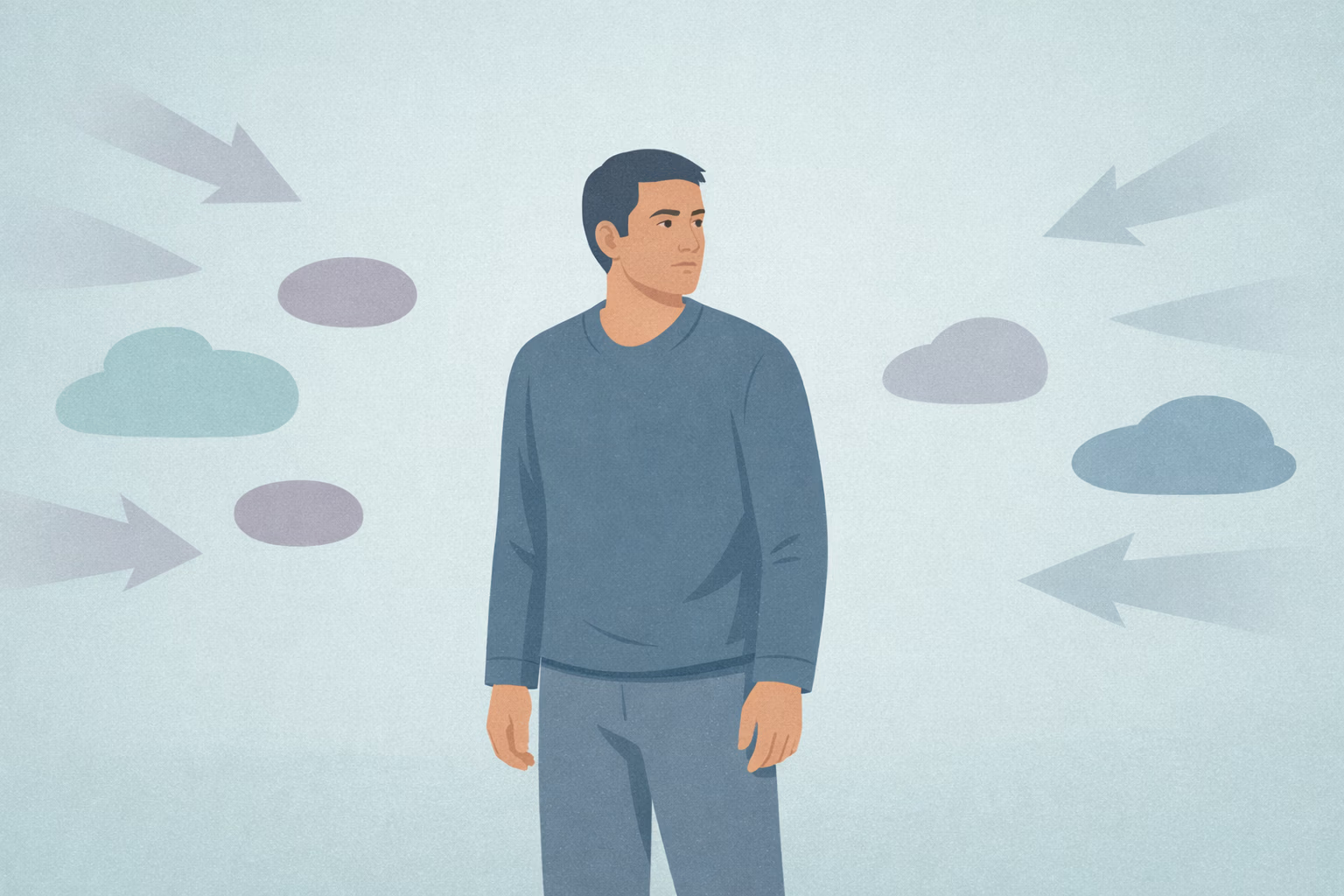
Understand nervous system stress caused by missing tribe cues.
Adjacency is a spatial orientation—being "next to" without the "pursuit" of intimacy. It is a neutral, structural state. In the Meaning Density Model™, identifying adjacency helps you navigate social situations where high intimacy isn't possible or required. It allows you to feel the comfort of proximity without the "intimacy demand" that often triggers the Threat system. You are simply "next to" another human, which is a foundational signal of biological safety.
Yes. For a system in recovery, adjacency is often more restorative than intimacy. Intimacy requires significant "narrative access" and emotional labor, whereas adjacency is a "bottom-up" experience of simple presence. By deciding that adjacency is "enough," you close the pursuit loop and allow your nervous system to rest in the shared space. This builds the structural tolerance needed for deeper connection to eventually emerge without being forced or causing further overwhelm.
One Quiet Window, one insight, one reflection — every Sunday