


Emotional Outsourcing & Dependence
Learn why relying on others for emotional stability backfires.
In context: Holding back creates a “restraint loop.“ Your Narrative system wants to express, but your Status or Threat system is braking the movement. This internal “clash“ manifests as physical and psychological tension. In this model, we name the tension of restraint as a high-energy state.

Holding back requires effort.
It keeps things contained, measured, manageable.
You feel the tension of restraint—not tight enough to cut off, not loose enough to release.
This is the work of containment, where connection is allowed to exist without spilling beyond what feels safe.
Name restraint gently with DojoWell.
Explore DojowellArticles exploring the psychology behind these patterns.
Learn why relying on others for emotional stability backfires.
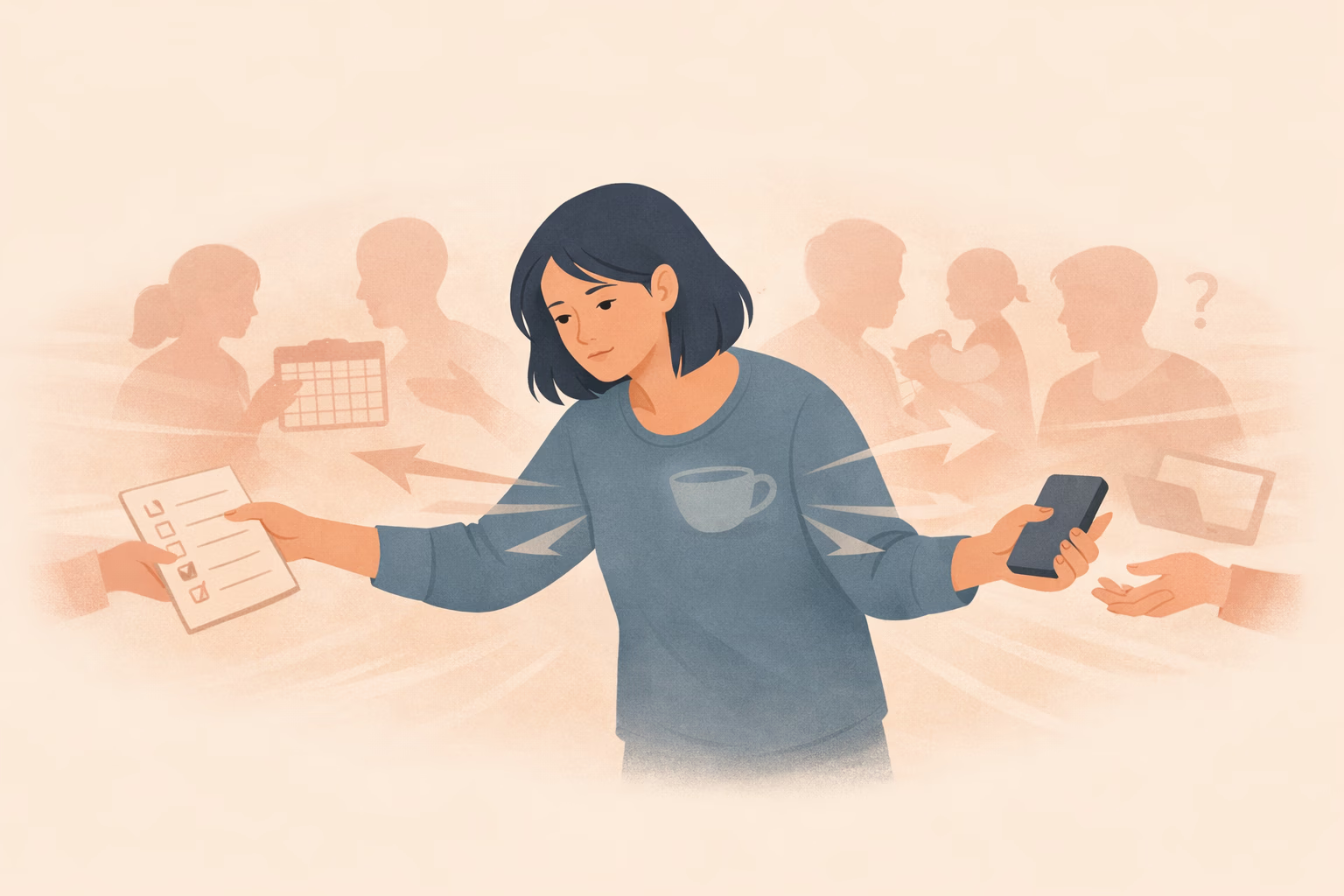
Learn why you overfunction in relationships and how to rebalance emotional labor.
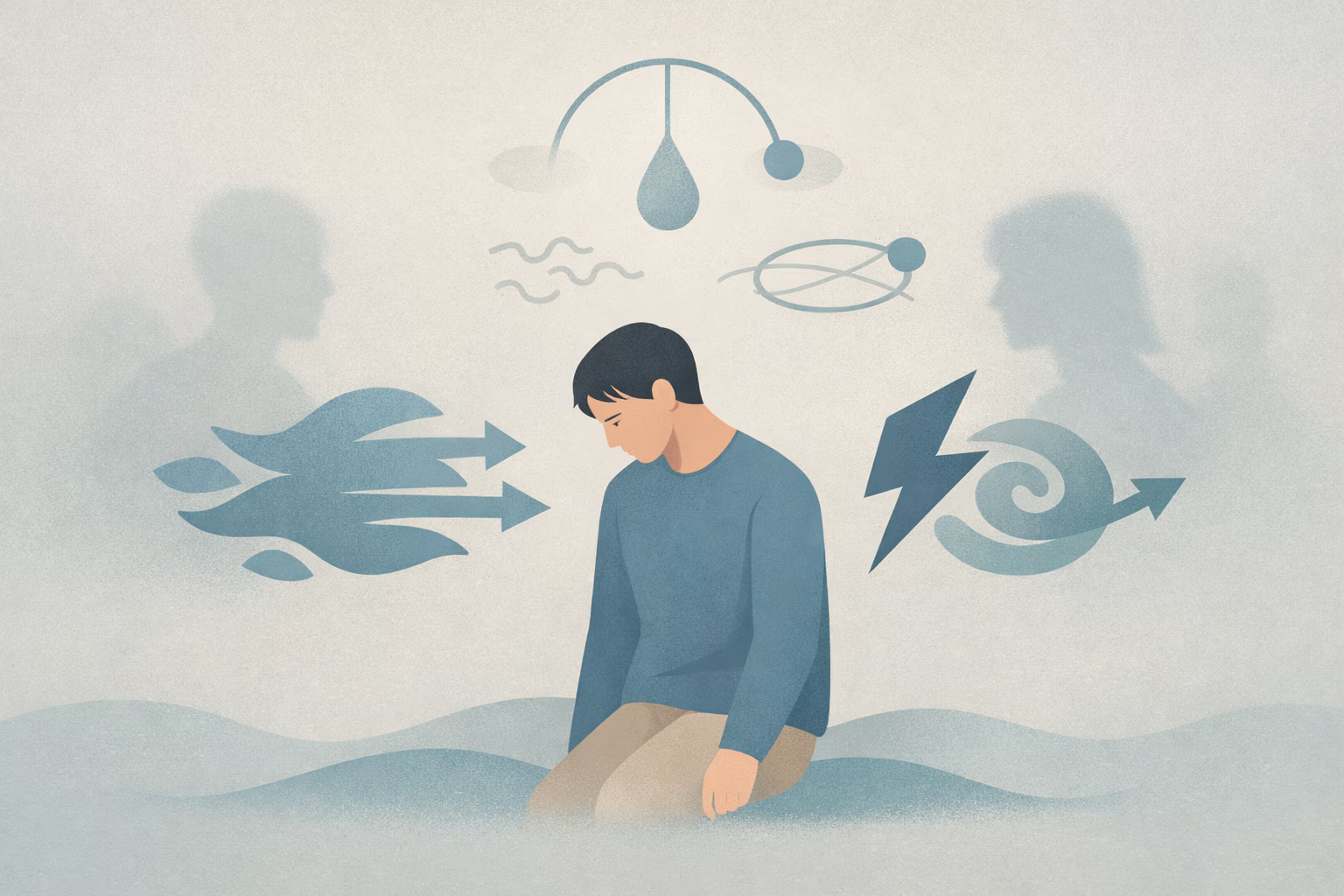
Explore why inner friction appears during transitions.
Holding back creates a "restraint loop." Your Narrative system wants to express, but your Status or Threat system is braking the movement. This internal "clash" manifests as physical and psychological tension. In this model, we name the tension of restraint as a high-energy state. Recognizing that you are spending integration capacity just to "not act" helps you understand your exhaustion. It is the cost of maintaining a boundary when the impulse to merge is strong.
Not necessarily; it’s a sign of a "threshold" being reached. Sometimes holding back is a necessary protective measure for your identity. The Meaning Density Model™ suggests observing the tension without judgment. By naming it "the tension of restraint," you validate your own boundaries. This reduces the Narrative "shame loop," allowing you to decide from a state of coherence whether it is safe to release the restraint or if the boundary is currently essential for your safety.
One Quiet Window, one insight, one reflection — every Sunday